

Adaptive Fashion: Style, Dignity and Accessibility
on Jan 17, 2026
Choosing clothing can be more complicated when everyday fashion leaves out comfort and practical needs. For many in the United Kingdom living with disabilities or specific health requirements, traditional designs often mean sacrificing style for function. Adaptive fashion offers a fresh alternative where inclusive design, comfort, and self-expression go hand in hand. Discover how modern adaptive clothing now puts confidence and individual taste at the heart of every wardrobe choice.
Key Takeaways
| Point | Details |
|---|---|
| Inclusive Design | Adaptive fashion prioritises functionality and style, addressing diverse physical needs while promoting personal expression. |
| Technological Innovations | Advanced features like e-textiles and ergonomic designs enhance wearability and empower users, allowing for greater independence. |
| Market Dynamics | Adaptive clothing often has higher costs due to specialised designs, requiring consumers to consider functionality and durability when purchasing. |
| Integrating Fashion | The evolution of fashion is blending adaptive and mainstream styles, ensuring accessibility and comfort become standard across all clothing lines. |
Defining adaptive fashion and misconceptions
Adaptive fashion represents a revolutionary approach to clothing design that prioritises inclusivity, functionality, and personal dignity. Unlike traditional fashion, this specialised clothing segment focuses on creating garments that accommodate diverse physical needs while maintaining aesthetic appeal. Comprehensive research on adaptive clothing reveals it is not merely about addressing disability, but about empowering individuals to express themselves confidently.
Contrary to widespread misconceptions, adaptive fashion is not limited to medical-looking garments or exclusively designed for seniors or individuals with severe disabilities. These clothes are crafted for a broad spectrum of users, including people with sensory processing differences, mobility challenges, and those requiring unique clothing interactions. Adaptive clothing research demonstrates that these designs can significantly improve quality of life by reducing anxiety and promoting social inclusion.
Key characteristics of adaptive fashion include:
- Innovative closure systems
- Adjustable features
- Sensory-friendly fabrics
- Easy-to-wear designs
- Discreet medical accommodations
The primary goal is creating clothing that looks stylish, feels comfortable, and enables greater independence for wearers with diverse physical requirements. Fashion designers are increasingly recognising that accessibility and style are not mutually exclusive, but complementary elements of inclusive design.
Pro tip: When exploring adaptive fashion, prioritise pieces that make you feel confident and comfortable, rather than focusing solely on functional aspects.
Key features of adaptive clothing innovations
Adaptive clothing innovations are transforming fashion by integrating intelligent design solutions that prioritise user comfort, functionality, and personal autonomy. Electronic textile materials are revolutionising apparel design, introducing advanced technological capabilities that extend far beyond traditional clothing functionality. These innovations represent a significant leap in creating garments that actively support and enhance the wearer’s daily experience.
The key technological and design features of adaptive clothing include several groundbreaking elements. Innovative design solutions encompass sophisticated closure systems like magnetic and Velcro fastenings, which simplify dressing processes for individuals with mobility challenges. Designers are also incorporating seated designs specifically tailored for wheelchair users, featuring reinforced seams, longer panel lengths, and strategically placed fabric panels that ensure comfort and functionality.
Advanced adaptive clothing technologies now offer remarkable capabilities:
- Intelligent e-textiles with physiological monitoring
- Real-time thermoregulation systems
- AI-driven fabric customisation
- Sensory-friendly material compositions
- Enhanced mobility support mechanisms
These innovations demonstrate that adaptive clothing is not just about accommodation, but about empowerment, independence, and celebrating individual diversity. By integrating cutting-edge technologies and thoughtful design principles, adaptive fashion is creating a more inclusive and accessible clothing landscape that respects individual needs and personal style preferences.
Pro tip: When exploring adaptive clothing, look for garments that blend technological innovation with your personal aesthetic, ensuring both functionality and self-expression.
Types and variations for specific needs
Adaptive clothing encompasses a diverse range of specialised garment designs targeting various physical needs and conditions. Clothing modifications for disabilities represent a comprehensive approach to addressing unique user requirements, ranging from congenital impairments to temporary mobility challenges. These carefully designed clothing variations are not just about functionality, but about restoring dignity and independence for individuals with diverse physical needs.
Adaptive fashion types can be categorised based on specific user requirements, including:
- Wheelchair-accessible clothing with open backs
- Sensory-friendly garments with flat seams
- Medical device accommodation clothing
- Easy-closure designs for limited hand mobility
- Stretchable waistband trousers
- Compression garments for specific medical conditions
- Magnetic or velcro fastening alternatives
The spectrum of adaptive clothing variations is remarkably nuanced, addressing needs across different age groups and disability types. For individuals with partial mobility, designs might feature side openings, adjustable lengths, and strategically placed fastenings that enable easier dressing. For those with sensory processing differences, fabrics are carefully selected to minimise irritation, with seamless constructions and soft, breathable materials that provide maximum comfort.
Designers are increasingly recognising that adaptive clothing is not a niche market, but a critical avenue for promoting inclusivity and personal expression. By developing garments that seamlessly blend functionality with style, they are challenging traditional fashion paradigms and creating clothing that celebrates individual diversity.
To better understand adaptive clothing, here’s a table summarising common clothing challenges and the innovative adaptive solutions available:
| Clothing Challenge | Mainstream Approach | Adaptive Fashion Solution |
|---|---|---|
| Limited hand mobility | Small buttons or zips | Magnetic, Velcro, or pull-on fastenings |
| Wheelchair use | Standard seams and panels | Reinforced seams, longer back panels |
| Sensory sensitivities | Mixed fabric textures | Seamless, soft, sensory-friendly fabrics |
| Use of medical devices | No dedicated access points | Discreet device openings or panels |
| Temporary injury | Conventional closures | Adjustable lengths, one-handed features |
Pro tip: When selecting adaptive clothing, prioritise pieces that make you feel confident and comfortable, focusing on designs that genuinely enhance your daily living experience.
How adaptive fashion enhances independence
Adaptive fashion is a transformative approach that empowers individuals with disabilities by providing clothing solutions that directly support personal autonomy. Functional clothing solutions go beyond mere fabric and design, representing a profound mechanism for restoring dignity and self-determination. By incorporating innovative features like magnetic closures, ergonomic designs, and strategically placed fastenings, these garments enable people to dress and undress with minimal or no external assistance.
Psychological impact of adaptive clothing extends far beyond physical functionality. These specialised garments play a crucial role in emotional well-being by:
- Reducing dependence on caregivers
- Boosting self-esteem
- Facilitating social inclusion
- Supporting independent living
- Promoting personal identity expression
The technological innovations embedded in adaptive clothing are specifically designed to address diverse mobility challenges. Modifications such as side openings, adjustable lengths, and seamless constructions enable individuals with partial mobility to maintain their personal styling preferences while ensuring practical wearability. These design considerations transform clothing from a potential barrier to a tool of empowerment, allowing wearers to navigate daily life with increased confidence and reduced physical strain.
Ultimately, adaptive fashion represents more than just clothing. It is a powerful statement of inclusivity, recognising that personal style and functionality are fundamental human rights that should be accessible to everyone, regardless of physical ability.
Pro tip: Prioritise adaptive clothing pieces that not only meet your functional needs but also reflect your personal style and make you feel genuinely confident.
Costs, access and practical buying advice
Navigating the adaptive clothing market requires careful consideration of both financial and functional factors. Adaptive clothing market dynamics reveal significant challenges in accessibility, with specialised designs often commanding higher price points due to complex manufacturing processes and limited production scales. Understanding these market constraints helps consumers make more informed purchasing decisions.
Consumer purchasing strategies for adaptive fashion should prioritise several key considerations:
- Evaluate actual functionality over aesthetic preferences
- Compare price-to-value ratios
- Research brands specialising in inclusive design
- Consider long-term durability
- Examine fabric quality and adaptability
- Check return and exchange policies
The cost of adaptive clothing typically ranges higher than mainstream fashion due to specialised design requirements. Emerging brands are working to reduce these price barriers by developing more efficient production techniques and increasing market awareness. Some strategies for managing expenses include searching for sales, considering second-hand options, and investing in versatile pieces that offer multiple adaptive features.
Consumers should also explore emerging online marketplaces and specialist retailers that focus on inclusive clothing design. By combining careful research, strategic purchasing, and an understanding of individual needs, individuals can find adaptive clothing solutions that balance functionality, style, and affordability.
Pro tip: Contact manufacturers directly to understand specific garment adaptations and potential customisation options that might provide better value for your specific requirements.
Comparing adaptive and mainstream fashion options
The landscape of fashion is undergoing a transformative shift, with adaptive clothing challenging traditional design paradigms. Unlike mainstream fashion, which primarily emphasises aesthetic trends, adaptive clothing prioritises functionality, comfort, and accessibility as its core design principles. This fundamental difference represents a profound reimagining of clothing’s purpose beyond mere visual appeal.
Fashion industry evolution reveals a gradual convergence between adaptive and mainstream clothing lines. Key distinctions include:
- Functional design innovations
- Integrated medical device access
- Wheelchair-friendly feature modifications
- Magnetic and alternative fastenings
- Stretch fabric technologies
- Ergonomic construction techniques
Mainstream fashion brands are increasingly recognising the importance of inclusive design, slowly integrating adaptive features into their collections. This shift represents more than a trend; it’s a significant social movement towards recognising diverse body types and mobility needs. By breaking down traditional aesthetic barriers, designers are creating clothing that celebrates individual differences and promotes dignity.
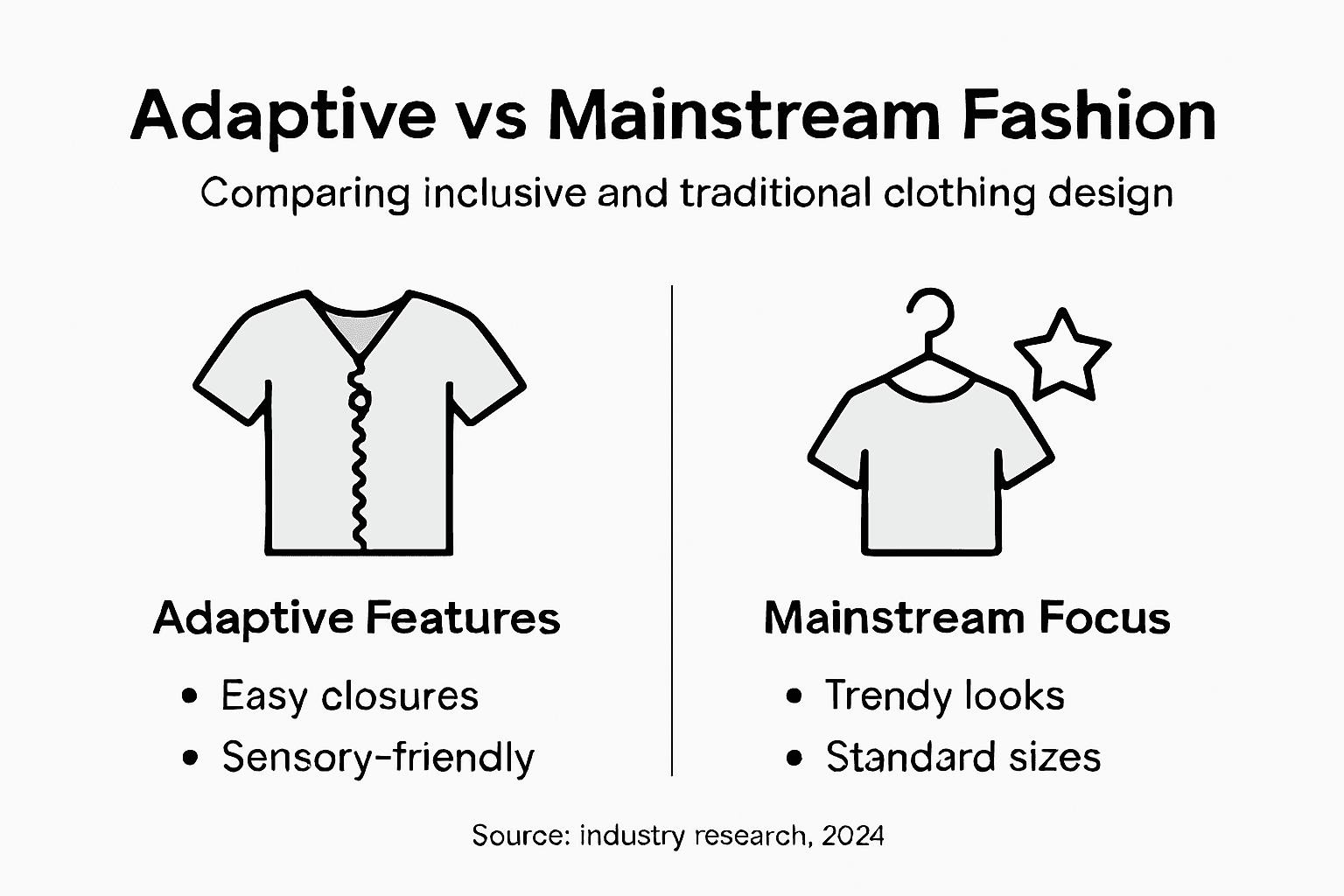
Ultimately, the goal is not to segregate adaptive clothing as a separate category, but to seamlessly integrate inclusive design principles into all fashion offerings. This approach ensures that style, comfort, and functionality become universal considerations, regardless of an individual’s physical capabilities.
Below is a comparison between adaptive and mainstream fashion priorities to clarify how they address user needs:
| Design Priority | Mainstream Fashion Focus | Adaptive Fashion Focus |
|---|---|---|
| Aesthetic trends | High | Balanced with practicality |
| Accessibility | Rarely considered | Central to design |
| Fastening complexity | Traditional zips/buttons | Simplified, alternative fastenings |
| Mobility support | Standard sizing | Ergonomic, varied modifications |
| Fabric adaptability | Often overlooked | Highly prioritised |
Pro tip: When comparing adaptive and mainstream fashion, focus on garments that offer both functional adaptations and personal style expressions that make you feel confident.
Discover Inclusive Style and True Independence with Stomart
Adaptive fashion is about more than just clothing. It addresses real challenges such as limited hand mobility, the need for easy closures, and sensory-friendly fabrics, all while restoring dignity and personal expression. If you are seeking garments that combine functionality, comfort, and style, you deserve options that truly empower your daily life and boost your confidence.
At Stomart.co.uk, explore a wide selection of fashion accessories and personal wellness gadgets designed to complement your lifestyle and meet diverse needs. Whether you want innovative closures or sensory-friendly fabrics, our collections support your journey towards greater independence. Take control of your wardrobe today and experience how thoughtful design enhances both your look and your freedom.
Start your adaptive fashion journey now and shop with confidence at Stomart.co.uk. Transform your clothing challenges into opportunities for self-expression and ease—discover your ideal pieces and make every day easier and more stylish.
Frequently Asked Questions
What is adaptive fashion?
Adaptive fashion focuses on designing clothing that accommodates various physical needs while ensuring style and comfort. It is aimed at empowering individuals with disabilities by providing garments that are functional and inclusive.
How does adaptive fashion enhance independence for individuals?
Adaptive fashion enhances independence by incorporating features like easy closures, ergonomic designs, and sensory-friendly materials, allowing individuals to dress themselves with minimal or no assistance, thus promoting self-determination and confidence.
What are key features to look for when choosing adaptive clothing?
Key features to consider include adjustable fastenings (like magnetic or Velcro), sensory-friendly fabrics, easy-to-wear designs, and garments that accommodate medical devices or specific mobility requirements. These ensure both practicality and comfort.
How does adaptive clothing compare with mainstream fashion?
While mainstream fashion often prioritises aesthetic trends, adaptive clothing focuses on functionality and accessibility. Adaptive designs integrate features like ergonomic modifications and simplified closures, making them more suitable for individuals with diverse physical needs.