

Best home organisation ideas for a clutter-free home
on Jan 01, 2026
Over half of British homeowners say clutter makes daily life feel more stressful. As eco-conscious city dwellers, finding sustainable ways to keep your home tidy is more than a preference, it is a necessity for minimalist living. Whether your flat is compact or your terrace is packed with memories, this guide shares practical strategies to help you assess your storage needs, declutter purposefully, and embrace multifunctional organisation while honouring your green values.
Quick Summary
| Key Insight | Explanation |
|---|---|
| 1. Assess Your Storage Needs | Create an inventory of belongings to understand what you need for storage solutions. |
| 2. Strategically Declutter Each Room | Focus on small areas, sorting items into keep, donate, and discard categories to simplify decision-making. |
| 3. Organise with Categories and Zones | Group similar items together and create areas for easy access, ensuring everything has a designated space. |
| 4. Use Multifunctional Storage Solutions | Invest in furniture that serves dual purposes to maximise space and reduce clutter visibility. |
| 5. Regularly Review and Maintain Spaces | Schedule quarterly assessments to adapt your organisation system and prevent clutter from accumulating again. |
Step 1: Assess your storage needs
Successfully organising your home starts with a comprehensive understanding of your current storage situation. This crucial first step will help you map out exactly what space and solutions you need to create a clutter-free environment.
Begin by creating a detailed inventory of your belongings that covers every room in your home. Walk through each space systematically and note down items that need storage. Pay special attention to seasonal items, sentimental objects, and things you use infrequently. This process helps you understand not just how much storage you require, but also what type of storage will work best for your specific needs.
To make this process manageable, keep a weekly diary or planner tracking your organizational tasks. Break down your assessment into smaller chunks so you do not feel overwhelmed. Focus on one room or category at a time, noting items that can be stored, donated, or discarded. This methodical approach prevents decision fatigue and helps you create a clear picture of your storage requirements.
Top Tip: Use your smartphone to take photos of spaces and items during your assessment to help visualise storage solutions and keep a digital record of your inventory.
Step 2: Declutter every room strategically
Decluttering your entire home requires a systematic and patient approach that transforms chaos into calm. The goal is to create organised spaces that reflect your lifestyle and bring mental clarity.
Strategic decluttering involves taking small, manageable steps rather than attempting an overwhelming whole-house overhaul. Start by dedicating 15-minute increments to specific areas. Choose a single drawer, shelf, or corner and focus entirely on that space. Sort items ruthlessly into three categories: keep, donate, and discard. Begin by removing obvious rubbish and creating distinct piles for different types of items. This methodical process prevents decision fatigue and helps you make clear choices about your belongings.
Make decluttering a consistent habit by scheduling regular sessions. Set specific times each week dedicated to tackling different rooms or zones in your home. This approach builds momentum and prevents clutter from accumulating again. Remember that progress is more important than perfection. Some days you might only clear out a small basket or tidy a single cupboard, and that is absolutely fine. The key is maintaining steady, incremental improvement in your living spaces.
Top Tip: Create a ‘maybe’ box for items you are uncertain about keeping, and revisit it after one month to make a final decision with a clearer perspective.
Step 3: Categorise and zone your belongings
Transforming your living spaces into efficient, well-organised zones requires a thoughtful approach to sorting and storing your possessions. The ultimate goal is creating a system that makes finding and returning items intuitive and stress-free.

Organizing belongings means understanding that everything should have a designated place, which supports order and ease of management. Begin by grouping similar items together. For instance, create zones for electronics, paperwork, hobby supplies, and seasonal clothing. Use labeled cubbies or storage containers to establish clear boundaries for different categories of belongings. This visual and physical separation helps maintain clarity and prevents items from migrating across different areas of your home.
Consider the frequency of use when designing your zones. Place everyday items in easily accessible spaces, while storing less frequently used possessions in higher shelves or more distant storage areas. Involve all household members in maintaining these organisational zones, as shared understanding helps sustain the system. Regular review and adjustment of your categorisation will ensure the system continues to meet your evolving lifestyle needs.
Top Tip: Use colour coded labels or transparent containers to make your zoning system visually intuitive and easy to maintain.
Step 4: Incorporate multifunctional storage solutions
Transforming your living spaces into efficient, clutter-free environments requires clever storage solutions that work harder and smarter. The key is selecting furniture and storage options that serve multiple purposes while maintaining a streamlined aesthetic.
Multifunctional storage solutions maximize space by using furniture and storage options that serve multiple purposes. Consider investing in pieces that offer hidden storage capabilities. Ottoman coffee tables with internal compartments, beds with built-in drawers, and console tables with shelving can dramatically reduce visible clutter while providing practical storage. Innovative storage systems can integrate functional features beyond basic storage, optimising space and utility, transforming how you use every square metre of your home.
When selecting multifunctional storage, think creatively about vertical space and unconventional storage opportunities. Wall-mounted shelves can double as decorative elements, shoe racks can store gardening tools, and kitchen trolleys can serve as additional workspace and storage. The goal is to create a flexible environment where each item serves multiple purposes, reducing the need for excessive furniture and keeping your home feeling open and uncluttered.
Here’s a comparison of popular multifunctional storage furniture types and their primary benefits:
| Furniture Type | Key Features | Best Placement |
|---|---|---|
| Ottoman Coffee Table | Hidden compartments, movable | Living room, lounge area |
| Bed with Storage Drawers | Maximises under-bed space | Bedroom |
| Console Table with Shelves | Open and closed storage options | Hallway, home office |
| Wall-Mounted Shelves | Uses vertical space, decorative | Kitchen, study, bathroom |
Top Tip: Measure your spaces precisely before purchasing multifunctional furniture to ensure perfect fit and maximum storage potential.
Step 5: Review and maintain organised spaces
Sustaining an organized home requires ongoing attention and periodic evaluation of your storage systems. Think of your organizational approach as a living strategy that evolves with your changing lifestyle and needs.
Maintaining an organized space involves planning and breaking tasks into manageable chunks, with a focus on consistent review and adaptation. Schedule quarterly reviews of your storage zones, examining each area critically. During these reviews, assess what is working well and what needs adjustment. Remove items that no longer serve a purpose, reorganize spaces that have become cluttered, and update your storage solutions to match your current requirements.
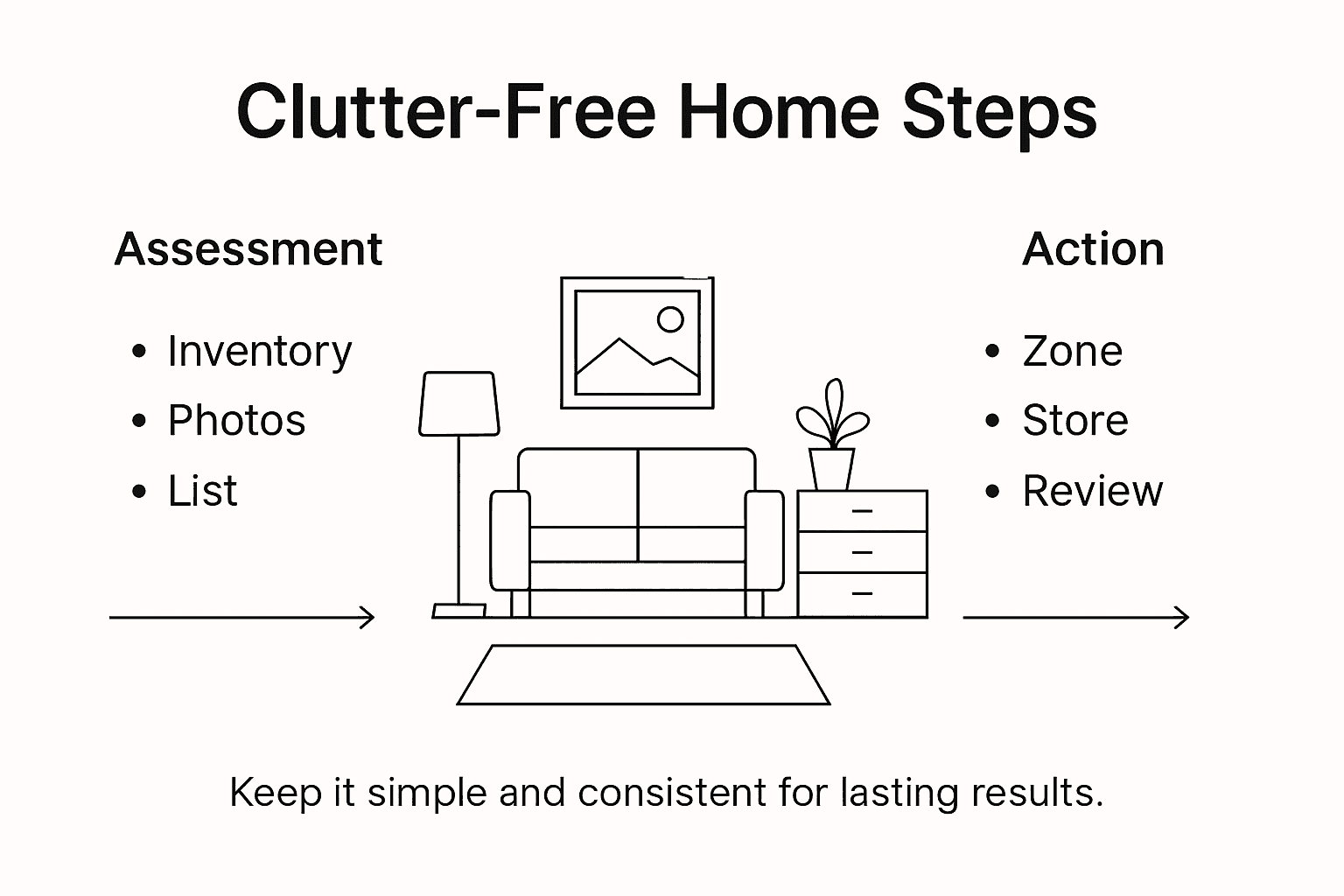
Create a simple tracking system to monitor your organizational progress. This might involve a digital spreadsheet or a dedicated notebook where you document changes, note areas needing improvement, and track the effectiveness of your storage strategies. Regular maintenance prevents small organizational challenges from becoming overwhelming, ensuring your home remains a calm and efficient space that supports your daily life.
This table summarises effective review and maintenance strategies for keeping your home organised:
| Strategy | Frequency | Purpose |
|---|---|---|
| Quarterly zone assessment | Every 3 months | Identify issues, adapt solutions |
| Digital tracking notebook | Ongoing | Monitor changes, log improvements |
| Decluttering session | Weekly or monthly | Prevent clutter build-up |
| Calendar reminder | Every 3 months | Ensure regular review routines |
Top Tip: Set a recurring calendar reminder for your quarterly organization review to ensure you stay consistent and proactive.
Create Your Clutter-Free Home with Smart Storage Solutions
The journey to a clutter-free and organised home starts with understanding your unique storage needs and creating efficient zones for your belongings. This article highlights the challenges of decluttering and maintaining order using multifunctional storage solutions that save space and bring calmness to your living environment. If you are looking to transform chaos into calm, the right products make all the difference.
Discover a wide selection of practical home goods and storage accessories at Stomart.co.uk to help you categorise, zone and maintain your spaces while maximising your home’s potential. Whether you need stylish multi-purpose furniture or smart storage containers, shopping with us ensures you find functional solutions that match your lifestyle. Begin your organisation journey today by visiting Stomart.co.uk and explore products designed to help you stay organised and enjoy a clutter-free home now.
Frequently Asked Questions
How can I assess my storage needs for a clutter-free home?
To assess your storage needs, start by creating a detailed inventory of your belongings in each room. Walk through your home, noting items that require storage, especially seasonal and infrequently used items, to develop a clear understanding of the space and solutions you need.
What is the most effective way to declutter every room?
The most effective way to declutter is to tackle one small area at a time, dedicating specific 15-minute sessions. Sort items into three categories: keep, donate, and discard, to streamline your decision-making process and reduce overwhelm.
How should I categorise my belongings for better organisation?
Categorising your belongings involves grouping similar items and assigning designated zones for each category, such as electronics, paperwork, and hobby supplies. Use labelled containers or cubbies to maintain order and make retrieval intuitive, ensuring everything has its place.
What are some multifunctional storage solutions to consider for my home?
Multifunctional storage solutions, such as ottoman coffee tables with hidden compartments or beds with built-in drawers, can dramatically reduce clutter. Evaluate your living spaces and incorporate furniture that serves multiple purposes to maximise your storage potential.
How can I maintain organised spaces after decluttering?
Maintaining organised spaces involves regular reviews of your storage solutions, ideally every three months. Schedule a quarterly assessment to remove items that no longer serve a purpose and adjust your organisation methods to keep your home clutter-free.