

Digital Ecosystems: Transforming Online Retail Success
on Jan 18, 2026
Finding the right path to increased visibility and seamless shopping can feel out of reach when technologies, platforms, and business processes no longer fit together smoothly. For E-commerce entrepreneurs and online retailers, mastering the digital ecosystem is critical to building robust connections between systems, enabling rapid innovation, and keeping ahead of market shifts. This guide unpacks how interconnected digital environments, strategic collaboration, and smart technology choices help retailers thrive in fast-moving markets across Europe, North America, and Asia.
Key Takeaways
| Point | Details |
|---|---|
| Understanding Digital Ecosystems | Digital ecosystems facilitate dynamic collaboration among businesses, technologies, and services, allowing for responsive interactions and value creation. |
| Types of Ecosystems for Retailers | Retailers can leverage platform, network, and hybrid ecosystems to enhance operational efficiency and customer experience through strategic collaboration. |
| Core Components Interaction | Effective digital ecosystems rely on interconnected platforms, organisational actors, and robust technological infrastructure for seamless value generation. |
| Addressing Adoption Challenges | Organisations must identify and overcome barriers such as misalignment, legacy systems, and security concerns to successfully implement digital ecosystems. |
Defining Digital Ecosystems in Commerce
Digital ecosystems represent sophisticated interconnected digital environments where businesses, technologies, platforms, and services collaborate dynamically to create comprehensive commercial networks. These complex systems go beyond traditional business interactions by enabling collaborative digital interactions through integrated technological infrastructure.
At their core, digital ecosystems function like living biological systems, where multiple entities interact, exchange value, and evolve together. Software components, applications, digital platforms, and communication technologies form the fundamental building blocks of these intricate networks. Unlike rigid traditional business models, digital ecosystems promote fluid, adaptive interactions that allow organisations to respond rapidly to market changes and customer expectations.
The primary characteristics of digital commerce ecosystems include seamless technological integration, collaborative value creation, and continuous innovation. Organisations leverage these ecosystems to reimagine business models, expand market reach, and develop more responsive strategic approaches. Digital ecosystems serve as pivotal frameworks that interconnect technological and human elements to drive strategic innovation.
Pro tip: Regularly audit and refresh your digital ecosystem’s technological components to maintain competitive agility and prevent systemic obsolescence.
Types of Digital Ecosystems for Retailers
Retailers today navigate increasingly complex digital landscapes by developing sophisticated digital ecosystems that enable strategic collaboration and technological innovation. Retail ecosystems encompass diverse network configurations designed to enhance operational efficiency and customer experiences across multiple dimensions.
Three primary types of digital ecosystems emerge as particularly significant for modern retailers. First, platform ecosystems centralise interactions through digital platforms that connect users, developers, and service providers. These ecosystems create dynamic marketplaces where multiple stakeholders can seamlessly interact and exchange value. Second, network ecosystems focus on interconnected firms collaborating to co-create comprehensive value propositions, enabling businesses to share resources, knowledge, and technological capabilities.
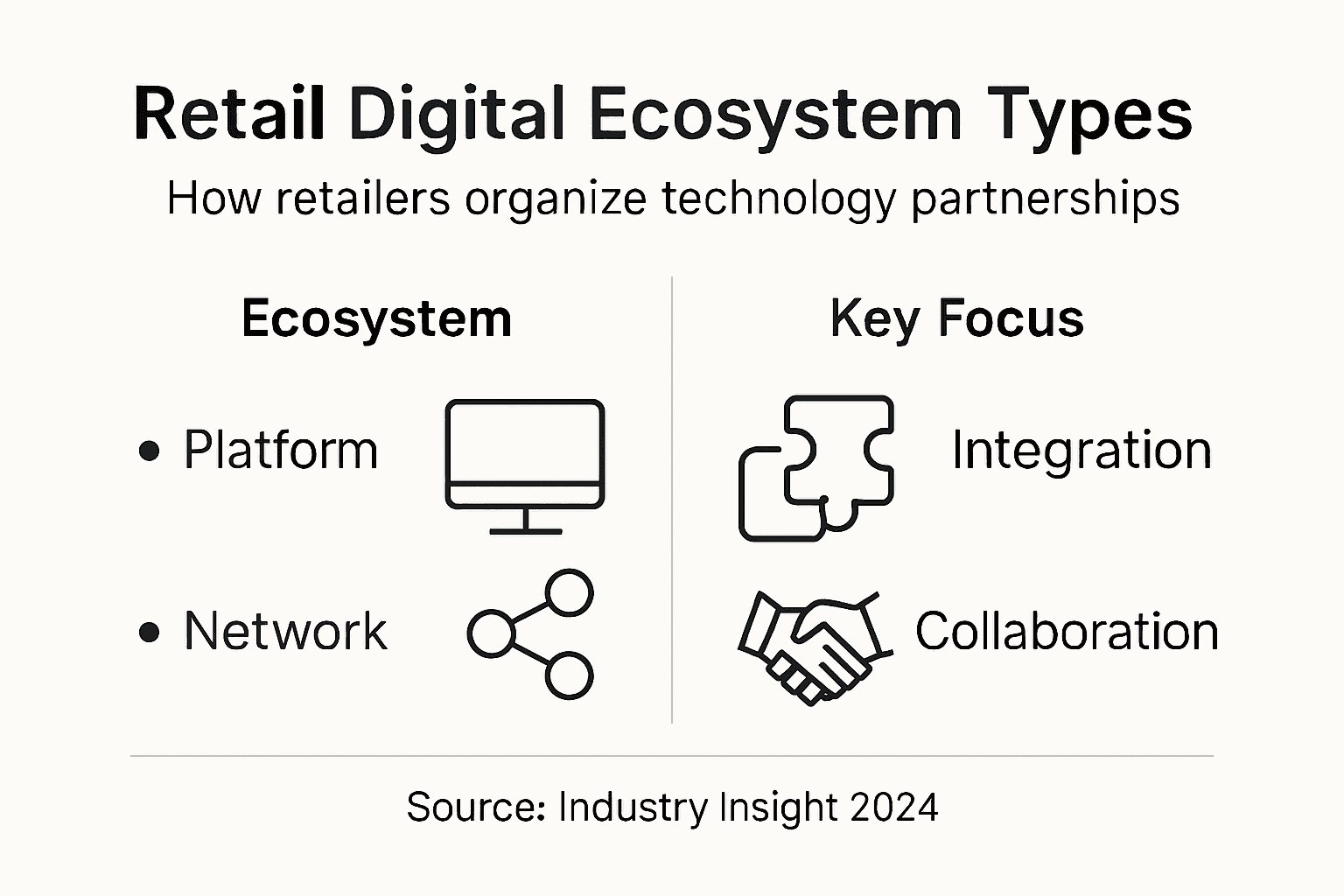
Business ecosystem models present unique governance challenges that require strategic management. Hybrid ecosystems represent a third category, combining characteristics of platform and network models. These complex systems integrate advanced technologies like hyperautomation, blockchain, and artificial intelligence to create adaptive, responsive commercial environments. Key technological components include edge computing devices, Internet of Things (IoT) sensors, and AI-driven analytical tools that enable personalised customer interactions and streamlined operational processes.
Pro tip: Conduct a comprehensive technology audit to identify potential integration points and compatibility challenges within your chosen digital ecosystem approach.
Here’s a comparison of the three main digital ecosystem types for retailers:
| Ecosystem Type | Main Focus | Key Technologies |
|---|---|---|
| Platform Ecosystem | Centralised interaction | APIs, digital platforms |
| Network Ecosystem | Collaborative partnerships | Cloud, communication tech |
| Hybrid Ecosystem | Adaptive integration | AI, blockchain, IoT |
Core Components and How They Interact
Digital ecosystems operate through intricate networks of interconnected technological and human components that collaborate to create seamless value generation. Digital ecosystem components interact through complex interoperability mechanisms that enable real-time data exchange and strategic decision-making across multiple platforms and organisational boundaries.

The fundamental components of digital ecosystems include digital platforms, technological infrastructure, organisational actors, and data resources. Digital platforms serve as the foundational architecture, providing the technological framework that enables interactions between different stakeholders. These platforms integrate various software applications, communication protocols, and data management systems that facilitate seamless information flow and collaborative value creation. Organisational actors, including businesses, developers, and service providers, leverage these platforms to exchange resources, share knowledge, and develop innovative solutions.
Interconnected digital ecosystem actors generate value through collaborative and competitive interactions, mediated by sophisticated governance structures. Advanced technologies such as cloud computing, artificial intelligence, and blockchain play crucial roles in enabling these interactions, providing the technological infrastructure that supports data integration, security, and real-time processing. Semantic, technical, organisational, and legal interoperability mechanisms ensure that diverse digital tools can communicate effectively, preventing data redundancy and maximising ecosystem efficiency.
Pro tip: Regularly map and analyse your digital ecosystem’s interaction points to identify potential integration bottlenecks and optimisation opportunities.
Below is a summary of core digital ecosystem components and their business roles:
| Component | Business Role | Example Technology |
|---|---|---|
| Digital Platform | Enables value exchange and collaboration | E-commerce software |
| Organisational Actor | Drives innovation and strategic decisions | Service providers |
| Technological Infrastructure | Supports integration and operations | Cloud computing |
| Data Resource | Informs decision-making and optimisation | Real-time analytics |
Integrating Systems for Seamless Shopping
Modern retail success hinges on creating comprehensive, interconnected shopping experiences that transcend traditional channel boundaries. Omnichannel retailing integrates multiple online and offline channels to deliver a unified and consistent customer journey across digital and physical touchpoints.
The technological infrastructure supporting seamless shopping requires sophisticated integration strategies. API-driven connections form the backbone of modern retail ecosystems, enabling real-time data synchronisation between inventory management systems, customer databases, and multiple sales platforms. Advanced technologies like Radio-Frequency Identification (RFID), Internet of Things (IoT) sensors, and artificial intelligence play crucial roles in creating intelligent, responsive shopping environments that adapt to individual customer preferences and behaviours.
Distributed commerce architecture enables retailers to create unified shopping experiences that support complex consumer interactions. This includes capabilities like online browsing with local store pickup, cross-channel returns, and personalised marketing that maintains consistent messaging across mobile apps, physical stores, and digital marketplaces. Intelligent systems must synchronise customer data, inventory visibility, and content management to eliminate friction points and enhance overall shopping convenience.
Pro tip: Implement middleware solutions that create standardised data protocols to ensure smooth communication between disparate technological systems and platforms.
Pitfalls and Challenges in Digital Ecosystem Adoption
Digital ecosystem transformation presents numerous complex challenges that can derail even the most well-intentioned technological initiatives. Organisations frequently encounter significant adoption risks when attempting to modernise their technological infrastructure, with many transformation efforts ultimately failing due to systemic implementation barriers.
One primary challenge involves organisational misalignment, where different departments maintain conflicting technological goals and strategies. This fragmentation creates resistance to change, making comprehensive digital ecosystem implementation difficult. Legacy systems pose particular problems, as their rigid architectures often struggle to integrate with modern digital platforms. Advanced technologies require not just technical upgrades, but fundamental shifts in organisational culture, communication protocols, and strategic thinking.
Digital ecosystem complexity creates multifaceted challenges that extend beyond simple technological integration. Security vulnerabilities, privacy concerns, and governance complexities emerge as critical issues. Technological heterogeneity means different systems must communicate seamlessly while maintaining robust security standards. Scalability becomes another significant concern, with organisations needing flexible architectures that can adapt to rapidly evolving digital landscapes and emerging technological innovations.
Pro tip: Conduct comprehensive technology audits and develop a phased implementation strategy that prioritises interoperability and addresses potential resistance points before full-scale digital ecosystem deployment.
Unlock Your Retail Potential with Seamless Digital Ecosystems
Navigating the complexities of digital ecosystems can be challenging, especially when trying to integrate diverse technologies while meeting evolving customer expectations. This article highlights key pain points retailers face such as organisational misalignment, legacy system hurdles, and the need for adaptive technology like AI and blockchain to create seamless, omnichannel experiences. At Stomart.co.uk, we understand these challenges and have built a versatile platform that brings together a wide range of consumer products across categories like health and beauty, tech accessories, and home goods in one easy-to-navigate digital environment.
Imagine eliminating friction in your shopping journey through real-time synchronisation and intelligent interactions that adapt to your preferences. By exploring our curated collections and seasonal deals, you can experience firsthand how a well-orchestrated digital ecosystem enhances product discovery and shopping convenience. Ready to transform your online retail experience and embrace the future of e-commerce? Visit Stomart.co.uk today and start discovering smart, connected shopping.
Explore our latest trending offers and bestsellers now to enjoy a seamless, responsive shopping ecosystem designed for your needs.
Frequently Asked Questions
What are digital ecosystems in online retail?
Digital ecosystems in online retail refer to interconnected environments where businesses, technologies, and services collaborate to enhance customer experiences and operational efficiency.
How do platform ecosystems differ from network ecosystems?
Platform ecosystems centralise interactions through digital platforms, while network ecosystems focus on collaboration among interconnected firms to co-create value. Each serves unique purposes in enhancing retail strategies.
What technologies are essential for integrating systems in retail ecosystems?
Key technologies include APIs for data synchronisation, IoT sensors for inventory management, and artificial intelligence for personalising customer interactions, all of which support seamless shopping experiences.
How can organisations overcome challenges in implementing digital ecosystems?
To address challenges, organisations should conduct technology audits, align departmental goals, address legacy system issues, and adopt a phased implementation strategy to ensure effective integration and minimise resistance.