

Organic Beauty Explained: What Sets It Apart
on Feb 02, 2026Choosing beauty products for your skincare routine can feel complicated when ingredient lists are filled with unfamiliar names and unclear labels. For many health-conscious women, making sense of what truly counts as organic becomes a journey of both personal wellbeing and environmental care. This guide uncovers the meaning behind organic beauty, explains the importance of certifications like COSMOS Organic, and empowers you to select products that genuinely align with your values for safety, purity, and sustainability.
Key Takeaways
| Point | Details |
|---|---|
| Understanding Organic Beauty | Organic beauty prioritises natural ingredients and environmental responsibility, ensuring products are cultivated without harmful chemicals. |
| Certification Standards | Certifications like COSMOS Organic and Soil Association ensure product integrity and consumer trust through rigorous quality benchmarks. |
| Differences between Beauty Categories | Organic products require a minimum of 95% certified organic ingredients, contrasting with natural and regular beauty products that may contain synthetic components. |
| Benefits of Organic Products | Organic beauty enhances skin health through higher concentrations of natural nutrients and reduces exposure to harmful chemicals, benefiting both personal wellness and the environment. |
What Organic Beauty Truly Means
Organic beauty represents a holistic approach to skincare and cosmetics that goes far beyond simple product labelling. Organic cosmetic products fundamentally prioritise natural ingredients, environmental responsibility, and skin health through carefully selected, minimally processed components.
At its core, organic beauty means selecting products that are:
- Cultivated without harmful synthetic chemicals
- Free from potentially toxic substances like phthalates and parabens
- Produced using environmentally sustainable agricultural practices
- Minimally processed to retain natural ingredient potency
- Cruelty-free and ethically manufactured
The distinction between conventional and organic beauty products lies not just in ingredient sourcing, but in a comprehensive philosophy of wellness. Organic beauty brands demonstrate a commitment to transparency, ensuring every ingredient serves a genuine purpose for skin nourishment.
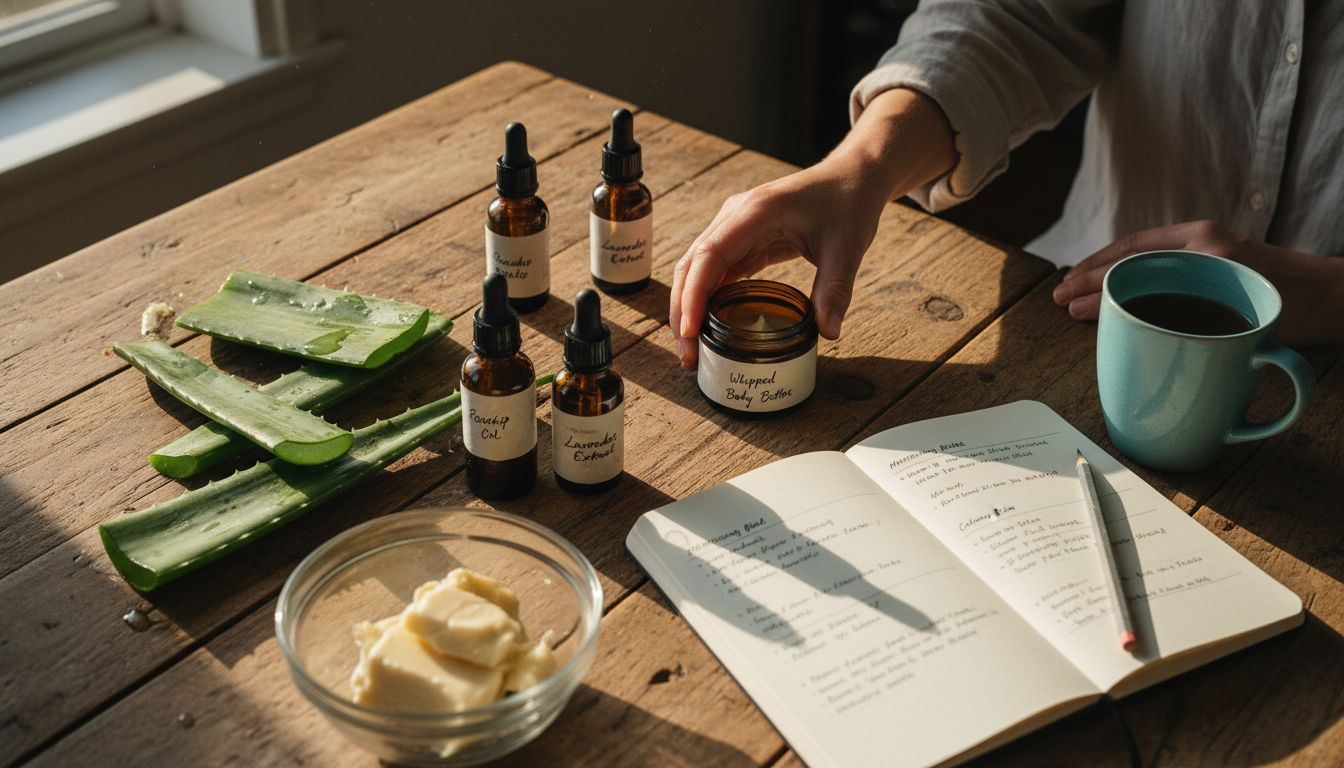
Understanding organic beauty requires recognising that skin absorption plays a critical role. What we apply topically doesn’t just sit on the surface - it penetrates deeply, potentially entering our bloodstream. This biological reality makes the purity of ingredients paramount.
Pro tip: Always check for third-party organic certifications when selecting beauty products to ensure genuine, rigorous standards of ingredient quality and environmental responsibility.
Key Standards And Certifications Globally
In the world of organic beauty, global certification standards play a crucial role in ensuring product integrity and consumer trust. COSMOS-standard represents the most comprehensive international framework for organic and natural beauty product certification, setting rigorous benchmarks for ingredient quality and sustainability.
The key global certification standards include:
- COSMOS Organic: Requires minimum 95% organic ingredients
- COSMOS Natural: Allows some synthetic ingredients for product performance
- Soil Association Certification: UK’s leading organic beauty standard
- BDIH (German Standard): Emphasises natural and ethical production
- ECOCERT: French certification focusing on environmental responsibility
These certifications differ significantly in their approach and requirements. Certification coalitions like COSMOS involve multiple international bodies, ensuring comprehensive and consistent evaluation of organic beauty products.
Here is an overview of recognised global organic beauty certifications and their primary focus:
| Certification | Country/Region | Key Focus Area |
|---|---|---|
| COSMOS Organic | International | Strict organic content and traceability |
| Soil Association | United Kingdom | High environmental and ethical standards |
| ECOCERT | France/Global | Environmental responsibility, transparency |
| BDIH | Germany | Natural raw material emphasis |
Moreover, these standards aren’t just bureaucratic checkboxes. They represent a deep commitment to transparency, environmental sustainability, and consumer health. By mandating strict guidelines on ingredient sourcing, production methods, and packaging, these certifications protect both consumers and the planet.
Pro tip: When shopping for organic beauty products, always look for multiple certification logos to guarantee the highest standards of quality and authenticity.
Organic Vs Natural And Regular Beauty
Understanding the nuanced differences between organic, natural, and regular beauty products requires careful examination. Beauty product classifications reveal significant distinctions that impact consumer health and environmental sustainability.
Key differences between these categories include:
-
Regular Beauty Products:
- Contain numerous synthetic chemicals
- Minimal ingredient transparency
- No mandatory organic certification
- Often use petrochemical derivatives
-
Natural Beauty Products:
- Approximately 95% naturally derived ingredients
- May include non-organic components
- Less stringent sourcing requirements
- Minimal processing of ingredients
-
Organic Beauty Products:
- Minimum 95% certified organic ingredients
- Strict farming and production standards
- Zero synthetic chemical contamination
- Comprehensive environmental and ethical guidelines
Product ingredient definitions demonstrate that terminology matters significantly. Regular beauty products frequently incorporate synthetic preservatives and artificial fragrances, whereas organic alternatives prioritise pure, sustainably sourced ingredients.
To further highlight the unique attributes of each beauty product category, see the summary below:
| Category | Ingredient Source | Processing Level | Environmental Impact |
|---|---|---|---|
| Regular Beauty | Mainly synthetic, petroleum | Highly processed | Often damaging, high pollution |
| Natural Beauty | Mostly natural or plant-based | Minimally processed | Moderate, varies by brand |
| Organic Beauty | Certified organic farming | Least processed possible | Actively sustainable, positive |
Consumers must remain vigilant, understanding that marketing terms like ‘natural’ lack legal definition. Trusted organic certifications provide the most reliable guarantee of product integrity and environmental responsibility.
Pro tip: Always scrutinise ingredient lists and certification logos to distinguish genuine organic products from misleading marketing claims.
Benefits For Your Skin And Environment
Organic beauty products offer transformative advantages that extend far beyond typical skincare routines. Organic skincare benefits demonstrate remarkable potential for both personal wellness and ecological sustainability.
Benefits for your skin include:
- Higher concentration of natural vitamins and antioxidants
- Reduced exposure to harmful synthetic chemicals
- Enhanced suitability for sensitive skin types
- Deeper, more natural nourishment
- Minimal risk of skin irritation
Environmental sustainability practices reveal profound ecological advantages. Organic beauty brands prioritise sustainable farming methods that actively protect biodiversity, reduce chemical pollution, and minimise carbon footprints through responsible manufacturing.
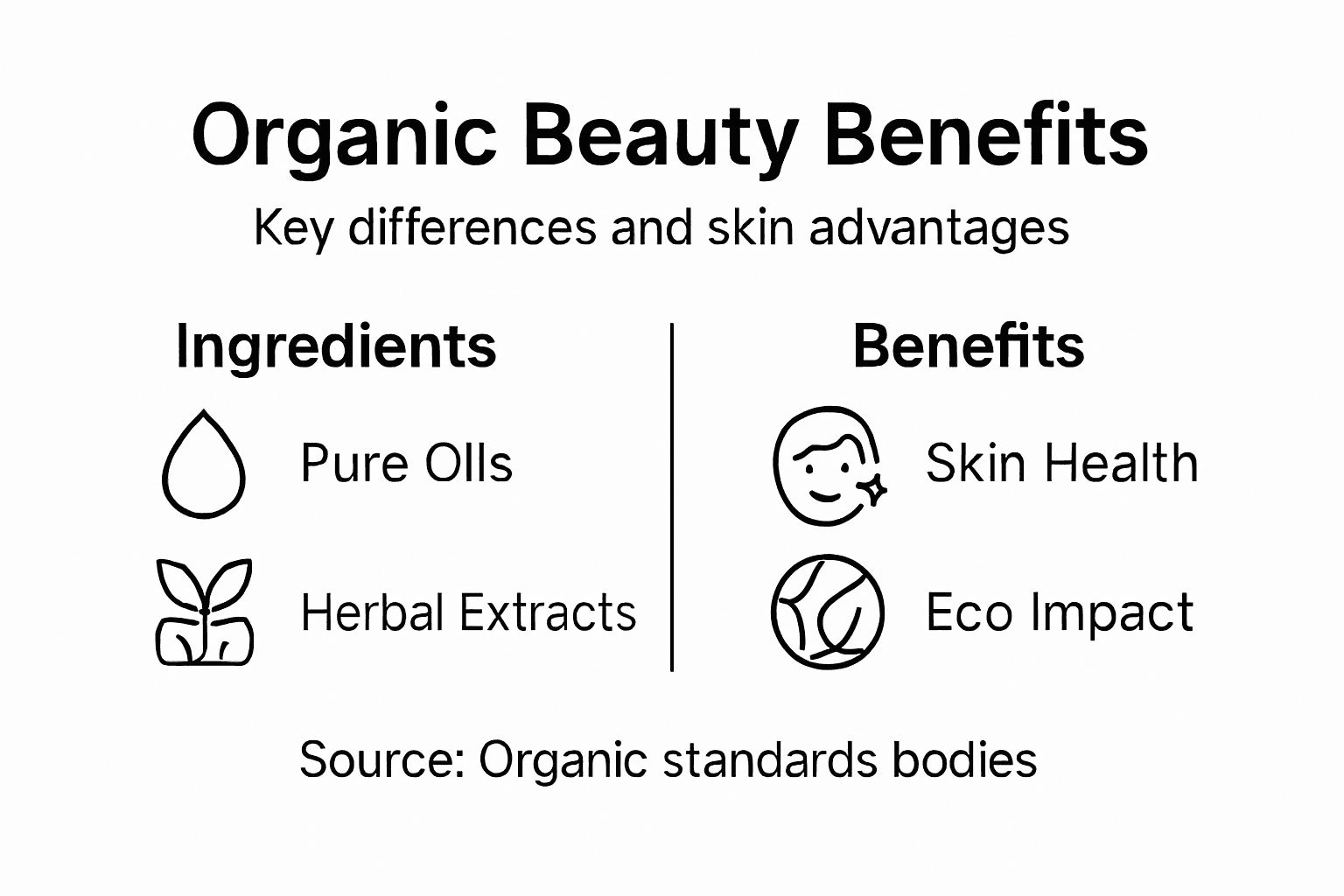
The holistic approach of organic beauty transcends individual skincare, creating a meaningful connection between personal health and global environmental preservation. By choosing organic products, consumers directly support agricultural practices that promote soil health, protect water systems, and support ecosystem balance.
Pro tip: Select organic skincare products with transparent sourcing and multiple certification logos to ensure maximum environmental and personal health benefits.
Risks, Misconceptions, And Shopping Tips
Navigating the organic beauty landscape requires critical understanding of potential consumer misconceptions and risks that can impede informed purchasing decisions. Consumer skepticism often stems from genuine concerns about product authenticity and performance.
Common misconceptions about organic beauty include:
- Organic products are always more expensive
- Natural ingredients are automatically safer
- Organic products are less effective than synthetic alternatives
- All ‘natural’ labels mean the same thing
- Certification processes are uniform across brands
Health risks associated with synthetic beauty products highlight the importance of careful product selection. These risks include potential exposure to endocrine disruptors, carcinogens, and allergens that can compromise long-term health.
When shopping for organic beauty products, consumers should prioritise transparency, seek multiple certifications, and carefully examine ingredient lists. Understanding the nuanced differences between marketing claims and genuine organic standards is crucial for making informed skincare choices.
Pro tip: Always cross-reference product certification logos and conduct independent research on brand transparency before making a purchase.
Discover Authentic Organic Beauty Solutions at Stomart.co.uk
Choosing truly organic beauty products means prioritising your skin’s health and supporting environmentally responsible practices. This article highlights the challenges of spotting genuine organic items amid confusing labels and misleading claims. You deserve beauty solutions that offer certified purity, minimal processing, and rigorous adherence to global standards like COSMOS Organic to safeguard your wellbeing and the planet.
At Stomart.co.uk, we understand your desire for transparency and quality. Explore our curated selection of organic personal care and beauty items designed to meet strict certification criteria and nurture your skin naturally. Take advantage of our seasonal deals and discover products that align with your values without compromise.
Ready to make a confident switch to authentic organic beauty? Visit Stomart.co.uk now and experience the difference that certified, genuinely natural ingredients can bring to your daily routine. Don’t miss out on our latest promotions – your skin and the environment will thank you.
Frequently Asked Questions
What defines organic beauty products?
Organic beauty products are characterised by their ingredients, which are cultivated without harmful synthetic chemicals and usually contain at least 95% certified organic components. They are produced following environmentally sustainable practices and are often cruelty-free.
How do organic beauty products differ from natural and regular beauty products?
Organic beauty products contain strictly regulated ingredients with a minimum of 95% organic content, whereas natural products may include some non-organic components and less stringent ingredient sourcing. Regular beauty products often contain numerous synthetic chemicals and lack mandatory organic certification.
What are the benefits of using organic beauty products?
Using organic beauty products can lead to healthier skin due to their higher concentrations of natural vitamins and antioxidants, reduced exposure to harmful chemicals, and suitability for sensitive skin. Additionally, these products support environmental sustainability through responsible farming practices.
How can I ensure that I am choosing genuine organic beauty products?
To ensure you’re selecting genuine organic products, look for third-party organic certifications like COSMOS Organic or ECOCERT on the packaging, and check the ingredient list for a high percentage of certified organic ingredients. Transparency about sourcing and production methods is also a good indicator of authenticity.