

Positive Reinforcement: How It Shapes Everyday Behaviour
on Dec 15, 2025
Most advice about positive reinforcement gets it wrong. While parents and educators across British communities rely on praise and rewards, only about 30 percent use truly effective strategies that promote lasting change. Understanding the real science behind positive reinforcement can help you steer clear of common myths and pitfalls. This article breaks down proven techniques and clears up misconceptions, so you can use positive reinforcement with greater confidence in every British setting.
Key Takeaways
| Point | Details |
|---|---|
| Understanding Positive Reinforcement | Positive reinforcement encourages desirable behaviours through meaningful rewards and recognition that enhance motivation and behavioural repetition. |
| Types of Reinforcement | Reinforcement strategies include primary (biological needs) and secondary (learned rewards), with variations like social, tangible, and activity-based reinforcers. |
| Implementation in Daily Life | Effective positive reinforcement in work and home environments boosts productivity and personal growth by linking specific actions to meaningful incentives. |
| Common Pitfalls | Overreliance on external rewards can diminish intrinsic motivation; hence, it is crucial to balance rewards with genuine acknowledgment of effort. |
Positive Reinforcement Defined and Debunked
Positive reinforcement is a psychological strategy fundamentally centred on encouraging desirable behaviours through strategic rewards and acknowledgement. Initially developed by pioneering psychologists, this approach transforms human interaction by creating motivational pathways that naturally inspire repeated positive actions.
Psychological research reveals that positive reinforcement operates through a sophisticated mechanism of psychological conditioning. When an individual receives praise, recognition, or tangible benefits immediately following a specific behaviour, their brain associates that action with a pleasurable outcome. This association increases the likelihood of repeating the behaviour in future scenarios. The concept, credited to psychologist B.F. Skinner, demonstrates how external rewards can systematically shape human and animal conduct across various contexts.
Contrary to popular misconceptions, positive reinforcement is not about constant praise or eliminating accountability. Instead, it represents a nuanced approach to behaviour modification that requires precision and genuine understanding. The rewards must be meaningful, proportional, and directly linked to the specific behaviour being encouraged. This means distinguishing between arbitrary compliments and strategic, targeted acknowledgement that truly motivates individuals to develop and maintain constructive habits.
Pro Tip: Effective Reinforcement Strategy: Focus on specific, immediate, and genuine feedback that clearly connects the desired behaviour with a meaningful reward, ensuring the recipient understands exactly what action is being recognised and appreciated.
Types of Positive Reinforcement Explained
Positive reinforcement is not a one-size-fits-all approach but a nuanced strategy with multiple distinct categories. Psychological research distinguishes between primary and secondary reinforcement techniques, each playing a unique role in shaping behavioural responses.
The first category comprises primary reinforcers, which are intrinsic biological rewards that do not require prior learning to be effective. These include fundamental necessities like food, water, warmth, and physical comfort. Such reinforcers are universally powerful because they directly connect with basic survival needs, triggering immediate neurological responses that motivate continued behaviour. Secondary reinforcers, by contrast, are learned stimuli that gain motivational power through repeated association with primary rewards. These might include verbal praise, monetary incentives, tokens, or social recognition.
Moreover, positive reinforcement can be further categorised by delivery method and context. Social reinforcers involve recognition, attention, and approval from others, which can be particularly effective in group settings. Tangible reinforcers include physical rewards like gifts, certificates, or privileges. Activity reinforcers allow individuals to engage in preferred activities as a reward for desired behaviour, making the incentive inherently enjoyable and personally meaningful.
Pro Tip: Personalised Reinforcement Strategy: Identify an individual’s unique motivational triggers by observing their responses to different types of rewards, then customise your reinforcement approach to match their specific preferences and psychological needs.
To clarify the distinctions within positive reinforcement, see this summary of reinforcement types and examples:
| Type of Reinforcer | Description | Common Examples |
|---|---|---|
| Primary | Innate, biological rewards | Food, water, physical comfort |
| Secondary | Learned through association | Verbal praise, tokens, money |
| Social | From others’ recognition | Approval, applause, attention |
| Tangible | Physical, material rewards | Certificates, gifts, privileges |
| Activity | Opportunity to engage in preferred activities | Extra playtime, choosing a game |
How Positive Reinforcement Works in Daily Life
Positive reinforcement seamlessly integrates into our everyday experiences, subtly shaping behaviours through strategic rewards and recognition. Daily interactions demonstrate how this psychological principle influences human conduct, transforming mundane moments into opportunities for personal growth and motivation.
Workplace environments provide compelling examples of positive reinforcement in action. When employees receive recognition for exceptional performance, such as a bonus, public acknowledgement, or additional responsibilities, they become more likely to maintain high productivity levels. Similarly, in educational settings, students who receive praise for academic achievements or collaborative efforts are motivated to continue demonstrating those constructive behaviours. The mechanism operates through a neurological reward system, where the brain associates the specific action with a pleasurable outcome, thereby increasing the probability of future repetition.

Beyond professional and academic contexts, positive reinforcement permeates personal relationships and individual development. Parents might offer extra screen time or a special outing as a reward for children completing chores or demonstrating responsible behaviour. Fitness enthusiasts often use self-reward strategies like treating themselves to a favourite meal after consistent workout routines. These approaches harness the fundamental psychological principle of connecting desirable actions with meaningful, personalised incentives that resonate with individual motivations.
Pro Tip: Behavioural Motivation Technique: Create a personalised reward system that aligns specific achievements with meaningful incentives, ensuring the rewards are proportionate, timely, and genuinely motivating to the individual’s unique preferences and goals.
Benefits for Personal Development and Home Environment
Positive reinforcement transforms the home environment into a powerful catalyst for personal growth, creating a nurturing ecosystem that encourages individual development and familial harmony. Research demonstrates how strategic acknowledgement can significantly impact behavioural patterns, turning everyday interactions into opportunities for meaningful psychological development.
Home environments that implement consistent positive reinforcement strategies cultivate a supportive atmosphere where individuals feel valued and motivated. This approach extends beyond simple reward mechanisms, creating a holistic framework for personal growth. Children learn responsibility through structured praise, adults develop enhanced self-discipline, and family members create mutual understanding by recognising and celebrating each other’s efforts. The psychological impact is profound - individuals become more intrinsically motivated, developing a growth mindset that transcends immediate rewards and builds long-term personal resilience.
The nuanced application of positive reinforcement in home settings requires deliberate and thoughtful implementation. By focusing on specific behaviours, providing timely and genuine recognition, and maintaining consistency, families can create an environment that naturally encourages personal development. This might involve acknowledging a teenager’s independent study efforts, praising a partner’s household contribution, or recognising a child’s emotional intelligence during conflict resolution. Such targeted approaches help individuals understand the value of their actions, building self-esteem and creating a cycle of continuous personal improvement.
Pro Tip: Relationship Building Strategy: Design a personalised recognition system that celebrates individual achievements, ensuring rewards are meaningful, specific, and proportionate to the effort demonstrated.
Common Pitfalls and How to Avoid Them
Positive reinforcement is a sophisticated psychological approach that requires nuanced understanding and strategic implementation. Inadvertent mistakes can undermine the entire behavioural modification process, transforming a potentially powerful tool into an ineffective or even counterproductive strategy.
One significant challenge involves maintaining the delicate balance between external rewards and intrinsic motivation. Overreliance on tangible rewards can create a transactional mindset where individuals perform actions solely for external recognition, ultimately diminishing their internal drive. This phenomenon occurs when rewards become an expectation rather than a genuine acknowledgement of effort. The key is to gradually transition from consistent external rewards to more nuanced social reinforcement, such as verbal praise, recognition, and emotional support that cultivate intrinsic motivation.
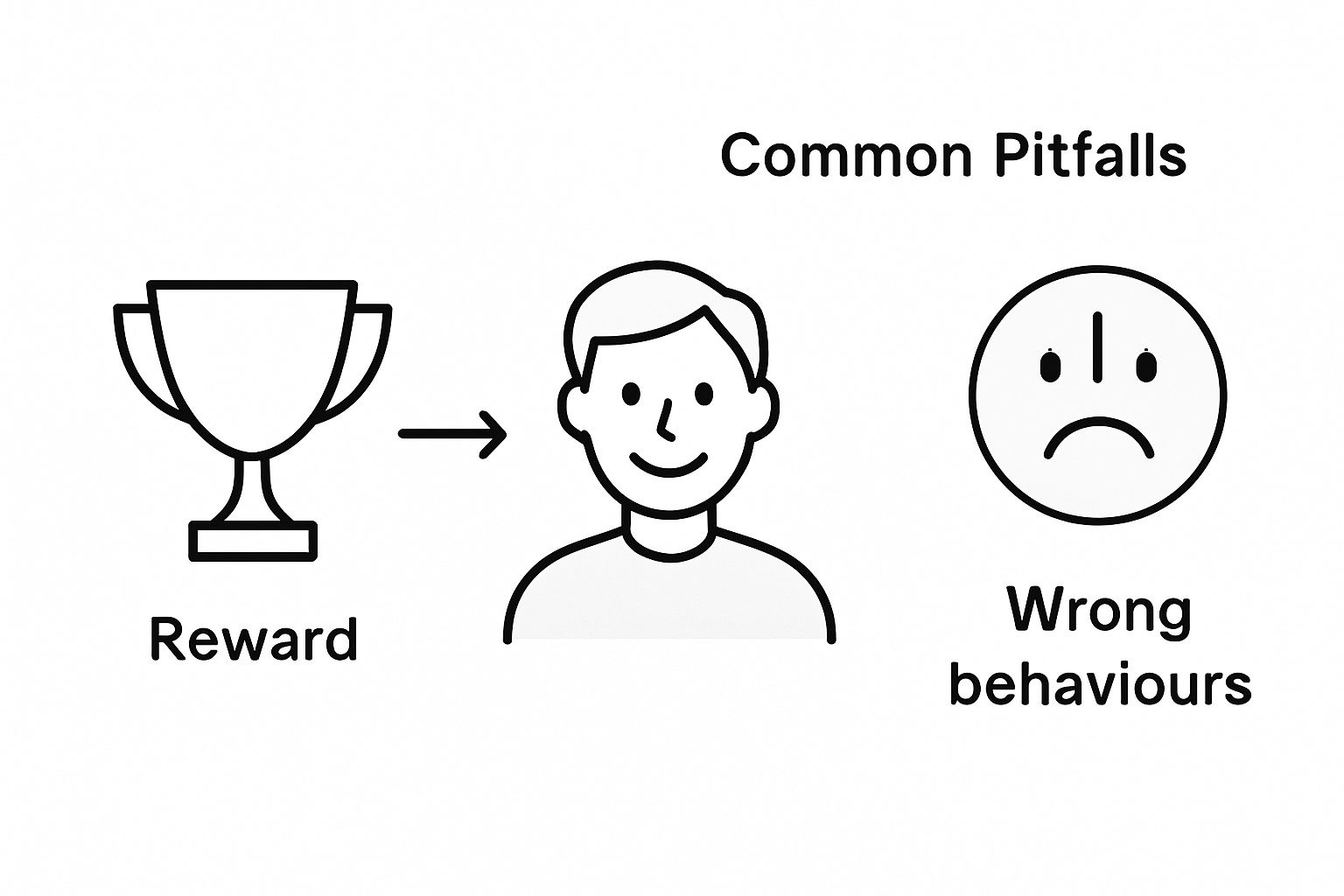
Another critical pitfall is the unintentional reinforcement of undesirable behaviours. Many individuals unknowingly provide attention or rewards that inadvertently validate negative actions. For instance, responding dramatically to a child’s tantrum might actually encourage more dramatic outbursts, as the child learns that such behaviour generates significant emotional engagement. Effective positive reinforcement demands strategic, calculated responses that consistently reward constructive behaviours while systematically reducing attention given to counterproductive actions. This requires emotional intelligence, patience, and a commitment to maintaining clear, consistent boundaries.
Pro Tip: Behaviour Modification Strategy: Develop a deliberate, graduated approach to reinforcement that progressively reduces tangible rewards while increasing meaningful social recognition, ensuring sustained motivation without creating reward dependency.
Here is a comparison of effective versus ineffective positive reinforcement approaches:
| Approach Type | Key Characteristics | Likely Outcome |
|---|---|---|
| Effective | Specific, timely, meaningful rewards | Strengthens lasting positive behaviour |
| Ineffective | Generic, delayed, mismatched rewards | Fosters confusion or reward dependence |
Unlock Positive Change at Home and Beyond with Strategic Rewards
Understanding how positive reinforcement shapes everyday behaviour highlights the need for meaningful, timely, and personalised rewards that truly motivate individuals. Whether you aim to encourage responsibility in children, boost productivity at work, or nurture personal growth, pairing thoughtful reinforcement with the right products can make all the difference. From wellness gadgets and home essentials to gifts that celebrate achievements, the right tools enhance your ability to create lasting positive habits.
Explore a diverse range of carefully selected items designed to support your goals for personal development and harmonious living. Act now to discover unique rewards that strengthen motivation and foster growth. Visit Stomart.co.uk today where convenience meets variety, and start transforming your environment with tangible incentives that inspire positive behaviour immediately.
Frequently Asked Questions
What is positive reinforcement?
Positive reinforcement is a psychological strategy that encourages desirable behaviours through rewards and recognition, leading to an increased likelihood of those behaviours being repeated.
How does positive reinforcement work in daily life?
Positive reinforcement integrates into everyday experiences by rewarding desired actions, such as recognising employees’ achievements at work or praising children’s efforts at home, thereby motivating individuals to repeat those behaviours.
What are the types of positive reinforcement?
Positive reinforcement can be categorised into primary reinforcers (biological rewards like food), secondary reinforcers (learned stimuli like praise), and can also include social, tangible, and activity reinforcers.
What are common pitfalls of using positive reinforcement?
Common pitfalls include over-relying on external rewards, which can diminish intrinsic motivation, and unintentionally reinforcing undesirable behaviours by inadvertently rewarding negative actions.