

Skin Barrier – How It Shapes Complexion Health
on Jan 23, 2026
Finding the right skincare routine feels impossible when your complexion changes overnight, leaving you with sudden dryness or sensitivity and no clear reason why. The secret often lies in the health of your skin barrier, a dynamic system that acts as both shield and hydration manager for your body. Understanding what makes the skin barrier so unique helps you make smarter choices and consistently achieve radiant, comfortable skin that glows with health.
Key Takeaways
| Point | Details |
|---|---|
| Understanding the Skin Barrier | The skin barrier consists of multiple layers that work together to protect against moisture loss and external threats. Supporting its health is essential for a radiant complexion. |
| Importance of Key Ingredients | Lipids such as ceramides, and niacinamide are crucial for maintaining barrier integrity and preventing moisture loss. Choose products that contain these ingredients for better skin health. |
| Identifying Barrier Damage | Common causes of barrier damage include harsh products, physical trauma, and environmental stressors. Identifying and addressing these factors can prevent further harm. |
| Best Practices for Care | Gentle cleansing, regular moisturising, and daily sunscreen use are foundational practices for maintaining a healthy skin barrier. Consistency over time leads to significant improvements. |
What the Skin Barrier Actually Is
Your skin is far more than just a surface layer that holds everything together. It’s a sophisticated, living organ that serves as your body’s first and most critical line of defence against the world. This barrier sits between your internal environment and everything external: pollution, pathogens, temperature fluctuations, and harsh chemicals. What makes the skin barrier particularly clever is its dual functionality. On one side, it actively prevents water loss from escaping your body, keeping you hydrated from within. On the other side, it blocks harmful invaders and environmental damage from penetrating inward. Think of it as a highly selective security system that knows exactly what should pass through and what should stay out.
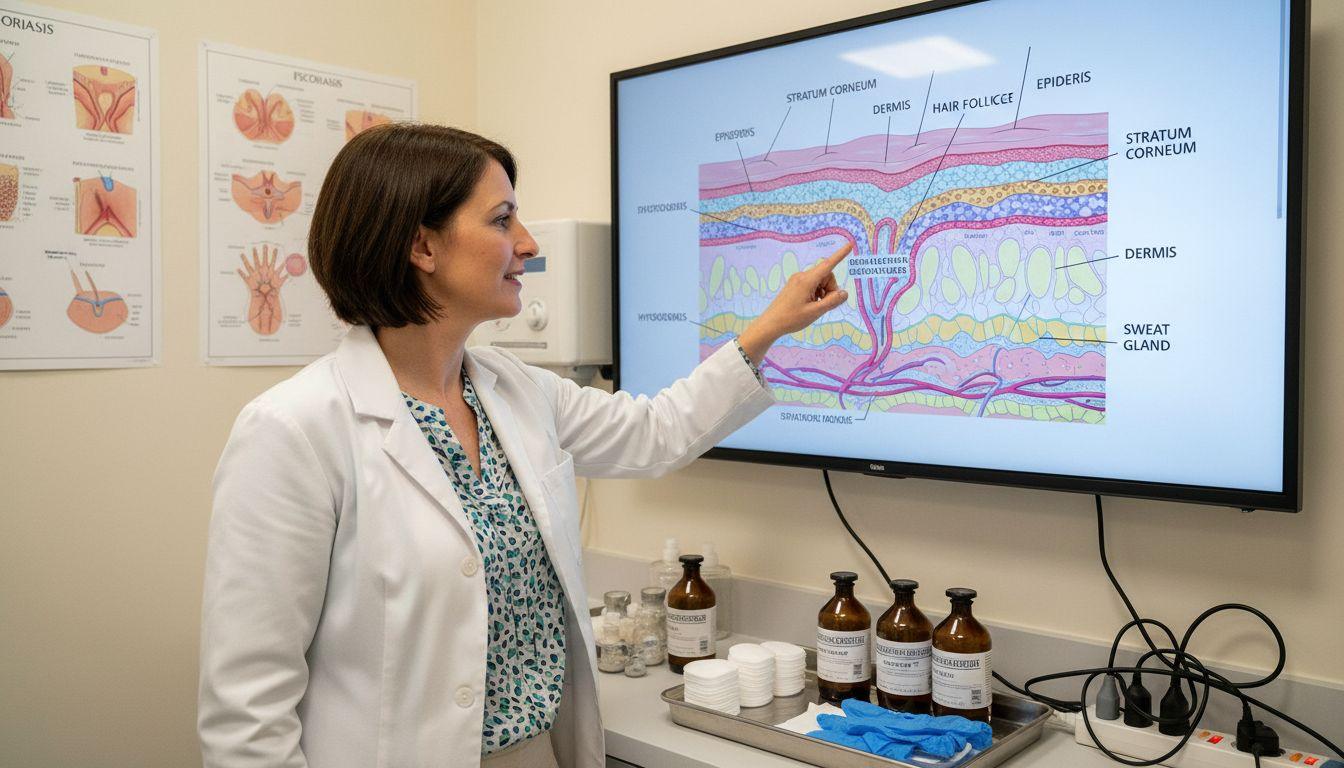
The star of this protective show is a layer called the stratum corneum, which is the outermost part of your epidermis. This layer might sound simple, but its architecture is genuinely fascinating. The stratum corneum’s brick-and-mortar structure consists of dead cells called corneocytes arranged like bricks, with lipids acting as the mortar binding them together. These lipids are crucial because they create a waterproof seal that controls which molecules can diffuse across your skin. When this lipid matrix is healthy and intact, your skin can maintain proper hydration levels and keep unwanted substances out. When it’s compromised, everything falls apart. Water escapes more easily, making skin feel tight and dehydrated, whilst pathogens and irritants find their way in more readily. The entire structure works together as a unified whole, and disrupting even one component cascades into noticeable changes in your complexion.
Beyond the stratum corneum, your skin barrier also includes support from various appendages and structures throughout the skin. Hair follicles, sebaceous glands, sweat glands, and even your nails contribute to barrier function in ways most people overlook. Sebaceous glands produce sebum, which creates a waterproofing layer on your skin’s surface. Sweat glands help regulate temperature whilst simultaneously contributing antimicrobial defence. These structures aren’t secondary players; they’re integral components of a complex immune system that blocks pathogens and maintains hydration/20%3A_Immune_System/20.1%3A_Innate_Immunity/20.1A%3A_Skin_and_Mucosae_(Surface_Barriers)). When you understand that your skin barrier involves far more than just one layer, you start seeing why a single irritating ingredient or overly aggressive treatment can affect your overall complexion health. It’s a system where everything interconnects.
What truly matters for your complexion is recognising that the skin barrier isn’t static. It changes constantly based on your environment, your skincare choices, your diet, your stress levels, and even the weather. Some days your barrier is thriving, and your skin looks radiant and smooth. Other days, when your barrier is compromised, the same skin might feel sensitive, look patchy, or experience increased transepidermal water loss (the scientific term for water escaping through the skin). Understanding this dynamic nature helps you approach skincare more intelligently. Rather than searching for quick fixes, you can focus on supporting and maintaining this remarkable protective system throughout your day.
Pro tip: Begin thinking of your skincare routine not as a way to “fix” your skin, but as a way to support and protect your skin barrier’s natural functions, and you’ll see more consistent improvements in your complexion health.
Structure and Functions of the Skin Barrier
Your skin barrier isn’t just one layer doing one job. It’s a three-part system, each layer with specific responsibilities that work together to keep your complexion healthy and your body protected. Think of it like a security building with multiple checkpoints, each one checking for different threats and managing different resources. Understanding how these layers function separately and together helps explain why your complexion changes when one part gets disrupted.
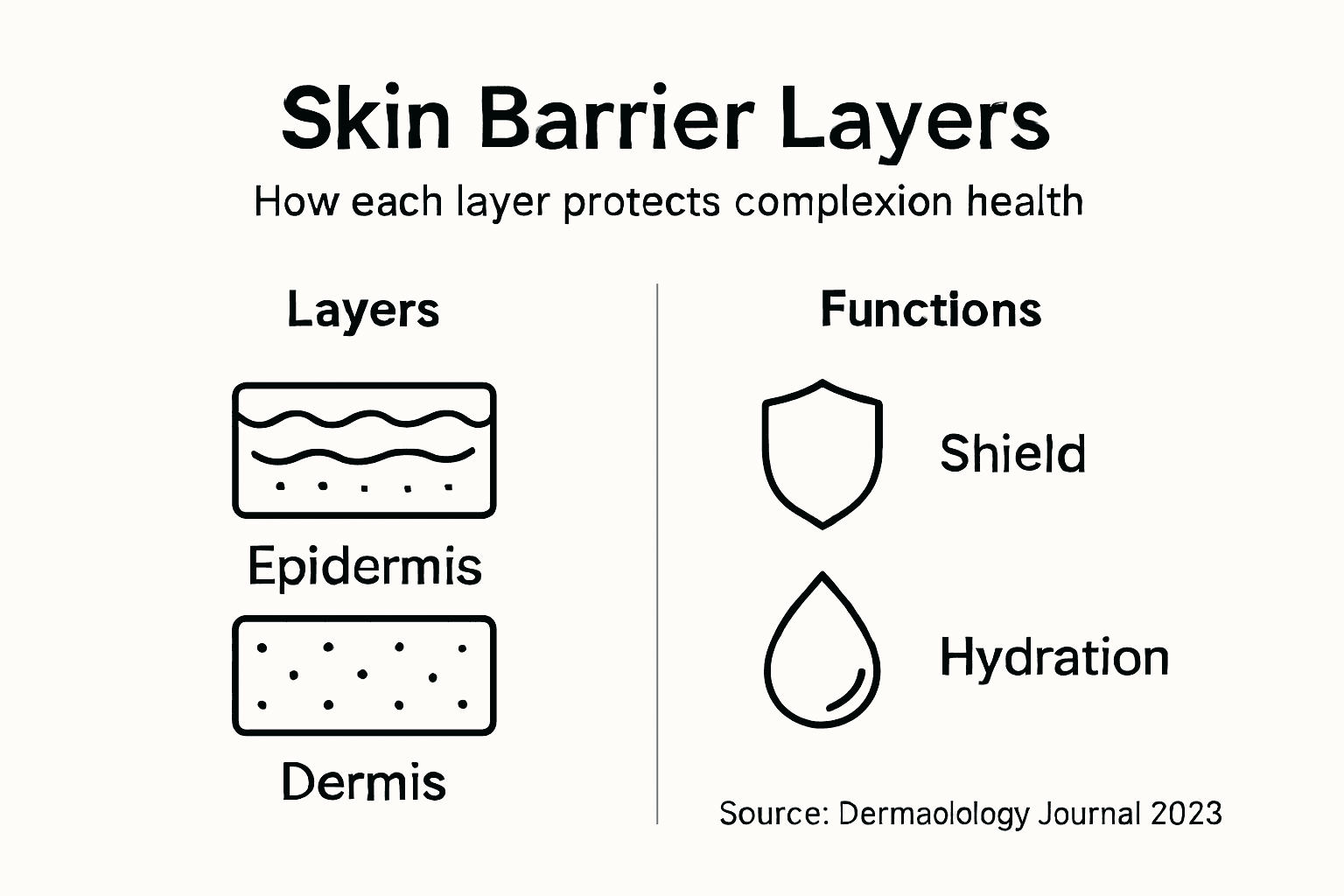
The outermost layer is the epidermis, and within it sits the stratum corneum we discussed earlier. This is your skin’s primary gatekeeper. The epidermis contains keratinocytes (living skin cells that eventually become corneocytes) and produces melanin, which protects you from ultraviolet damage. This layer prevents microbial invasion and controls water loss from your body. Underneath the epidermis lies the dermis, a much thicker layer that’s essentially your skin’s structural foundation. The dermis contains collagen and elastin fibres that give your skin its strength, firmness, and elasticity. This is where you’ll find hair follicles, sebaceous glands, sweat glands, plus an extensive network of nerves and blood vessels. These blood vessels deliver oxygen and nutrients that keep your skin cells thriving, whilst the nerves help you sense temperature and pressure. Without a healthy dermis, your skin loses its plump appearance and becomes prone to sagging and visible wrinkles. Finally, beneath the dermis sits the subcutis (also called the hypodermis), which is essentially a cushioning layer of fat. This layer insulates your body, absorbs mechanical shock, and helps maintain your core temperature. It also provides structural support and anchors your skin to the muscles and tissues below.
What makes this three-layer system so effective is the distinct functions each layer provides. The epidermis handles immediate protection and water regulation. The dermis supplies structural integrity and sensory capability. The subcutis cushions and insulates. But beyond these three main layers, your skin barrier also depends on several other functions working properly. Your skin maintains a pH balance that’s naturally slightly acidic, which actually helps prevent bacterial overgrowth and keeps your barrier functioning optimally. You also have electrolyte homeostasis occurring at the skin level, meaning your skin carefully regulates minerals and ions to maintain proper cellular function. Additionally, your skin appendages contribute continuously to barrier health. The sebum produced by sebaceous glands creates a waterproofing layer on your skin’s surface, sweat glands contribute both cooling and antimicrobial defence, and even the acid mantle (a protective layer on your skin’s surface made from sebum, sweat, and dead skin cells) plays a role in maintaining your skin’s protective environment.
To help clarify the unique contributions of each skin layer, here’s a summary table:
| Skin Layer | Main Components | Primary Function | Impact on Skin Health |
|---|---|---|---|
| Epidermis | Keratinocytes, melanin | Blocks microbes, UV protection | Regulates moisture, visible tone |
| Dermis | Collagen, elastin, blood vessels | Structural support, sensation | Maintains firmness, elasticity |
| Subcutis | Fat cells, connective tissue | Insulation, shock absorption | Prevents sagging, temperature hold |
When you look at your complexion in the mirror, what you’re seeing is the result of all these layers and functions working in concert. A radiant, clear complexion indicates that your barrier is intact, hydrated, and functioning well. A dull, sensitive, or reactive complexion often signals that one or more components of your barrier isn’t working optimally. Maybe your dermis is dehydrated and your collagen is stressed. Maybe your epidermis is damaged from sun exposure or harsh products. Maybe your natural pH has been disrupted. Understanding this layered structure helps you stop treating symptoms and start supporting the actual cause. When you moisturise, you’re ideally helping your stratum corneum retain water. When you use sun protection, you’re preventing UV damage to your epidermis and dermis. When you manage stress and sleep well, you’re supporting the circulation and cellular renewal that happens in the dermal layer.
Pro tip: Focus on nourishing all three layers by using a balanced routine: protect with sunscreen, hydrate with moisture-binding ingredients, and support skin health through adequate sleep and antioxidant-rich nutrition, rather than chasing surface-level fixes.
Key Ingredients Supporting Barrier Health
Not all skincare ingredients are created equal when it comes to supporting your skin barrier. Some ingredients actively repair and strengthen your barrier, whilst others can inadvertently damage it if used incorrectly. The difference between a complexion that thrives and one that constantly struggles often comes down to whether you’re using ingredients that genuinely support barrier function. Your barrier doesn’t need miracle workers or exotic extracts. It needs specific, science-backed ingredients that address the actual building blocks of a healthy protective layer.
The foundation of barrier health starts with lipids, which are absolutely fundamental to how your barrier functions. Your stratum corneum relies on three main types of lipids to maintain its integrity: ceramides, cholesterol, and fatty acids. These lipids form the mortar between your corneocytes, creating a waterproof seal that prevents transepidermal water loss and blocks external irritants from penetrating inward. When your barrier is depleted of lipids, no amount of hydrating serums will fix the underlying problem because water will simply continue escaping. This is why lipid-rich ingredients like ceramides should be a cornerstone of your routine. Beyond lipids, vitamin D supports both your skin health and immune function, helping your barrier maintain its protective capabilities. Your skin also benefits from niacinamide, which reduces inflammation and actively strengthens barrier function by increasing ceramide production. Unlike some skincare ingredients that feel good in the moment but don’t provide lasting benefit, niacinamide works at a cellular level to reinforce your barrier’s structure.
For external protection and supporting barrier recovery, dermatologists recommend mineral sunscreens containing zinc oxide or titanium dioxide to shield your skin from ultraviolet damage that breaks down collagen and elastin. You’ll also find that retinoids (vitamin A derivatives) improve texture, reduce the appearance of wrinkles, and support overall skin health by promoting cellular turnover, though they should be introduced gradually to avoid overwhelming a sensitive barrier. Hyaluronic acid draws moisture into your skin and helps your stratum corneum retain hydration, making it particularly valuable if your barrier is compromised and your skin feels tight or dehydrated. Peptides work differently by signalling your body to produce more collagen, which strengthens the dermal layer beneath your barrier and improves skin firmness. Additionally, supporting products for addressing specific concerns like breakout management can help maintain barrier health by preventing inflammation and irritation that weakens protective function.
What matters most is understanding that barrier health isn’t about using the fanciest or most expensive ingredients. It’s about using the right combination of ingredients that actually support your barrier’s structure and function. Your skin doesn’t need ten different serums. It needs ceramides to rebuild its lipid matrix, niacinamide to strengthen its cells, sunscreen to prevent damage, adequate moisture to keep it hydrated, and perhaps one or two additional targeted ingredients depending on your specific concerns. When you look at product labels, search for these proven barrier supporters rather than chasing trendy ingredients that make impressive marketing claims but don’t address barrier health directly. Your complexion will respond much more dramatically to a simplified routine with the right lipid-supporting and moisture-binding ingredients than to a complicated routine with random products.
For quick comparison, see how key barrier-supporting ingredients differ by their main actions:
| Ingredient | Core Benefit | How It Supports Barrier |
|---|---|---|
| Ceramides | Rebuilds lipid matrix | Prevents water loss, seals gap |
| Niacinamide | Strengthens and soothes | Boosts ceramides, soothes skin |
| Hyaluronic Acid | Attracts and retains moisture | Hydrates, supports flexibility |
| Mineral Sunscreen | Shields from UV damage | Prevents collagen breakdown |
| Peptides | Stimulates collagen production | Improves structure, firmness |
Pro tip: Start by introducing one lipid-rich product and one barrier-strengthening ingredient like niacinamide, then wait 2–3 weeks to see how your barrier responds before adding anything else, giving your skin time to adjust and rebuild.
Common Causes of Skin Barrier Damage
Your skin barrier is resilient, but it’s not invincible. Countless daily habits and environmental factors can quietly chip away at its integrity, often without you realising what’s causing the problem. The tricky part is that barrier damage doesn’t always announce itself loudly. You might notice dryness, redness, or unexpected sensitivity and assume you’ve developed a new skin condition, when really your barrier is simply struggling from cumulative stress. Understanding what actually damages your barrier helps you stop the damage before it starts, rather than frantically trying to repair it afterwards.
Barrier damage comes from three main categories: chemical assault, physical trauma, and underlying skin conditions. Chemical damage happens when you expose your skin to harsh detergents in cleansers, irritating products, or excessive sanitisers. Over-washing your face, particularly with hot water, strips away your skin’s natural protective oils and disrupts your pH balance. Many people unknowingly damage their barriers by using products that feel cleansing or refreshing in the moment but are actually too harsh for daily use. Alcohol-based toners, over-the-counter acne treatments with high concentrations of active ingredients, and even some “natural” products can trigger significant barrier damage. Physical damage occurs through mechanical insults like excessive scratching, sunburn, and friction from tight masks or rough fabrics. If you’re prone to picking at your skin or live somewhere with extreme weather, you’re regularly exposing your barrier to physical stress. Sunburn in particular causes severe barrier disruption because ultraviolet radiation damages the lipid matrix and denatures the proteins holding your stratum corneum together. Even vigorous rubbing with towels or aggressive exfoliation can compromise barrier integrity over time.
Beyond these external factors, certain underlying skin conditions actively damage your barrier from within. Eczema, rosacea, and psoriasis all involve impaired barrier function as a core component of the condition itself. If you have any of these, your barrier is fighting an uphill battle because the condition predisposes you to ongoing barrier compromise. Additionally, common signs of barrier damage include dryness, redness, itchiness, and increased sensitivity to products you’ve previously tolerated. Your skin might sting when you apply moisturiser, feel uncomfortably tight even after hydrating, or react dramatically to ingredients that never bothered you before. Some people experience this after a single aggressive treatment, whilst others accumulate barrier damage slowly through months of using the wrong products. Environmental factors compound everything else. Sun exposure breaks down collagen and elastin whilst damaging your lipid matrix. Wind, cold, and low humidity pull moisture from your skin. Hot showers feel wonderful but accelerate water loss through your barrier. If you live in a particularly dry climate or travel frequently, your barrier faces constant environmental challenges.
What’s crucial to recognise is that barrier damage is cumulative and interactive. Using one slightly harsh product once probably won’t devastate your barrier. But using a harsh cleanser, then an irritating acne treatment, then skipping moisturiser, then getting sunburned, then over-exfoliating creates a perfect storm of barrier compromise. Your skin starts losing its ability to hold moisture and fight off irritants. What happens next is that you notice your skin feels off, so you try a new product hoping it will help, but that new product is often even harsher because you’re desperate for results. This cycle perpetuates barrier damage rather than healing it. The key is identifying which factors are currently stressing your barrier and eliminating them first, rather than adding more products to fix symptoms.
Pro tip: If you suspect barrier damage, strip your routine down to just a gentle cleanser, barrier-supporting moisturiser, and sunscreen for one to two weeks before reintroducing any active ingredients, allowing your barrier time to repair itself.
Best Practices for Strengthening Your Barrier
Strengthening your skin barrier isn’t about investing in expensive treatments or overhauling your entire routine overnight. It’s about making deliberate, consistent choices that support your barrier’s natural repair mechanisms. Think of barrier strengthening like building muscle. You don’t get results from one intense workout. You get results from showing up consistently, doing the right movements, and giving your body adequate recovery time. Your skin barrier works the same way. Small, sustainable changes compounded over weeks transform your complexion far more effectively than dramatic interventions that stress your skin further.
Start with the foundation: gentle cleansing. This single change makes an enormous difference for most people. Your cleanser should remove dirt, oil, and makeup without stripping your skin’s natural protective oils. Fragrance-free, mild cleansers are your safest option because they’re formulated to respect your barrier rather than assault it. Use lukewarm water, not hot, because heat opens your pores and accelerates transepidermal water loss. Cleanse twice daily if you wear makeup or sunscreen, but once daily is perfectly adequate if you’re not wearing products that need removing. After cleansing comes regular moisturising, and this is where barrier-repairing ingredients become crucial. Look for products containing ceramides and fatty acids, which directly replenish your lipid matrix. Apply moisturiser to damp skin immediately after cleansing to lock in hydration. This simple step prevents water loss and gives your barrier the building blocks it needs to repair itself. You’ll notice improvement within days if your barrier is severely compromised, and within two to three weeks if damage is mild.
Next, incorporate broad-spectrum sunscreen with SPF 30 or higher into your daily routine without exception. Sunscreen protects your existing barrier from ultraviolet damage that would otherwise accelerate barrier breakdown. This is non-negotiable if you want lasting barrier health. Beyond these three fundamentals, avoid over-exfoliation and harsh treatments. Many people damage their barriers by exfoliating too frequently or using products like strong chemical peels when their barrier is already compromised. You don’t need to exfoliate more than once weekly, and if your skin is sensitive, monthly or even less frequent exfoliation might be appropriate. Managing inflammation with appropriate therapies and maintaining consistent hydration throughout the day supports your barrier’s ability to function optimally. Limit hot showers, which feel luxurious but accelerate water loss through your skin. Manage stress through whatever methods work for you, since stress hormones trigger inflammation that weakens barrier function. Avoid smoking, which accelerates skin ageing and impairs barrier repair.
Tailoring your routine to your specific skin type matters too. Someone with oily skin might need a lighter moisturiser than someone with dry skin, but everyone benefits from barrier-supporting ingredients. If you have an underlying condition like eczema or rosacea, work with a dermatologist to develop a routine that supports your barrier whilst managing your condition. Be patient with the process. Your barrier doesn’t rebuild in days. You’re looking at two to four weeks of consistent, gentle care before you see dramatic improvements in dryness, sensitivity, or redness. During this time, resist the urge to introduce new products or active ingredients. Your barrier needs stability and predictability to heal properly. Once you’ve established this foundation and your skin feels stronger, you can gradually reintroduce other products if you choose, but by then you’ll likely find your skin needs far less intervention than before.
Pro tip: Create a barrier care checklist (gentle cleanser, moisturiser with ceramides, sunscreen SPF 30 plus) and use only these products for two weeks, tracking how your skin responds, before adding anything else back into your routine.
Strengthen Your Skin Barrier with Thoughtful Care and Trusted Products
If you have noticed dryness, sensitivity or irritation it might mean your skin barrier is compromised. As highlighted, your skin’s protective layer depends on delicate lipids like ceramides and consistent hydration to prevent water loss and damage from environmental stressors. Avoiding harsh cleansers and supporting your barrier with the right ingredients such as niacinamide and mineral-based sunscreens can transform your complexion health. This article explains why your skin barrier is a complex dynamic system that needs gentle, consistent protection rather than quick fixes.
Explore carefully selected skin-friendly products at Stomart that nourish your skin barrier without overwhelming it. Whether you want effective moisturisers rich in lipids, gentle cleansers, or reliable sun protection, our range supports your goal of maintaining a resilient complexion. Visit Stomart.co.uk today and start rebuilding your skin’s natural strength with ingredients your skin truly needs. Make this the moment you invest in barrier health for lasting radiance and comfort.
Frequently Asked Questions
What is the skin barrier and why is it important?
The skin barrier is the outer layer of skin that acts as a protective shield, preventing water loss and blocking harmful substances from entering the body. It is crucial for maintaining skin hydration and overall complexion health.
How can I strengthen my skin barrier?
You can strengthen your skin barrier by using gentle cleansers, moisturising with lipid-rich products (like ceramides), applying broad-spectrum sunscreen daily, and avoiding harsh treatments or over-exfoliation. Consistent care is vital for barrier repair.
What ingredients should I look for to support my skin barrier?
Key ingredients that support skin barrier health include ceramides, niacinamide, hyaluronic acid, mineral sunscreens (zinc oxide or titanium dioxide), and peptides. These ingredients help rebuild the lipid matrix, retain moisture, and protect against environmental damage.
What are common causes of skin barrier damage?
Common causes of skin barrier damage include chemical irritation from harsh cleansers or treatments, physical trauma from sunburn or excessive friction, and underlying skin conditions like eczema, rosacea, or psoriasis. Identifying and addressing these factors is essential for recovery.