

What Is Fast Fashion – Impact on Eco-Conscious Shoppers
on Dec 31, 2025
The fashion world shifts faster than ever, with 85 percent of discarded clothing ending up in landfills every year. Eco-conscious shoppers are increasingly questioning the impact of fast fashion, especially as british and European brands drive trends across global markets. Exploring what fast fashion really means and debunking its common myths helps you understand both the environmental footprint and the social costs behind the clothes you buy. This guide reveals the realities and empowers you to make choices that matter.
Key Takeaways
| Point | Details |
|---|---|
| Fast Fashion’s Characteristics | Fast fashion focuses on rapid production and trend adaptation, leading to constant clothing turnover and low prices. This model significantly contributes to environmental damage and labour exploitation. |
| Environmental and Social Impact | The fast fashion industry has substantial ecological footprints, including high water usage and carbon emissions, as well as pervasive labour issues like unsafe working conditions. |
| Consumer Empowerment | Shoppers can make informed decisions by seeking sustainable brands, exploring second-hand options, and supporting ethical manufacturing practices. |
| Sustainable Alternatives | Sustainable fashion prioritises quality, longevity, and environmental consideration, contrasting with fast fashion’s short-lived products and production cycles. |
Defining Fast Fashion and Common Myths
Fast fashion represents a global manufacturing and consumption model designed to rapidly translate runway trends into affordable clothing for mass markets. This business approach prioritises speed, low production costs, and quick consumer turnover, creating a system where clothing styles change dramatically every few weeks. Understanding the environmental consequences of fast fashion practices requires examining its complex global supply chain.
The core characteristics of fast fashion include extremely short production cycles, extremely low manufacturing prices, and a constant stream of new design releases targeting trend-sensitive consumers. Manufacturers produce garments quickly by leveraging cheap labour in developing countries, using inexpensive synthetic materials, and implementing streamlined production techniques that minimise design and production time. These strategies allow brands to introduce new clothing lines weekly, encouraging consumers to continuously purchase updated styles.
Common myths surrounding fast fashion often mask its profound environmental and social impacts. Many consumers believe cheap clothing represents a harmless consumer choice, unaware that the industry generates significant ecological damage. Textile production contributes substantially to global carbon emissions, water pollution, and waste generation. The rapid consumption cycle means millions of garments are discarded annually, with approximately 85% ending up in landfills or being incinerated.
Savvy Shopping Tip: Research clothing brands that prioritise sustainable manufacturing practices and invest in higher-quality, longer-lasting garments to reduce your personal fashion environmental footprint.
How Fast Fashion Brands Operate Globally
Fast fashion brands leverage complex global supply chains to produce clothing at unprecedented speeds and minimal costs. Global supply chain dynamics reveal intricate production networks that span multiple continents, enabling companies to rapidly transform design concepts into affordable retail products. Major brands like Zara, H&M, and Mango have perfected a business model that prioritises speed, cost-efficiency, and continuous trend adaptation.
The operational strategy typically involves sourcing raw materials and manufacturing in countries with lower labour costs and less stringent environmental regulations. Developing nations in Southeast Asia, such as Bangladesh, Vietnam, and Cambodia, serve as primary manufacturing hubs. These regions offer significant cost advantages through lower wage structures, minimal worker protections, and reduced environmental compliance requirements. Brands strategically distribute production across multiple countries to mitigate risks, manage costs, and maintain flexibility in their global manufacturing networks.
These global operations are characterised by extremely short production cycles and a constant stream of new designs. Systematic analysis of global supply chains demonstrates the interconnected nature of production and consumption across different economic regions. Brands utilise advanced technologies and data analytics to predict trends, design products rapidly, and move them from concept to retail shelves within weeks. This approach allows them to respond quickly to changing consumer preferences while maintaining low inventory risks and maximising profit margins.
Savvy Consumer Tip: Research brands that provide transparent information about their supply chain and manufacturing practices to make more informed and ethical purchasing decisions.
Key Factors Driving Fast Fashion Trends
Rapid manufacturing cycles and consumer demand fundamentally shape modern fast fashion trends, creating a dynamic marketplace that responds instantaneously to emerging style preferences. The fashion industry has evolved to prioritise speed, affordability, and constant product renewal, driven by technological advancements and shifting consumer expectations. Brands like Zara and H&M have mastered the art of transforming design concepts into retail products within weeks, capitalising on consumers’ desire for trendy, low-cost clothing.
Social media platforms and digital technology have dramatically accelerated trend lifecycles, enabling instant trend transmission across global markets. Technological innovations in supply chain management have revolutionised how fashion brands predict and respond to consumer preferences, creating a hyper-responsive ecosystem. Influencers, celebrity endorsements, and online trend forecasting now play crucial roles in determining which styles gain immediate popularity, allowing brands to quickly prototype and launch new designs that align with current aesthetic movements.
The economics of fast fashion rely on several interconnected factors: ultra-low production costs, rapid design iterations, and a continuous stream of affordable clothing that appeals to budget-conscious consumers. These brands leverage global manufacturing networks, particularly in developing countries with lower labour expenses, to maintain competitive pricing. By reducing design-to-retail timelines and minimising inventory risks, companies can offer trendy clothing at unprecedented speed and affordability, effectively transforming fashion consumption patterns worldwide.
Savvy Shopping Tip: Develop a critical eye towards trend cycles and focus on building a versatile wardrobe with timeless pieces that transcend temporary fashion movements.
Environmental and Social Impact Explained
The devastating environmental and social consequences of fast fashion demand urgent global attention, revealing a complex web of ecological destruction and human rights challenges. The fashion industry generates massive environmental footprints through excessive water consumption, substantial carbon emissions, and the proliferation of synthetic textile waste. A single cotton t-shirt, for instance, requires approximately 2,700 litres of water to produce, while polyester garments contribute significantly to microplastic pollution in marine ecosystems.
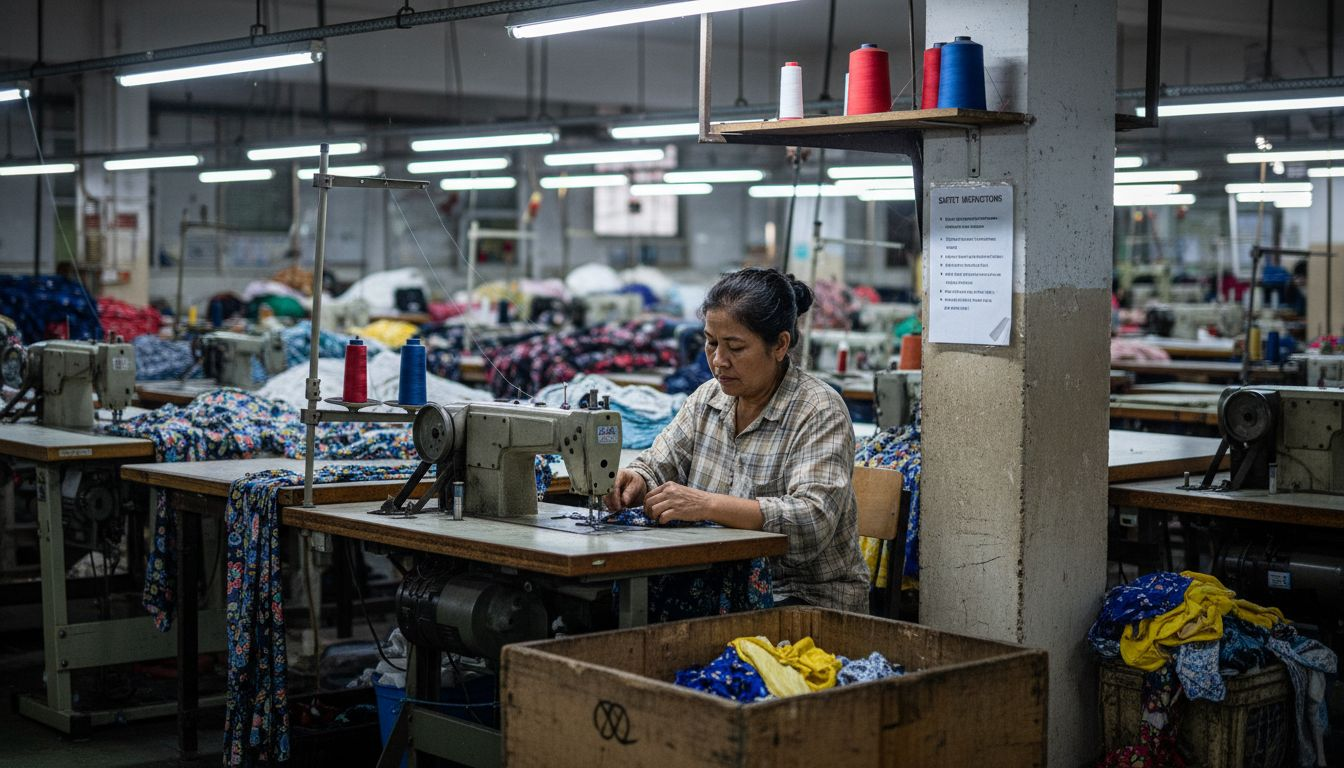
Social impacts are equally profound, with global supply chains perpetuating systemic labour exploitation. Garment workers in developing countries frequently endure hazardous working conditions, receive minimal wages, and face potential child labour risks. Textile manufacturing regions in countries like Bangladesh and Cambodia consistently report unsafe workplace environments, where workers are exposed to toxic chemicals, experience long working hours, and receive compensation far below living wage standards. These practices fundamentally undermine human dignity and workers’ fundamental rights.
The environmental toll extends beyond immediate production processes, encompassing entire lifecycle emissions and waste generation. Approximately 85% of textiles end up in landfills or are incinerated annually, creating substantial greenhouse gas emissions and contributing to long-term ecological degradation. Synthetic fabrics like polyester, derived from fossil fuels, take hundreds of years to decompose, further exacerbating environmental challenges. The industry’s linear consumption model prioritises rapid production and disposal over sustainable, circular economic principles, creating a systemic challenge that requires comprehensive reimagining of fashion production and consumption.
Here’s a summary of the major environmental and social impacts of fast fashion:
| Impact Type | Description | Real-World Consequence | Example |
|---|---|---|---|
| Water Usage | Large volumes consumed in textiles | Strains local water resources | 2,700 litres per cotton t-shirt |
| Carbon Emissions | Energy-intensive production | Increases climate change risks | Synthetic fibres production |
| Waste Generation | Rapid disposal of garments | Landfills overflow, pollution rises | 85% of clothing ends in landfill |
| Labour Conditions | Unsafe, underpaid employment | Systemic exploitation and poverty | Minimal wages in Bangladesh factories |
Savvy Consumer Tip: Prioritise purchasing clothing from brands demonstrating transparent supply chain practices, sustainable manufacturing processes, and genuine commitment to worker welfare and environmental stewardship.
Sustainable Alternatives and Ethical Shopping Choices
Consumer-driven sustainability is transforming the fashion industry’s approach to ethical production, creating innovative pathways for conscious shoppers seeking meaningful alternatives to fast fashion. Sustainable fashion brands are increasingly adopting circular economy principles, focusing on reducing waste, utilising recycled materials, and creating clothing designed for longevity rather than rapid consumption. These approaches challenge traditional fast fashion models by prioritising quality, environmental stewardship, and transparent manufacturing processes.
Ethical shopping choices encompass multiple strategic approaches beyond simply purchasing sustainable garments. Conscious consumers can explore several impactful strategies, including buying second-hand clothing, supporting local and small-scale designers, investing in versatile and timeless pieces, and selecting brands with verifiable fair labour practices. Vintage shops, clothing rental platforms, and curated sustainable fashion marketplaces offer increasingly sophisticated alternatives that allow individuals to express personal style while minimising environmental impact.
The emerging sustainable fashion ecosystem includes innovative materials like organic cotton, recycled polyester, hemp, and regenerated textiles that significantly reduce environmental footprints. Brands are developing advanced manufacturing techniques that minimise water consumption, eliminate toxic chemicals, and create closed-loop production systems. Consumer education plays a crucial role in this transformation, empowering shoppers to make informed decisions that align with their values and contribute to systemic industry change.
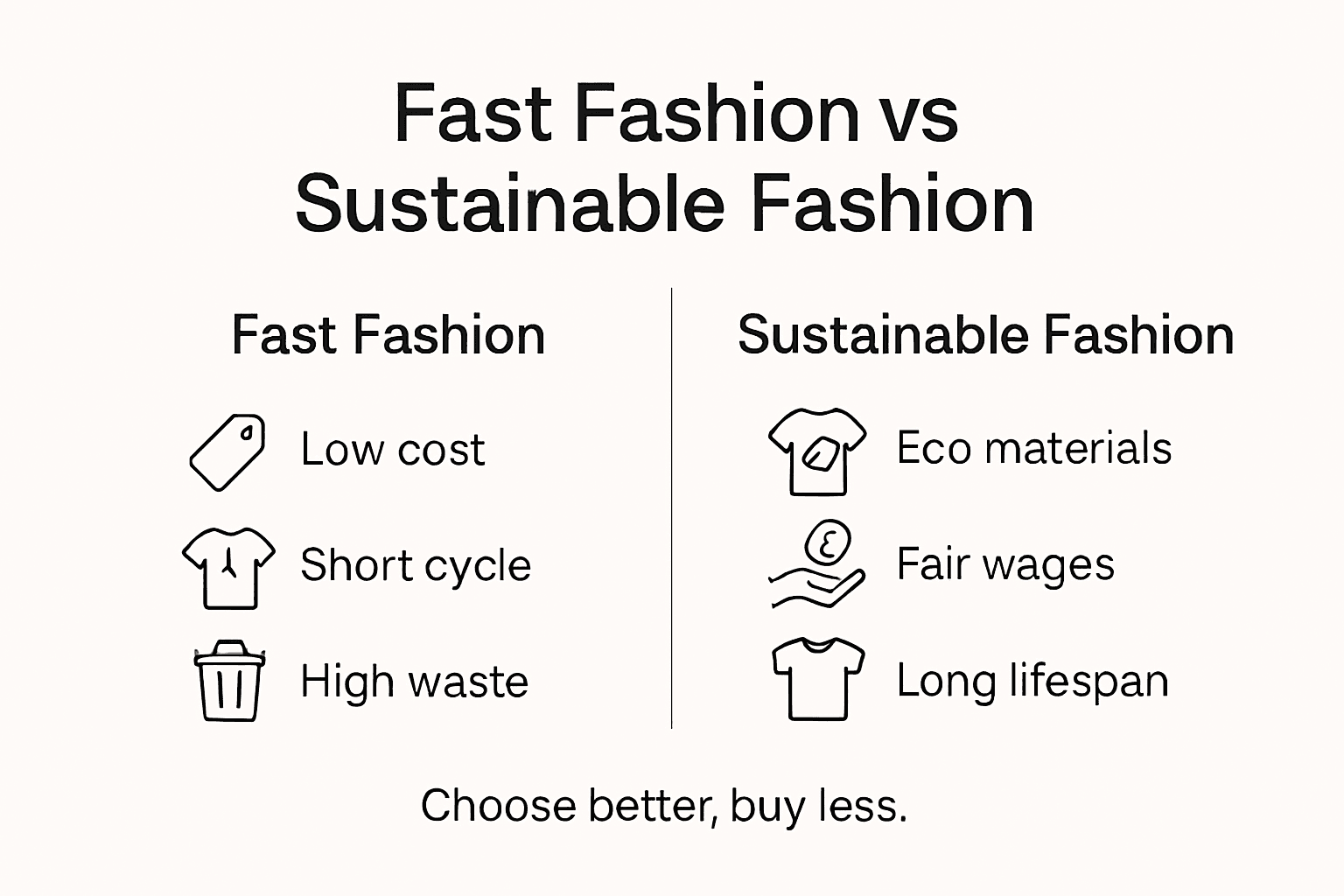
The table below compares fast fashion and sustainable fashion across key dimensions:
| Dimension | Fast Fashion | Sustainable Fashion |
|---|---|---|
| Production Speed | Weeks from concept to retail | Months, with focus on quality |
| Material Choice | Mostly synthetic, fossil-based | Organic, recycled, minimal chemicals |
| Lifespan of Garment | Short, often single-season | Designed for years of use |
| Supply Chain Transparency | Limited disclosure | High focus, open reporting |
Savvy Shopping Tip: Research brands’ sustainability certifications, investigate their supply chain transparency, and prioritise quality over quantity when building your wardrobe.
Embrace Smarter Shopping and Reduce Your Fast Fashion Impact
Understanding the heavy environmental and social toll of fast fashion can feel overwhelming. The rapid cycles of trendy, low-cost clothing often come at the price of water overuse, waste, carbon emissions, and unethical labour practices. If you are an eco-conscious shopper wanting to move beyond fleeting styles and support a more sustainable lifestyle, it is essential to make mindful choices that prioritise quality, transparency, and durability.
At Stomart.co.uk, we understand your desire to shop responsibly without compromising convenience or variety. Explore our extensive range of products where you can find ethical fashion accessories and timeless pieces that last longer and reduce waste. Plus, discover related categories like health & beauty and organic products that align with your values for a healthier planet and lifestyle. Take control of your impact and enjoy smart shopping today by visiting our main site to find trending essentials and seasonal deals designed to support your environmentally conscious choices.
Frequently Asked Questions
What is fast fashion?
Fast fashion refers to a model where clothing is produced rapidly and affordably, allowing brands to frequently release new styles based on current runway trends, often at the expense of sustainability.
How does fast fashion impact the environment?
Fast fashion significantly contributes to environmental issues, including high carbon emissions, excessive water usage in textile production, and the generation of massive amounts of textile waste, with 85% of clothing ending up in landfills.
What are some social impacts of fast fashion?
The fast fashion industry often perpetuates labour exploitation, with garment workers facing unsafe working conditions, low wages, and long hours, leading to systemic issues of poverty and human rights violations.
How can consumers make sustainable choices when shopping for clothing?
Consumers can opt for sustainable shopping by researching brands with transparent supply chain practices, choosing second-hand or vintage clothing, investing in high-quality garments designed for longevity, and supporting local designers who prioritise ethical production.