

What Is Functional Fashion and Why It Matters
on Dec 05, 2025
Most advice about clothing focuses on trends instead of true value, yet more than 60 percent of British consumers report comfort and practicality as top priorities when choosing what to wear. Functional fashion steps in where typical style falls short, blending advanced materials and thoughtful design to meet real-life needs. Discover how this modern approach to clothing not only enhances daily experiences but also redefines what it means to dress with purpose.
Key Takeaways
| Point | Details |
|---|---|
| User-Centred Design | Functional fashion focuses on clothing that meets specific performance needs, enhancing comfort and utility for the wearer. |
| Types of Functional Fashion | Varieties such as modular, circular, and adaptive fashion address diverse user requirements and promote sustainability. |
| Advanced Features | These garments integrate technologies for temperature regulation, moisture management, and ergonomic design to optimise user experience. |
| Buying Considerations | Consumers should evaluate material quality, durability, and ethical production when selecting functional fashion to ensure long-term value. |
Defining Functional Fashion and Core Concepts
Functional fashion represents a revolutionary approach to clothing design that transcends traditional aesthetic considerations, focusing instead on creating garments that serve specific performance objectives. Clothing designs now prioritise user needs, integrating innovative materials and techniques to enhance comfort, utility, and overall user satisfaction.
At its core, functional fashion is about user-centred design, emphasising how clothing can adapt to human physiological, biomechanical, and psychological requirements. This approach moves beyond standard fashion cycles by creating customised clothing solutions that consider individual physical abilities, body shapes, and sensory capacities. Designers analyse how garments interact with human movement, environmental conditions, and personal comfort preferences to develop clothing that genuinely supports the wearer.
Key characteristics of functional fashion include:
- Advanced material technologies
- Ergonomic design principles
- Performance-driven construction
- Adaptability to diverse user needs
Functional fashion bridges the gap between aesthetic appeal and practical utility, recognising that clothing should not just look good but also actively contribute to the wearer’s well-being and performance. Whether for professional athletes, outdoor enthusiasts, or everyday consumers, these intelligently designed garments represent a sophisticated understanding of human-centred design principles.

Popular Types and Key Distinctions
Functional fashion encompasses several distinct approaches that transform traditional clothing design, each addressing specific user needs and environmental considerations. Modular fashion represents one innovative category, allowing wearers to customise garments by adding or removing elements through clever fastenings, promoting versatility and sustainability by extending clothing lifecycles.
Another prominent type is circular fashion, which applies circular economy principles to clothing production. This approach creates a closed-loop system where garments are intentionally designed, produced, used, and subsequently recycled or repurposed, dramatically minimising waste and environmental impact. By reimagining clothing as part of a continuous ecosystem, circular fashion challenges traditional linear consumption models.
Key types of functional fashion include:
- Performance sportswear
- Adaptive clothing for diverse physical abilities
- Tech-integrated smart textiles
- Sustainable and recyclable garment designs
- Ergonomic workwear
Each type of functional fashion serves unique purposes, from enhancing athletic performance to supporting individuals with specific mobility requirements. These innovative approaches demonstrate how clothing can be more than aesthetic expression, transforming into intelligent solutions that actively support human experiences and environmental sustainability.
Essential Features and Practicalities
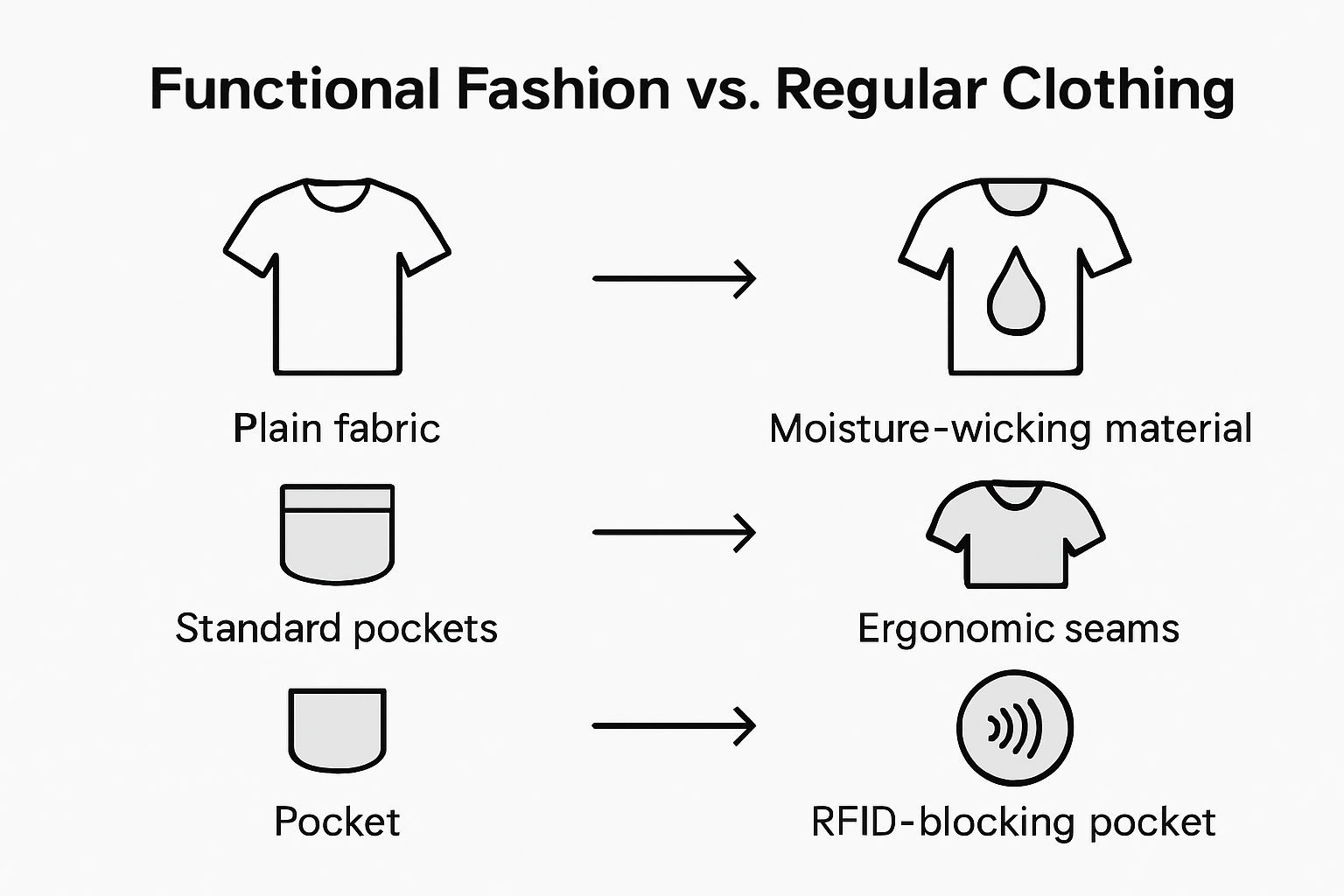
Functional clothing represents a sophisticated approach to garment design, integrating advanced features that go far beyond traditional aesthetic considerations. These intelligent garments incorporate critical performance-enhancing technologies such as temperature regulation, moisture management, and ergonomic construction techniques designed to optimise user comfort and functionality.
The design process for functional fashion involves a meticulous understanding of human physiological requirements. Designers carefully analyse body movements, sensory capacities, and individual physical characteristics to create garments that adapt seamlessly to diverse user needs. This approach ensures that clothing is not merely a passive covering but an active companion that supports and enhances human performance across various environments and activities.
Key practical features of functional fashion include:
- Advanced thermal regulation technologies
- Moisture-wicking fabric compositions
- Strategically placed ergonomic panels
- Adaptable design elements
- Lightweight, breathable materials
- Impact-absorbing construction techniques
Beyond individual performance benefits, functional fashion also addresses broader considerations such as sustainability, comfort, and versatility. By prioritising user-centred design principles, these garments represent a sophisticated evolution in clothing technology, transforming how we think about the relationship between human bodies and the textiles we wear.
Everyday Applications for Modern Lifestyles
In today’s fast-paced world, slow fashion offers a thoughtful approach to clothing that transcends fleeting trends. This movement encourages consumers to invest in high-quality, versatile garments that serve multiple purposes across different aspects of modern life, from professional environments to leisure activities.
The rise of functional fashion reflects a broader cultural shift towards practicality and personal expression. Anti-fashion styles challenge traditional aesthetic norms, prioritising clothing that adapts to individual lifestyles rather than conforming to external fashion dictates. This approach is particularly relevant for professionals, athletes, urban commuters, and individuals seeking clothing that seamlessly transitions between different daily scenarios.
Practical applications of functional fashion across modern lifestyles include:
- Work-from-home attire with enhanced comfort and video-call readiness
- Performance sportswear for fitness enthusiasts
- Travel clothing with built-in temperature regulation
- Adaptive garments for diverse physical abilities
- Sustainable clothing choices that reduce environmental impact
These innovative clothing solutions demonstrate how fashion can be both intelligent and personalised, addressing the complex demands of contemporary living. By prioritising functionality, comfort, and individual expression, functional fashion empowers people to feel confident and prepared across various life contexts.
Buying Functional Fashion: Critical Considerations
When selecting functional fashion, textile aesthetics play a crucial role in determining the right garment. Consumers must carefully evaluate multiple factors beyond mere visual appeal, including material quality, durability, and the specific functional needs the clothing will address. The most effective functional fashion pieces seamlessly blend performance capabilities with personal style preferences.
The purchasing process for functional fashion requires a holistic approach that considers both immediate needs and long-term sustainability. Circular fashion principles encourage buyers to invest in garments designed for longevity, produced through ethical practices, and capable of minimising environmental impact. This mindset transforms clothing acquisition from a transactional experience to a thoughtful, strategic decision.
Key considerations when buying functional fashion include:
- Material composition and performance characteristics
- Adaptability across multiple environments
- Durability and potential lifecycle of the garment
- Ethical production standards
- Comfort and ergonomic design
- Sustainability credentials
Ultimately, selecting functional fashion is about making intelligent choices that align with personal lifestyle requirements, environmental consciousness, and individual aesthetic preferences. By approaching clothing purchases as investments in personal performance and environmental responsibility, consumers can build wardrobes that are both highly practical and personally meaningful.
Discover Functional Fashion Solutions Tailored for You
Are you seeking clothing that moves beyond just style to truly support your daily life and well-being Functional fashion focuses on ergonomic design and advanced materials that adapt to your unique needs, whether you require moisture management, thermal regulation or versatile pieces for work and leisure This article highlights the challenges of finding garments that blend performance with comfort and sustainability
At Stomart.co.uk, we understand these demands and offer a curated selection of functional fashion essentials and accessories designed to empower your lifestyle Our range includes lightweight, breathable fabrics and adaptable designs perfect for modern living Explore our latest arrivals and seasonal deals to invest in clothing that performs as hard as you do Don’t wait to elevate your wardrobe—discover practical, stylish solutions that deliver comfort and confidence every day at Stomart.co.uk
Start your journey towards intelligent fashion today by visiting Stomart.co.uk and embracing pieces that support your unique rhythm and environment
Frequently Asked Questions
What is functional fashion?
Functional fashion is an innovative approach to clothing design that focuses on creating garments tailored to specific performance objectives, enhancing comfort, utility, and overall user satisfaction.
What are the key characteristics of functional fashion?
Key characteristics include advanced material technologies, ergonomic design principles, performance-driven construction, and adaptability to diverse user needs, ensuring the clothing supports both aesthetic appeal and practical utility.
How does circular fashion relate to functional fashion?
Circular fashion applies circular economy principles to clothing production, creating a closed-loop system designed to minimise waste. This sustainable approach aligns with functional fashion by promoting garments that are intentionally designed for longevity and repurposing.
What practical features are commonly found in functional fashion garments?
Common features include temperature regulation, moisture-wicking fabric, ergonomic panels, adaptable design elements, lightweight breathable materials, and impact-absorbing construction techniques, all aimed at optimising user comfort and functionality.
Recommended
- Guide to Women’s Clothing: Styles, Tips, and Trends - STOMART.CO.UK
- Choosing the Perfect Clothing Store - STOMART.CO.UK
- Fashion vs Style Explained - STOMART.CO.UK
- Fashion vs Style Explained - STOMART.CO.UK
- Footwear Technology Explained: Comfort and Performance – YDA UK
- Benefits of Faith-Based Fashion: Complete Guide – Walk In His Footsteps