

What Is Sleep Hygiene and Why It Matters
on Jan 20, 2026
Many young professionals in cities juggle demanding careers and social lives but end up sacrificing restful nights without realising it. Quality sleep is about more than just clocking eight hours. Poor sleep hygiene can lead to serious health issues like hypertension, obesity, and diabetes. This guide helps you see past common myths, understand what good sleep hygiene involves, and discover practical strategies for real improvement in health and productivity.
Key Takeaways
| Point | Details |
|---|---|
| Importance of Sleep Hygiene | Sleep hygiene involves practices that optimise sleep quality and duration beyond just the duration of sleep alone. |
| Myths vs. Realities | Many misconceptions about sleep hygiene undermine effective rest, such as the belief that any rest is sufficient or that sleep difficulties are purely psychological. |
| Strategies for Improvement | Establishing a consistent sleep schedule, creating a conducive sleep environment, and managing lifestyle factors are essential for enhancing sleep quality. |
| Health and Productivity Connection | Poor sleep significantly impacts personal health and professional performance, leading to cognitive deficits and diminished workplace productivity. |
Defining Sleep Hygiene and Common Myths
Sleep hygiene represents a comprehensive approach to cultivating healthy sleep habits that support consistent, restorative rest. Unlike popular misconceptions, sleep hygiene extends far beyond simply getting eight hours of sleep. Systematic sleep practices involve intentional behaviours and environmental modifications designed to optimise sleep quality and duration.
At its core, sleep hygiene encompasses multiple dimensions including consistent bedtime routines, creating an ideal sleep environment, and managing lifestyle factors that impact rest. Many adults unknowingly undermine their sleep quality through habits like irregular sleep schedules, excessive screen time before bed, and consuming stimulants late in the evening. These seemingly minor disruptions can significantly compromise overall sleep efficiency and subsequent daytime performance.
Common myths about sleep hygiene often perpetuate misunderstandings that prevent people from achieving optimal rest. Some believe that sleep is a passive process where any amount of rest suffices, but research demonstrates sleep is an active, complex biological mechanism. Another prevalent misconception suggests that sleep difficulties are purely psychological, whereas scientific evaluations reveal sleep quality depends on intricate interactions between behavioural, environmental, and physiological factors.
Here is a summary of common sleep hygiene myths versus scientific realities:
| Myth | Reality |
|---|---|
| Any rest is sufficient | Sleep is an active process |
| Sleep difficulty is only psychological | Multiple factors influence sleep |
| Eight hours guarantees quality sleep | Quality depends on environment and behaviour |
| Sleep is passive | Biological mechanisms remain active during sleep |
Pro tip: Create a consistent pre-sleep ritual that signals to your body it is time to wind down, such as reading a book, practising gentle stretches, or performing relaxation breathing techniques for 15-20 minutes before bedtime.
Core Elements of Good Sleep Hygiene
Establishing effective sleep hygiene requires a holistic approach that addresses multiple aspects of daily life and nighttime routines. Healthy sleep habits encompass a strategic combination of environmental, behavioural, and lifestyle factors that collectively support consistent, high-quality rest.

Key elements of good sleep hygiene include maintaining a consistent sleep schedule, creating an optimal sleep environment, and managing daily habits that impact rest. This involves establishing a regular bedtime and wake time, even on weekends, to regulate the body’s internal clock. The bedroom should be transformed into a sleep sanctuary: dark, quiet, cool, and free from electronic distractions. Investing in comfortable bedding, using blackout curtains, and controlling room temperature can significantly enhance sleep quality.
Lifestyle choices play a crucial role in sleep hygiene. Recommended practices suggest limiting caffeine and alcohol consumption, particularly in the hours leading up to bedtime. Regular physical exercise contributes to better sleep, but timing is critical - intense workouts should be completed at least three hours before sleep to allow the body to wind down. Additionally, developing a relaxing pre-sleep routine, such as reading, gentle stretching, or meditation, can help signal to the body that it is time to prepare for rest.
Pro tip: Create a dedicated sleep environment by removing work materials, electronic devices, and minimising clutter to help your mind associate the bedroom exclusively with relaxation and sleep.
How Sleep Hygiene Affects Health and Productivity
Sleep quality fundamentally influences both personal health and professional performance. Health impacts of sleep deprivation extend far beyond simple tiredness, creating profound consequences for mental and physical functioning that can dramatically undermine daily effectiveness.
Chronic sleep disruption triggers a cascade of physiological challenges that compromise cognitive performance and emotional regulation. Insufficient sleep impairs critical mental functions including attention span, decision-making capabilities, memory consolidation, and emotional control. Professionals experiencing persistent sleep deficits are more likely to commit workplace errors, experience reduced problem-solving skills, and demonstrate diminished creative thinking - ultimately undermining their career progression and organisational contribution.
Workplace productivity research reveals that even minor sleep disruptions can cause substantial performance declines. Individuals suffering from poor sleep patterns experience higher rates of absenteeism, slower task completion, and increased likelihood of workplace accidents. The cumulative effect means that seemingly minor sleep hygiene neglect can translate into significant professional and health risks, potentially leading to long-term career and wellness challenges.
Pro tip: Track your sleep patterns using a journal or smartphone app to identify specific behaviours that positively or negatively impact your rest and productivity.
Sleep Hygiene Strategies for Modern Lifestyles
Navigating sleep hygiene in today’s fast-paced, technology-driven world requires intentional and adaptive strategies. Healthy lifestyle habits demand a comprehensive approach that addresses the unique challenges posed by constant connectivity and digital overwhelm.
Modern professionals must proactively counteract the disruptive effects of technology on sleep patterns. This involves establishing clear boundaries between work and rest, implementing digital detox practices, and creating intentional wind-down routines. Practical techniques include setting device-free zones in the bedroom, using blue light filtering applications on electronic devices, and establishing consistent pre-sleep rituals that signal to the body it is time to transition into relaxation mode. Regular physical exercise, preferably earlier in the day, can help regulate sleep cycles and reduce the physiological impact of stress.
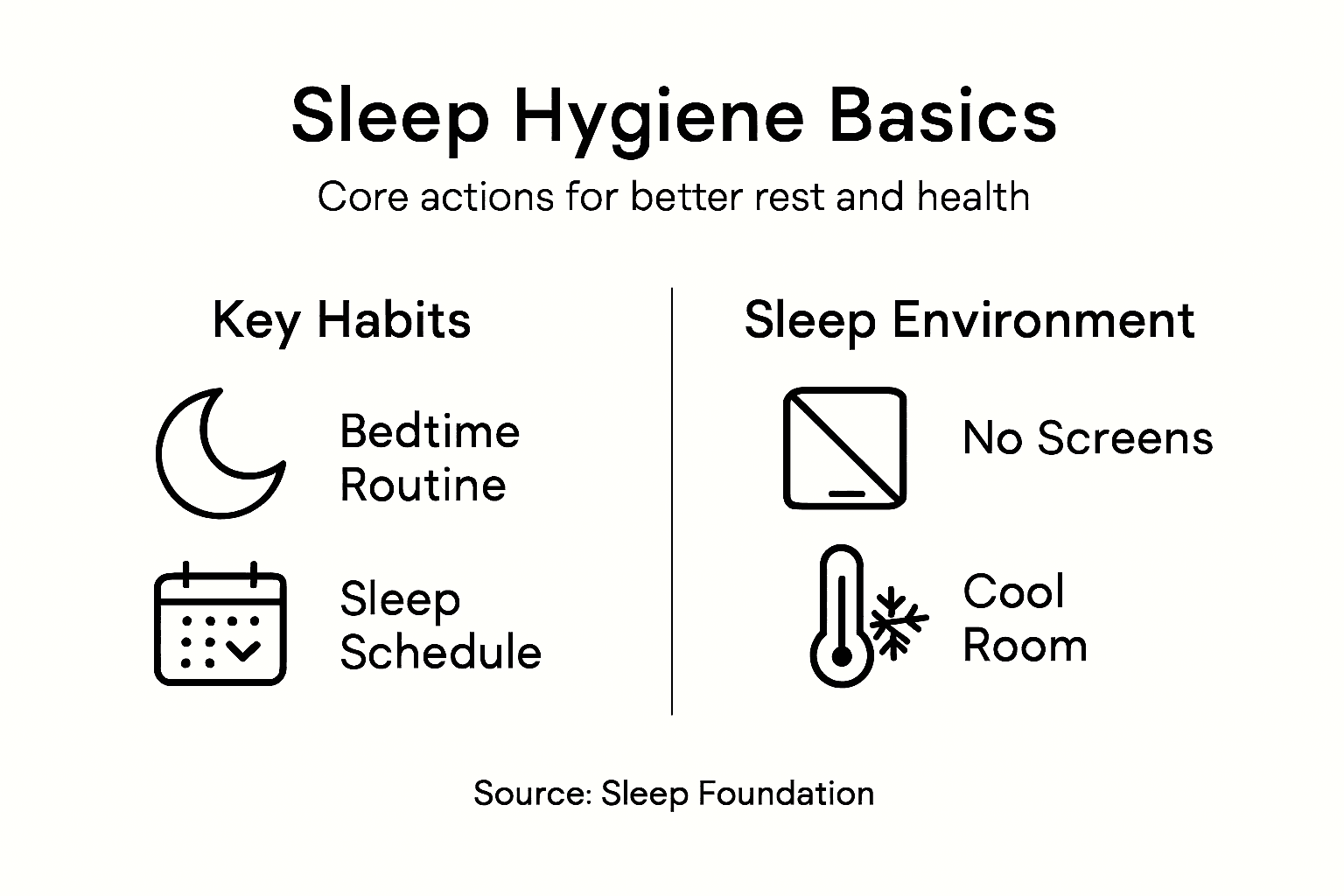
Nutrition and lifestyle management play crucial roles in sleep hygiene for contemporary living. Mindful consumption of caffeine, alcohol, and heavy meals requires strategic timing and moderation. Stress management techniques such as meditation, deep breathing exercises, and progressive muscle relaxation can significantly improve sleep quality. Creating a personalised sleep environment that minimises external stimuli - through considerations like temperature control, noise reduction, and comfortable bedding - becomes essential in supporting restorative rest amidst the constant demands of modern life.
Pro tip: Design a consistent 30-minute pre-sleep wind-down routine that systematically reduces environmental stimulation and helps transition your body and mind towards restful sleep.
Comparing Alternatives and Common Pitfalls
Sleep hygiene strategies are not one-size-fits-all, and understanding the nuanced alternatives is crucial for developing an effective approach. Sleep hygiene best practices reveal multiple pathways to improving rest, each with unique strengths and potential challenges.
Traditional sleep hygiene recommendations often focus on environmental modifications, but emerging research suggests more holistic interventions. Common pitfalls include relying solely on sleep medications, maintaining inconsistent sleep schedules, and using electronic devices before bedtime. Alternative approaches such as cognitive behavioural therapy, mindfulness practices, and personalised relaxation techniques offer more sustainable solutions. These methods address underlying psychological factors that contribute to sleep disturbances, moving beyond surface-level environmental adjustments.
This table compares traditional and modern sleep hygiene approaches:
| Approach | Key Features | Potential Limitations |
|---|---|---|
| Traditional | Focus on environment (dark, quiet room) | May overlook individual differences |
| Modern | Personalised routines, technology integration | Relies on self-monitoring and adaptation |
| Holistic | Combines behaviour, environment, and technology | May require expert guidance |
| Sole dependence on medication | Quick relief for some cases | Risk of dependency and side effects |
Technological interventions in sleep management demonstrate promising results in supporting sleep hygiene efforts. Wearable sleep trackers and smartphone applications can provide individualised insights, helping people understand their unique sleep patterns and identify specific areas for improvement. However, technology is not a standalone solution - it works best when integrated with comprehensive lifestyle strategies and professional guidance.
Pro tip: Experiment with multiple sleep improvement strategies, tracking your responses in a sleep journal to identify the most effective combination for your individual needs.
Enhance Your Sleep Hygiene with Smart Choices from Stomart
Struggling to create the perfect sleep environment or maintain consistent bedtime routines as discussed in our article on “What Is Sleep Hygiene and Why It Matters”? You are not alone in facing challenges such as irregular sleep schedules, disruptive technology use before bed, or uncomfortable bedroom settings. These common obstacles can severely impact your ability to enjoy truly restorative rest and boost daytime performance.
At Stomart.co.uk, we understand the importance of sleep hygiene to your overall health and productivity. Explore our carefully selected range of home goods and personal wellness gadgets designed to help you craft a peaceful, tech-free sanctuary that promotes quality sleep. From blackout curtains and calming lighting options to relaxation aids and bedding essentials, your journey toward better sleep begins here. Don’t wait for ongoing sleep difficulties to affect your wellbeing — take control today and visit Stomart.co.uk to discover products that support healthier sleep habits. Transform your nights and energise your days now.
Frequently Asked Questions
What is sleep hygiene?
Sleep hygiene refers to a set of practices and habits that are conducive to sleeping well on a regular basis. It includes maintaining consistent sleep schedules, optimising the sleep environment, and managing lifestyle factors that influence sleep quality.
Why is sleep hygiene important?
Good sleep hygiene is crucial because it affects overall health, productivity, and mental well-being. Poor sleep can lead to cognitive impairments, emotional regulation issues, and decreased performance in daily activities.
How can I improve my sleep hygiene?
Improving sleep hygiene involves establishing a consistent sleep routine, creating a comfortable and distraction-free sleep environment, limiting caffeine and alcohol intake, and incorporating relaxation techniques before bedtime.
What are common misconceptions about sleep hygiene?
Common misconceptions include the belief that any amount of rest is sufficient, that sleep difficulties are purely psychological, and that quality sleep is guaranteed simply by aiming for eight hours of sleep. In reality, sleep quality is influenced by various behavioural and environmental factors.