

What Is Smart Home Technology and Its Impact
on Jan 02, 2026
Nearly half of British households are expected to adopt at least one smart home device by 2026, marking a rapid shift in how daily life is managed and enjoyed. For tech-savvy British homeowners, the appeal is clear—automated comfort, greater efficiency, and robust security can all be achieved with today’s connected technology. This guide uncovers what smart home technology truly means, dispels lingering myths, and explains how modern solutions fit seamlessly into any British home.
Key Takeaways
| Point | Details |
|---|---|
| Smart Home Technology is Accessible | Contrary to common myths, smart home devices are increasingly affordable and user-friendly, making them suitable for a wider audience. |
| Diverse Device Categories | In 2026, smart home devices categorise into security, lighting, appliance automation, and entertainment, enhancing convenience and connectivity. |
| Energy Management Benefits | Smart home solutions can significantly lower utility costs and improve energy efficiency through intelligent control systems. |
| Cybersecurity Awareness is Crucial | Homeowners must be proactive in managing cybersecurity risks by using strong passwords and understanding device privacy settings. |
Defining Smart Home Technology and Common Myths
Smart home technology transforms traditional living spaces into interconnected environments where devices communicate and automate household functions. Public acceptance studies reveal that these technologies are becoming increasingly mainstream, challenging long-standing misconceptions about complexity and accessibility.
At its core, smart home technology encompasses a network of connected devices designed to enhance convenience, energy efficiency, and security. These systems range from intelligent lighting and heating controls to comprehensive home security networks. Technological advancements have made these solutions more accessible and user-friendly, contrary to popular myths that suggest such technologies are exclusively for tech enthusiasts or wealthy households.
Common myths surrounding smart home technology include:
- Smart homes are prohibitively expensive
- These systems are complicated to install and use
- Privacy and data security are perpetually compromised
- Only new homes can effectively integrate smart technology
In reality, modern smart home solutions are increasingly affordable, with user-friendly interfaces that enable straightforward setup and operation. Manufacturers have prioritised intuitive design, ensuring that individuals with varying technical expertise can successfully implement and enjoy these technologies.
Pro tip: Start your smart home journey with one or two simple devices like a smart plug or intelligent thermostat to gradually build confidence and understanding of the technology.
Core Types of Smart Home Devices in 2026
The landscape of smart home devices continues to evolve rapidly, with emerging technologies transforming how we interact with our living spaces. In 2026, smart home devices are categorised into several key functional domains that address convenience, energy management, security, and personalised living experiences.

Smart Climate Control Devices represent a critical category, featuring AI-powered thermostats and environmental management systems. These intelligent devices can automatically adjust temperature, humidity, and air quality based on occupancy, weather conditions, and individual preferences. Advanced home automation research highlights the growing sophistication of these systems, moving beyond simple temperature regulation to comprehensive environmental optimization.
Key types of smart home devices in 2026 include:
-
Security Systems
- Facial recognition cameras
- Smart locks with biometric access
- Integrated alarm systems with remote monitoring
-
Intelligent Lighting
- Mood-adaptive colour-changing bulbs
- Motion-activated lighting zones
- Energy-efficient LED networks
-
Home Appliance Automation
- Smart refrigerators with inventory tracking
- Connected cooking systems
- Automated cleaning robots
-
Entertainment and Communication
- Voice-activated media centres
- Multi-room audio systems
- Interactive home communication hubs
These device categories are increasingly designed with interoperability in mind, allowing seamless communication and creating truly integrated smart home ecosystems that adapt to residents’ lifestyles and preferences.
To better understand the unique benefits of different smart home device categories, see the table below:
| Device Category | Primary User Benefit | Typical Example Device |
|---|---|---|
| Security Systems | Improved home safety | Facial recognition camera |
| Intelligent Lighting | Customised ambience | Mood-adaptive colour bulb |
| Appliance Automation | Routine task simplification | Smart refrigerator |
| Entertainment & Communication | Enhanced connectivity | Voice-activated media centre |
Pro tip: When selecting smart home devices, prioritise those compatible with universal standards like Matter to ensure future-proof connectivity and easier system integration.
How Home Automation and Connectivity Work
Home automation technologies leverage complex networks of interconnected devices to transform traditional living spaces into intelligent, responsive environments. At the core of these systems are sophisticated communication protocols and sensor networks that enable seamless interaction between various smart devices, creating a unified ecosystem of technological integration.
Internet of Things (IoT) serves as the fundamental architecture for home automation, allowing diverse devices to communicate and share data across multiple platforms. Modern home automation platforms utilise advanced wireless sensor networks and cloud technologies to provide comprehensive control and monitoring capabilities. These systems typically incorporate several key technological components:
-
Communication Protocols
- WiFi for high-bandwidth connections
- Bluetooth for short-range device interactions
- Zigbee for low-power sensor networks
- MQTT for efficient data transmission
-
Sensor Technologies
- Motion detection sensors
- Temperature and humidity monitors
- Occupancy tracking devices
- Air quality measurement tools
-
Control Interfaces
- Smartphone applications
- Voice-activated assistants
- Web-based dashboards
- Centralised control panels
The integration of these technologies enables intelligent decision-making processes, allowing home systems to adapt and respond to changing environmental conditions and user preferences automatically. Microcontrollers and cloud-based platforms process incoming sensor data, triggering appropriate responses such as adjusting temperature, managing lighting, or enhancing security protocols.
For a concise reference on how leading communication protocols differ in smart home systems, review this table:
| Protocol | Coverage Range | Main Advantage | Common Use Case |
|---|---|---|---|
| WiFi | Whole home | High data speeds | Cameras, media centres |
| Bluetooth | Single room | Low energy consumption | Wearables, remotes |
| Zigbee | Multi-room mesh | Reliable low-power connectivity | Sensors, lighting |
| MQTT | Internet-wide | Efficient message transmission | Cloud device control |
Pro tip: When setting up a home automation system, ensure all devices use compatible communication protocols to guarantee smooth interoperability and reduce potential technical conflicts.
Practical Benefits for UK Homeowners Today
Smart home technologies are revolutionising how British homeowners manage their living spaces, offering unprecedented levels of convenience, energy efficiency, and personal comfort. These innovative systems provide practical solutions that address the unique challenges faced by UK households, transforming everyday living experiences through intelligent technological integration.
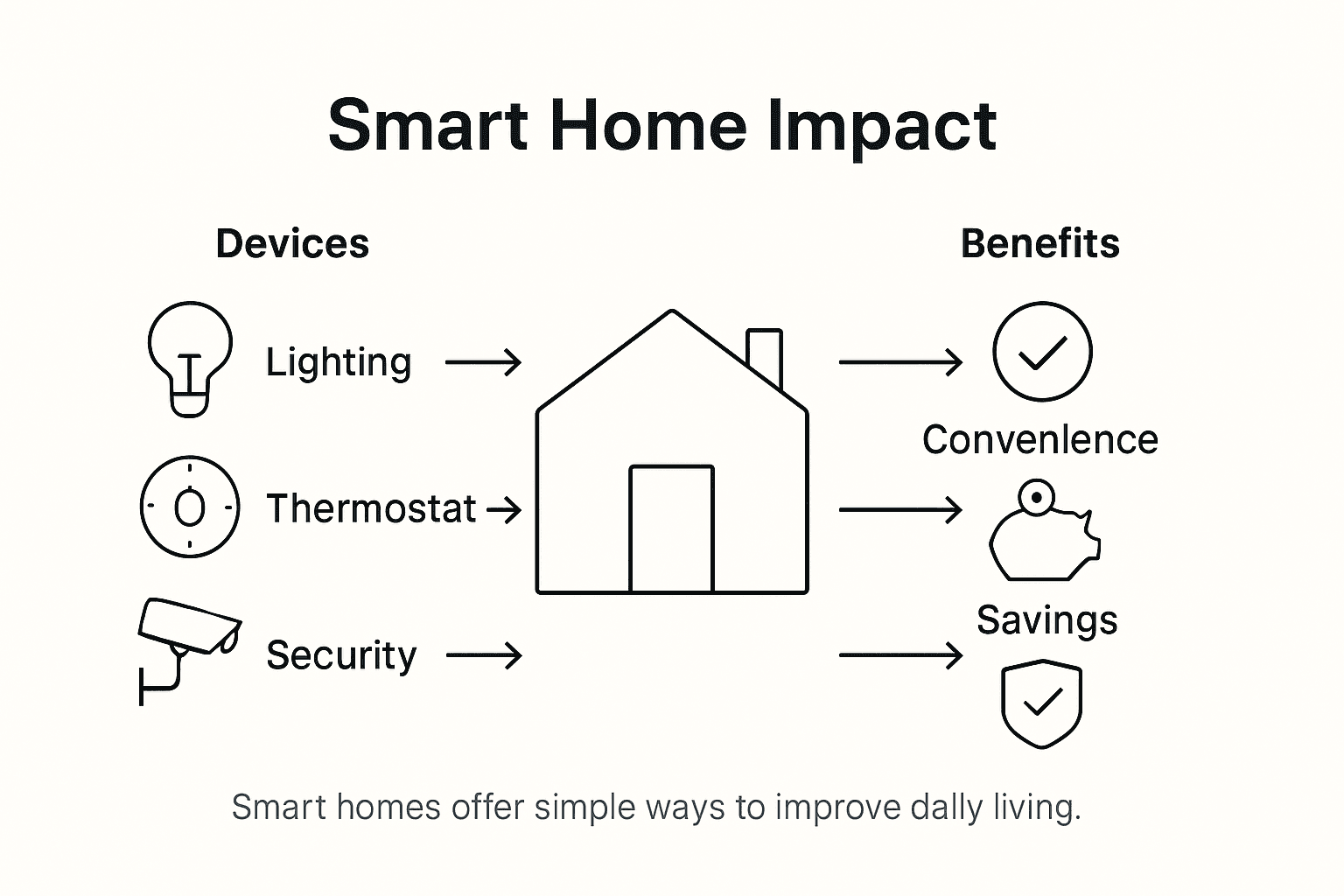
Energy Management stands as a critical benefit for British homeowners, with smart home technologies enabling significant utility cost reductions. Advanced home automation systems contribute to enhanced security, personal comfort, and independent living standards, particularly for vulnerable population groups. The key advantages include:
-
Cost Savings
- Reduced energy consumption
- Intelligent heating and cooling control
- Optimised electricity usage
-
Security Enhancements
- Remote monitoring capabilities
- Smart lock and camera systems
- Real-time alerts and notifications
-
Accessibility Improvements
- Voice-controlled device management
- Automated task completion
- Support for elderly and disabled residents
Beyond immediate practical benefits, smart home technologies are increasingly viewed as investments that potentially increase property values. The ability to create personalised, efficient living environments represents a significant advancement in residential technology, allowing homeowners to adapt their spaces to changing lifestyle needs with unprecedented flexibility.
Pro tip: Start your smart home journey with one core system like intelligent heating or security, then gradually expand your network to ensure seamless integration and manageable implementation.
Safety, Privacy, and Cost Considerations
Smart home technology introduces complex security and privacy challenges that require careful consideration by UK homeowners. While these innovative systems offer remarkable convenience, understanding potential risks and implementing robust protective strategies is crucial for responsible technology adoption.
Cybersecurity Risks represent a significant concern in smart home ecosystems. Emerging research highlights the importance of comprehensive security protocols and user education to mitigate potential vulnerabilities. The primary security considerations include:
-
Data Protection Challenges
- Potential unauthorized device access
- Risk of personal information breaches
- Vulnerability to sophisticated cyber attacks
-
Privacy Management
- Controlling data collection practices
- Understanding device tracking mechanisms
- Implementing strict user consent protocols
-
Financial Considerations
- Initial investment costs
- Ongoing maintenance expenses
- Potential energy savings and long-term value
Beyond technological safeguards, user awareness plays a critical role in maintaining smart home security. Homeowners must remain proactive in updating device firmware, using strong authentication methods, and regularly reviewing privacy settings to protect their digital environments.
Pro tip: Always use unique, complex passwords for each smart home device and enable two-factor authentication whenever possible to significantly enhance your system’s security.
Transform Your Home with Easy Smart Solutions Today
Facing the challenges of integrating smart home technology can feel overwhelming. The article highlights common concerns like device compatibility, privacy fears, and managing affordable smart devices that truly improve your home life. If you are looking to simplify your journey into intelligent living, focusing on user-friendly products that boost security, comfort, and energy savings is key.
At Stomart.co.uk, we understand these goals and offer a wide range of accessible smart home essentials designed for effortless installation and everyday convenience. From intelligent lighting and security gadgets to smart plugs and climate control devices, our selection helps you personalise your living space easily while addressing privacy and cost concerns. Explore our selection and take advantage of seasonal deals and new arrivals to start upgrading your home environment today.
Ready to embrace the future of living with confidence Visit Stomart.co.uk now and discover smart home products that work together seamlessly. Start small but think big for a safer, smarter, and more comfortable home experience.
Frequently Asked Questions
What is smart home technology?
Smart home technology refers to interconnected devices in a home that allow automation and remote control of various household functions, enhancing convenience, energy efficiency, and security.
How does smart home technology improve energy efficiency?
Smart home devices, such as smart thermostats and lighting systems, intelligently manage energy usage by adjusting settings based on occupancy and preferences, thereby reducing energy consumption and lowering utility costs.
Are smart home systems easy to install and use?
Yes, modern smart home systems are designed to be user-friendly, with intuitive interfaces that simplify installation and operation, making them accessible to individuals with varying levels of technical expertise.
What are the primary security concerns associated with smart home technology?
The main security concerns include potential unauthorized access to devices, data protection challenges, and vulnerability to cyber-attacks. Homeowners can mitigate these risks through strong passwords, regular updates, and education on privacy settings.
Recommended
- Cosy and Stylish Home Upgrades - STOMART.CO.UK
- LED Beauty Devices: Do They Work? - STOMART.CO.UK
- Latest Trends in Smart Home Devices You Need to Know - STOMART.CO.UK
- Bluetooth Smartwatch for Modern Lifestyles - STOMART.CO.UK
- What Is eSIM Profile and How It Simplifies Travel | Lumo eSIM Store
- Cyber Threat Intelligence: Everything You Need to Know - IT Start