

What night-time meant before screens took over
on Mar 17, 2026Most of us assume eight hours of uninterrupted sleep has always been the norm, but historical evidence reveals a radically different picture. Before artificial lighting and screens dominated our evenings, people worldwide practised segmented sleep with distinct intervals of wakefulness between two separate sleep periods. This article explores the rich cultural traditions of pre-screen night-time, examining how darkness shaped social behaviours, spiritual practices, and natural sleep rhythms that modern technology has fundamentally transformed.
Key takeaways
| Point | Details |
|---|---|
| Segmented sleep was universal | Historical records show people worldwide practised first and second sleeps separated by waking intervals. |
| Night-time had distinct rituals | Darkness created a separate cultural season with unique social norms and spiritual practices. |
| Industrial shifts changed patterns | Artificial lighting and factory schedules consolidated sleep into continuous blocks for early rising. |
| Screens disrupted natural rhythms | Modern devices suppress melatonin and replace reflective activities with constant stimulation. |
| Historical insights guide solutions | Understanding past practices reveals pathways to healthier contemporary sleep habits. |
The culture of night-time before artificial light
Before electric lighting transformed our world, night-time existed as a distinct cultural realm with its own rules and rituals. Darkness held genuine authority over human behaviour, shaping everything from social interactions to spiritual observances. Communities recognised night as a separate season of life, not merely the absence of day. This understanding influenced architecture, social customs, and even legal frameworks governing nocturnal activities.
People developed sophisticated relationships with darkness that modern societies have largely forgotten. Night-time carried symbolic weight, representing mystery, danger, and spiritual opportunity simultaneously. Religious communities scheduled prayers during dark hours, believing these moments offered heightened spiritual connection. Households organised their spaces and routines around managing darkness, creating intimate social environments that fostered conversation and contemplation.
The concept of what natural time is becomes clearer when examining preindustrial night-time culture. Without clocks dominating consciousness, people aligned activities with natural darkness cycles. This created a rhythm fundamentally different from our current relationship with night, where artificial light allows us to ignore natural cues entirely.
Biphasic sleep patterns emerged naturally within this cultural framework. People retired to bed shortly after sunset, experiencing what historians call “first sleep” lasting several hours. They would then wake naturally for an interval of quiet wakefulness before returning to “second sleep” until dawn. This pattern wasn’t considered unusual or problematic. Instead, it represented the normal structure of human rest.
During wakeful intervals, households engaged in activities perfectly suited to darkness and quietude:
- Quiet reflection and prayer
- Intimate conversations with family members
- Light household tasks requiring minimal visibility
- Reading by candlelight for those with literacy
- Contemplating dreams from first sleep
These practices created a unique temporal space that modern life has eliminated. The interval between sleeps offered psychological benefits we’re only beginning to understand. It provided natural breaks for processing emotions, solving problems, and connecting with others in ways that daytime busyness prevented. This wasn’t insomnia or sleep disruption. Rather, it represented a healthy, culturally embedded approach to rest and wakefulness.
“Night was not simply the absence of day but a distinct period with its own social dynamics, spiritual significance, and behavioural expectations that shaped preindustrial life in profound ways.”
Segmented sleep: understanding first and second sleep
Historical evidence for segmented sleep patterns appears across diverse cultures and time periods, suggesting this wasn’t regional custom but universal human behaviour. Documents from medieval Europe, colonial Africa, and ancient Asia all reference first and second sleeps as ordinary aspects of daily life. Diaries, court records, medical texts, and literature casually mention these sleep phases, indicating widespread acceptance of the pattern.
The typical segmented sleep cycle followed a consistent structure. People went to bed two to three hours after sunset, sleeping for approximately four hours during first sleep. They would then wake naturally, remaining conscious for one to two hours before returning to second sleep for another three to four hours until dawn. This created roughly eight hours of total sleep divided into two distinct periods with purposeful wakefulness between.
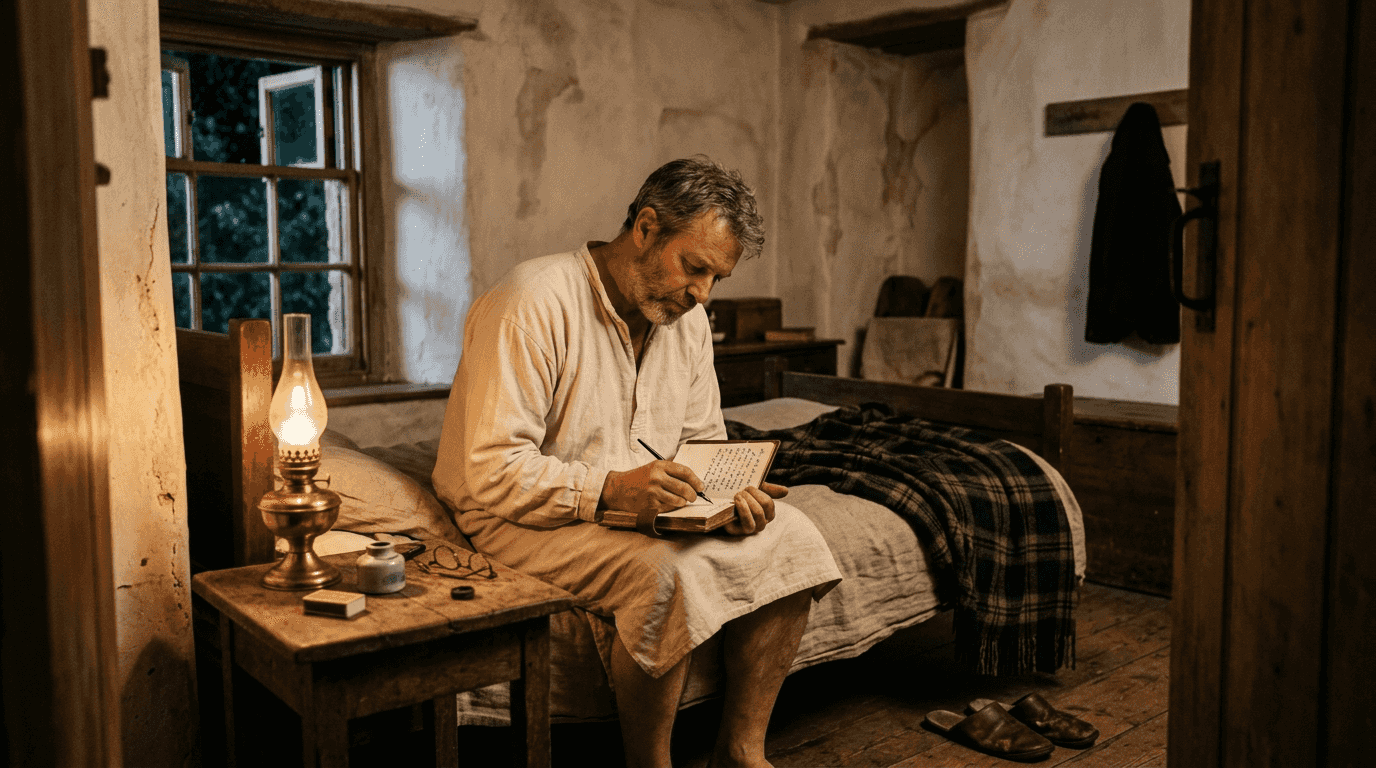
What makes this pattern fascinating is how people utilised the wakeful interval. Rather than viewing it as problematic, they embraced this time for activities uniquely suited to quiet darkness. The period offered mental clarity different from both daytime alertness and drowsy bedtime states. Many reported enhanced creativity, spiritual awareness, and emotional processing during these hours.
Common activities during the wakeful interval included:
- Spiritual practices like prayer or meditation
- Intimate marital relations, considered ideal during this peaceful time
- Reflecting on dreams from first sleep and interpreting their meanings
- Light household chores requiring minimal visibility
- Reading devotional or philosophical texts by candlelight
- Quiet conversations with family members or neighbours
- Creative work like writing, planning, or problem solving
Modern sleep research has begun validating the naturalness of this pattern. Studies show that when people are removed from artificial light and allowed to follow natural darkness cycles, many spontaneously develop segmented sleep resembling historical patterns. This suggests our ancestors weren’t following arbitrary customs but responding to genuine biological rhythms that artificial lighting has suppressed.
| Sleep phase | Duration | Primary activities | Psychological state |
|---|---|---|---|
| First sleep | 3-4 hours | Deep rest and physical restoration | Unconscious dreaming |
| Wakeful interval | 1-2 hours | Reflection, prayer, socialising | Calm alertness |
| Second sleep | 3-4 hours | Continued restoration and dreaming | Unconscious rest |
| Total cycle | 7-10 hours | Complete rest and activity balance | Natural rhythm |
The disappearance of segmented sleep correlates directly with artificial lighting adoption and industrial work schedules. As societies gained ability to extend evening activities with lamps and later electricity, the cultural space for middle-of-the-night wakefulness vanished. Factory work demanded early rising and continuous sleep blocks, making the leisurely two-phase pattern impractical for industrial labourers.
Pro Tip: If you occasionally wake during the night and feel alert rather than anxious, try embracing this as a natural interval rather than forcing immediate return to sleep. Spend 20 to 30 minutes in quiet activity like reading or gentle stretching, then return to bed when drowsiness returns naturally.
Understanding how sleep cycles impact productivity requires recognising that consolidated eight-hour blocks represent relatively recent cultural invention, not biological imperative. Our ancestors’ segmented approach may have offered psychological and social benefits we’ve sacrificed for industrial efficiency.
How artificial lighting and industrialisation altered night-time
The introduction of artificial lighting fundamentally transformed human relationships with darkness and sleep. Oil lamps, gas lighting, and eventually electricity extended productive hours far beyond natural daylight, creating entirely new possibilities for evening activities. This technological shift didn’t merely add convenience. It restructured social behaviours, work patterns, and biological rhythms in ways that permanently altered night-time culture.
Initially, artificial lighting remained expensive and limited to wealthy households and public spaces. This created a gradual transition period where some maintained traditional sleep patterns whilst others adopted extended evening activities. As lighting technology became affordable and widespread during the 19th century, the cultural shift accelerated dramatically. Evening entertainment, social gatherings, and work could continue regardless of natural darkness.
Industrial Revolution work schedules played an equally crucial role in eliminating segmented sleep. Factory employment required workers to arrive at specific early morning times, making the leisurely two-phase sleep pattern impractical. Employers demanded well-rested labourers ready for long shifts, not workers who might wake naturally at midnight for contemplative intervals. Economic pressure forced adaptation to consolidated sleep blocks that fit industrial timetables.
This transition created several significant changes:
- Evening activities shifted earlier, compressing into hours immediately after work
- The wakeful interval between sleeps disappeared from cultural consciousness
- Sleep became viewed as single continuous block rather than two phases
- Night-time social visits and conversations declined dramatically
- Spiritual practices scheduled during dark hours moved to other times
The biological impact proved substantial. Artificial light exposure, particularly in evening hours, suppresses melatonin production and delays natural sleep onset. This disrupts circadian rhythms that evolved over millennia to respond to natural darkness. Modern research shows even dim artificial light can significantly affect sleep timing and quality, creating a mismatch between biological needs and cultural practices.
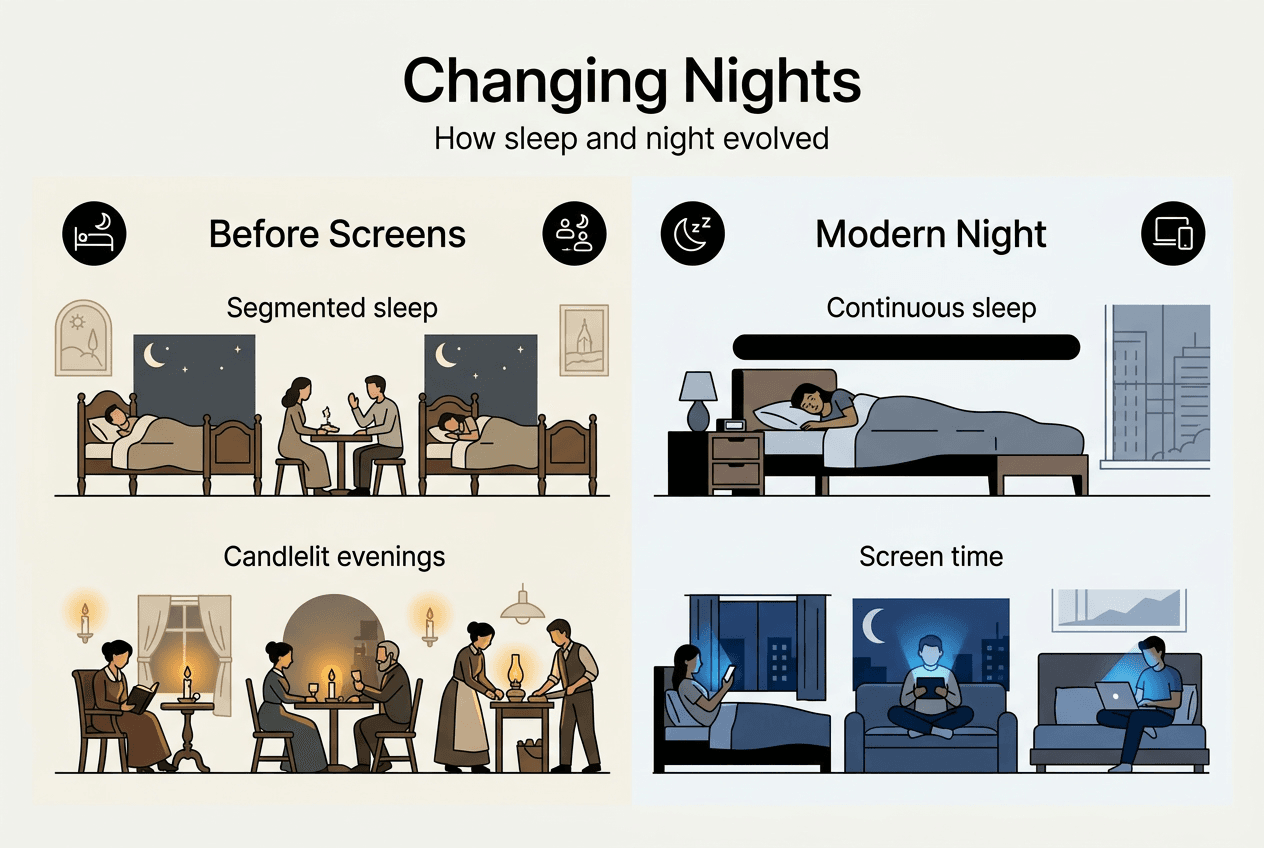
| Historical period | Lighting technology | Typical sleep pattern | Social impact |
|---|---|---|---|
| Pre-1800 | Candles and firelight | Segmented two-phase sleep | Night as distinct cultural season |
| 1800-1900 | Oil and gas lamps | Transitional mixed patterns | Gradual consolidation |
| 1900-2000 | Electric lighting | Consolidated single block | Night-time activities normalised |
| 2000-present | LED and screens | Delayed and disrupted | Constant connectivity |
The relationship between sleep setup and mental health becomes more complex when considering this historical context. Modern sleep difficulties may partly reflect biological systems struggling to adapt to relatively recent environmental changes. Our bodies still expect natural darkness cues that artificial lighting overrides.
Pro Tip: Create a gradual lighting transition in your home during evening hours. Dim lights progressively as bedtime approaches, and use warm-toned bulbs rather than bright white or blue-tinted lighting. This helps restore natural melatonin production patterns that artificial lighting disrupts.
The decline of traditional night-time practices happened remarkably quickly in historical terms. Within two to three generations, segmented sleep shifted from universal norm to forgotten curiosity. Elderly people in early 20th century still remembered the pattern from childhood, but their grandchildren grew up assuming continuous sleep represented the only natural approach. This rapid cultural amnesia demonstrates how quickly technological change can erase longstanding human practices.
From reflection to screens: night-time in the modern age
Contemporary night-time routines bear little resemblance to the contemplative intervals our ancestors experienced between sleep phases. Screens have become the dominant feature of evening hours, replacing quiet reflection with constant stimulation. Smartphones, tablets, computers, and televisions keep minds actively engaged right up until bedtime, eliminating the gradual wind-down that natural darkness once provided. This shift represents perhaps the most dramatic transformation in how humans experience night-time.
The psychological impact extends beyond simple distraction. Screen-based activities demand active attention, decision-making, and emotional engagement. Scrolling social media, watching streaming content, or responding to messages keeps the brain in alert, reactive states incompatible with sleep preparation. Where historical night-time intervals offered mental processing and emotional integration, modern screen time fragments attention and prevents the reflective states that supported psychological wellbeing.
Biological disruption compounds these psychological effects. Blue light exposure significantly reduces sleepiness, delays sleep onset, and diminishes REM sleep quality. Screens emit wavelengths that directly suppress melatonin production, essentially signalling to the brain that it’s still daytime. This creates a physiological barrier to natural sleep timing, forcing many people to rely on sheer exhaustion rather than healthy circadian cues to fall asleep.
Modern night-time habits have eliminated activities that once filled the wakeful interval between sleeps:
- Quiet contemplation and processing daily experiences
- Unhurried conversations with household members
- Spiritual practices and prayer during peaceful hours
- Creative thinking and problem-solving in calm mental states
- Physical intimacy without distraction or time pressure
- Reading substantive material requiring focused attention
These losses aren’t merely nostalgic concerns. Research increasingly shows that constant stimulation and lack of reflective time contribute to anxiety, relationship difficulties, and reduced emotional regulation. The activities our ancestors practised during night-time intervals served genuine psychological functions that screens cannot replicate. Replacing contemplation with consumption fundamentally changes how we process experiences and maintain mental health.
The social dimension has shifted equally dramatically. Where night-time once fostered intimate household connections, screens now isolate individuals even when physically together. Family members occupy the same room whilst engaging separate digital worlds, eliminating the shared experience that night-time conversations once provided. This parallel solitude replaces the communal aspects of historical night-time culture.
Managing screen time effectively requires recognising these broader cultural and biological implications. It’s not simply about limiting minutes on devices. Rather, it involves understanding what screens have replaced and consciously creating space for activities that support natural sleep rhythms and psychological wellbeing. This means establishing genuine boundaries, not just reducing usage whilst maintaining constant connectivity.
The challenge lies in swimming against powerful cultural currents. Modern life expects constant availability and engagement. Work emails arrive at all hours. Social connections depend on digital platforms. Entertainment options provide endless stimulation. Choosing to disconnect and embrace quiet evening hours requires intentional effort against these pressures. Yet the potential benefits mirror what our ancestors gained from their night-time practices: better sleep, deeper relationships, and enhanced mental clarity.
Restoring healthier night-time routines doesn’t require abandoning modern technology entirely. Instead, it involves creating deliberate transitions that honour biological needs and psychological wellbeing. This might mean establishing screen-free hours before bed, designating device-free spaces in the home, or consciously replacing scrolling time with reflective activities. Small changes can recreate some benefits of historical night-time culture within contemporary contexts.
Explore restful night-time solutions and natural sleep advice
Understanding how dramatically night-time culture has transformed offers valuable insights for addressing modern sleep challenges. The historical practices our ancestors developed weren’t arbitrary traditions but responses to genuine biological and psychological needs that remain relevant today. Stomart recognises these connections between past wisdom and contemporary wellbeing, offering practical resources and solutions to help you restore balance in your night-time routines. Explore our guides on achieving restful sleep and managing screen time effectively to discover how small changes can significantly improve your sleep quality and overall wellbeing. These resources provide actionable steps grounded in both historical understanding and modern sleep science.
Frequently asked questions
What was segmented sleep and why did people practise it?
Segmented sleep involved two distinct sleep periods separated by one to two hours of natural wakefulness during the night. People worldwide practised this pattern because it aligned with natural darkness cycles before artificial lighting. The wakeful interval provided time for reflection, prayer, socialising, and light activities that supported psychological wellbeing.
What did people do during the wakeful period between sleeps?
During the interval between first and second sleep, people engaged in quiet activities suited to darkness and contemplation. Common practices included prayer and spiritual reflection, intimate conversations with family, light household chores, reading by candlelight, processing dreams, and creative thinking. This time was valued for its peaceful quality and mental clarity.
How did artificial lighting change sleep patterns?
Artificial lighting extended productive evening hours and eliminated the cultural space for segmented sleep. Combined with Industrial Revolution work schedules requiring early rising, lighting technology pushed society toward consolidated sleep blocks. Artificial light also suppresses melatonin production, disrupting natural circadian rhythms and delaying sleep onset.
Why do screens disrupt sleep more than other activities?
Screens emit blue light wavelengths that directly suppress melatonin and signal the brain to remain alert. Beyond biological effects, screen activities demand active attention and emotional engagement that prevent the mental wind-down necessary for sleep. This replaces the reflective, calming activities that historically prepared people for rest.
Can we restore healthier night-time habits in modern life?
Yes, by consciously creating boundaries around screen use and artificial light exposure during evening hours. Establishing device-free periods before bed, using warm-toned lighting, and replacing stimulating activities with reflective practices can help restore natural sleep rhythms. Small changes that honour biological needs significantly improve sleep quality and psychological wellbeing.
Recommended
- Managing Screen Time for Kids and Teens - STOMART.CO.UK
- What Natural Time Is - STOMART.CO.UK
- Practical Solutions for a Restful Night’s Sleep - STOMART.CO.UK
- Transform Your Space with a Night Starry Galaxy Projector - STOMART.CO.UK
- Why Manage Screen Time: Boost Focus and Well-Being – Optio Station: Best Project Management App for Prioritization