

Why Fair Trade Fashion Matters for Conscious Shoppers
on Dec 11, 2025Nearly 60 percent of British consumers now say they consider ethics before making fashion purchases. Growing awareness about supply chain abuses and environmental concerns has made Fair Trade fashion a major focus across the United Kingdom. This article explores how Fair Trade standards reshape the industry by demanding safer workplaces, transparent practices, and eco-friendly methods that benefit both garment workers and the planet.
Key Takeaways
| Point | Details |
|---|---|
| Fair Trade Principles | Fair Trade fashion prioritises human dignity and environmental sustainability, ensuring fair compensation, safe working conditions, and ethical treatment of workers. |
| Certification Schemes | Various Fair Trade certification schemes provide independent verification of ethical practices, helping consumers make informed decisions that support sustainability and worker welfare. |
| Worker Empowerment | Fair Trade initiatives focus on empowering workers through equitable trade partnerships, ensuring minimum living wages, safe conditions, and opportunities for development. |
| Environmental Responsibility | Fair Trade advocates for sustainable production methods that reduce environmental impacts, emphasising the importance of making conscious purchasing decisions that benefit both people and the planet. |
Defining Fair Trade Fashion Standards
Fair Trade fashion represents a comprehensive approach to ethical clothing production that goes far beyond traditional manufacturing practices. At its core, Fair Trade fashion prioritises the human dignity and environmental well-being of workers throughout the global textile supply chain. These standards ensure that garment workers receive fair compensation, work in safe conditions, and are treated with genuine respect.
The fundamental principles of Fair Trade fashion encompass several critical dimensions. Equitable trade partnerships establish transparent relationships between producers, manufacturers, and consumers, creating accountability at every stage of production. Workers are guaranteed living wages that reflect the true value of their labour, rather than being subjected to exploitative compensation models prevalent in conventional manufacturing.
Key standards in Fair Trade fashion include:
- Mandatory safe working environments
- Fair and timely wage payments
- Prohibition of child labour
- Guarantee of freedom of association for workers
- Environmentally sustainable production methods
- Transparent supply chain practices
Moreover, sustainable production methods are intrinsically linked to Fair Trade principles. This means minimising environmental impact, reducing carbon footprints, and implementing responsible resource management throughout textile manufacturing. By prioritising both human welfare and ecological preservation, Fair Trade fashion represents a holistic approach to clothing production that challenges traditional industry norms.
Types of Fair Trade Certification Schemes
Fair Trade certification represents a crucial mechanism for ensuring ethical and sustainable practices across global textile and agricultural supply chains. Certification schemes provide independent verification and accountability, helping consumers make informed purchasing decisions that support worker welfare and environmental responsibility.
Certification processes typically fall into two primary categories: organisational recognition and producer certification. Organisational recognition involves brands being validated by national Fair Trade organisations, while producer certification focuses on independent assessment of cooperatives and individual farms or manufacturing facilities.
Key certification schemes include:
- Fair for Life: A comprehensive certification programme focusing on responsible supply chains across agriculture, manufacturing, and trade
- Fairtrade International: The most widely recognised global certification standard
- World Fair Trade Organisation Guarantee System: Emphasising holistic organisational commitment to Fair Trade principles
- Fair Wear Foundation: Concentrating specifically on workplace conditions in garment manufacturing
These certification schemes go beyond simple compliance, requiring organisations to demonstrate ongoing commitment to transparent, ethical practices. They evaluate multiple dimensions including worker compensation, safety standards, environmental impact, and community development initiatives, providing a comprehensive framework for responsible production.
How Fair Trade Fashion Supports Workers
Worker empowerment lies at the heart of Fair Trade fashion, transforming traditional labour practices through comprehensive support mechanisms. Ethical production methods ensure that garment workers receive far more than just monetary compensation, creating holistic pathways for personal and professional development.
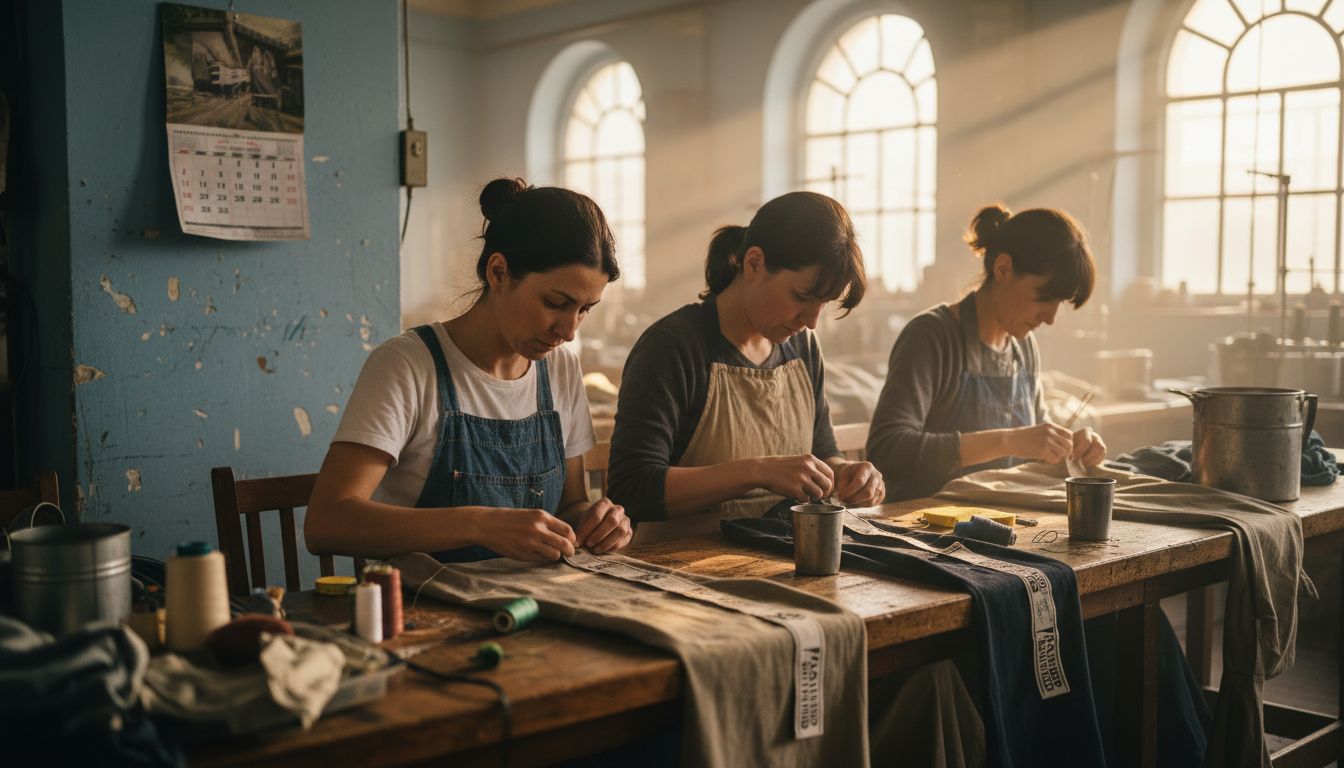
Fair Trade principles fundamentally redesign workplace dynamics by guaranteeing several critical protections. Workers receive equitable trade partnerships that provide transparent wage structures, safe working environments, and meaningful opportunities for collective representation. This approach directly challenges exploitative manufacturing models prevalent in conventional fashion industries.
Key ways Fair Trade supports workers include:
- Guaranteed minimum living wages
- Safe and regulated working conditions
- Prohibition of child labour
- Freedom of association and collective bargaining rights
- Healthcare and social security provisions
- Educational and skills development programmes
- Workplace safety training and protective equipment
Moreover, Fair Trade goes beyond immediate workplace improvements by investing in community infrastructure. When workers receive fair compensation, they can reinvest in local education, healthcare, and sustainable community development. Choosing the Perfect Clothing Store becomes more than a purchasing decision - it transforms into an act of global solidarity, supporting ethical labour practices and human dignity across international supply chains.
Environmental Impact and Consumer Ethics
Consumer consciousness has become a powerful catalyst for transforming fashion industry practices, with Fair Trade principles serving as a critical bridge between ethical consumption and environmental responsibility. Sustainable production methods represent far more than a trend - they are a fundamental reimagining of how clothing is created, consumed, and understood.
Equitable trade partnerships inherently integrate environmental considerations into every stage of textile production. This holistic approach means that sustainability is not an afterthought, but a core principle woven directly into manufacturing processes, supply chain management, and consumer engagement.
Key environmental considerations in Fair Trade fashion include:
- Reduced carbon emissions
- Minimised water consumption
- Use of organic and recycled materials
- Elimination of harmful chemical treatments
- Protection of biodiversity
- Sustainable waste management practices
- Promotion of circular economy principles
Ethical consumers increasingly recognise that their purchasing decisions carry profound environmental and social implications. Choosing the Perfect Clothing Store is no longer just about style or price, but about making a conscious choice that supports planetary health and human dignity. By prioritising Fair Trade fashion, individuals transform their wardrobes into statements of global responsibility and environmental stewardship.
Comparing Fair Trade with Fast Fashion
Ethical consumption represents a profound paradigm shift in how we understand clothing production, with Fair Trade and fast fashion representing two fundamentally opposing approaches to textile manufacturing. Ethical production methods reveal stark contrasts between responsible manufacturing and exploitative industrial practices.
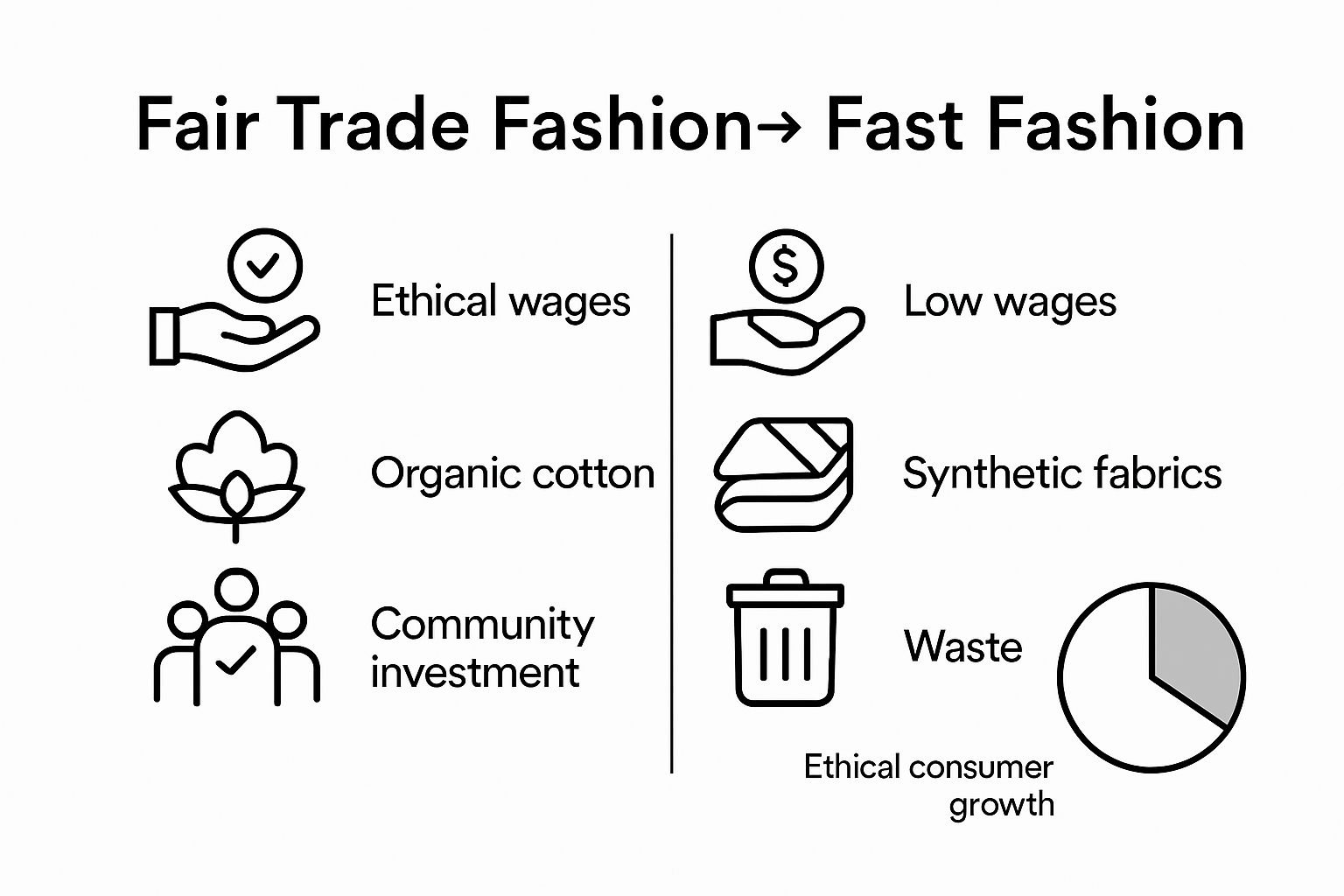
Equitable trade partnerships fundamentally challenge the fast fashion model, which prioritises rapid production and minimal costs over human and environmental welfare. While fast fashion relies on high-volume, low-cost manufacturing that frequently compromises worker safety and environmental standards, Fair Trade fashion focuses on sustainable, transparent, and humane production processes.
Key differences between Fair Trade and fast fashion include:
- Worker compensation
- Fair Trade: Living wages and safe working conditions
- Fast Fashion: Minimal wages, poor workplace safety
- Environmental impact
- Fair Trade: Sustainable materials and practices
- Fast Fashion: High waste and carbon emissions
- Production speed
- Fair Trade: Deliberate, quality-focused production
- Fast Fashion: Rapid, trend-driven manufacturing
- Supply chain transparency
- Fair Trade: Open and accountable processes
- Fast Fashion: Opaque and complex supply chains
Choosing the Perfect Clothing Store becomes an opportunity to challenge unsustainable fashion models. By selecting Fair Trade garments, consumers actively participate in transforming global textile industries, promoting a more equitable and environmentally responsible approach to fashion consumption.
Embrace Fair Trade Fashion with Purpose and Style
Choosing Fair Trade fashion means standing against exploitative labour and environmental harm while supporting fair wages, safe working conditions, and sustainable production methods. If you are seeking to align your wardrobe with your values, making conscious choices can create a real impact for workers and the planet. At Stomart, we understand how important it is to shop ethically without compromising on variety or quality.
Discover an exclusive range of fashion and lifestyle products that reflect your commitment to responsible consumption. By shopping at Stomart.co.uk, you support transparent supply chains and empower communities. Start your journey today and transform how your purchases contribute to a better world. Explore our carefully selected collections and take action by choosing Fair Trade fashion now.
Frequently Asked Questions
What are the key principles of Fair Trade fashion?
Fair Trade fashion focuses on human dignity and environmental sustainability. Key principles include fair wages, safe working environments, prohibition of child labour, freedom of association, and environmentally responsible production methods.
How does Fair Trade fashion support workers?
Fair Trade fashion empowers workers by guaranteeing minimum living wages, safe working conditions, prohibition of child labour, opportunities for collective bargaining, and access to healthcare and education programmes.
What are the environmental benefits of Fair Trade fashion?
Fair Trade fashion promotes reduced carbon emissions, minimised water use, the use of organic and recycled materials, elimination of harmful chemicals, and sustainable waste management practices, contributing to the preservation of biodiversity.
How does Fair Trade fashion differ from fast fashion?
Fair Trade focuses on sustainable, transparent, and humane production processes, ensuring fair worker compensation and minimal environmental impact, whereas fast fashion prioritises rapid production at low costs, often compromising worker welfare and environmental standards.
Recommended
- Choosing the Perfect Clothing Store - STOMART.CO.UK
- Guide to Women’s Clothing: Styles, Tips, and Trends - STOMART.CO.UK
- Choosing the Ideal UK Winter Coat - STOMART.CO.UK
- Fashion Trends Guide 2025 - STOMART.CO.UK
- Eco-Friendly Fragrance Dupes for Conscious Consumers