

Why Parents Use Smart Devices: Everyday Impact
on Jan 09, 2026More than eighty percent of british urban parents now use smart devices to support everyday childcare and learning. With cities growing busier, digital tools offer quick solutions for monitoring, teaching, and connecting with young children. Understanding how these technologies work and what they really offer helps families make informed choices, balancing convenience with safety and better outcomes for children.
Key Takeaways
| Point | Details |
|---|---|
| Integration of Smart Devices | Smart devices are essential in modern parenting, enhancing monitoring, education, and safety for children while streamlining household management. |
| Device Categories | Various categories such as monitoring, educational, and health technologies cater to specific parental needs and support child development. |
| Benefits and Risks | While offering significant benefits for childcare and learning, smart devices also pose risks related to privacy, overuse, and physical health that require careful management. |
| Best Practices | Establishing clear usage boundaries and fostering parental engagement are vital for safe and balanced technology use in family life. |
Smart devices for parents: Definition and concepts
Smart devices have transformed modern parenting, offering unprecedented technological support for child-rearing and family management. These sophisticated digital tools represent more than simple gadgets - they are integrated technological ecosystems designed to enhance parental capabilities and streamline household interactions. Comprehensive research on digital parenting reveals these technologies are fundamentally changing how parents monitor, educate, and protect their children.
At its core, a smart device for parents encompasses digital technologies capable of internet connectivity, data processing, and interactive functionality across multiple platforms. These devices range from smartphones and tablets to smart speakers, baby monitors, and wearable technologies. Unlike traditional electronics, these tools offer sophisticated features such as real-time monitoring, remote access, personalised alerts, and integrated learning capabilities. Family technology integration research demonstrates how these devices are increasingly becoming central to household communication and child management strategies.
Key characteristics of smart devices in parenting contexts include:
- Internet connectivity and cloud-based data synchronisation
- Intuitive user interfaces designed for busy parents
- Advanced sensor technologies for tracking and monitoring
- Machine learning algorithms enabling personalised recommendations
- Cross-platform compatibility allowing seamless information sharing
- Enhanced security features protecting family data
Pro tip: Always review privacy settings and understand data sharing protocols before integrating new smart devices into your family ecosystem.
Types of smart devices used in parenting
Parents today have access to an increasingly sophisticated array of smart devices designed to support child-rearing and family management. Modern parenting device research reveals a diverse ecosystem of technological tools tailored to different family needs and developmental stages. These smart devices range from communication and monitoring technologies to educational and interactive platforms that transform traditional parenting approaches.
The primary categories of smart devices used in parenting include:
- Communication and Monitoring Devices
- Smartphones with parental control applications
- Video baby monitors with internet streaming
- GPS tracking wearables for child location monitoring
- Smart home cameras with real-time alerts
- Educational and Interactive Technologies
- Tablet devices with child-friendly learning applications
- Interactive smart speakers with educational content
- Programmable robotic toys supporting cognitive development
- Language learning and skill-building digital platforms
- Health and Safety Technologies
- Smart thermometers with smartphone connectivity
- Wearable health tracking devices for children
- Sleep monitoring systems
- Medication tracking and reminder applications
Comprehensive parenting technology guides emphasise that each device category serves unique purposes in supporting parents’ daily responsibilities. The key is selecting technologies that genuinely enhance family interactions rather than replacing personal engagement.
The following table outlines how different smart device categories address specific parental needs:
| Device Category | Typical Functionality | Parental Need Addressed |
|---|---|---|
| Monitoring Devices | Location, video, alerts | Safety and supervision |
| Educational Tech | Interactive learning, content | Cognitive and skill development |
| Health & Safety | Tracking, reminders | Physical wellbeing management |
| Communication Tools | Messaging, scheduling | Family coordination and contact |
Pro tip: Regularly review and update parental control settings across all smart devices to maintain age-appropriate digital experiences for your children.
Core features supporting family life
Smart devices have evolved to offer sophisticated features that seamlessly integrate technology into family dynamics, transforming how parents manage daily responsibilities. Advanced family technology research reveals a comprehensive suite of functionalities designed to support and enhance parental capabilities across multiple domains of child-rearing and household management.

The core features supporting family life can be categorised into several critical dimensions:
Remote Monitoring and Safety Features
- Real-time location tracking for children
- Video surveillance with instant mobile alerts
- Geofencing capabilities
- Emergency contact integration
- Health and activity tracking
Communication and Connectivity Tools
- Voice-activated assistants for hands-free interaction
- Multi-device synchronisation
- Shared family calendars and scheduling
- Instant messaging and video calling
- Content sharing and collaborative platforms
Learning and Development Support
- Adaptive educational content delivery
- Skill-based interactive applications
- Personalised learning path tracking
- Age-appropriate content filtering
- Cognitive development monitoring
Digital interaction research demonstrates that these features are not merely technological add-ons but integral components creating a supportive digital ecosystem for modern families. The sophisticated AI and machine learning algorithms underlying these features enable personalised, responsive experiences that adapt to each family’s unique needs.
Pro tip: Regularly audit and update device permissions to maintain optimal privacy and functionality across your family’s smart technology ecosystem.
Benefits for childcare, learning, and wellbeing
Smart devices have emerged as transformative tools that extend far beyond simple technological conveniences, offering profound benefits for child development, family dynamics, and overall wellbeing. Comprehensive parenting technology research demonstrates how these intelligent technologies can support children’s cognitive, social, and emotional growth when thoughtfully integrated into family life.
The key benefits across different domains include:
Childcare and Safety Benefits
- Immediate location tracking and emergency monitoring
- Remote supervision capabilities
- Instant communication channels between parents and children
- Health and wellness tracking
- Secure digital boundaries and content filtering
Learning and Educational Advantages
- Personalised educational content delivery
- Interactive learning platforms
- Access to global educational resources
- Skill development through adaptive technologies
- Multilingual learning support
Wellbeing and Emotional Support
- Stress reduction through entertainment options
- Mental health tracking
- Social connectivity tools
- Emotional regulation applications
- Family communication enhancement
International parenting technology studies underscore that these benefits are most effectively realised through intentional, balanced use. The key is viewing smart devices as supportive tools that complement, rather than replace, traditional parenting approaches and interpersonal interactions.
Pro tip: Establish clear digital boundaries and create dedicated screen-free family time to maximise the positive potential of smart technologies.
Risks of overuse, privacy and safety issues
While smart devices offer remarkable benefits for families, they simultaneously present significant challenges that require careful navigation and proactive management. Digital device usage research reveals complex risks associated with excessive digital technology engagement that demand parents’ vigilant attention.
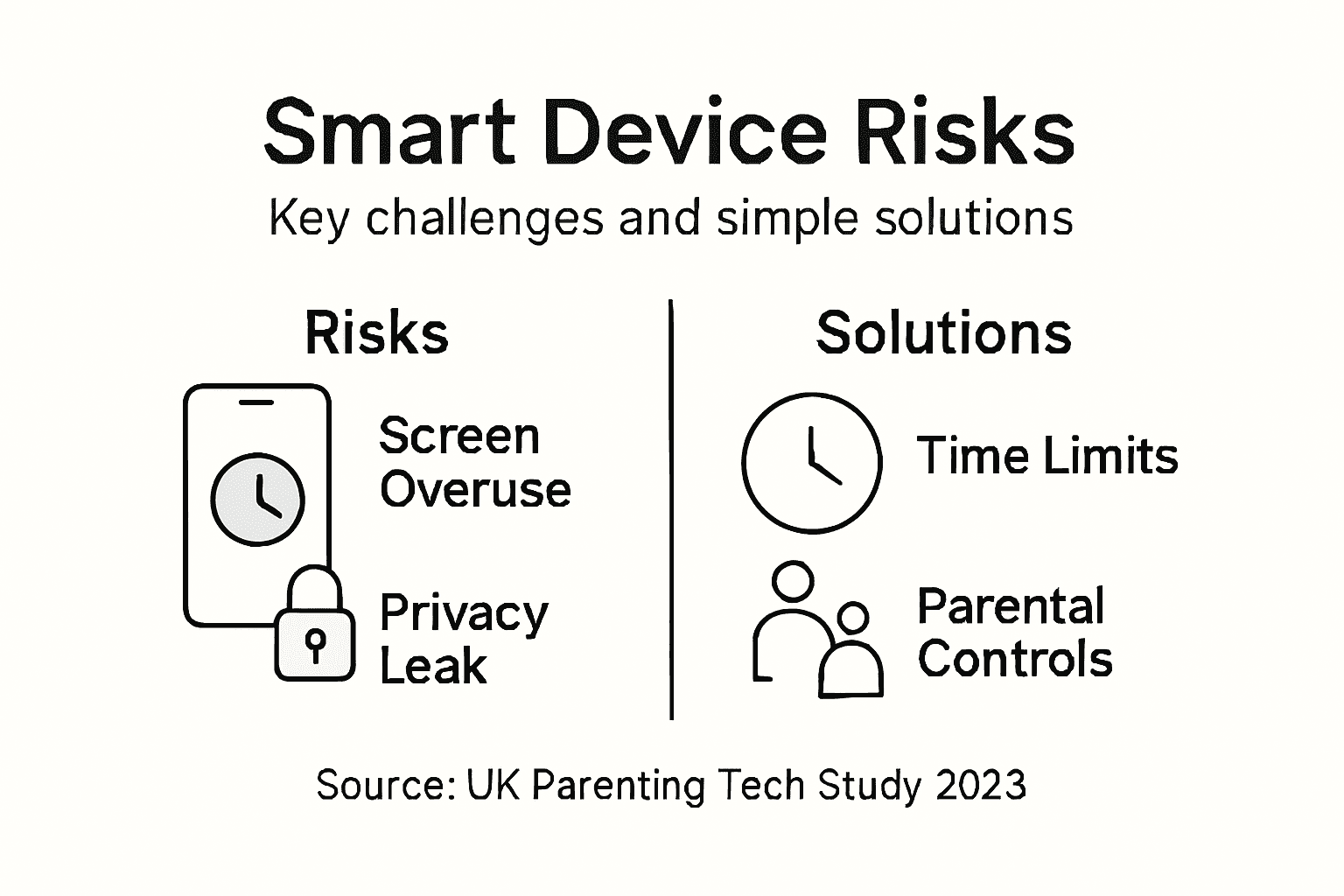
Key risks encompass multiple critical domains:
Psychological and Developmental Risks
- Potential addiction and dependency patterns
- Reduced face-to-face social interactions
- Disrupted sleep cycles
- Diminished attention span
- Increased anxiety and emotional dysregulation
Privacy and Safety Vulnerabilities
- Potential data breaches
- Unintended personal information exposure
- Risk of online predation
- Cyberbullying threats
- Inappropriate content access
Physical Health Concerns
- Prolonged screen time impacts
- Potential vision degradation
- Sedentary behaviour risks
- Disrupted physical activity levels
- Potential posture and muscular issues
Comprehensive digital safety studies emphasise that these risks are not inevitable but require intentional parental intervention, technological literacy, and balanced device management strategies. Understanding these potential challenges enables proactive protection without entirely eliminating the educational and connective benefits of smart technologies.
Below is a summary of key risks versus recommended mitigation strategies for smart device use in families:
| Risk Domain | Example Issue | Effective Mitigation Strategy |
|---|---|---|
| Psychological | Screen addiction | Structured device-free routines |
| Privacy & Safety | Data breaches, cyberbullying | Strong passwords, supervision |
| Physical Health | Sedentary behaviour | Encourage outdoor activities |
| Social Interaction | Reduced face-to-face contact | Promote family conversations |
Pro tip: Implement structured screen time limits and create technology-free zones within your home to mitigate potential negative impacts of digital device overuse.
Best practices for safe and balanced use
Navigating the complex landscape of smart device usage requires deliberate, thoughtful strategies that prioritise children’s wellbeing and developmental needs. Comprehensive digital parenting research highlights the critical role parents play in establishing healthy technological boundaries and fostering digital literacy.
Key best practices for safe and balanced device use include:
Establishing Clear Boundaries
- Create structured daily screen time limits
- Define technology-free zones in the home
- Establish consistent device usage rules
- Use age-appropriate content filters
- Schedule regular digital detox periods
Active Parental Engagement
- Participate in children’s digital experiences
- Discuss online safety and digital citizenship
- Monitor device usage and content
- Encourage critical thinking about digital information
- Model healthy technology interactions
Promoting Alternative Activities
- Encourage physical outdoor play
- Support offline social interactions
- Develop non-digital hobbies and skills
- Create family bonding activities
- Prioritise face-to-face communication
Family technology integration studies emphasise that balanced technology use is not about complete restriction, but about creating a supportive environment that teaches responsible digital engagement and preserves children’s holistic development.
Pro tip: Develop a family technology agreement that outlines usage expectations, consequences, and shared values around digital device use.
Enhance Your Family Life with Smart Solutions from Stomart
Balancing the demands of parenting while ensuring your children’s safety, education and wellbeing can feel overwhelming. The article highlights key challenges such as managing screen time, safeguarding privacy, and maintaining meaningful family interactions through smart devices. At Stomart, we understand these concerns and offer a diverse range of products that support parents in creating a balanced digital environment for their family.
Discover innovative tech accessories and home essentials that help you stay connected and organised without compromising safety or quality time. From smart home gadgets to wellness devices, our carefully selected items empower you to build a secure and engaging atmosphere for your children’s growth. Take advantage of seasonal deals and bestsellers by visiting Stomart.co.uk today and find thoughtful solutions tailored to your family’s lifestyle.
Ready to transform your daily parenting routine with technology that works for you? Explore our electronics selection and home goods collection, and make informed choices that protect and inspire your loved ones now.
Frequently Asked Questions
What are smart devices for parents?
Smart devices for parents are digital technologies that offer internet connectivity, data processing, and interactive functionalities designed to assist in child-rearing and family management. Examples include smartphones, baby monitors, and wearable health trackers.
How do smart devices enhance child safety?
Smart devices enhance child safety through features such as real-time location tracking, video monitoring, and emergency alerts. These capabilities enable parents to supervise their children remotely and respond quickly in emergencies.
What are the educational benefits of using smart devices for children?
Smart devices provide personalised and interactive learning experiences, access to educational content, and skill development tools. They support cognitive growth by adapting to a child’s learning pace and preferences.
What risks should parents be aware of when using smart devices?
Parents should be aware of potential risks such as screen addiction, privacy concerns, and physical health issues linked to excessive screen time. It’s essential to establish guidelines and monitor device usage to mitigate these risks.