

Why Personalised Fashion Matters for Modern Shoppers
on Jan 31, 2026
Standing out in a world full of mass-produced trends can feel impossible when your style is about more than just clothing labels. Personalised fashion offers a bold way to express who you are, blending creative freedom with smart technology and a strong commitment to sustainability. Whether you crave clothing that fits your unique body or want to build a wardrobe reflecting your values, personalisation unlocks meaningful self-expression and conscious choices for British shoppers who refuse to be just another face in the crowd.
Key Takeaways
| Point | Details |
|---|---|
| Personalised Fashion is Comprehensive | It involves a collaborative design process that reflects individual style, body type, and lifestyle needs, utilising advanced digital technologies. |
| Diverse Personalisation Models Exist | Different brands implement unique approaches e.g., Digital-First Personalisation or Sustainable Customisation, catering to varied consumer preferences. |
| Empowerment through Self-Expression | Personalisation allows individuals to share their identities and values, transforming clothing into a medium of personal storytelling. |
| Sustainability is Key | On-demand manufacturing and resource efficiency reduce environmental impact, making personalised fashion a responsible choice for consumers. |
Personalised Fashion Defined and Misconceptions
Personalised fashion represents a sophisticated design approach that goes far beyond traditional clothing selection, transforming how consumers interact with their wardrobe. Interactive design technologies now enable shoppers to experience fashion as a deeply individual expression of identity, rather than simply purchasing pre-designed garments.
At its core, personalised fashion involves a collaborative process between consumers and producers, integrating multiple dimensions of individual preference. This isn’t merely about altering clothing dimensions, but creating a holistic experience that reflects personal style, body type, and lifestyle needs. The key characteristics include:
- Dynamic interaction between consumer and designer
- Utilisation of advanced digital technologies
- Emphasis on individual identity expression
- Customisation beyond standard sizing
- Data-driven design approaches
Many consumers mistakenly believe personalisation is synonymous with custom tailoring, but modern interpretations are far more nuanced. Machine learning algorithms and virtual try-on technologies now enable unprecedented levels of individual adaptation, allowing fashion to become genuinely responsive to individual body dimensions and personal aesthetic preferences.
Personalisation strategies extend well beyond physical product modification, encompassing marketing experiences, recommendation systems, and interactive design methodologies. Collaborative design processes now integrate consumer feedback, digital profiling, and ergonomic considerations to create truly tailored fashion experiences.

Pro tip: When exploring personalised fashion, focus on brands offering interactive design tools and comprehensive size recommendations rather than settling for generic sizing approaches.
Variations in Personalised Fashion Experiences
Personalised fashion experiences are far from uniform, with each brand and consumer segment developing unique approaches to individualised design and interaction. Emerging technologies in the fashion industry are driving remarkable diversity in how personalisation is conceptualised and implemented across different market segments.
The variations in personalised fashion experiences can be broadly categorised into several distinctive models:
- Digital-First Personalisation: Brands leveraging artificial intelligence and machine learning
- Sustainable Customisation: Eco-conscious approaches focusing on minimal waste
- Body-Positive Sizing: Inclusive design strategies beyond traditional size ranges
- Cultural Identity Expression: Personalisation reflecting individual heritage and aesthetic preferences
- Interactive Design Platforms: Consumer-driven customisation technologies
These approaches demonstrate that personalisation is not a monolithic concept, but a dynamic, multifaceted strategy tailored to different consumer needs and technological capabilities. Digital platforms now enable unprecedented levels of individual interaction, allowing consumers to become co-creators in their fashion experience rather than passive recipients.
Moreover, technological sophistication varies significantly across brands. Some organisations offer basic size recommendations, while others provide immersive virtual try-on experiences, 3D body scanning, and algorithmically curated style suggestions that adapt in real-time to individual preferences and body measurements.
To better understand the evolving landscape, here is a comparison of personalised fashion models and their main benefits:
| Personalisation Model | Key Technologies Used | Primary Benefit |
|---|---|---|
| Digital-First Personalisation | AI, machine learning | Real-time customisation |
| Sustainable Customisation | Eco-friendly platforms | Lower environmental impact |
| Body-Positive Sizing | 3D body scanning | Greater inclusivity |
| Cultural Identity Expression | Cultural data analytics | Enhanced heritage reflection |
| Interactive Design Platforms | Virtual design tools | Consumer creative freedom |
Pro tip: Explore fashion brands offering multiple personalisation touchpoints to find the most comprehensive and engaging individual design experience.
How Personalisation Empowers Self-Expression
Exploring fashion as a form of personal narrative reveals how clothing has transcended mere fabric and design to become a powerful medium of individual storytelling. Fashion is no longer just about covering the body, but about communicating complex personal identities, cultural backgrounds, and individual values.
Personalisation empowers self-expression through multiple transformative dimensions:
- Symbolic Communication: Clothing as a non-verbal language
- Cultural Representation: Reflecting heritage and personal history
- Emotional Authenticity: Expressing inner feelings through external appearance
- Resistance to Mass Trends: Creating unique personal narratives
- Community Building: Connecting with like-minded individuals
Modern personalisation technologies enable unprecedented levels of individual creativity. Digital customisation platforms allow consumers to move beyond passive consumption, becoming active designers of their personal aesthetic. This shift transforms fashion from a prescriptive industry to an interactive, collaborative experience where individual creativity takes centre stage.
Moreover, personalized fashion represents a cultural revolution that challenges traditional aesthetic norms. By providing tools for individual expression, these technologies democratise fashion, allowing people to break free from standardised design constraints and craft representations that genuinely reflect their multifaceted identities.
Pro tip: Experiment with multiple personalisation options to discover fashion choices that truly resonate with your unique personality and lived experiences.
Sustainability and Ethical Impacts of Personalised Fashion
Ethical challenges in fashion personalization reveal a complex intersection between consumer preferences and global sustainability practices. By reimagining fashion production, personalisation offers a nuanced approach to addressing environmental and social responsibility within the textile industry.
The key sustainable dimensions of personalised fashion include:
- Reduced Overproduction: Minimising textile waste
- On-Demand Manufacturing: Creating clothing only when needed
- Resource Efficiency: Optimising material usage
- Supply Chain Transparency: Improving labour conditions
- Consumer Empowerment: Enabling conscious purchasing decisions
Digital technologies are transforming traditional manufacturing paradigms. Precision production techniques allow brands to create garments that precisely match individual measurements, dramatically reducing the environmental footprint associated with mass-produced clothing that often ends up in landfills.
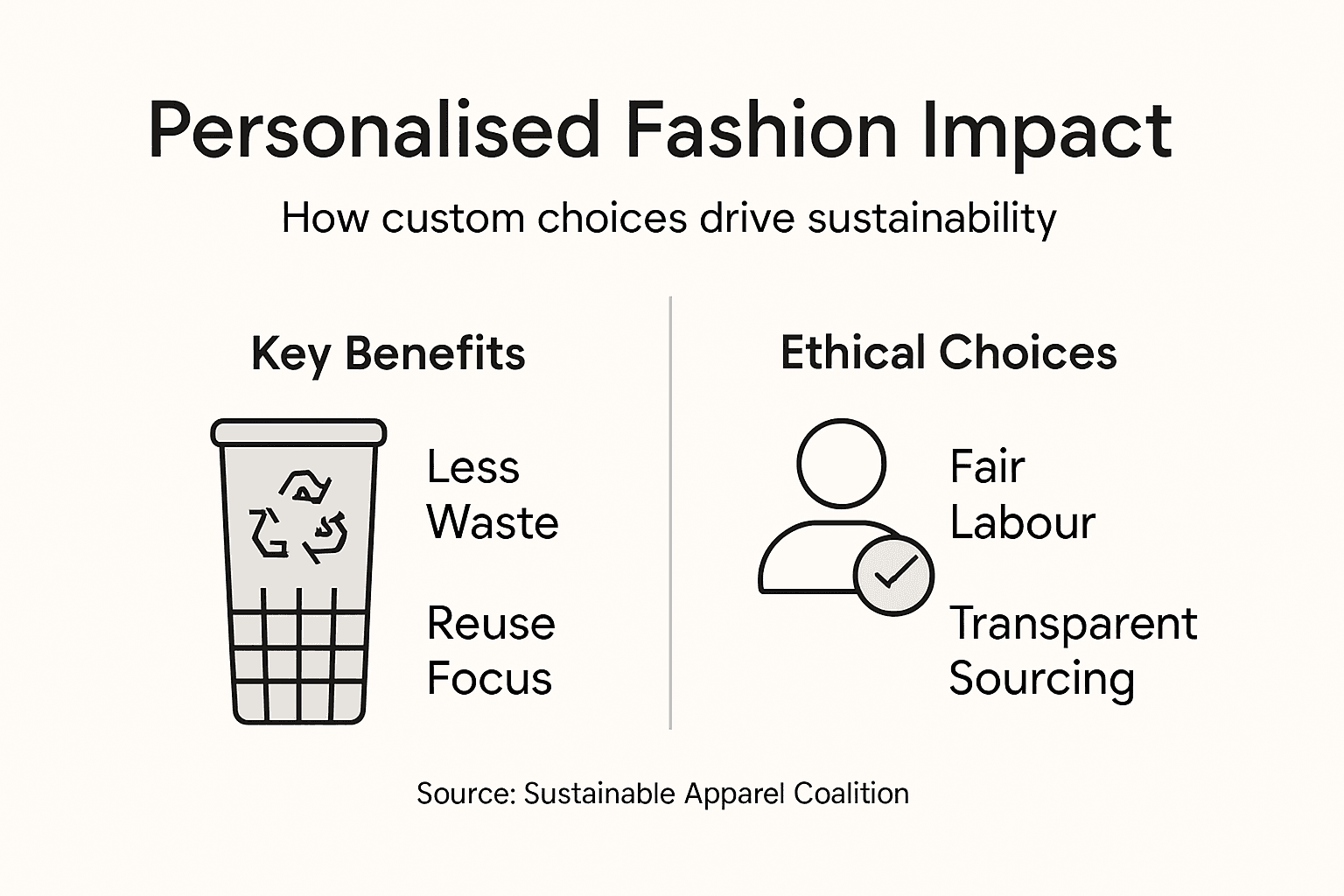
Sustainable innovation in fashion technologies demonstrates how personalization can serve as a powerful mechanism for environmental conservation. By enabling consumers to participate directly in design processes, these technologies create a more responsible and engaged approach to fashion consumption.
Here’s a summary highlighting how personalisation supports sustainable and ethical fashion:
| Sustainability Factor | Impact on Fashion Production | Consumer Advantage |
|---|---|---|
| On-demand manufacturing | Minimises excess inventory and waste | Access to unique wardrobe |
| Resource efficiency | Reduces material and energy use | More conscious consumption |
| Transparency | Improves supply chain visibility | Informs ethical purchasing |
| Consumer empowerment | Promotes decision-making power | Encourages responsible choices |
Pro tip: Choose brands that offer transparent production processes and demonstrate genuine commitment to sustainable, personalized fashion practices.
Risks, Accessibility, and Common Challenges
Designing inclusive wearable technologies reveals significant challenges in creating personalised fashion experiences that genuinely cater to diverse human bodies and identities. The journey towards truly inclusive personalisation is fraught with complex social, technological, and cultural barriers that require nuanced understanding.
Key challenges in personalised fashion accessibility include:
- Technological Bias: Algorithmic limitations in representation
- Size Inclusivity: Beyond standard body measurements
- Economic Barriers: High costs of personalization
- Cultural Sensitivity: Respecting diverse aesthetic preferences
- Privacy Concerns: Data protection and user autonomy
Algorithmic personalization systems present significant risks, particularly in potentially reinforcing existing social stereotypes. These technologies must navigate a delicate balance between providing tailored experiences and preserving individual creative expression.
Privacy risks in fashion recommender systems highlight the critical need for transparent, ethical approaches to data usage. Consumers increasingly demand personalization while simultaneously seeking protection from invasive tracking and potential misuse of their personal information.
Pro tip: Always review privacy settings and data usage policies when engaging with personalized fashion platforms to maintain control over your personal information.
Discover Personalised Fashion Solutions That Reflect You
Modern shoppers face the challenge of finding clothing that truly fits their unique style, body shape and values. The article highlights how personalised fashion goes beyond custom tailoring to embrace advanced technologies like AI and 3D body scanning, delivering more inclusive, sustainable and expressive wardrobe choices. If you are seeking a more meaningful connection with your clothing that respects your individuality and supports responsible consumption, this is the transformation you need.
At Stomart.co.uk, you can explore fashion accessories and personal wellness items designed to empower your self-expression while aligning with your lifestyle needs. Experience dynamic product discovery through our carefully curated ranges, seasonal deals and bestsellers that make it easy to find pieces tailored for you. Act now to enjoy personalised offers that celebrate your identity and support sustainable shopping habits. Visit our homepage to start your journey towards a wardrobe that truly belongs to you.
Frequently Asked Questions
What is personalised fashion?
Personalised fashion is a design approach that allows consumers to create clothing that reflects their individual style, body type, and lifestyle needs, utilising advanced technologies for customisation beyond standard sizing.
How does personalised fashion enhance self-expression?
Personalised fashion empowers self-expression by allowing individuals to communicate their identities, cultural backgrounds, and values through custom garments that reflect their unique tastes and preferences.
What are the sustainability benefits of personalised fashion?
Personalised fashion promotes sustainability by reducing overproduction through on-demand manufacturing, optimising resource use, and improving supply chain transparency, thereby encouraging environmentally conscious purchasing decisions.
What are the challenges of accessibility in personalised fashion?
Key challenges include technological bias, the need for size inclusivity beyond standard measurements, economic barriers related to costs, cultural sensitivity concerning aesthetic preferences, and privacy concerns regarding data protection.