

Clutter Raises Stress Hormones 30%: Boost Home Productivity
on Feb 28, 2026Visual clutter in your home increases cortisol levels by 20 to 30 percent, elevating stress without you even realizing it. This invisible psychological burden fragments your attention, reducing productivity by up to 40 percent and draining mental energy daily. If you struggle with focus, anxiety, or feeling overwhelmed at home, clutter may be the hidden culprit sabotaging your wellbeing. This guide reveals the science behind clutter’s impact on your mind and provides a clear framework to reclaim mental clarity, boost productivity, and transform your living space into a calming, functional environment.
Key Takeaways
| Point | Details |
|---|---|
| Clutter triggers stress invisibly | Visual clutter raises cortisol by 20 to 30 percent, activating chronic stress responses without conscious awareness. |
| Productivity drops sharply | Task performance declines up to 40 percent due to attention fragmentation and cognitive overload in cluttered spaces. |
| Common beliefs are wrong | Most people underestimate clutter’s mental impact, mistakenly believing it only affects aesthetics or even boosts creativity. |
| Psychological frameworks work | Structured approaches targeting cognitive, emotional, and behavioral effects improve decluttering success by 40 percent. |
| Decluttering delivers measurable benefits | Reducing clutter lowers anxiety by 30 percent, improves mood by over 20 percent, and enhances sleep quality significantly. |
Understanding the Invisible Psychological Impact of Clutter
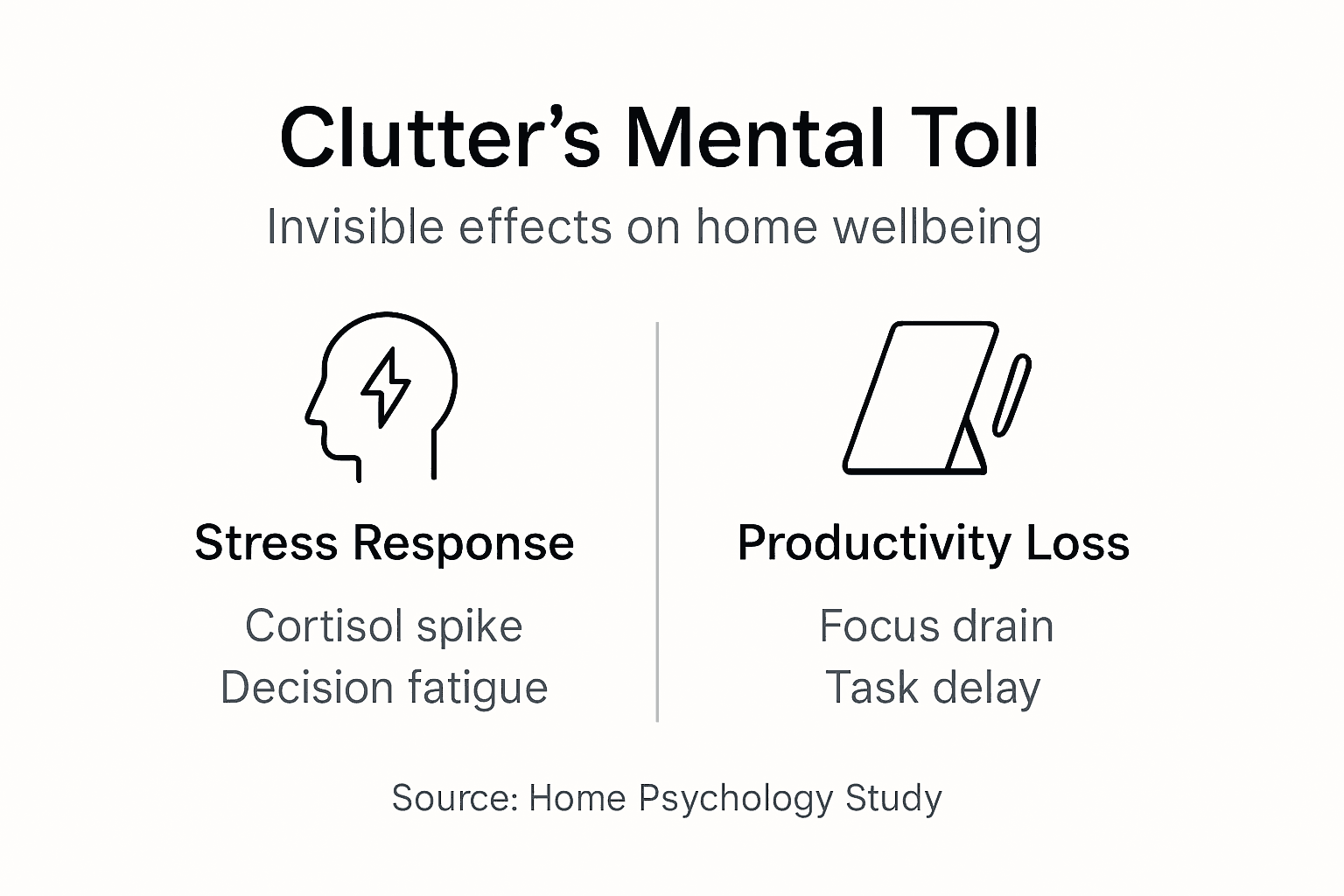
Clutter doesn’t just make your home look messy. It activates your brain’s stress response, releasing cortisol and triggering chronic psychological strain you might not consciously recognize. Research shows visual clutter increases cortisol by 20 to 30 percent, putting your body in a constant state of alert. This invisible burden operates below your awareness, making you feel anxious or irritable without understanding why.
Beyond stress hormones, clutter consumes precious cognitive resources. Your brain processes every visible object in your environment, which fragments attention and overloads mental capacity by approximately 30 percent. This mental taxation creates a constant background hum of cognitive effort, draining the energy you need for important tasks. Many people vastly underestimate this effect because it happens silently, outside conscious thought.
The cumulative impact of these invisible processes reduces overall wellbeing and daily functioning. Mental fatigue becomes your default state, making simple decisions feel overwhelming and complex tasks nearly impossible. You might blame yourself for lack of motivation or focus, when the real issue is your environment quietly sabotaging your mental health. Understanding what untidy spaces say about you psychologically is the first step toward meaningful change.
Pro Tip: Spend five minutes scanning your main living area. Notice how your eyes jump from object to object. That mental movement is cognitive load in action, quietly exhausting your brain throughout the day.
Key invisible effects include:
- Elevated cortisol creating chronic stress without obvious triggers
- Attention fragmentation reducing focus by up to 30 percent
- Mental fatigue draining energy for productive activities
- Reduced emotional regulation leading to mood instability
How Clutter Reduces Productivity and Cognitive Performance
Once clutter triggers stress responses and consumes cognitive resources, these invisible burdens translate into concrete productivity losses you can measure and feel. Your brain’s alert system goes into overdrive when surrounded by visual chaos, constantly scanning for threats or important items. This state of hypervigilance reduces task efficiency by up to 40 percent, as mental energy diverts from your actual work to processing environmental noise.

Decision fatigue compounds these problems dramatically. Every cluttered surface presents dozens of micro decisions about what to move, where to place things, or what requires attention. Your mental bandwidth gets consumed before you even start meaningful work. This explains why you might feel exhausted after simply looking around a messy room, having accomplished nothing productive.
Structured environments support optimal cognitive function by reducing this unnecessary mental load. When everything has a designated place and surfaces stay clear, your brain can direct full attention toward chosen tasks. Implementing home organisation ideas creates the foundation for sustained focus and higher quality work output.
Specific productivity impacts:
- Visual distractions pull focus every 3 to 5 minutes on average
- Task switching from clutter interruptions costs 20 to 25 minutes per recovery
- Decision quality drops by 30 percent in cluttered versus organized spaces
- Working memory capacity decreases, limiting complex problem solving
Steps to reclaim cognitive performance:
- Clear your desk completely, returning only essential items for current tasks
- Designate specific homes for frequently used objects to eliminate search time
- Implement a five minute end of day reset to maintain organization
- Use visual barriers like drawer organizers to hide non essential items
| Environment Type | Average Focus Duration | Task Completion Rate | Decision Quality |
|---|---|---|---|
| Highly Cluttered | 8 to 12 minutes | 60 percent baseline | 30 percent below optimal |
| Moderately Cluttered | 15 to 20 minutes | 75 percent baseline | 15 percent below optimal |
| Organized | 35 to 45 minutes | 95 to 100 percent baseline | Optimal performance |
Creating an organized home office directly impacts your professional output and daily task management. The difference between struggling through foggy thinking and achieving flow state often comes down to environmental structure.
Pro Tip: Take a photo of your workspace. Visual documentation reveals clutter your eyes have learned to ignore, helping you identify specific problem areas draining cognitive resources.
Common Misconceptions About Clutter and Mental Health
Many people cling to false beliefs about clutter that prevent them from addressing its psychological impact. The most persistent myth suggests clutter only affects aesthetics or reflects personal style rather than mental health. This misconception allows the invisible cognitive and emotional burdens to continue unchecked, as people dismiss organization as mere preference rather than psychological necessity.
Another widespread belief holds that clutter enhances creativity by providing stimulating visual variety. While some perceive clutter as sparking creativity, research shows 75 percent of people experience concentration loss rather than creative gains. The mental fragmentation caused by visual chaos overwhelms any potential inspirational benefit for the vast majority. This myth particularly harms remote workers and students who struggle with focus but resist organizing their spaces.
Lack of awareness about clutter’s genuine psychological effects creates the biggest barrier to change. When you don’t recognize the connection between your environment and mental state, you naturally attribute stress, distraction, and mood problems to other causes. Understanding these realities, including what your sleep setup says about mental health, empowers you to take decluttering seriously as a mental health intervention.
Common false beliefs to abandon:
- Clutter is harmless and only matters for appearance
- Messy spaces indicate creativity and free thinking
- Organization is for naturally tidy people, not a skill anyone can develop
- Clutter’s effects are too minor to justify decluttering effort
- You need large blocks of time to make meaningful progress
Recognizing these misconceptions as false opens the door to meaningful environmental changes that dramatically improve mental wellbeing. Your living space isn’t neutral; it actively shapes your psychological state every moment you spend in it.
A Psychological Framework for Understanding and Addressing Clutter
With misconceptions cleared, you need a structured approach to tackle clutter’s multifaceted effects systematically. The psychological framework divides clutter’s impact into three interconnected categories: cognitive overload, emotional burden, and behavioral disruption. This mental model helps you identify which specific problems your clutter creates and match them with targeted solutions.
Cognitive overload encompasses attention fragmentation, decision fatigue, and working memory depletion discussed earlier. Emotional burden includes stress hormone elevation, anxiety symptoms, and mood dysregulation clutter triggers. Behavioral disruption covers procrastination patterns, difficulty starting tasks, and inability to maintain routines in chaotic spaces. Each category requires different intervention strategies for maximum effectiveness.
Research demonstrates targeted approaches increase decluttering success rates by approximately 40 percent compared to generic tidying efforts. When you understand whether clutter primarily drains your cognitive resources, emotional stability, or behavioral consistency, you can customize solutions that address your specific challenges. This personalized strategy creates sustainable improvements rather than temporary surface changes.
| Impact Category | Primary Effects | Effective Interventions |
|---|---|---|
| Cognitive Overload | Attention fragmentation, decision fatigue, reduced working memory | Clear surfaces, designated item homes, visual barriers |
| Emotional Burden | Elevated cortisol, anxiety, mood instability | Calming color schemes, personal meaningful items only, breathing space |
| Behavioral Disruption | Procrastination, routine difficulty, task avoidance | Daily reset rituals, progress tracking, reward systems |
Understanding how these three areas interact in your life leads to comprehensive wellbeing improvements. Most people experience all three impacts simultaneously, but one usually dominates as the primary source of distress.
Framework application steps:
- Identify which category affects you most severely through honest self assessment
- Target that area first with specific interventions for quick wins
- Gradually expand efforts to address secondary impact categories
- Monitor improvements in mental clarity, emotional stability, and daily functioning
Pro Tip: Keep a simple daily log noting stress levels, focus quality, and task completion for one week. Patterns will reveal which impact category most urgently needs attention in your environment.
The Psychological Benefits of Decluttering and Organized Spaces
Applying the framework delivers measurable mental health improvements you can track and feel within weeks. Decluttering reduces anxiety symptoms by approximately 30 percent, as removing visual chaos calms your nervous system and lowers cortisol production. This isn’t subtle; most people report noticeably easier breathing, reduced muscle tension, and fewer racing thoughts after organizing their primary living spaces.
Sleep quality improves by over 20 percent in organized bedrooms compared to cluttered ones. Your brain needs environmental cues that signal safety and rest to properly transition into sleep states. Clutter sends constant activation signals, keeping you in a state of subtle alertness even when exhausted. Mood regulation also strengthens significantly, as the cognitive load reduction frees mental resources for emotional processing and perspective.
These benefits aren’t temporary boosts that fade after initial excitement. Regular decluttering maintenance sustains psychological improvements for months and years. Creating a productive study corner or workspace demonstrates how environmental structure becomes the foundation for lasting mental wellness rather than requiring constant willpower.
Documented psychological benefits:
- 30 percent reduction in anxiety symptoms within four to six weeks
- 20 plus percent improvement in sleep quality and duration
- Enhanced mood stability with fewer emotional swings
- Increased sense of control and self efficacy
- Better emotional regulation during stressful periods
Your home environment either supports or undermines your mental health continuously. Investing in organization creates a positive feedback loop where reduced stress makes maintaining order easier, which further reduces stress. This sustainable cycle contrasts sharply with clutter’s negative spiral of increasing chaos and deteriorating wellbeing.
Applying Psychological Insights to Practical Decluttering Strategies
Translating framework knowledge into concrete action requires evidence based behavioral techniques that override common obstacles. Start by leveraging the fresh start effect, choosing a meaningful date like a Monday, month beginning, or birthday to launch your decluttering project. This psychological principle increases commitment and follow through by 35 percent compared to arbitrary start times.
Implement the two minute rule for daily maintenance. If organizing an item takes less than two minutes, do it immediately rather than deferring. This prevents small messes from accumulating into overwhelming clutter while building automatic tidying habits. Pair this with designated homes for every object, which reduces the cognitive load of deciding where things belong by 40 percent.
Behavioral change succeeds through small, consistent actions rather than exhausting marathon sessions. Break decluttering into 15 minute daily blocks focused on single categories or zones. This approach prevents decision fatigue and creates sustainable momentum. Research on home organisation shows incremental progress produces better long term results than sporadic intensive efforts.
Practical implementation steps:
- Choose one high impact area like your bedroom or desk for initial focus
- Remove everything from that space, then return only actively used items
- Assign specific homes to each returned item using containers or designated spots
- Implement a five minute daily reset routine before bed to maintain order
- Gradually expand the system to additional rooms once the first area stabilizes
Environmental design principles enhance these behavioral strategies significantly. Use closed storage to hide visual clutter while keeping items accessible. Implement smart storage solutions that reduce perceived stress by 35 percent through improved visual aesthetics. Choose organizational products in calming colors and simple designs that support rather than compete for attention.
Key psychological principles:
- Make desired behaviors easier than undesired ones through strategic item placement
- Use visual cues like empty baskets to prompt tidying actions
- Celebrate small wins to reinforce positive associations with organization
- Track progress visually with before photos to maintain motivation
Pro Tip: Create a “decision free zone” like your bedside table where only three specific items belong. This trains your brain in the clarity organized spaces provide without overwhelming you with choices.
Discover Tools and Ideas for a Clutter-Free, Stress-Reducing Home
Transforming psychological insights into lasting environmental change often requires the right organizational tools and modern solutions. Stomart offers expertly curated products designed specifically to reduce visual clutter while enhancing your home’s functionality and aesthetic appeal. From innovative storage systems to space saving furniture, you’ll find practical options that target the cognitive, emotional, and behavioral impacts discussed throughout this guide.
Explore comprehensive home organisation ideas that blend psychological principles with stylish design, creating spaces that actively support mental clarity and productivity. Discover modern décor essentials that prove organized living doesn’t mean sacrificing personal style. Check out innovative home essentials that simplify daily routines while maintaining the calming, clutter free environment your mental health deserves.
Frequently Asked Questions About Clutter’s Psychological Effects
What physiological changes happen due to clutter’s psychological effects?
Clutter triggers measurable increases in cortisol production, elevating your stress hormone levels by 20 to 30 percent even when you’re unaware of feeling stressed. This hormonal shift activates your sympathetic nervous system, raising heart rate and blood pressure while suppressing immune function. Over time, chronic cortisol elevation contributes to inflammation, sleep disruption, and increased disease risk beyond just feeling anxious or overwhelmed.
How quickly can decluttering reduce stress and improve focus?
Most people notice initial improvements within 48 to 72 hours of clearing a primary living space like a bedroom or workspace. Cortisol levels begin normalizing within one week of sustained organization, while focus and cognitive performance show measurable gains after two to three weeks. Full psychological benefits including 30 percent anxiety reduction typically manifest within four to six weeks of maintaining organized environments.
Are there specific organization products proven to help mental clarity?
Closed storage solutions like drawers, cabinets, and opaque bins reduce visual clutter most effectively, lowering cognitive load by up to 40 percent compared to open shelving. Labeled containers eliminate decision making about item locations, while drawer dividers and desk organizers create designated homes that prevent accumulation. Vertical storage maximizes space efficiency while maintaining clear surfaces, which research links directly to improved concentration and reduced stress.
Can small, incremental decluttering efforts be effective?
Yes, 15 minute daily sessions produce better long term results than occasional marathon decluttering days. Small consistent actions build sustainable habits without triggering decision fatigue or overwhelm. Focusing on single categories or small zones prevents the cognitive overload that causes many people to abandon larger projects. Incremental progress also provides regular psychological wins that reinforce motivation and create positive associations with organization.
How do I maintain decluttering habits long term to prevent relapse?
Implement a non negotiable five minute daily reset routine, ideally before bed, to return items to designated homes. Use the one in, one out rule where acquiring new items requires removing something existing to prevent accumulation. Schedule monthly 30 minute reviews to assess what you actually use versus what creates visual noise. Link maintenance behaviors to existing habits like making coffee or evening routines, which increases consistency through behavioral stacking and reduces reliance on willpower alone.