

Hidden philosophy of everyday objects in your home
on Mar 23, 2026You likely see your kitchen utensils, living room furniture, and family photographs as simple functional items or decorative pieces. Yet these ordinary household objects carry profound philosophical meanings that shape your personal identity, preserve cultural memories, and strengthen family bonds in ways you’ve never considered. The objects surrounding you aren’t just things; they’re silent communicators of values, embodiments of heritage, and architects of emotional connection. This exploration reveals how recognising these hidden dimensions transforms your relationship with your home and the items within it.
Key Takeaways
| Point | Details |
|---|---|
| Objects as identity symbols | Everyday objects carry personal identity and cultural memories that shape how you understand yourself and your place in the world. |
| Action oriented items | Action oriented items enable tasks while contemplation oriented items invite reflection. |
| Cherished objects strengthen families | Shared meanings around objects foster family identity and lasting bonds, as members articulate why items matter and connect them to values. |
| Design reinforces social norms | Design decisions can encode expectations about behaviour through how objects function and are used in daily life. |
The symbolic meaning behind everyday home objects
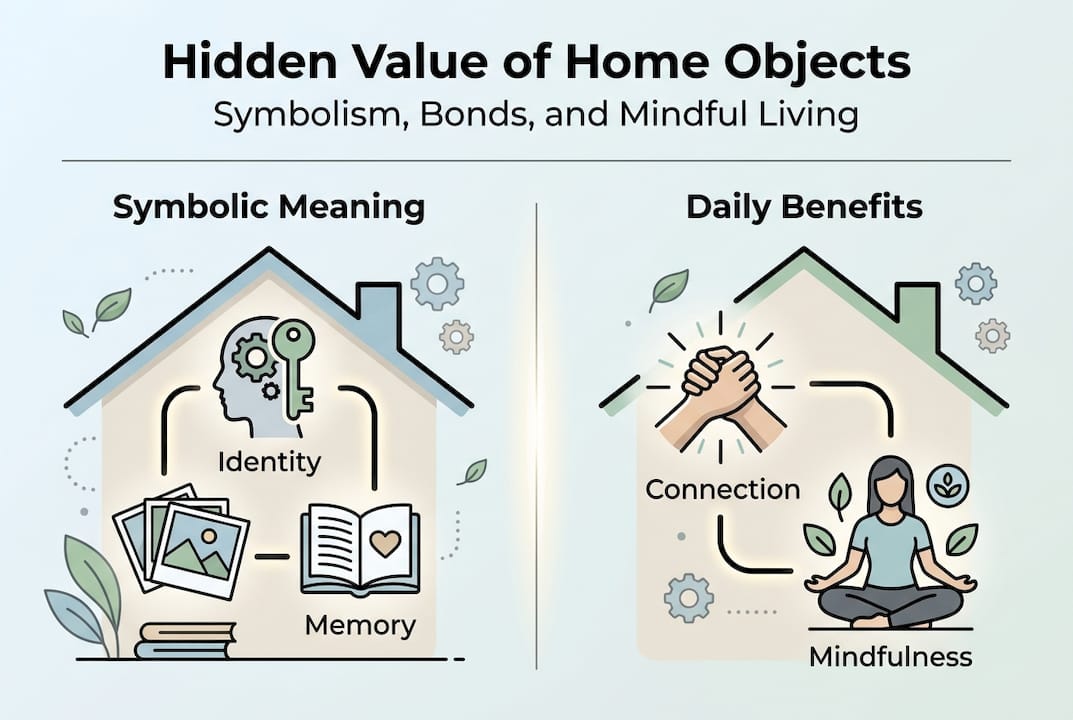
Everyday household objects carry philosophical meanings as symbols of personal identity, cultural memory, and emotional attachments. Your grandmother’s teapot isn’t merely a vessel for brewing tea. It represents continuity with your heritage, evokes specific memories of shared moments, and communicates belonging to a family narrative that extends beyond your individual existence. These symbolic dimensions transform ordinary items into repositories of meaning that shape how you understand yourself and your place in the world.
Philosophers distinguish between action-oriented and contemplation-oriented objects. Action-oriented items like kitchen knives, hammers, and vacuum cleaners exist primarily to enable doing. You interact with them to accomplish specific tasks, and their value lies in functional efficiency. Contemplation-oriented objects like family photographs, inherited jewellery, and decorative ceramics invite reflection rather than action. They exist to be looked at, remembered, and emotionally experienced.
- Action-oriented objects fade into the background during use; you focus on the task, not the tool
- Contemplation-oriented items demand attention and emotional engagement
- Many objects occupy a hybrid space, serving both practical and symbolic functions
- The same object type can hold different meanings for different people based on personal history
Emotional attachments explain why you can’t simply replace a worn blanket with an identical new one. The original carries memories embedded through years of use. Its specific stains, faded colours, and worn patches tell a story that a pristine replacement cannot duplicate. This symbolic reality operates alongside functional reality, and recognising this duality enriches your experience of home.
“Objects are not just things; they are extensions of ourselves, carrying the weight of our experiences and the essence of our relationships.”
Understanding these symbolic dimensions helps you make more intentional interior design choices that align with your values rather than following trends that feel hollow or disconnected from your authentic self.
How cherished objects build strong family bonds
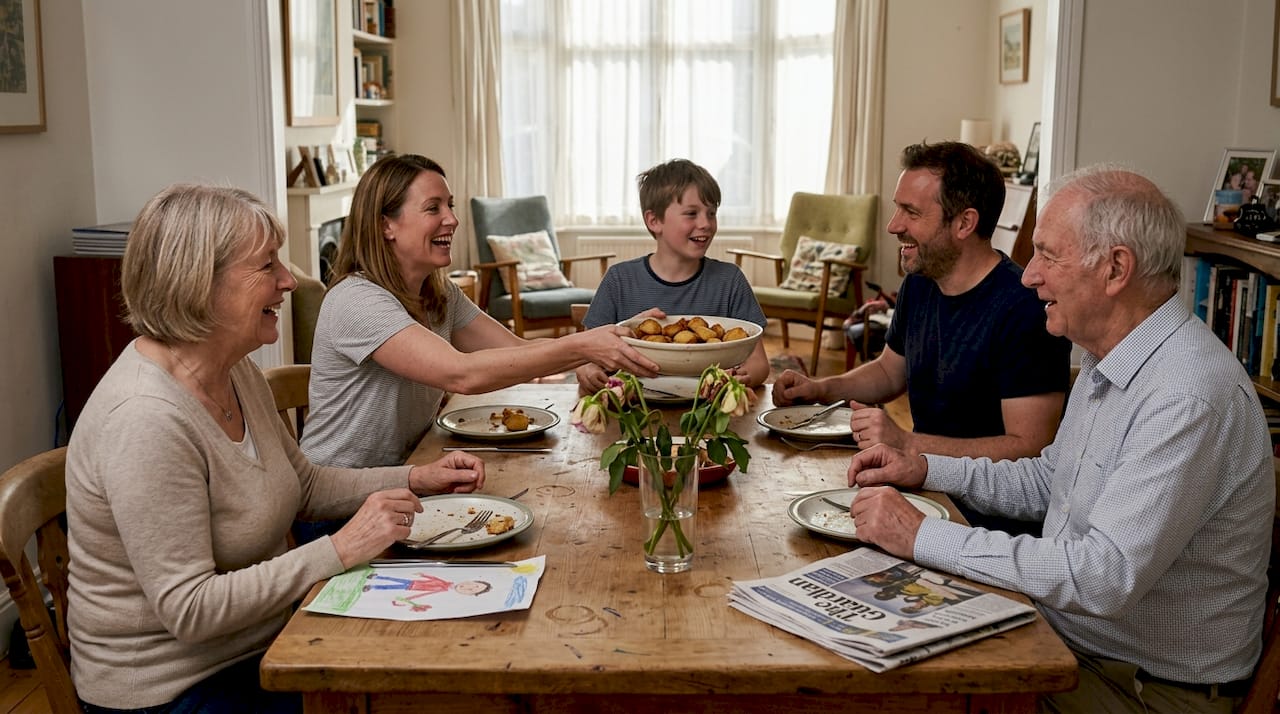
Empirical research reveals the concrete impact of meaningful objects on family relationships. A survey of 80 families revealed cherished objects foster family bonds in homes with shared meanings versus detached ones. Researchers identified distinct patterns between what they termed “happy homes” and “detached homes” based on how family members related to household objects.
In happy homes, objects served as communicators of shared family identity. A dining table wasn’t just furniture; it represented countless family meals, difficult conversations, celebrations, and the ongoing ritual of gathering. Children in these households could articulate why specific objects mattered and connect them to family stories and values. Parents intentionally curated items that reflected family heritage and aspirations.
| Home type | Object relationship | Emotional outcome |
|---|---|---|
| Happy homes | Shared symbolic meanings | Strong family bonds and identity |
| Detached homes | Purely functional view | Weak emotional connection |
| Happy homes | Objects as family communicators | Enhanced sense of belonging |
| Detached homes | Individual object preferences | Fragmented family narrative |
Detached homes exhibited a starkly different pattern. Objects remained purely functional or reflected individual preferences without connecting to a larger family narrative. Family members couldn’t identify objects that represented shared values or history. The home felt like a collection of individual spaces rather than a unified family environment.
This distinction matters because it demonstrates how intentional object curation directly influences family emotional health. Objects become the physical manifestation of family culture, providing tangible touchpoints that reinforce belonging and shared identity. A child who understands why the family displays certain photographs, keeps specific heirlooms, or chooses particular decorative items absorbs family values through these material expressions.
Pro Tip: Create a “family story shelf” where you rotate meaningful objects quarterly, using each rotation as an opportunity to share the stories and values these items represent with your children.
The research also revealed that symbolic attachment differs fundamentally from mere functional attachment. You might prefer a specific coffee mug because it keeps drinks hot effectively, but you cherish your grandmother’s chipped teacup because it connects you to her memory and your family’s tea-drinking tradition. The latter attachment runs deeper and proves more resistant to replacement, even when superior functional alternatives exist.
Applying these insights through your homeware styling choices transforms your house into a home that actively strengthens family bonds through intentional material culture.
Object mechanics and social norms: the example of the Berlin Key
Object design doesn’t merely serve function; it programmes human behaviour and enforces social norms. The Berlin Key’s design forces locking at night but allows daytime access, blending technology and sociology as a “programme of action.” This historical key system, used in Berlin apartment buildings, provides a fascinating case study in how physical objects shape social behaviour.
The Berlin Key operates through clever mechanical design:
- The key must be inserted fully through the lock from either side
- During daytime hours, the key can be withdrawn after unlocking, allowing entry without forcing a lock
- At night, the mechanism requires the key to remain inserted and turned to unlock, forcing the user to lock the door after entry
- This design physically prevents residents from leaving the building entrance unlocked at night
- The system distributes social responsibility across all residents through mechanical enforcement
This example illustrates how objects function as hybrid human-object agencies rather than neutral tools awaiting human intention. The key doesn’t simply enable locking; it actively shapes when and how locking occurs, removing human choice at specific times. The object becomes a social actor, enforcing community norms through its physical properties.
For homeowners, this principle extends beyond historical key systems. Modern smart locks, childproof cabinet latches, and timed light switches all embed social programmes into their mechanical or digital design. A childproof medicine cabinet doesn’t just store medications; it enforces safety protocols by making access difficult for small children while remaining manageable for adults.
“The genius of the Berlin Key lies not in its complexity but in how it makes the socially responsible action the path of least resistance.”
Understanding object mechanics helps you make intentional choices about which behaviours you want to encourage or discourage in your home. A cosy meditation corner with comfortable seating and minimal distractions doesn’t just provide a space for meditation; it programmes regular mindfulness practice by reducing friction and making the desired behaviour easier than alternatives.
The limits of this approach matter too. Objects can nudge and shape behaviour, but they cannot completely override human agency. A determined person can work around most mechanical constraints. The Berlin Key succeeds because it aligns mechanical design with existing social norms rather than attempting to create entirely new behaviours through force alone.
Embracing imperfection and mindfulness in home objects
Japanese wabi-sabi in wooden objects embraces imperfection for mindfulness and sustainability, turning utility into meditative ritual. This aesthetic philosophy offers a radical alternative to the pursuit of flawless, mass-produced perfection that dominates contemporary consumer culture. Wabi-sabi finds beauty in impermanence, imperfection, and incompleteness.
The core principles of wabi-sabi transform how you relate to household objects:
- Natural materials reveal their authentic character through grain patterns, colour variations, and aging
- Imperfections highlight uniqueness rather than manufacturing defects requiring correction
- Objects improve with age as patina and wear marks tell stories of use and care
- Simplicity and restraint take precedence over ornate decoration or technological complexity
- Transience becomes beautiful rather than threatening; nothing lasts forever, and that’s acceptable
A wooden cutting board exemplifies these principles beautifully. Mass-produced plastic boards promise uniformity and easy replacement. A handcrafted wooden board accepts knife marks as evidence of meals prepared, develops a rich patina from oils and use, and requires mindful maintenance through regular oiling and proper cleaning. Each interaction becomes a small ritual of care rather than thoughtless utility.
Pro Tip: Choose one wooden object for your kitchen and commit to its care as a mindfulness practice. The five minutes spent oiling and maintaining it monthly creates a meditative ritual that connects you to materiality and impermanence.
This philosophy extends beyond aesthetics into sustainability and slow living. Objects designed to be replaced frequently create a disposable relationship with material goods. Wabi-sabi objects invite long-term relationships where aging enhances rather than diminishes value. Your grandfather’s worn leather chair tells a richer story than a pristine showroom replacement ever could.
The mindfulness dimension proves equally significant. Modern life encourages rushing through tasks with minimal attention. Wabi-sabi objects demand presence. Using a handcrafted ceramic mug requires noticing its weight, texture, and unique glaze patterns. This noticing pulls you into the present moment, transforming a mundane act into a brief meditation.
Applying wabi-sabi doesn’t require replacing everything with expensive artisan goods. It means shifting perspective to value character over perfection, longevity over novelty, and mindful use over thoughtless consumption. Your kitchen gadget choices reflect this philosophy when you prioritise durable, repairable items over disposable convenience, and your everyday lifestyle gadgets can embody these principles through thoughtful material selection and timeless design.
The contrast with contemporary consumer culture couldn’t be starker. Advertising constantly pushes newness, perfection, and upgrade cycles. Wabi-sabi counters this by celebrating what you already own, finding beauty in its evolution, and resisting the manufactured dissatisfaction that drives endless consumption.
Bring meaningful design into your home today
Transforming these philosophical insights into practical reality starts with intentional curation of your home environment. You’ve discovered how objects communicate identity, strengthen family bonds, programme behaviour through design, and invite mindfulness through imperfection. Now comes the application phase where these concepts shape your actual living space.
Stomart’s curated homeware collections offer starting points for building a home that reflects these deeper values rather than following hollow trends. Browse with new awareness, asking which items carry potential for symbolic meaning, which designs align with behaviours you want to encourage, and which objects invite the mindful appreciation that wabi-sabi celebrates. The goal isn’t purchasing more things but choosing items that genuinely enhance your home’s emotional and philosophical dimensions.
Explore the comprehensive home styling guide to understand how these philosophical principles translate into practical design decisions across different rooms and functions. Your home becomes a canvas for expressing values, nurturing relationships, and creating environments that support the life you want to live rather than the one consumer culture prescribes.
FAQ
What role do everyday objects play in personal identity?
Everyday objects function as extensions of your identity by reflecting your values, memories, and cultural heritage in material form. They create a sense of belonging and enable self-expression through the choices you make about what to display, use, and preserve. The objects surrounding you communicate who you are to yourself and others, making your home a physical manifestation of your inner world.
How can I curate objects to strengthen family bonds?
Choose objects with shared family stories or meanings rather than items selected purely for aesthetic appeal or function. Rotate or highlight special items regularly, using these moments as opportunities to share the stories and values they represent with family members. Create rituals around certain objects, such as using specific dishes for family celebrations or displaying seasonal heirlooms that prompt conversations about family history and identity. Your homeware styling approach should prioritise items that facilitate these meaningful interactions.
What is the significance of imperfection in design?
Imperfection highlights natural beauty and uniqueness by revealing the authentic character of materials and the human touch in creation. It promotes a mindful appreciation of objects’ life cycles, helping you value aging and patina as evidence of use and care rather than deterioration requiring replacement. This perspective counters the disposable consumer culture that creates dissatisfaction with perfectly functional items simply because newer options exist. Choosing items that embrace imperfection, as explored in the kitchen gadgets buying guide, shifts your relationship with material goods from thoughtless consumption to intentional stewardship.
How do object mechanics influence daily behaviour?
Object design programmes behaviour by making certain actions easier or more difficult through physical constraints and affordances. Smart locks, childproof latches, and ergonomic tools all embed intended use patterns into their mechanical properties, nudging users toward specific behaviours. This influence works best when design aligns with existing social norms rather than attempting to force entirely new behaviours, creating a path of least resistance that makes the desired action feel natural rather than imposed.