

Ambient Computing: Transforming Everyday Living
on Jan 16, 2026
More than 60 percent of British households are expected to use smart devices by next year, marking a rapid shift toward ambient computing in daily life. As technology blends more seamlessly with our surroundings, tech-savvy consumers and enthusiasts are discovering smarter ways to automate and personalize their living spaces. This guide explores how invisible networks and intelligent devices are transforming homes around the world, offering practical insights for anyone eager to embrace a more intuitive and connected lifestyle.
Key Takeaways
| Point | Details |
|---|---|
| Ambient Computing Definition | Ambient computing integrates digital systems into everyday environments, enabling intuitive interactions without explicit user commands. |
| Core Technologies | Key technologies include IoT sensors, artificial intelligence, cloud computing, and machine learning, which collaboratively create responsive environments. |
| Practical Applications | Ambient computing enhances home efficiency, safety, and personal wellness through smart devices that automate processes and monitor user needs. |
| Privacy Concerns | The pervasive data collection in ambient computing raises significant privacy and security risks, necessitating robust protective measures and user awareness. |
What Is Ambient Computing Technology
Ambient computing is a transformative technological paradigm that seamlessly integrates digital systems into our everyday environments. Sensitive digital environments emerge as intelligent networks designed to respond naturally to human presence, removing traditional interaction barriers between users and technology.
At its core, ambient computing represents a sophisticated approach where multiple intelligent systems collaborate without requiring explicit user commands. These systems utilise advanced technologies like artificial intelligence, Internet of Things (IoT) sensors, cloud computing, and machine learning to create responsive environments. Smart devices learn user behaviour by continuously gathering and processing environmental data, enabling proactive assistance that feels almost intuitive.
The fundamental characteristics of ambient computing include:
- Invisibility of technological infrastructure
- Automatic environmental adaptation
- Predictive understanding of user needs
- Seamless integration across multiple devices
- Intelligent data processing without direct interaction
These intelligent systems aim to make technology fade into the background while remaining incredibly useful, transforming how we interact with digital ecosystems in our homes, workplaces, and public spaces.
For a clearer understanding, here is a summary comparing key technologies enabling ambient computing:
| Technology | Primary Role | Example Application |
|---|---|---|
| IoT Sensors | Data collection from environment | Motion sensors in smart homes |
| Artificial Intelligence | Analyses and interprets data | Predictive home automation |
| Cloud Computing | Centralised processing and storage | Syncing device data remotely |
| Machine Learning | Learns user preferences | Adapts heating based on habits |
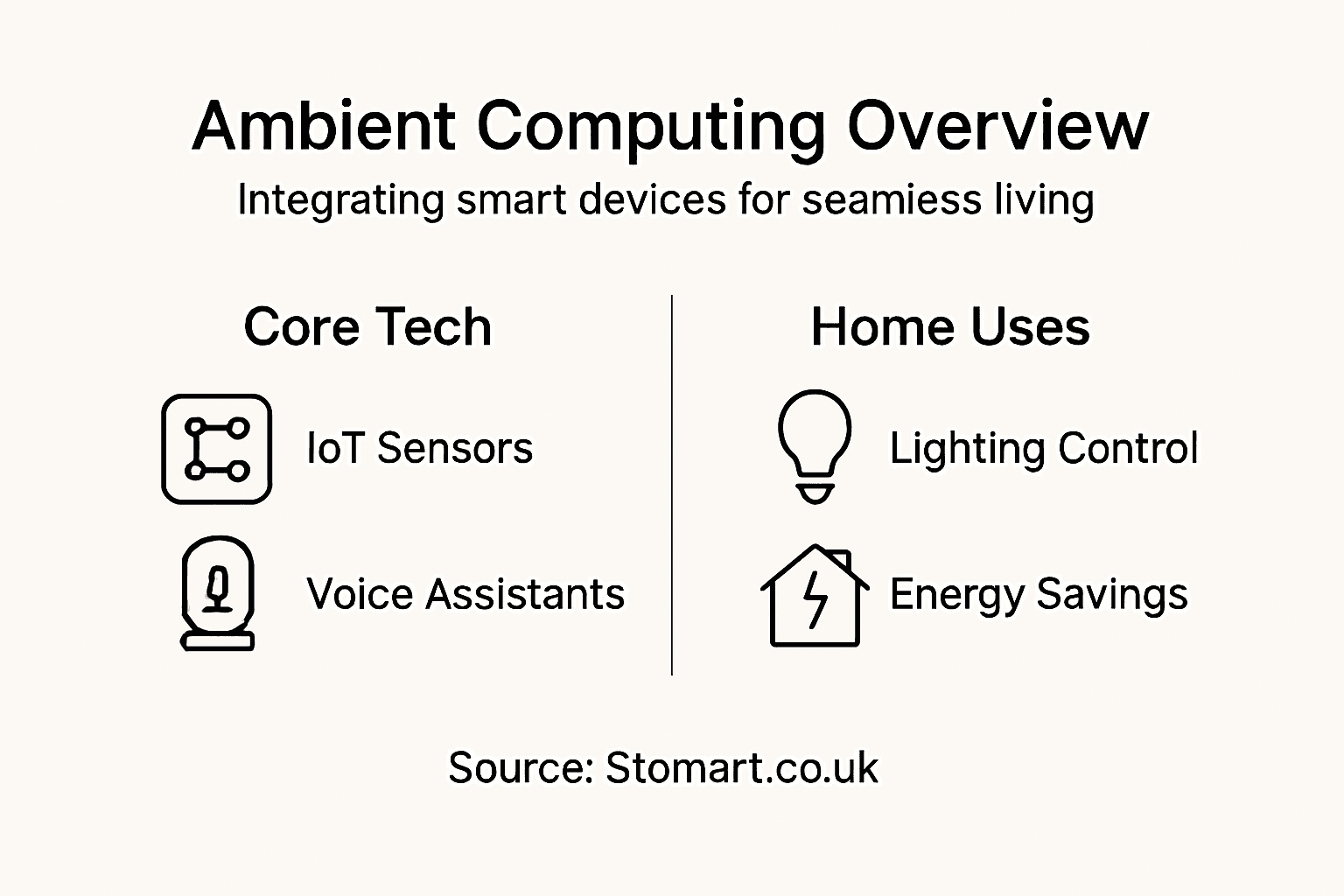
Pro tip: Start experimenting with ambient computing by integrating a few smart home devices that communicate with each other, such as smart thermostats and voice-activated assistants, to experience the technology’s potential firsthand.
Types of Ambient Devices and Systems
Ambient intelligence devices encompass a diverse ecosystem of sophisticated technological solutions designed to create intelligent, responsive environments. IoT-based sensing systems integrate multiple device types that collaborate seamlessly to understand and anticipate human needs across various contexts.
The primary categories of ambient devices can be classified into several key groups:
- Environmental Sensors
- Temperature monitoring devices
- Motion detection systems
- Air quality measurement sensors
- Humidity and pressure monitors
- Wearable Technologies
- Health tracking wristbands
- Physiological signal monitors
- Smart clothing with embedded sensors
- Personal health diagnostic devices
- Home Automation Systems
- Smart thermostats
- Voice-activated digital assistants
- Automated lighting controls
- Security and surveillance networks
Sensor technologies enable continuous monitoring by collecting data across multiple modalities, ensuring robust and adaptive intelligence. These interconnected systems work collectively to create environments that respond dynamically to human presence and requirements.
The ultimate goal of these ambient devices is to provide seamless, unobtrusive technological support that enhances user experience while remaining virtually invisible in daily interactions.
Pro tip: When selecting ambient computing devices, prioritise systems with robust cross-device compatibility and interoperability to create a more cohesive and responsive smart environment.
How Ambient Computing Operates Seamlessly
Ambient computing fundamentally transforms technological interaction by creating intelligent environments that anticipate and respond to human needs without requiring explicit commands. Ubiquitous technology integration enables devices to become invisible yet incredibly responsive assistants in our daily lives.
The operational mechanism of ambient computing involves several sophisticated technological processes:
-
Sensor-Based Data Collection
-
Continuous environmental monitoring
-
Real-time physiological and contextual data gathering
-
Multi-modal information processing
-
Artificial Intelligence Processing
-
Machine learning algorithm analysis
-
Predictive behaviour understanding
-
Automated decision-making capabilities
-
Adaptive Response Systems
-
Automatic task execution
-
Personalised environment adjustments
-
Seamless device intercommunication
Cloud and edge computing technologies enable these systems to operate with minimal latency, creating intelligent networks that learn and adapt continuously. The core principle is transforming technology from a tool that requires active manipulation to an intuitive, background service that understands and supports user needs.
These interconnected systems work collaboratively, creating a responsive ecosystem where technological interventions feel natural and unobtrusive, ultimately enhancing human experiences across various contexts.
Pro tip: Begin exploring ambient computing by selecting devices with strong cross-platform compatibility and investing time in configuring personalised automation routines.
Practical Smart Home and Lifestyle Uses
Ambient computing revolutionises daily living by transforming ordinary spaces into intelligent environments that anticipate and respond to human needs. Smart home sensor technologies enable unprecedented levels of automation and personalisation across residential and lifestyle contexts.
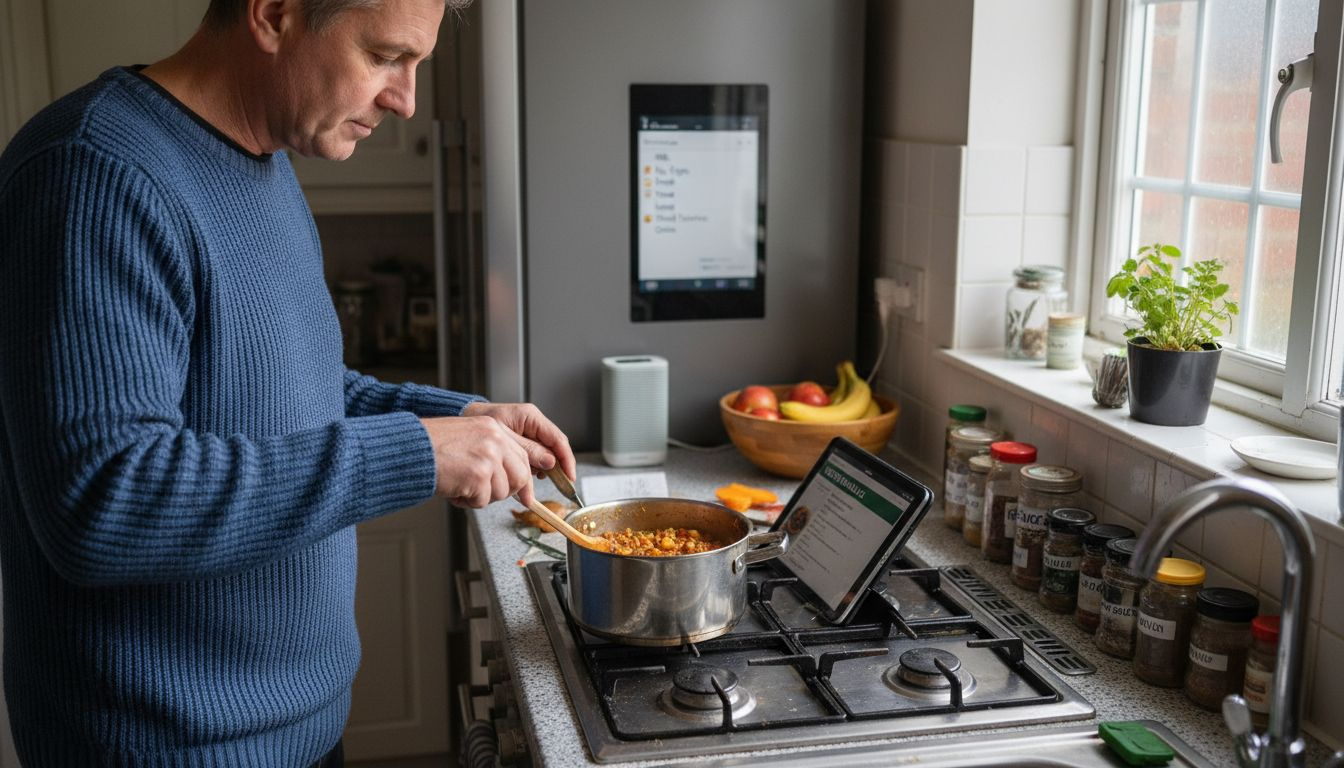
Practical applications of ambient computing span multiple domains:
Home Comfort and Efficiency
- Automatic temperature regulation
- Adaptive lighting systems
- Energy consumption optimisation
- Predictive maintenance for household appliances
Safety and Security
- Motion-activated surveillance systems
- Environmental hazard detection
- Automated access control
- Intelligent alarm configurations
Personal Wellness
- Health monitoring devices
- Sleep environment optimization
- Stress reduction through environmental adjustments
- Air quality management
Voice-controlled smart home systems dramatically simplify domestic interactions, allowing residents to manage complex tasks through simple vocal commands. These intelligent networks learn individual preferences, creating personalised experiences that seamlessly integrate technology into everyday life.
The most compelling aspect of ambient computing lies in its ability to transform technological interactions from deliberate actions to intuitive, background processes that enhance rather than interrupt human experience.
To illustrate practical benefits, see how ambient computing enhances everyday scenarios:
| Scenario | Enhancement Provided | User Benefit |
|---|---|---|
| Energy Management | Automated optimisation of consumption | Reduced energy bills |
| Home Security | Real-time threat detection | Increased personal safety |
| Wellness Monitoring | Continuous health tracking | Early issue identification |
| Lifestyle Convenience | Integrated voice controls | Effortless environment adjustment |
Pro tip: Start building your smart home ecosystem by selecting devices with robust cross-platform compatibility and investing time in understanding their interconnection capabilities.
Privacy, Security, and Potential Risks
Ambient computing introduces profound privacy challenges that demand careful consideration and proactive management. Pervasive data collection mechanisms create complex ethical and security landscapes where convenience potentially compromises personal information protection.
Key privacy and security risks include:
Data Vulnerability Concerns
- Continuous background data gathering
- Potential unauthorised system access
- Risk of personal information exposure
- Unintended data sharing between devices
Surveillance and Tracking Risks
- Detailed personal behaviour mapping
- Location tracking capabilities
- Potential misuse by third parties
- Erosion of personal privacy boundaries
Technical Security Challenges
- Encryption vulnerabilities
- Network communication interception
- Device firmware exploitation
- Potential system manipulation
Large-scale data analytics capabilities amplify risks by enabling sophisticated profiling and potential misuse of personal information. These interconnected systems require robust protective frameworks to balance technological convenience with individual privacy rights.
Navigating this complex landscape demands a nuanced approach that prioritises user consent, transparent data practices, and proactive security measures to mitigate potential risks associated with ambient computing technologies.
Pro tip: Regularly audit device privacy settings, use strong unique passwords, and consider physical device disconnection when maximum privacy is required.
Discover the Power of Ambient Computing in Your Everyday Life
Ambient computing offers the promise of seamlessly intelligent environments that anticipate your needs, remove the hassle of constant device interaction, and bring effortless comfort, security, and wellness to your home. If you are seeking to transform your living space into a smart, responsive haven, overcoming challenges like device compatibility or privacy concerns is essential. With smart home systems, wearable tech, and sensor devices all working together invisibly, now is the perfect moment to embrace this future.
At Stomart.co.uk, we understand your goal to create a personalised, intuitive environment. Explore our wide range of tech accessories and home goods designed to integrate smoothly with ambient computing technology. Start building your smarter lifestyle today with products that adapt to your habits, enhance your wellness, and keep your home secure. Take control and experience convenience like never before by visiting Stomart.co.uk now and turning your living space into a truly ambient smart ecosystem.
Frequently Asked Questions
What is ambient computing?
Ambient computing is a technology paradigm that integrates digital systems into everyday environments, allowing devices to operate seamlessly without explicit user commands. It combines technologies such as artificial intelligence, IoT sensors, and cloud computing to create responsive environments that anticipate user needs.
How do ambient computing devices enhance home automation?
Ambient computing devices enhance home automation by enabling automatic adjustments based on user behaviour. For example, smart thermostats can optimise temperature settings, while voice-activated assistants allow for effortless control of various home systems, creating a more comfortable and efficient living environment.
What are the main privacy concerns associated with ambient computing?
The main privacy concerns include continuous data collection, potential unauthorised access to personal information, and risks of surveillance and tracking. These challenges highlight the importance of having robust security measures and awareness of data practices when using ambient computing technologies.
How can I start implementing ambient computing in my home?
To start implementing ambient computing, consider integrating smart devices that communicate with each other, such as smart thermostats and security cameras. Focus on selecting devices with strong cross-platform compatibility and take time to configure personalised automation routines to enhance your smart home experience.