

Zero Waste Lifestyle – How It Transforms Daily Living
on Jan 13, 2026
Over 90 percent of britsh households still send the majority of their waste to landfills, despite a rising demand for sustainable options. This paradox highlights the real struggle facing eco-conscious millennials and Gen Z who want to adopt zero waste lifestyles but feel trapped by current systems. Unpacking the core concepts and myths around zero waste empowers you to challenge misconceptions and discover practical strategies for real environmental change.
Key Takeaways
| Point | Details |
|---|---|
| Understanding Zero Waste | Zero Waste is a holistic approach that challenges traditional waste management by promoting proactive strategies for minimising waste through the 5 Rs: Refuse, Reduce, Reuse, Recycle, and Rot. |
| Core Principles | The 5 Rs provide a framework for individuals to make intentional choices that reduce waste and cultivate sustainable consumption habits. |
| Economic and Environmental Benefits | Adopting Zero Waste strategies not only saves costs on materials and waste management but also significantly mitigates environmental pollution and enhances community health. |
| Practical Implementation | Transitioning to a Zero Waste lifestyle requires manageable changes; starting with small, incremental actions can lead to meaningful reductions in personal and community waste. |
Zero waste lifestyle: core concepts and myths
Zero waste is far more than just sorting your recycling bins. It represents a holistic philosophy transforming how we interact with resources, consumption, and environmental responsibility. Zero waste principles fundamentally reimagine waste management by challenging traditional linear consumption models and promoting circular economic approaches.
Contrary to popular misconceptions, zero waste does not mean producing absolutely zero rubbish. Instead, it involves a systematic approach focusing on minimising waste generation through conscious choices. UN Development Programme research explains that zero waste encompasses a comprehensive strategy targeting pollution reduction and resource conservation across production and consumption systems.
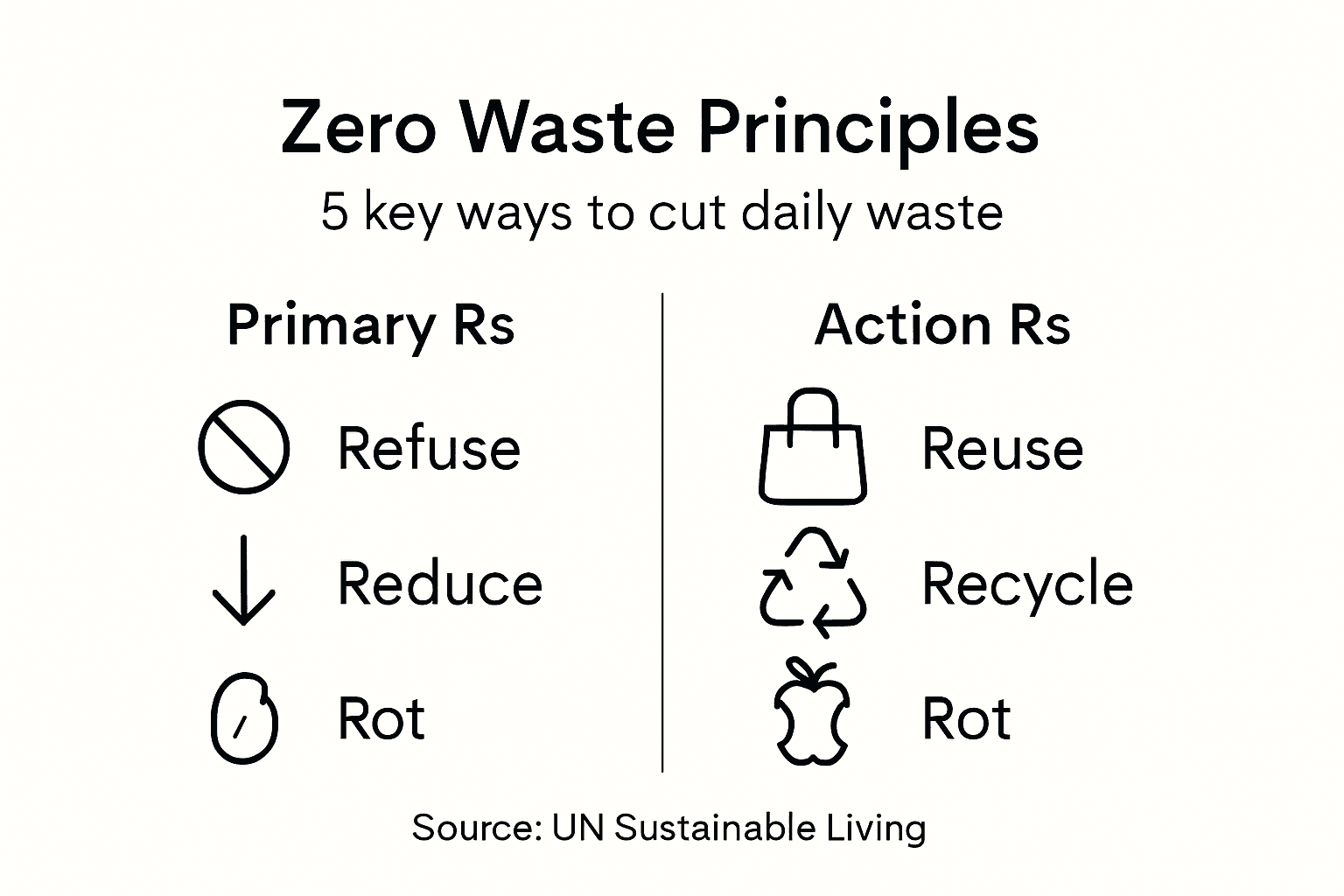
The core principles of zero waste revolve around five key strategies, often referred to as the 5 Rs:
- Refuse: Proactively avoiding unnecessary items and single-use products
- Reduce: Minimising consumption of resources and potential waste streams
- Reuse: Finding alternative purposes for existing items
- Recycle: Processing materials to create new products
- Rot (Compost): Transforming organic waste into nutrient-rich soil amendments
By understanding these principles, individuals can shift from passive consumers to active environmental stewards, making meaningful impacts through everyday choices.
Pro tip: Start your zero waste journey by conducting a week-long waste audit, documenting everything you discard to identify potential reduction opportunities.
Essential principles and the 5 Rs explained
The 5 Rs represent a strategic framework for minimising waste and transforming consumption patterns. Zero Waste Europe highlights these principles as crucial for developing sustainable resource management strategies that go far beyond traditional recycling approaches.
Let’s break down each principle in detail:
-
Refuse: This is the most powerful strategy, involving proactively preventing waste before it enters your life. It means saying no to unnecessary single-use items, avoiding free promotional merchandise, and making intentional purchasing decisions that prioritise long-term utility over momentary convenience.
-
Reduce: Focuses on minimising overall consumption by purchasing fewer items, selecting products with minimal packaging, and choosing high-quality, durable goods that last longer. This principle challenges the current throwaway culture and encourages mindful consumption.
-
Reuse: Centres on finding multiple purposes for existing items, repairing products instead of replacing them, and selecting reusable alternatives to disposable products. This might include using glass jars for storage, converting old clothing into cleaning rags, or choosing refillable water bottles.
-
Recycle: While important, recycling is intentionally positioned fourth in the hierarchy. Institute for Environmental Research principles emphasise that recycling should be a last resort after exhausting previous strategies. Effective recycling requires proper sorting and understanding local recycling capabilities.
-
Rot (Compost): The final principle transforms organic waste into valuable nutrients. Composting kitchen scraps and garden waste creates rich soil amendments while diverting significant waste from landfills.
Pro tip: Create a personal waste tracking system to monitor your progress through each of the 5 Rs, helping you identify areas for continuous improvement.
Here’s a quick comparison of how each 5 Rs strategy influences economic, environmental, and health outcomes:
| Strategy | Economic Effect | Environmental Impact | Health Benefit |
|---|---|---|---|
| Refuse | Reduces unnecessary spending | Prevents waste creation | Limits exposure to pollutants |
| Reduce | Lowers monthly expenses | Conserves resources | Reduces landfill-related toxins |
| Reuse | Delays replacement costs | Extends product life cycles | Minimises chemical exposure |
| Recycle | Facilitates resource recovery | Cuts raw material extraction | Promotes cleaner environments |
| Rot | Saves on fertiliser purchases | Prevents methane from landfill waste | Improves soil and food safety |
Types and everyday practices of zero waste
Zero waste encompasses a diverse range of practices spanning individual, community, and systemic levels. Case studies reveal multiple implementation strategies that demonstrate how waste reduction can be systematically integrated into daily living.
At the household level, zero waste practices involve strategic choices across multiple domains:
-
Kitchen Practices:
- Using reusable containers for food storage
- Purchasing bulk ingredients without packaging
- Composting organic waste
- Meal planning to reduce food spoilage
-
Personal Care:
- Selecting package-free toiletries
- Using refillable cosmetic containers
- Choosing biodegradable personal hygiene products
- Making homemade cleaning solutions
-
Shopping Habits:
- Bringing personal shopping bags
- Selecting products with minimal packaging
- Supporting local producers
- Purchasing secondhand items
Zero waste case studies from Japan demonstrate remarkable community-level transformations, highlighting how collective action can dramatically reduce waste generation. The Kamikatsu town example illustrates how systematic sorting, community engagement, and innovative recycling approaches can minimise landfill contributions.
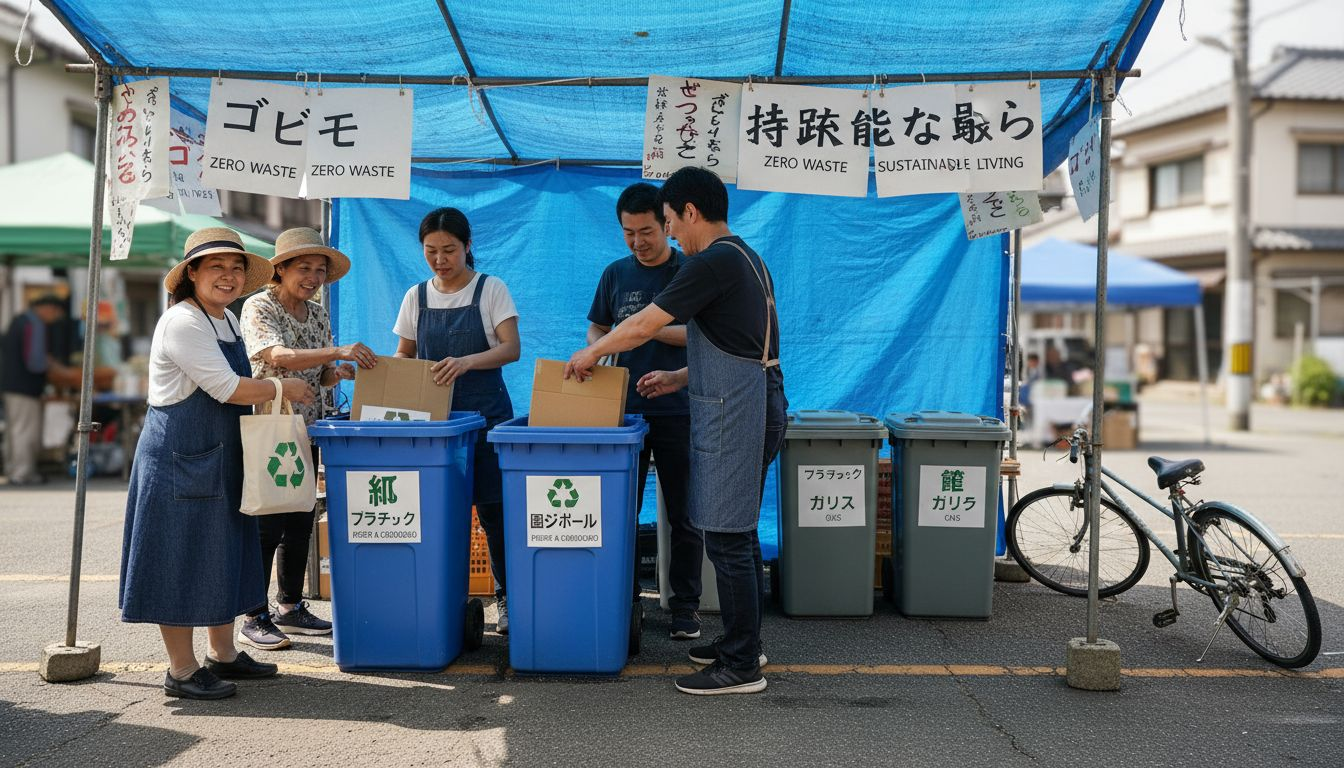
Beyond individual actions, zero waste involves systemic changes requiring collaboration between consumers, businesses, and local governments to redesign waste management infrastructures and consumption patterns.
Below is a summary outlining individual versus community-level zero waste actions and their potential long-term impact:
| Level | Example Actions | Long-Term Outcomes | Community Benefit |
|---|---|---|---|
| Individual | Meal planning, bulk buying, composting | Lowers personal footprint | Inspires peers through example |
| Community | Local compost facilities, sorting hubs | Policy change, less waste | Reduces landfill and pollution |
Pro tip: Create a personal waste inventory, documenting everything you discard for one week to identify your primary waste sources and potential reduction strategies.
Economic, health, and environmental impacts
UN-Habitat research reveals significant global benefits of adopting zero waste strategies across multiple interconnected domains. These approaches extend far beyond simple waste management, delivering transformative impacts on economic, environmental, and human health systems.
Economically, zero waste practices generate substantial financial advantages. By reducing raw material consumption, minimising waste management costs, and creating circular economy opportunities, organisations and communities can unlock significant monetary savings. Sustainability research demonstrates that strategic waste reduction can decrease operational expenses while simultaneously generating new economic opportunities through innovative resource recovery and recycling initiatives.
Environmental benefits represent perhaps the most compelling argument for zero waste adoption. Reduced landfill usage, decreased greenhouse gas emissions, and conservation of natural resources create cascading positive effects. By preventing waste generation and promoting material reuse, zero waste strategies directly contribute to mitigating climate change and protecting ecosystem integrity.
Health impacts are equally profound. Minimising toxic waste exposure, reducing environmental pollution, and improving sanitation conditions lead to enhanced community well-being. Zero waste approaches decrease air and water contamination, limit harmful chemical dispersal, and create healthier living environments for both urban and rural populations.
Pro tip: Calculate your personal waste management costs and potential savings by tracking your consumption and waste generation for one month.
Balancing convenience, cost, and commitment
Resource efficiency research highlights the complex challenge of integrating zero waste principles into daily life while maintaining practicality. The transition requires thoughtful strategies that acknowledge individual constraints and enable sustainable transformation without overwhelming personal resources.
Convenience often emerges as the primary psychological barrier to zero waste adoption. Many individuals perceive sustainable practices as time-consuming and labour-intensive. However, strategic approaches can seamlessly integrate waste reduction into existing routines. Simple swaps like reusable shopping bags, purchasing bulk ingredients, and selecting products with minimal packaging can significantly reduce waste without dramatically altering lifestyle patterns.
Sustainability research demonstrates that economic considerations play a crucial role in zero waste commitment. While initial investments in reusable products might seem costly, long-term savings become apparent. Durable products reduce repeated purchasing, homemade alternatives minimise packaging expenses, and reduced consumption directly translates to lower monthly expenditures.
Successful zero waste integration requires a gradual, compassionate approach towards personal transformation. Start with manageable changes, celebrate small victories, and progressively expand your sustainable practices. Recognise that perfection is not the goal; consistent, incremental improvements create meaningful environmental impact.
Pro tip: Create a monthly zero waste budget tracking both expenses and potential savings to visualise your economic and environmental progress.
Alternatives and practical transition strategies
Zero waste transition technologies showcase innovative frameworks for sustainable resource management across diverse contexts. These strategies provide practical pathways for individuals and communities to systematically reduce waste generation and transform consumption patterns.
Practical alternatives emerge through strategic approaches targeting different lifestyle domains. In the kitchen, this might involve:
- Bulk ingredient purchasing
- Investing in quality reusable containers
- Learning preservation techniques
- Developing meal planning skills
- Exploring local composting options
Personal care and household domains offer additional transition opportunities. Replacing disposable products with sustainable alternatives like bamboo toothbrushes, refillable cleaning products, and package-free toiletries can dramatically reduce waste generation without compromising personal standards.
UN sustainable development frameworks emphasise multi-stakeholder collaboration as critical for successful zero waste transitions. This involves engaging local communities, supporting policy innovations, and creating supportive infrastructures that enable sustainable lifestyle transformations.
Successful transitions require patience, continuous learning, and a willingness to experiment. Each small change contributes to broader systemic shifts, demonstrating that individual actions can create meaningful environmental impact.
Pro tip: Create a personal zero waste transition roadmap with specific, achievable monthly goals to maintain motivation and track progress.
Embrace a Zero Waste Lifestyle with Practical Solutions from Stomart.co.uk
The journey towards a zero waste lifestyle begins by making mindful choices that align with the 5 Rs—Refuse, Reduce, Reuse, Recycle, and Rot. Many people struggle with finding convenient and affordable products that support these principles without compromising daily comfort or convenience. At Stomart.co.uk, we understand the challenge of balancing sustainability with busy lives. Our wide selection of eco-friendly home goods, reusable kitchen essentials, and personal care items is designed to help you take meaningful steps right now.
Take control of your environmental impact by choosing lasting, responsible products from our carefully curated ranges. Whether you want to reduce single-use plastics with reusable containers, support your composting efforts with natural kitchen tools, or adopt package-free toiletries, Stomart.co.uk makes it easy to begin your transition today. Don’t wait to see the benefits of saving money and protecting the planet. Start your zero waste transformation by exploring our best-selling sustainable products, discover helpful tips in our lifestyle and wellness blog, and take advantage of exclusive seasonal deals designed to make your eco-friendly choices even more accessible.
Frequently Asked Questions
What are the core principles of a zero waste lifestyle?
The core principles of a zero waste lifestyle revolve around the 5 Rs: Refuse, Reduce, Reuse, Recycle, and Rot (Compost). These strategies promote minimising waste generation and encourage sustainable consumption patterns.
How can I start my zero waste journey?
Begin your zero waste journey by conducting a waste audit for one week to identify what you discard most frequently. This will highlight opportunities for reducing waste and implementing the 5 Rs in your daily life.
What are some practical daily practices to follow for zero waste living?
Practical daily practices include using reusable containers for food storage, buying bulk ingredients, composting organic waste, and selecting package-free personal care products. These actions contribute to reducing your overall waste footprint.
How does a zero waste lifestyle benefit the environment?
A zero waste lifestyle benefits the environment by reducing landfill usage, lowering greenhouse gas emissions, conserving natural resources, and promoting material reuse. This holistic approach directly contributes to mitigating climate change and protecting ecosystems.