

How modern architecture improves mood, memory and connection
on Mar 10, 2026Natural daylight can boost serotonin production by up to 50%, transforming how you feel in your home or workplace. Modern architecture goes beyond aesthetics to shape your psychological well-being through deliberate design choices. This guide explores how spatial planning, natural light, biophilic elements, and materials influence mood, cognitive function, and social bonds, offering evidence-based insights from neuroarchitecture research.
Key takeaways
| Point | Details |
|---|---|
| Natural light enhances mood | Daylight exposure elevates serotonin levels and reduces stress hormones, directly improving emotional well-being. |
| Biophilic design boosts memory | Incorporating plants and natural materials into interiors significantly improves cognitive performance and memory retention. |
| Spatial layouts shape social interaction | Open floor plans increase face-to-face engagement by around 50%, though balancing privacy remains essential. |
| Materials influence emotional experience | Textured and natural surfaces reduce perceived stress by 30%, creating comforting sensory environments. |
| Evidence-based design prevents misconceptions | Understanding actual research helps avoid pitfalls like overly sparse minimalism that can increase anxiety. |
Introduction to modern architecture and human well-being
Modern architecture emphasises clean lines, open spaces, and abundant natural light, but its influence extends far beyond visual appeal. Research in neuroarchitecture reveals how built environments directly affect your brain chemistry, emotional states, and cognitive abilities. When you enter a well-designed space, your nervous system responds to lighting conditions, spatial proportions, and material textures in measurable ways.
Neuroarchitecture merges neuroscience, psychology, and design to understand these relationships. This multidisciplinary approach examines how architectural choices trigger neurological responses that influence behaviour and well-being. Studies demonstrate that design elements like window placement, ceiling height, and colour schemes can alter stress levels, focus, and social behaviour.
Key features of modern architecture that impact psychological health include:
- Maximised natural light through large windows and skylights
- Open floor plans promoting movement and social interaction
- Integration of natural materials like wood, stone, and plants
- Minimalist aesthetics reducing visual clutter
- Flexible spaces adapting to diverse activities and moods
Understanding these connections empowers you to create environments that actively support mental health rather than merely providing shelter. The spaces you inhabit daily shape your thoughts, emotions, and relationships in profound yet often invisible ways.
Natural light and mood enhancement
Natural light serves as one of the most powerful mood regulators in architectural design. Exposure to daylight boosts serotonin production by up to 50%, improving mood and reducing depression symptoms. Your brain’s pineal gland responds to light exposure by modulating hormone production, affecting everything from sleep quality to emotional stability.
Modern architecture capitalises on this biological response through strategic design interventions. Large south-facing windows maximise daylight penetration during winter months, whilst light wells and clerestory windows distribute illumination deeper into interior spaces. Architects position workspaces and living areas to capture morning light, which proves particularly effective for regulating circadian rhythms.
Key architectural strategies for optimising natural light include:
- Floor-to-ceiling windows on primary living spaces
- Reflective surfaces amplifying available daylight
- Open floor plans reducing light-blocking barriers
- Skylights introducing overhead illumination
- Light shelves bouncing daylight towards ceilings
Research demonstrates that consistent daylight exposure correlates with measurably reduced anxiety and depression rates. Workers in naturally lit offices report better mood stability compared to those under artificial lighting throughout the day. The effects of daylight on cognition extend beyond mood to include enhanced alertness and decision-making capabilities.
Pro Tip: Position your desk perpendicular to windows rather than facing them directly to reduce glare whilst maintaining strong daylight exposure throughout the day.
Daylight Exposure Impact: Studies show 40-60% improvement in mood stability with adequate natural light compared to artificially lit environments, with optimal exposure occurring between 8am and noon.
Biophilic design and memory improvement
Biophilic design brings natural elements into built environments, creating spaces that align with your innate connection to nature. Biophilic design elements improve memory task performance by significant margins, demonstrating measurable cognitive benefits. Plants, natural materials, and organic patterns stimulate attention restoration, allowing your brain to recover from mental fatigue.

The mechanism involves both direct and indirect exposure to nature. Direct biophilia includes living plants, water features, and natural ventilation, whilst indirect biophilia incorporates natural materials, colours, and forms reminiscent of outdoor environments. Your cognitive system responds to these elements by reducing mental exhaustion and improving focus.
Effective biophilic design research00035-4/fulltext) identifies specific applications that enhance memory function:
- Green walls creating vertical gardens in compact spaces
- Natural wood finishes on flooring and furniture
- Stone accents providing textural variety
- Indoor water features introducing soothing sounds
- Organic patterns in textiles and wall coverings
| Environment Type | Memory Performance | Attention Span | Stress Reduction |
|---|---|---|---|
| Biophilic spaces | +15-20% | +10-15% | 25-30% |
| Standard interiors | Baseline | Baseline | Baseline |
| Overly clinical spaces | -5-10% | -8-12% | +15-20% stress |
Implementing biophilic principles doesn’t require extensive renovation. Strategic placement of potted plants, replacement of synthetic materials with natural alternatives, and incorporation of nature-inspired artwork all contribute to cognitive benefits. The connection between biophilic design and memory techniques and design becomes particularly relevant when creating study or work environments.
Pro Tip: Place plants within your direct line of sight during focused work to provide periodic visual breaks that restore attention without requiring conscious effort.
Spatial organisation and social connection
Spatial layout fundamentally shapes how you interact with others in built environments. Open floor plans increase face-to-face interactions by approximately 50% compared to traditional compartmentalised layouts. Removing physical barriers encourages spontaneous conversations, collaborative work, and stronger social bonds among occupants.
However, this increased connectivity involves tradeoffs. Privacy reduction can elevate distractions and stress, particularly for tasks requiring deep concentration. Research indicates that completely open offices may decrease productivity despite enhancing social interaction. The challenge lies in balancing communal spaces with private zones that accommodate diverse psychological needs.
Hybrid spatial designs address this tension through flexible zoning:
- Open collaborative areas for group activities
- Semi-private alcoves for focused work
- Soundproof pods for confidential conversations
- Movable partitions adapting spaces to changing needs
- Varied ceiling heights creating distinct spatial zones
| Layout Type | Social Interaction | Privacy Level | Productivity | Stress Factors |
|---|---|---|---|---|
| Fully open plan | Very high | Very low | Moderate | Noise, distractions |
| Hybrid design | High | Moderate | High | Minimal |
| Traditional offices | Low | High | Moderate | Isolation, rigidity |
The most successful modern designs incorporate spatial variety, allowing you to choose environments matching your immediate needs. Activity-based working models provide different zones for collaboration, concentration, and relaxation within the same building.
Pro Tip: Create visual privacy through strategic furniture placement and transparent partitions that maintain spatial openness whilst reducing direct sightlines between workstations.
Materials, textures and emotional experience
Tactile experiences profoundly influence your emotional state in architectural spaces. Engaging with textured surfaces reduces perceived stress by 30%00035-4/fulltext), demonstrating the psychological impact of material choices. Natural materials like wood, stone, and textiles create sensory richness that synthetic alternatives struggle to replicate.
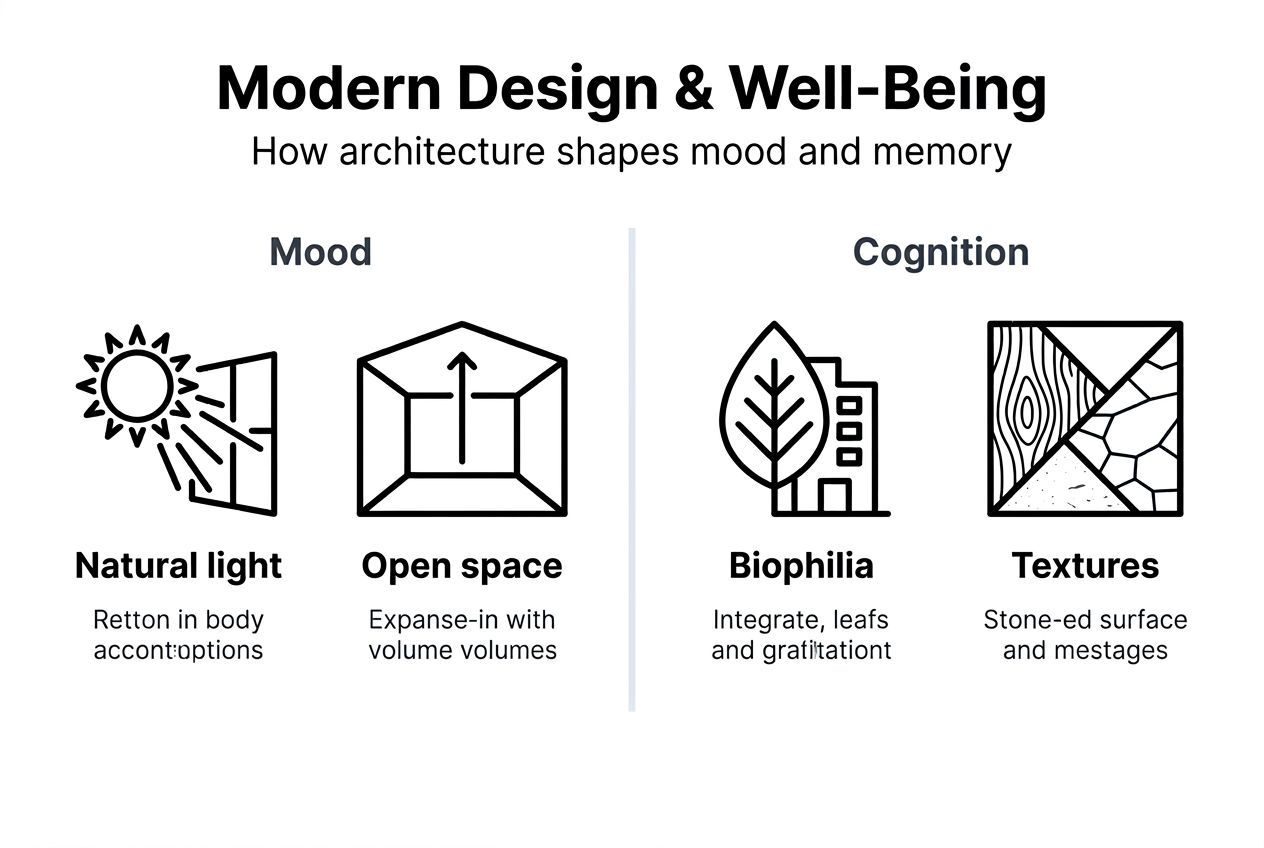
Your sensory system continuously processes environmental information, even when you’re not consciously aware. Smooth, cold surfaces like polished concrete or metal can feel sterile and unwelcoming, whilst warm, textured materials create psychological comfort. Wood particularly demonstrates anxiety-reducing properties, with studies showing measurable decreases in cortisol levels when people work in wooden environments.
Effective material strategies for emotional well-being include:
- Exposed timber beams adding warmth and visual interest
- Textured wall coverings creating tactile engagement
- Natural stone flooring providing grounding sensory experiences
- Woven fabrics introducing softness to hard surfaces
- Cork or wool acoustic panels combining function with comfort
The relationship between materials and emotion extends beyond touch to include visual and auditory properties. Hard surfaces amplify sound, creating stressful acoustic environments, whilst soft materials absorb noise and promote calm. Visual texture also matters; even non-tactile materials can appear warm or cold based on colour, grain, and finish.
Exploring techniques for mixing textures in design helps create layered sensory experiences. The stress reduction with textures00035-4/fulltext) occurs through both conscious appreciation and subconscious sensory processing, making material selection a powerful tool for emotional design.
Common misconceptions about modern architecture and mental health
Several widespread beliefs about modern design and psychological well-being lack scientific support. Understanding these misconceptions prevents design choices that inadvertently harm rather than help mental health.
Minimalism frequently gets misinterpreted as requiring stark, empty spaces devoid of personality. Research shows overly sparse environments can increase anxiety by 25% compared to thoughtfully furnished spaces. Your brain requires adequate visual stimulation, and excessive emptiness can feel unsettling rather than calming. True minimalism involves intentional curation, not mere absence.
Another common myth suggests that large, empty spaces automatically improve mental health through openness. In reality, scale must match function and human proportion. Cathedral ceilings and vast open areas can feel intimidating or lonely without appropriate furnishing and spatial subdivision. Effective design balances openness with human-scaled elements that create psychological comfort.
Additional misconceptions include:
- Believing any natural light improves mood regardless of quality or timing
- Assuming white walls universally create calm environments
- Thinking open plans suit all personality types equally
- Expecting biophilic design to work without adequate implementation
- Supposing modern architecture inherently promotes well-being without evidence-based choices
| Misconception | Reality | Evidence |
|---|---|---|
| Minimalism means emptiness | Requires intentional curation with adequate stimulation | Sparse spaces increase anxiety 25% |
| All open spaces improve mood | Scale must match human proportion and function | Oversized spaces can increase loneliness |
| Any natural light helps | Quality, intensity, and timing matter significantly | Low-quality light provides minimal benefit |
Light and colour effects particularly suffer from oversimplification. Whilst natural light generally improves mood, inadequate intensity or poor quality provides minimal benefit. Similarly, colour psychology requires context; blues might calm one person whilst making another feel cold and unwelcoming.
Practical design strategies to enhance mood, memory and connection
Applying neuroarchitecture insights requires concrete action steps tailored to your specific spaces. These evidence-based strategies help you create environments supporting psychological well-being.
- Maximise natural light by removing window obstructions and using sheer curtains that filter rather than block daylight.
- Ensure adequate ventilation through operable windows or mechanical systems, as fresh air directly impacts cognitive performance.
- Incorporate at least three to five plants in primary living or working areas to gain biophilic cognitive benefits.
- Choose natural materials for high-touch surfaces like door handles, tabletops, and flooring where tactile engagement occurs.
- Create distinct zones within open spaces using furniture arrangement, area rugs, and varied lighting levels.
- Balance social areas with private retreats where you can withdraw for focused work or relaxation.
Additional practical interventions include:
- Installing dimmable lighting to adjust ambience for different activities and times of day
- Using warm colour temperatures (2700-3000K) in relaxation areas and cooler temperatures (4000-5000K) in work zones
- Adding acoustic treatments like fabric panels or bookshelves to reduce noise stress
- Positioning seating to enable both social interaction and quiet contemplation
- Incorporating personal objects and artwork to prevent spaces feeling impersonal
Techniques for incorporating natural elements work particularly well when combined with strategic lighting and spatial planning. The synergy between memory improvement techniques and environmental design becomes evident when you create dedicated study zones with optimal conditions.
Thoughtful colour choices for interiors should consider both personal preferences and evidence-based colour psychology. Warm neutrals with natural wood tones typically provide versatile foundations that support rather than dictate emotional responses.
Conclusion: building better spaces for well-being
Architecture directly shapes your psychological health through measurable mechanisms involving light exposure, spatial organisation, material selection, and biophilic integration. The evidence demonstrates that informed design choices can substantially boost mood stability, enhance memory performance, and strengthen social connections.
You now understand how specific architectural elements influence brain chemistry and behaviour. Natural light regulates serotonin production, biophilic design restores cognitive attention, balanced spatial planning enables both connection and solitude, and textured materials reduce stress through sensory engagement. These insights empower you to create healthier environments whether renovating a home, designing a workspace, or simply rearranging existing spaces.
Approach design decisions with evidence-based thinking rather than assumptions. Test changes, observe responses, and adjust based on actual experiences. Your spaces should evolve with your needs, supporting well-being through intentional, thoughtful planning that honours both scientific research and personal preferences.
Explore well-being focused design solutions
Ready to transform your space into a wellness-enhancing environment? STOMART offers carefully curated home goods, lighting solutions, and natural décor elements that support evidence-based design principles. Browse collections featuring biophilic accessories, texture-rich textiles, and thoughtfully designed lighting that brings neuroarchitecture insights into practical application. Whether you’re refreshing a single room or reimagining your entire home, you’ll find products that combine aesthetic appeal with psychological benefits, helping you create spaces that genuinely improve daily well-being.
Frequently asked questions
How does modern architecture influence emotional well-being?
Modern architecture shapes mood through deliberate manipulation of light, materials, and spatial organisation, affecting brain chemistry and stress responses. Design choices either soothe or heighten emotional reactions by influencing serotonin levels, cortisol production, and sensory processing.
What design elements help improve memory in interiors?
Biophilic designs incorporating plants and natural materials demonstrably boost cognitive function and memory retention. Adequate natural light and comfortable spatial layouts that reduce mental fatigue also support memory performance, with combined effects improving recall by 15-20%. Explore additional memory improvement techniques to maximise these benefits.
How can open floor plans affect social interaction and privacy?
Open layouts increase face-to-face interaction by approximately 50% but significantly reduce privacy and quiet spaces for concentration. Hybrid designs balancing communal areas with private zones deliver optimal social connectivity whilst preserving individual focus needs and reducing stress from constant exposure.