

Why humans need rituals for emotional health in 2026
on Mar 06, 2026Rituals are far more than superstitious routines or religious traditions. They serve as powerful psychological tools that reduce anxiety, foster emotional stability, and strengthen social bonds in ways routines simply cannot. Whether you realise it or not, rituals signal safety to your nervous system, helping you navigate uncertainty and build meaningful connections. This guide explores the science behind why rituals matter, debunks common myths, and shows you practical ways to harness their benefits for mental and emotional wellbeing.
Key takeaways
| Point | Details |
|---|---|
| Rituals provide meaningful structure | Symbolic activities with emotional significance improve emotional stability beyond mere habit. |
| Anxiety reduction through control | Rituals create psychological control in uncertain situations, lowering stress responses. |
| Social bonding strengthens wellbeing | Shared rituals activate neurobiological pathways that deepen community belonging and connection. |
| Common myths undermine benefits | Rituals are not superstitions or compulsions but evidence-backed tools for mental health. |
| Personalised rituals enhance growth | Thoughtfully integrated rituals tailored to individual needs boost resilience and life satisfaction. |
Understanding rituals: definition and psychological essence
What exactly separates a ritual from your morning coffee routine? Rituals are symbolic, non-instrumental activities with emotional meaning, distinct from compulsions or routines. While routines focus on efficiency and practical outcomes, rituals carry intentional emotional weight. Your coffee habit becomes a ritual when you mindfully savour each sip as a moment of gratitude, transforming the act into something psychologically significant.
Ritualistic behaviours differ fundamentally from compulsive ones. Compulsions increase anxiety when not performed, creating rigid dependency. Rituals, by contrast, reduce anxiety and offer comfort without enslaving you to them. The key lies in intentionality and meaning.
Understanding these distinctions matters for mental health:
- Rituals require conscious intention and symbolic meaning, not just repetition
- They provide emotional regulation without creating pathological dependency
- Unlike compulsions, rituals remain flexible and adaptable to circumstances
- The therapeutic power of rituals emerges from their ability to ground you emotionally
When you recognise this distinction, you can design daily routines and rituals that genuinely support your wellbeing rather than trap you in meaningless repetition.
Why rituals matter: meaning and emotional regulation
Your brain craves meaning, especially during difficult times. Nostalgia triggers ritual engagement, enhancing meaning in life through symbolic emotional activities. When you revisit cherished traditions or create new meaningful practices, you activate psychological pathways that strengthen your sense of purpose and identity.
Creative rituals offer particularly powerful benefits. Research shows that arts and crafts rituals improve wellbeing similarly to employment, providing structure and satisfaction that extends beyond the activity itself. Whether painting, journaling, or crafting, these practices create space for self-expression whilst building emotional resilience.
The nervous system responds directly to ritual engagement. Rituals signal safety and continuity, helping regulate your nervous system during anxiety and transitions. This physiological response explains why rituals feel grounding during uncertain periods.
Consider these emotional regulation benefits:
- Rituals activate parasympathetic nervous system responses that counter stress
- They create predictable emotional anchors during chaotic periods
- Symbolic actions help process difficult emotions without words
- Regular practice builds psychological muscle for handling uncertainty
In 2026, with ongoing mental health challenges in the UK affecting millions, incorporating rituals offers accessible support. You can boost your mental health daily with rituals that require minimal time but deliver substantial emotional returns.
Pro Tip: Start with a five-minute morning ritual that combines a physical action with positive intention, such as lighting a candle whilst setting one daily goal.
How rituals reduce anxiety and create structure
Anxiety thrives on unpredictability. Rituals combat this by creating psychological control in situations where actual control remains limited. Physical rituals increase perceived luck and reduce anxiety by creating psychological control in uncertain contexts. Even seemingly superstitious acts, when performed intentionally, shift your mental state from helpless to prepared.
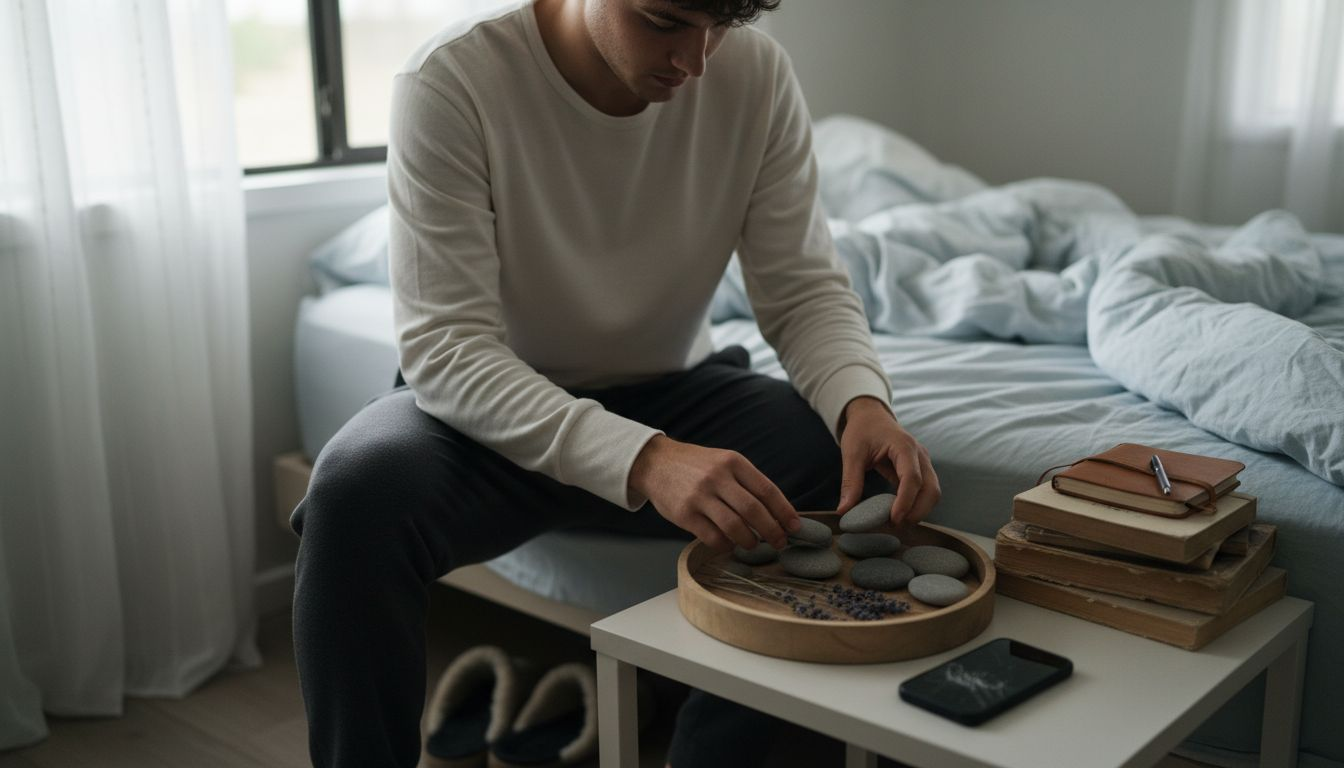
Therapeutic applications demonstrate this power. Rituals help regulate anxiety and PTSD through signalling safety and readiness. Therapists increasingly incorporate ritual-based interventions to help clients manage intrusive thoughts and emotional dysregulation.
To implement anxiety-reducing rituals effectively:
- Identify moments of peak uncertainty or stress in your day
- Choose a simple physical action you can perform consistently in those moments
- Attach symbolic meaning to the action that resonates with your values
- Practise the ritual regardless of immediate outcomes, focusing on the process
- Notice how the ritual shifts your emotional state over time
- Adjust the ritual as needed to maintain genuine engagement
The structure itself provides comfort. When external circumstances feel chaotic, your rituals remain constant touchstones. Morning rituals to reduce anxiety prove particularly effective because they set your nervous system’s baseline for the entire day.
Pro Tip: Keep rituals simple enough that you can perform them even during your most stressed moments, when complexity becomes a barrier.
Rituals as social bonds: the science of connection
Humans are wired for connection, and rituals serve as social glue that strengthens bonds in measurable ways. Religious rituals increase pain thresholds and bonding via opioid activation, demonstrating the neurobiological foundation of ritual-based connection. Your brain literally releases bonding chemicals when you participate in synchronised, meaningful activities with others.
Communal practices extend beyond religious contexts. Shared sauna rituals boost social wellbeing and inclusion, creating profound feelings of belonging through simple shared experiences. These effects occur because synchronised activities activate mirror neurons and promote physiological alignment between participants.
Different ritual types offer distinct social benefits:
| Ritual type | Primary function | Example | Social outcome |
|---|---|---|---|
| Communal ceremonies | Group identity | Seasonal celebrations | Strengthened collective bonds |
| Heritage rituals | Cultural continuity | Family traditions | Intergenerational connection |
| Recreational rituals | Informal bonding | Weekly game nights | Friendship reinforcement |
| Wellness rituals | Shared care | Group meditation | Mutual support networks |
The social dimension of rituals matters particularly for mental health:
- Shared rituals combat loneliness through regular meaningful contact
- They create belonging without requiring verbal intimacy
- Group rituals reduce social anxiety by providing predictable interaction structures
- Collective practices validate individual experiences through shared meaning
You can enhance your own wellbeing by creating supportive social rituals in your home environment. Even simple weekly gatherings gain power when approached with ritual intentionality. Planning social events and rituals that prioritise meaning over mere entertainment deepens connections.
Common misconceptions about rituals
Misunderstanding rituals prevents many people from accessing their benefits. Let’s address the myths that may be holding you back.
The first misconception conflates rituals with superstitions or arbitrary habits. Rituals are not mere superstition or compulsions; they provide significant psychological benefits grounded in neuroscience and psychology. Superstitions rely on magical thinking about external outcomes. Rituals work through internal psychological shifts.
Another common error involves confusing rituals with compulsive behaviours. Compulsions feel mandatory and increase anxiety when prevented. Rituals remain voluntary and reduce anxiety through engagement. This distinction matters clinically and practically.
Key clarifications:
- Rituals benefit secular individuals as much as religious practitioners
- Effectiveness depends on personal meaning, not adherence to tradition
- Simple rituals work as powerfully as elaborate ones
- You need not believe in supernatural elements to gain psychological benefits of rituals
The final myth suggests rituals require extensive time or resources. In reality, a two-minute tea ceremony performed with full attention can profoundly impact your day. The meaning you assign matters more than the duration or complexity.
Embracing rituals based on evidence rather than misconception opens pathways to improved mental health. You’re not engaging in wishful thinking when you practise rituals intentionally. You’re applying psychological principles that enhance emotional regulation and social connection.
Comparative framework: types of rituals and their effects
Understanding the variety of ritual types helps you select practices that match your specific needs. Different categories serve distinct psychological and social functions.
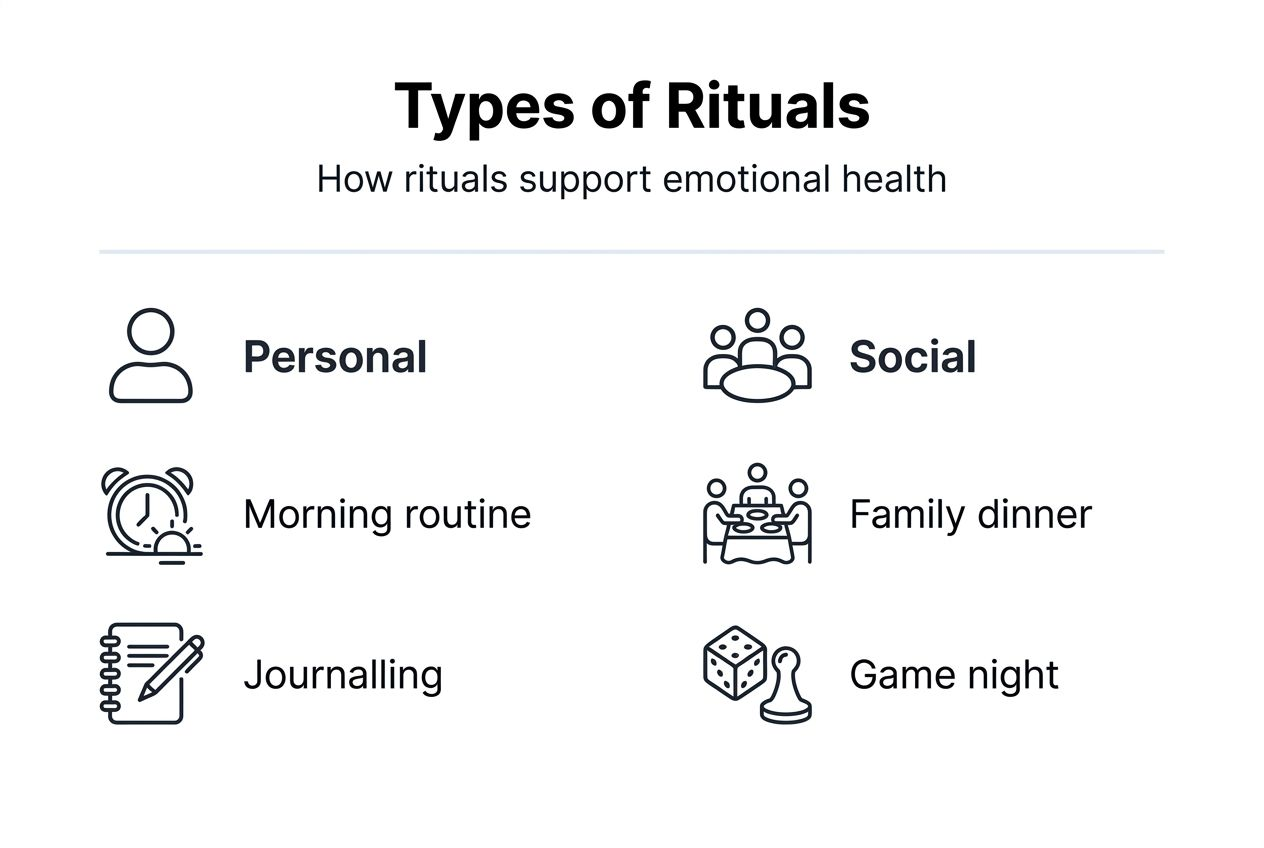
Personal rituals focus on individual emotional regulation and self-connection. These might include morning journalling, evening gratitude practice, or pre-performance preparation routines. Their primary benefit lies in creating internal stability and meaning.
Social rituals emphasise bonding and collective identity. Weekly family dinners, friendship traditions, or workplace celebrations strengthen interpersonal connections through shared symbolic actions. These practices build trust and belonging.
Religious rituals combine personal meaning with communal participation. They activate neurobiological bonding mechanisms whilst providing existential significance. Even non-religious individuals can adapt these structures for secular purposes.
Creative rituals merge self-expression with psychological benefits. Activities like regular crafting sessions or musical practices offer both artistic outlets and emotional grounding.
| Ritual type | Primary focus | Example practices | Key benefits |
|---|---|---|---|
| Personal | Individual regulation | Morning meditation, journalling | Emotional stability, self-awareness |
| Social | Group bonding | Shared meals, celebrations | Connection, belonging, trust |
| Religious | Spiritual meaning | Prayer, ceremonial observance | Existential purpose, community |
| Creative | Self-expression | Crafting, music, art | Life satisfaction, emotional processing |
This framework isn’t rigid. Many rituals blend categories, such as a family art night combining social, creative, and personal elements. The most effective rituals often integrate multiple dimensions to address various wellbeing needs simultaneously.
Implementing rituals for personal growth and wellbeing
Creating meaningful rituals requires intention but not complexity. Follow these steps to develop practices that genuinely support your mental and emotional health.
- Identify your specific needs, whether stress reduction, social connection, or existential meaning
- Choose a symbolic action that resonates emotionally with your identified need
- Start with minimal time commitment to ensure consistency over perfection
- Establish a regular pattern that fits naturally into your existing schedule
- Incorporate social elements when possible to enhance bonding benefits
- Remain flexible and adjust rituals as your circumstances and needs evolve
- Focus on the process and intention rather than achieving specific outcomes
Simple examples demonstrate this approach. A stress-relief ritual might involve lighting a specific candle each evening whilst taking three deep breaths. A transition ritual could mark the end of your workday by physically closing your laptop and placing it in a drawer whilst saying,