

Why rest is more than sleep: understanding full recovery
on Mar 16, 2026Most of us believe a solid eight hours guarantees full recovery, yet countless people wake feeling drained despite adequate sleep. The truth is that genuine rest extends far beyond your nightly slumber, encompassing mental downtime, emotional regulation, and active relaxation practices. Understanding this broader concept of recovery transforms how you approach wellness, enabling you to address fatigue at its root rather than simply chasing more hours in bed. This article explores the multifaceted nature of rest and equips you with practical strategies to achieve complete restoration in your daily life.
Key takeaways
| Point | Details |
|---|---|
| Rest is multidimensional | Physical, mental, and emotional recovery all contribute to genuine restoration beyond sleep hours |
| Active relaxation matters | Mindfulness, breathing exercises, and intentional breaks enhance recovery as effectively as sleep |
| Personalisation is essential | Tailoring rest practices to your lifestyle and stress patterns yields superior wellness outcomes |
| Environmental factors influence recovery | Lighting, scent, posture, and sensory input significantly affect rest quality throughout the day |
The science of rest: beyond just sleeping
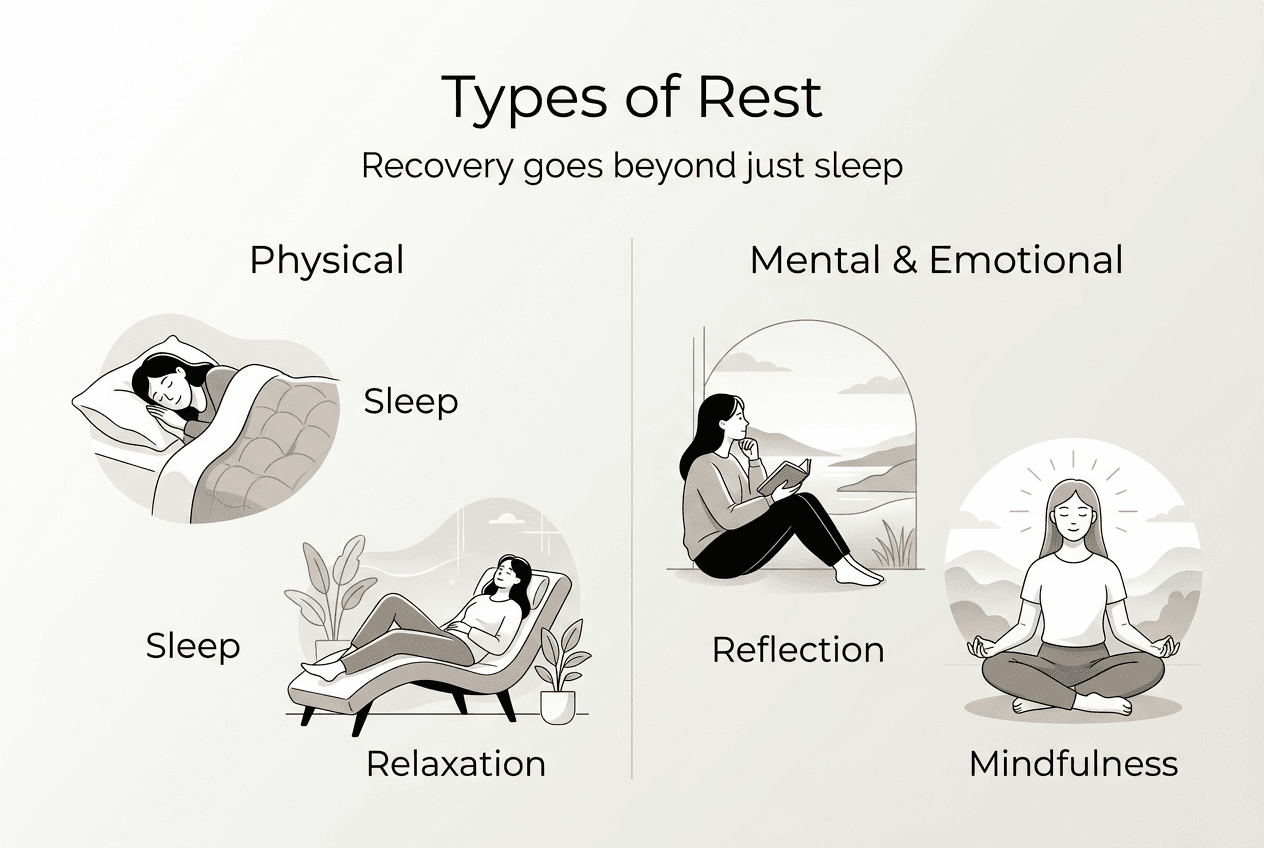
Rest is a multifaceted process involving physical recovery, mental restoration, and emotional regulation beyond hours of sleep. Whilst your body repairs tissues and consolidates memories during slumber, true recovery requires addressing cognitive fatigue and emotional strain accumulated throughout waking hours. Physical rest allows muscle fibres to rebuild, inflammation to decrease, and energy stores to replenish through metabolic processes that continue even when you’re awake but relaxed.

Mental rest reduces the cognitive load that builds from constant decision making, information processing, and problem solving. Your brain requires periods of low stimulation to clear metabolic waste products, strengthen neural connections, and restore attentional resources depleted by focused work. Emotional rest addresses the psychological toll of managing relationships, suppressing feelings, and navigating social demands that sleep alone cannot resolve.
The components of comprehensive rest include:
- Quality sleep providing circadian rhythm alignment and cellular repair
- Active relaxation through gentle movement, stretching, or restorative practices
- Mental downtime free from screens, decisions, and cognitive demands
- Emotional balance through processing feelings and setting boundaries
- Sensory rest limiting exposure to bright lights, loud sounds, and overwhelming stimuli
Pro Tip: Schedule 10 minute breaks every 90 minutes during work to align with your natural ultradian rhythms, the cycles governing alertness and focus throughout the day.
Scientific research demonstrates that recovery operates on multiple biological systems simultaneously. Whilst sleep handles much of the heavy lifting for physical restoration, your nervous system requires conscious relaxation practices to shift from sympathetic activation to parasympathetic dominance. This shift enables proper digestion, immune function, and hormonal balance that inadequate daytime rest disrupts regardless of sleep duration.
“Recovery is not passive; it demands intentional practices that address body, mind, and emotions in concert.”
Common misconceptions about rest and why they hold us back
The myth that sleep quantity alone defines rest quality pervades modern wellness culture, leading countless individuals to pursue eight hours whilst ignoring the stress reduction techniques that complement nocturnal recovery. Many believe that sufficient sleep alone guarantees full recovery, overlooking active relaxation and mental rest’s role in health. This narrow focus creates a cycle where people sleep adequately yet remain exhausted because they never address cognitive overload or emotional depletion.
Ignoring mental and emotional rest causes stress accumulation that manifests as irritability, poor concentration, and physical tension no amount of sleep can resolve. Your mind processes experiences, integrates learning, and regulates emotions during waking rest periods that complement sleep’s restorative functions. Without these crucial intervals, stress hormones remain elevated, inflammation increases, and your body stays locked in survival mode despite adequate time in bed.
The tendency to overlook active relaxation practices stems from cultural glorification of constant productivity. People wear busyness as a badge of honour, viewing rest as laziness rather than recognising it as essential maintenance for peak performance. This mindset prevents adoption of evidence based recovery methods like meditation, gentle movement, or simply sitting quietly without distraction.
Prolonged fatigue and burnout often result from these misconceptions:
- Equating rest solely with sleep duration rather than quality and variety
- Failing to recognise cognitive fatigue as distinct from physical tiredness
- Neglecting emotional processing in favour of suppression or distraction
- Believing that powering through exhaustion demonstrates strength rather than risking health
- Underestimating how sensory overload from screens and noise depletes energy reserves
“The most productive people understand that strategic rest amplifies output rather than diminishing it.”
These false beliefs create a paradox where individuals sleep more yet feel worse because they never address the full spectrum of recovery needs. Breaking free requires recognising that rest encompasses deliberate practices throughout your day, not just what happens after you turn off the lights.
Practical methods to enhance recovery beyond sleep
Incorporating relaxation rituals and mindful breaks within busy schedules enhances overall rest and recovery beyond what sleep alone provides. Mindfulness meditation, even for five minutes, activates parasympathetic responses that lower cortisol and blood pressure whilst improving emotional regulation. Short breaks between tasks prevent cognitive fatigue accumulation, maintaining mental clarity and decision making capacity throughout demanding days.
Breathing exercises offer immediate access to physiological calm, shifting your nervous system from stress response to relaxation mode within minutes. Try box breathing: inhale for four counts, hold for four, exhale for four, hold for four, repeating for several cycles whenever tension builds. Relaxation rituals like gentle stretching, progressive muscle relaxation, or simply gazing out a window create mental space that complements nocturnal recovery.
Environmental factors profoundly influence rest quality during waking hours. Soft, warm lighting reduces visual strain and signals your body to begin winding down, whilst harsh fluorescent or blue enriched light maintains alertness when you need recovery. Calming scents like lavender or chamomile activate olfactory pathways linked to relaxation centres in your brain. Ergonomic posture prevents physical tension that accumulates when you remain static, so adjust your workspace to support natural alignment.
| Rest Method | Mental Benefits | Physical Benefits | Emotional Benefits | | — | — | — | | Mindfulness meditation | Improved focus and reduced rumination | Lower blood pressure and cortisol | Enhanced emotional regulation | | Breathing exercises | Decreased anxiety and mental clarity | Activated parasympathetic response | Immediate stress relief | | Gentle movement | Cognitive refresh and creativity boost | Reduced muscle tension | Mood elevation through endorphins | | Sensory rest | Reduced overstimulation | Lower inflammation markers | Decreased irritability | | Nature exposure | Restored attention capacity | Improved immune function | Enhanced wellbeing and calm |
Integrating these methods into daily routines requires minimal time but delivers substantial returns. Schedule a two minute breathing session before important meetings, take a brief walk outside during lunch, or create a five minute transition ritual between work and personal time. These micro practices accumulate, providing recovery that sleep cannot address alone.
Pro Tip: Track your rest quality using a simple journal noting energy levels, mood, and focus throughout the day to identify which recovery methods work best for your unique needs and schedule.
Consistency matters more than duration when establishing restorative habits. Three minutes of daily meditation outperforms occasional hour long sessions because regular practice trains your nervous system to access relaxation states more readily. Start small, anchor new habits to existing routines, and gradually expand as benefits become apparent in your energy and resilience.
How to create a personalised rest and recovery routine
Personalised rest routines considering individual lifestyle and stressors result in better wellness outcomes than generic sleep advice alone. Your recovery needs vary based on work demands, physical activity levels, social obligations, and inherent sensitivity to stimulation. Customising rest strategies ensures you address your specific depletion patterns rather than following one size fits all recommendations that may miss crucial recovery gaps.
Follow this five step framework to develop an effective personalised routine:
- Assess your needs by tracking energy, mood, and focus patterns for one week, noting when you feel most depleted and what types of fatigue dominate (physical, mental, or emotional)
- Schedule both sleep and strategic breaks, treating rest appointments as non negotiable commitments rather than optional luxuries to fit around other priorities
- Include diverse relaxation techniques addressing all recovery dimensions: physical rest through gentle movement, mental rest via screen free time, emotional rest by processing feelings
- Monitor progress using simple metrics like morning energy ratings, afternoon concentration levels, and evening stress assessments to identify what works
- Adjust as needed based on changing demands, recognising that optimal rest evolves with seasons, work cycles, and life circumstances
Balance between physical sleep and active mental or emotional rest prevents the common trap of pursuing more hours in bed whilst ignoring daytime recovery needs. Aim for seven to nine hours of quality sleep nightly, complemented by three to five brief rest intervals throughout waking hours. This combination addresses recovery comprehensively rather than overloading sleep with expectations it cannot fulfil alone.
Consistent routines profoundly influence energy and mood by regulating circadian rhythms and establishing predictable recovery patterns your body anticipates. Going to bed and waking at similar times, even on weekends, stabilises sleep architecture and hormone release. Similarly, regular break times train your nervous system to cycle between activation and recovery efficiently, preventing the chronic stress state that undermines health regardless of sleep duration.
The benefits compound over weeks as your body adapts to reliable rest signals. You’ll notice improved resilience to stressors, faster recovery from demanding days, and sustained energy that doesn’t crash mid afternoon. This consistency transforms rest from reactive damage control into proactive performance optimisation that enhances every aspect of your wellbeing.
Explore holistic wellness products to complement your rest
Now that you understand the multifaceted nature of recovery, consider how thoughtfully designed wellness products can support your personalised rest routine. Quality relaxation aids like aromatherapy diffusers, ergonomic cushions, and sleep accessories create environments conducive to comprehensive restoration. Personal care products formulated with calming ingredients extend your recovery practices beyond scheduled rest periods into everyday self care rituals.
Visit STOMART to explore carefully curated wellness solutions spanning health and beauty, home goods, and lifestyle essentials that support both physical and mental rest. From lighting options that honour your circadian rhythm to organic products free from stimulating additives, you’ll find resources aligned with the holistic recovery approach this article advocates. These tools complement the knowledge you’ve gained, helping you implement effective rest strategies tailored to your unique needs.
FAQ
What are the different types of rest beyond sleep?
Physical rest allows bodily repair through sleep and relaxation, enabling tissue regeneration and metabolic recovery. Mental rest reduces cognitive load by limiting decision making and information processing, clearing neural pathways of accumulated waste products. Emotional rest addresses feelings through processing and boundaries, preventing psychological exhaustion from relationship management. Sensory rest limits exposure to bright lights, loud sounds, and overwhelming stimuli that deplete nervous system resources. Each type contributes uniquely to overall recovery, and neglecting any dimension creates imbalance that sleep alone cannot resolve.
How can I tell if I’m getting enough rest besides sleep?
Indicators of adequate rest include consistent energy throughout the day, emotional stability when facing stressors, mental clarity for complex tasks, and physical vitality without relying on stimulants. You should wake feeling refreshed, maintain focus during afternoon hours, and handle interpersonal challenges without excessive irritability. Conversely, persistent fatigue despite adequate sleep, poor concentration, emotional reactivity, and physical tension signal rest deficits requiring attention to mental, emotional, or sensory recovery needs beyond nocturnal hours.
Can relaxation techniques improve sleep quality?
Relaxation methods such as mindfulness and breathing exercises are proven to aid sleep quality by reducing stress hormones that interfere with sleep onset and maintenance. These techniques calm your mind and body, facilitating the physiological shift necessary for restorative sleep. Incorporating relaxation practices during the day prevents stress accumulation that disrupts nocturnal recovery, whilst pre bedtime routines signal your nervous system to transition toward sleep. This holistic approach addresses rest comprehensively rather than treating sleep as isolated from waking recovery needs.
How long should rest breaks be during the workday?
Effective rest breaks range from two to fifteen minutes depending on the intensity and duration of preceding work. Micro breaks of two to five minutes every hour prevent acute fatigue accumulation, whilst longer breaks of ten to fifteen minutes every ninety minutes align with natural ultradian rhythms governing alertness cycles. Quality matters more than duration, so even brief intervals of genuine mental disengagement restore cognitive resources more effectively than extended breaks spent scrolling devices. Experiment to find the frequency and length that maintains your energy and focus throughout demanding days.
Is it possible to rest too much?
Excessive rest, particularly prolonged inactivity or social isolation, can paradoxically increase fatigue and decrease resilience by disrupting circadian rhythms and reducing physical conditioning. The goal is balanced recovery that includes both restorative rest and appropriate challenge through movement, social engagement, and cognitive stimulation. If you find yourself sleeping excessively yet feeling worse, consider whether you’re addressing mental and emotional recovery needs or simply avoiding stressors through withdrawal. Quality rest energises and prepares you for engagement, whilst excessive avoidance often signals underlying issues requiring different interventions beyond more sleep.
Recommended
- What Is Beauty Sleep? Complete Guide To Benefits - STOMART.CO.UK
- Practical Solutions for a Restful Night’s Sleep - STOMART.CO.UK
- Weighted Eye Mask Can Improve Sleep Quality - STOMART.CO.UK
- What Is Sleep Hygiene and Why It Matters - STOMART.CO.UK
- Rol van Relaxstoel in Revalidatie – Comfort en Herstel – Finlandic