

What soil, seeds, and seasons teach about human growth
on Mar 18, 2026We often imagine growth as a straight line upwards, a steady climb from one achievement to the next. Yet nature reveals a far more nuanced truth through the cyclical patterns of soil, seeds, and seasons. These fundamental elements of gardening offer profound parallels to human development, showing us that genuine growth requires fertile foundations, intentional beginnings, and respect for natural rhythms. By exploring how these organic processes mirror our own journeys, we can unlock deeper insights into cultivating sustainable personal transformation and embracing the inevitable ebbs and flows of progress.
Key takeaways
| Point | Details |
|---|---|
| Foundation matters | Your environment and mindset act as soil, determining whether growth can truly flourish. |
| Choices shape outcomes | Like selecting seeds, the decisions you make at the start influence your entire development trajectory. |
| Timing is essential | Personal growth follows seasons of action, rest, challenge, and renewal that cannot be rushed. |
| Integration brings success | Combining quality foundations, wise choices, and seasonal awareness creates sustainable transformation. |
The role of soil in human growth
Just as healthy soil creates fertile ground by providing essential nutrients and structure, your emotional, mental, and social environment forms the bedrock upon which all personal development rests. Without nutrient-rich soil, even the strongest seed struggles to thrive. Similarly, humans require supportive conditions to reach their potential.
Poor soil quality leads to stunted growth in plants, manifesting as weak roots and limited vitality. The same principle applies to people trapped in negative environments. Toxic relationships, limiting beliefs, and unsupportive surroundings act as depleted soil, inhibiting the flourishing you deserve. Your surroundings either nourish or starve your growth.
Nurturing your soil involves deliberate practices that enrich your foundation:
- Prioritise self-care through adequate rest, nutrition, and mental health support
- Pursue continuous education and skill development to add nutrients to your knowledge base
- Surround yourself with positive influences who encourage rather than diminish
- Create physical spaces that promote wellbeing and focus
- Regularly assess and adjust habits that no longer serve your growth
These actions mirror how gardeners amend soil with compost, minerals, and organic matter. You cannot expect vibrant growth from depleted foundations. The quality of your internal and external environment directly determines what becomes possible.
“The soil is the great connector of lives, the source and destination of all. Without proper care, nothing flourishes.”
Pro tip: Schedule monthly ‘soil tests’ by journaling about your current environment, relationships, and habits to identify what nourishes you and what needs changing.
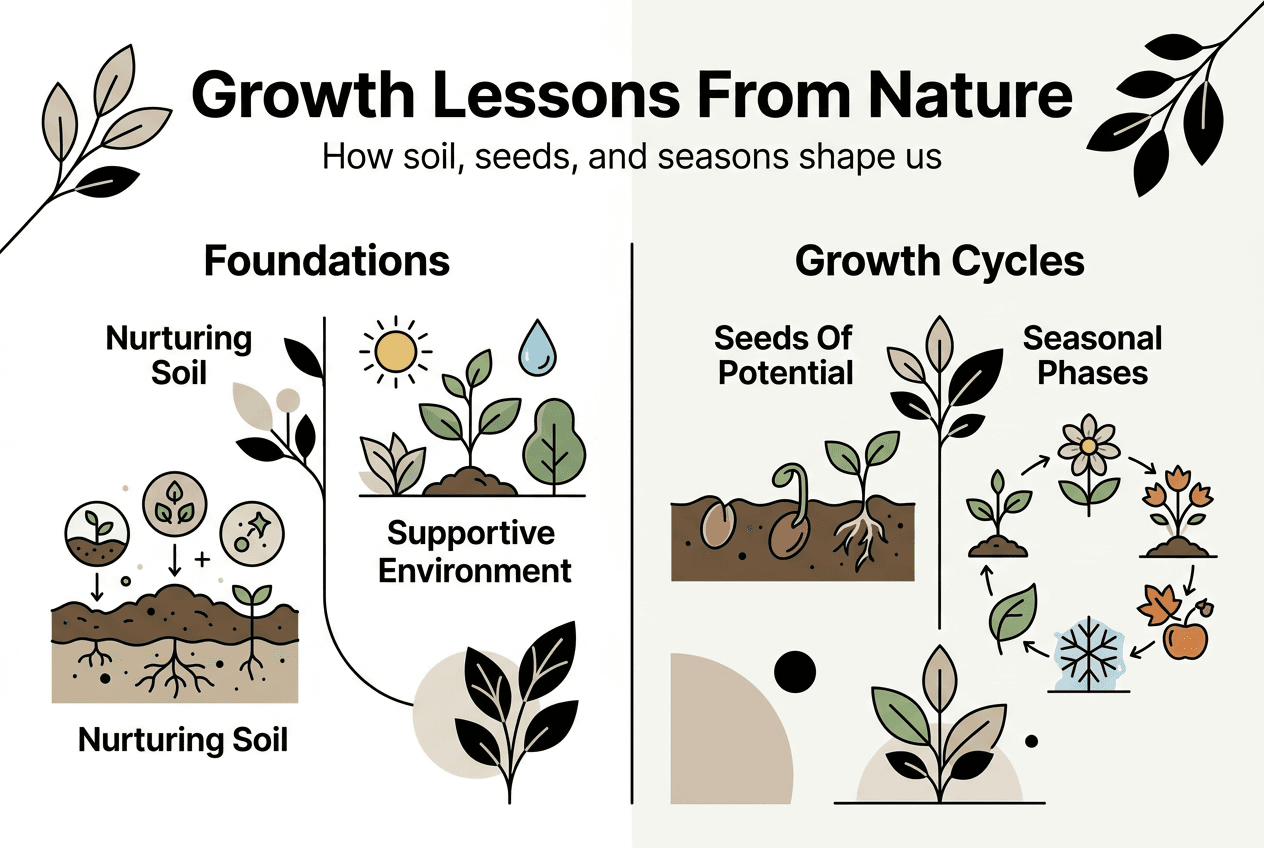
Recognising soil quality as foundational transforms how you approach challenges. Rather than blaming yourself for slow progress, examine whether your environment provides the support necessary for growth. Sometimes the issue isn’t your potential but the conditions surrounding you. Addressing foundational elements first creates the fertile ground where seeds of change can actually take root and thrive.
Seeds: potential, choices, and beginnings
Every seed contains remarkable potential, yet selecting the right seed affects the quality and strength of future growth. In human terms, seeds represent the choices you make when beginning new chapters, the goals you set, and the inherent capabilities you bring to any endeavour. Not all seeds yield identical outcomes, and understanding this shapes realistic expectations.
When you plant a tomato seed, you will never harvest courgettes. This obvious truth carries profound implications for personal development. The choices you make at the outset, the skills you cultivate, and the paths you pursue determine what becomes possible later. Selecting wisely requires honest self-assessment and clarity about desired outcomes.

Planting itself represents commitment, a deliberate act of faith in future results. You bury the seed in darkness, trusting that with proper care, something valuable will emerge. Beginning any growth journey demands similar courage, starting before you see results and believing in potential despite uncertainty.
Nurturing a seed from selection to harvest involves key steps:
- Selection: Choose seeds aligned with your soil conditions, climate, and desired harvest
- Preparation: Ready both the seed and environment for optimal germination
- Planting: Commit to the process by taking initial action at the right depth and spacing
- Care: Provide consistent water, light, and protection as the seed develops
- Patience: Allow adequate time for germination and growth without constant interference
Each step has human parallels. Selecting goals that match your values and circumstances increases success rates. Preparing through research and skill-building creates readiness. Taking action, even imperfectly, initiates growth. Consistent effort and self-compassion sustain momentum. Patience prevents premature judgement of progress.
“A seed grows with no sound, but a tree falls with huge noise. Destruction has noise, but creation is quiet.”
Pro tip: Recognise that heritage seeds (long-held dreams) and hybrid seeds (new opportunities) both have value, but require different approaches and timelines to flourish.
Some seeds germinate within days whilst others need weeks or months. Comparing your growth timeline to others’ proves futile when you are cultivating different varieties entirely. An oak seed takes years to become a mighty tree, whilst radishes mature in weeks. Neither timeline is superior, they simply reflect different natures and purposes. Understanding your unique seed type prevents discouragement and honours your particular growth pattern.
Seasons and the rhythm of growth
Nature operates in cycles, and seasonal changes dictate when plants grow, flourish, rest, or regenerate. These rhythms mirror human life phases, reminding us that growth is not constant but cyclical. Spring brings new beginnings and rapid expansion. Summer offers abundance and full expression. Autumn signals harvest and consolidation. Winter demands rest and internal renewal.
Understanding and respecting your personal seasons fosters sustainable growth. Pushing for constant productivity ignores the natural need for rest and reflection. Just as farmers do not plant during winter or expect harvest during spring, you must align efforts with appropriate phases. Forcing growth during rest periods leads to burnout and diminished results.
| Season | Natural Characteristics | Human Growth Phase | Key Actions |
|---|---|---|---|
| Spring | New growth, planting, energy | Beginning, learning, excitement | Start projects, explore ideas, build momentum |
| Summer | Full bloom, abundance, warmth | Peak performance, visibility, output | Execute plans, share work, maximise productivity |
| Autumn | Harvest, consolidation, preparation | Reflection, integration, gratitude | Assess results, celebrate wins, gather lessons |
| Winter | Dormancy, rest, renewal | Recovery, planning, internal work | Rest deeply, strategise, restore energy |
Common pitfalls include rushing through growth phases or ignoring times for rest. Our culture often glorifies constant hustle, treating winter seasons as failures rather than necessary preparation for future springs. Yet plants that skip dormancy grow weak and susceptible to disease. Humans who refuse rest face similar consequences: exhaustion, poor decisions, and compromised wellbeing.
Recognising your current season requires honest self-assessment:
- Do you feel energised and ready for new challenges, or depleted and needing recovery?
- Are your efforts yielding visible results, or do you sense underground preparation happening?
- Does pushing harder feel productive, or does it create resistance and frustration?
Pro tip: Track your personal seasons by noting energy levels, productivity patterns, and emotional states across months to identify your natural rhythms and plan accordingly.
Seasons also teach acceptance of challenge. Winter feels harsh, yet it serves essential purposes: killing pests, allowing soil to rest, and preparing for spring’s explosion. Difficult periods in your life, whilst uncomfortable, often clear away what no longer serves and create space for new growth. Resisting these necessary phases only prolongs their duration and intensifies their difficulty.
Applying nature’s lessons to your personal growth
Integrating soil, seeds, and seasons into actionable strategies transforms abstract metaphors into practical frameworks. Success requires combining quality foundations (environment), wise choices (intentions), and seasonal awareness (timing). None of these elements alone guarantees growth, but together they create conditions where flourishing becomes natural.
Create a growth plan that respects both action and rest phases. Map your goals against realistic timelines that account for germination periods, seasonal rhythms, and the need for consolidation. Avoid cramming every moment with productivity. Schedule deliberate rest, knowing it strengthens rather than hinders long-term progress.
Use gardening metaphors to maintain patience through setbacks. When a plant wilts, gardeners troubleshoot systematically: checking water, light, soil, pests. They rarely abandon the plant after one difficult day. Apply this same measured response to your challenges. Analyse conditions, adjust what you can control, and give changes time to take effect before judging results.
Practices that enrich your growth ‘soil’ include:
- Mindfulness to cultivate present-moment awareness and reduce reactive patterns
- Journaling to process experiences and extract lessons from each season
- Mentoring relationships that provide guidance, accountability, and perspective
- Physical movement to maintain the vitality necessary for sustained effort
- Community involvement to create networks of mutual support and shared growth
Gardening aids like pollinator-friendly tools and lighting can boost growth through environmental support. Similarly, strategic resources accelerate human development when foundations are solid. Books, courses, therapy, and coaching act as fertilisers, enhancing what already exists rather than replacing missing fundamentals.
Pro tip: Surround yourself with positive influencers who act as ‘pollinators’, cross-pollinating ideas and opportunities that enhance your growth beyond what you could achieve in isolation.
Recognise that different growth areas may occupy different seasons simultaneously. Your career might be in full summer bloom whilst your relationships undergo winter renewal. This complexity is natural. Trying to force every life domain into the same season creates unnecessary pressure. Instead, honour where each area currently sits and allocate energy accordingly.
The most powerful application involves viewing setbacks through a seasonal lens. That project that failed? Perhaps it was planted in winter when spring would have been appropriate. That relationship that ended? Possibly an autumn harvest making space for new spring plantings. Reframing difficulties as natural phases rather than permanent failures maintains hope and forward momentum even during challenging times.
How Stomart can support your growth journey
Nurturing your personal growth environment becomes easier with the right tools and resources. Stomart offers an extensive range of home goods, garden supplies, and wellness products designed to enhance the spaces where you live and grow. From practical gardening tools that help you cultivate actual plants to lighting solutions that brighten your environment, each product supports the foundational work of creating fertile soil for your development. Explore health benefits of house plants to understand how greenery improves mental wellbeing, or discover pollinator-friendly garden items that support thriving ecosystems both outside and within your personal growth journey. By thoughtfully selecting items that align with your current season and needs, you create an environment where natural growth becomes inevitable.
What soil, seeds, and seasons teach about human growth FAQ
How do I know if my environment is good ‘soil’ for growth?
Assess whether your surroundings energise or drain you, support or undermine your goals, and encourage or limit your potential. Good soil feels nourishing even when growth is challenging.
Can I skip the winter season and maintain constant growth?
No, attempting constant productivity without rest leads to burnout and diminished quality. Winter seasons restore energy and prepare foundations for future springs, making them essential rather than optional.
What if I planted the wrong ‘seeds’ and chose poor goals?
Seeds can be replanted when you recognise misalignment. Acknowledge the lesson, adjust your direction, and begin again with wiser selection based on what you have learned.
How long should I wait before expecting visible growth?
Timelines vary dramatically based on what you are cultivating. Some changes manifest within weeks whilst others require years of patient tending before results appear above ground.
Do I need perfect conditions before starting my growth journey?
No, waiting for perfect soil, seeds, and seasons means never beginning. Start with what you have, improve conditions as you go, and trust that imperfect action outperforms perfect inaction.
How can I tell which season I am currently in?
Notice your energy levels, the visibility of your efforts, and your emotional state. Spring feels hopeful and energetic, summer productive and visible, autumn reflective and grateful, winter quiet and restorative.