

Emotional Buying Causes 50% More Pollution: Eco Guide
on Mar 01, 2026Impulsive shopping drives up to 50% of global greenhouse emissions linked to consumer goods, yet most shoppers focus solely on the financial cost. The environmental toll of emotional buying extends far beyond your bank account. This guide reveals the hidden ecological impact of impulse purchases and equips you with practical frameworks to balance sustainability with budget constraints, helping you make mindful choices that protect both the planet and your wallet.
Key Takeaways
| Point | Details |
|---|---|
| Psychological triggers drive unsustainable consumption | Stress, social media, and emotional states fuel impulse buying that harms the environment. |
| Impulsive purchases generate massive waste | Up to 30% of impulse buys are returned or discarded within months, creating landfill overflow. |
| Decision frameworks balance eco and budget goals | Tri-dimensional models evaluate emotional, environmental, and financial factors before purchase. |
| Practical strategies reduce environmental footprint | Shopping lists, mindfulness, and planned purchases cut carbon emissions by 40%. |
| Conscious consumption benefits planet and wallet | Mindful buying habits save money while dramatically lowering your ecological impact. |
Understanding Emotional Buying: Psychology and Triggers
Emotional buying occurs when feelings rather than needs drive purchasing decisions. Unlike planned shopping, impulse purchases happen spontaneously, often triggered by temporary emotional states. Psychology research shows that 84% of shoppers make unplanned purchases weekly, with emotional factors playing a central role.
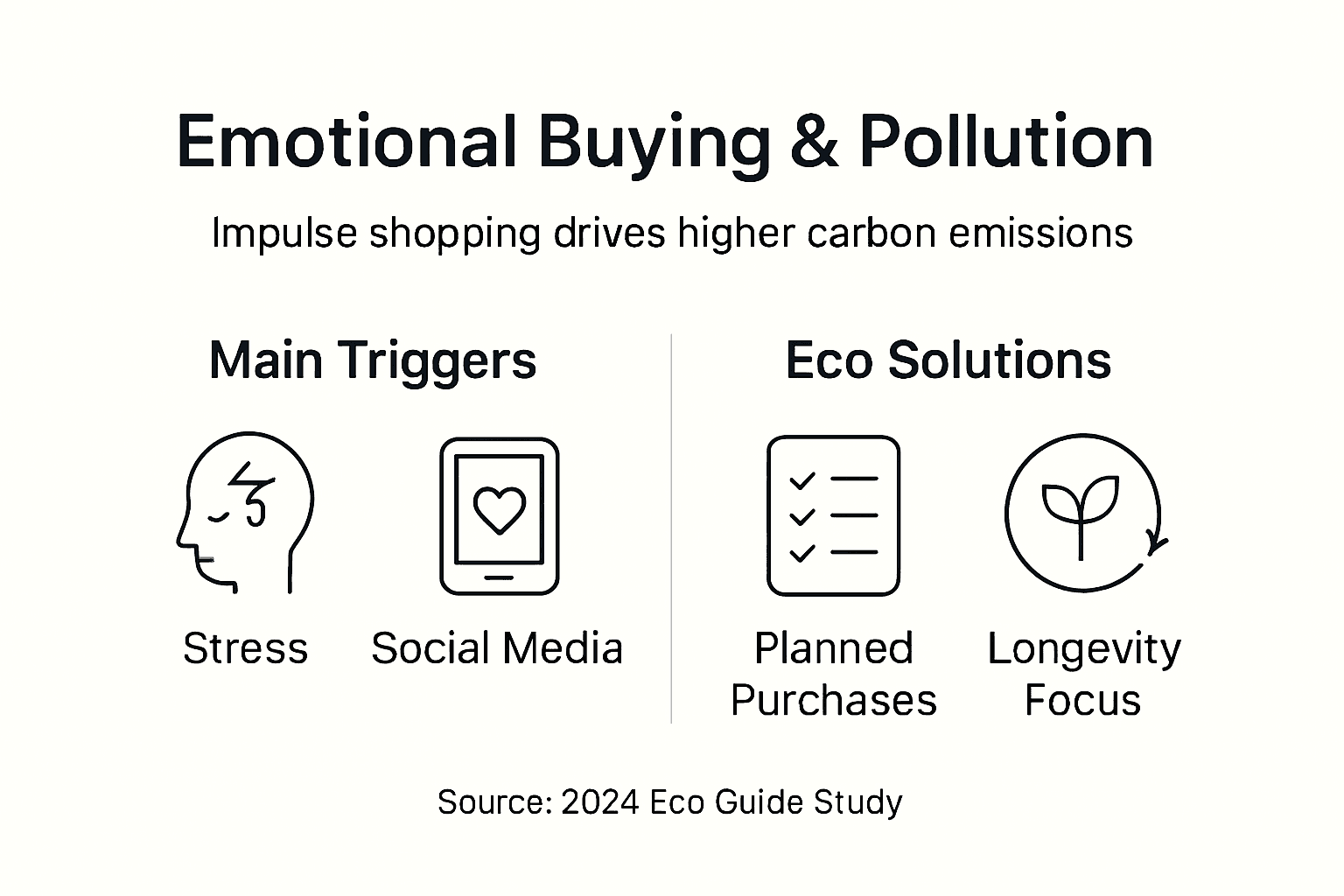
Several triggers amplify impulsive buying behavior:
- Stress and anxiety: Shopping provides temporary relief, creating a cycle of emotional purchasing that rarely addresses underlying issues.
- Social media influence: Targeted ads and influencer posts trigger FOMO, pushing immediate purchases without consideration of need or impact.
- Retail environments: Flash sales, limited time offers, and strategic product placement exploit decision fatigue and urgency.
- Mood elevation seeking: Buyers pursue the dopamine rush of acquisition, which fades quickly but leaves environmental consequences.
The psychological causes of emotional buying reshape our relationship with consumption. Studies indicate impulse purchases account for 40 to 80% of all buying decisions, depending on product category. Fashion and home goods see the highest rates.
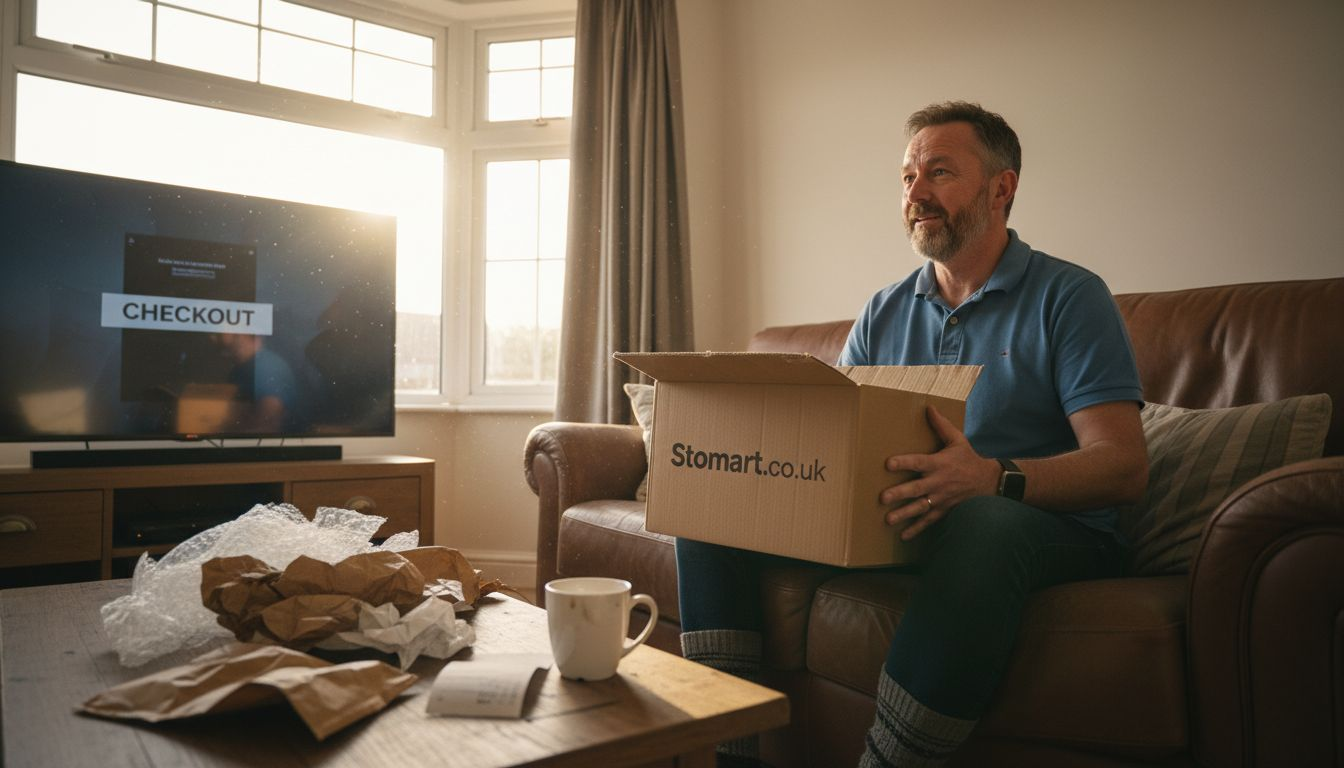
This pattern creates a sustainability crisis. When emotions override rational evaluation, shoppers ignore environmental costs, product lifespan, and actual utility. The brief satisfaction of impulse buying rarely justifies the long term ecological damage. Understanding these triggers is the first step toward breaking the cycle and adopting purchasing habits aligned with environmental values and financial stability.
Environmental Impact of Impulse Buying: From Resource Depletion to Waste
Every impulsive purchase sets off a chain of environmental consequences. Overproduction driven by unpredictable demand leads manufacturers to extract raw materials at unsustainable rates. When consumers buy on impulse, companies maintain excess inventory, multiplying resource depletion and energy consumption.
The waste statistics are staggering. Impulse purchases generate 30% higher return rates than planned buying, and research shows that 25% of impulse bought items end up in landfills within six months. Returned products often cannot be resold, creating additional disposal challenges.
| Environmental Cost | Impact from Impulse Buying |
|---|---|
| Carbon emissions | 2.1 billion tonnes annually from consumer goods overproduction |
| Water consumption | 93 billion cubic metres wasted on unworn fast fashion items |
| Landfill waste | 92 million tonnes of textiles discarded yearly |
| Microplastic pollution | 500,000 tonnes released from synthetic impulse purchases |
Fast fashion exemplifies the crisis. The industry produces 100 billion garments annually, with impulse purchases driving 60% of sales. Fast fashion’s environmental impact includes 10% of global carbon emissions and 20% of industrial wastewater pollution. Most items are worn fewer than five times before disposal.
Key environmental damages include:
- Resource extraction: Impulse buying increases mining, logging, and petroleum extraction for packaging and products.
- Transportation emissions: Rush production and shipping to meet impulse demand generates unnecessary carbon output.
- Chemical pollution: Accelerated manufacturing shortcuts environmental protections, releasing toxins into ecosystems.
Pro Tip: Before any purchase, estimate the product’s lifespan and environmental cost per use. If an item will be used fewer than 30 times, the environmental burden likely outweighs the benefit. This simple calculation prevents impulse buys with disproportionate ecological impacts.
Common Misconceptions About Emotional Buying and Environmental Sustainability
Several myths minimize the environmental severity of impulse purchases, leading shoppers to underestimate their ecological footprint. Correcting these misconceptions is essential for developing sustainable buying habits.
Myth: Impulse buying only affects personal finances
Many believe emotional purchases merely drain bank accounts. Reality: Every impulsive buy triggers production, transportation, and eventual disposal. Environmental studies confirm that consumption patterns directly correlate with carbon footprints. Your impulse purchases signal manufacturers to produce more, perpetuating overproduction cycles regardless of whether you can afford the purchase.
Myth: More consumption strengthens the economy
The conventional wisdom suggests buying stimulates economic growth. However, excessive consumption based on emotional triggers creates waste intensive production models. Economic analysis reveals that resource efficient economies outperform waste heavy models long term. Impulse driven consumption depletes natural capital faster than economies can adapt.
Myth: Emotional buying is purely a financial behavior
This misconception ignores the hidden cost of convenience and environmental burden. Psychological triggers that drive impulse purchases don’t discriminate between sustainable and harmful products. The same emotional state that leads to buying unnecessary items also prevents evaluation of environmental impact, packaging waste, or carbon intensity.
Additional misconceptions include:
- “Small purchases don’t matter”: Micro impulse buys accumulate massive environmental costs when multiplied across millions of consumers.
- “Recycling solves the problem”: Only 9% of plastic and 15% of textiles actually get recycled; impulse buying overwhelms recycling infrastructure.
- “Digital shopping reduces impact”: Online impulse purchases often increase emissions through individual shipping, excess packaging, and high return rates.
Recognizing these myths helps shoppers understand that emotional buying habits carry environmental consequences as significant as financial ones. Sustainable consumption requires acknowledging the full scope of impact beyond immediate monetary costs.
Frameworks for Balancing Environmental and Budget Concerns in Purchasing Decisions
Effective decision making requires integrated frameworks that evaluate purchases across multiple dimensions. The tri-dimensional model considers emotional, environmental, and financial factors simultaneously, preventing impulse purchases while supporting sustainable choices within budget constraints.
This framework operates through three evaluation lenses:
- Emotional assessment: Identify whether the purchase addresses a genuine need or temporary feeling. Wait 48 hours before buying to let emotional intensity subside.
- Environmental evaluation: Calculate the product’s lifecycle impact, including production resources, transportation distance, expected lifespan, and disposal method.
- Financial analysis: Compare immediate cost against long term value, factoring in financial aspects of buying decisions like durability and versatility.
| Decision Approach | Considers Emotions | Evaluates Environment | Assesses Budget | Prevents Impulse Buying |
|---|---|---|---|---|
| Traditional impulse control | No | No | Yes | Partially |
| Emotional awareness only | Yes | No | No | Partially |
| Tri-dimensional framework | Yes | Yes | Yes | Effectively |
Applying this framework follows a structured process:
- Pause when you feel purchasing urge and identify the triggering emotion.
- Research the product’s environmental credentials, including materials, manufacturing process, and company practices.
- Calculate true cost including maintenance, disposal, and opportunity cost of alternatives.
- Score each dimension on a 1 to 10 scale; purchases scoring below 7 in any category warrant reconsideration.
- Implement a mandatory waiting period proportional to purchase price: 24 hours for items under £50, one week for larger investments.
This systematic approach transforms reactive buying into conscious consumption. Studies show that structured decision frameworks reduce impulse purchases by 60% while improving satisfaction with completed purchases.
Pro Tip: Create a simple smartphone note with your framework checklist. Before any unplanned purchase, open the note and answer each question honestly. This five minute exercise prevents impulse buying while ensuring purchases align with your environmental values and financial goals.
Practical Strategies to Reduce Emotional Buying and Promote Sustainable Consumption
Transforming awareness into action requires specific techniques that interrupt impulse patterns and reinforce sustainable habits. These strategies address emotional triggers while building skills for conscious consumption.
Identify and manage emotional triggers:
- Track purchases for two weeks, noting your emotional state before each buying decision to reveal patterns.
- Develop alternative responses to triggers: take a walk for stress, call a friend for loneliness, exercise for boredom.
- Unsubscribe from promotional emails and unfollow shopping accounts that exploit emotional vulnerabilities.
Substitute impulsive buys with planned purchases:
Create detailed shopping lists before entering stores or browsing online. Research shows planned purchases have 70% lower return rates and higher long term satisfaction. Quality items used frequently generate less environmental impact per use than cheap impulse buys that break or become unwanted.
Focus on versatile, durable products that serve multiple purposes. A well made item costing twice as much but lasting five times longer delivers better environmental and financial outcomes. Consider eco-friendly shopping alternatives that prioritize sustainability without sacrificing quality or style.
Environmental benefits of strategic consumption:
Adopting these practices generates measurable ecological improvements. Research indicates that mindful consumption reduces personal carbon footprints by 35 to 45%. Decreasing impulse purchases by half cuts annual waste generation by 40% and saves the average household £1,200 yearly.
Additional effective strategies include:
- The 30 day list: Write down desired items and revisit after 30 days; 80% of impulse urges disappear.
- One in, one out rule: For every new item purchased, donate or recycle an existing one to maintain consumption awareness.
- Cash only shopping: Physical payment increases purchase deliberation compared to frictionless digital transactions.
Pro Tip: Practice the “five uses test” before buying. Visualize five specific occasions you’ll use the item. If you struggle to identify concrete uses, the purchase is likely impulse driven. This quick mental exercise combines emotional awareness with practical need assessment, protecting both environment and budget.
Implementing sustainable consumption tips transforms shopping from reactive to intentional. Small behavioral changes compound into significant environmental impact reduction over time.
Summary: Becoming a Conscious Consumer for the Planet and Your Wallet
Emotional buying generates profound environmental consequences extending far beyond immediate financial costs. Impulse purchases drive overproduction, accelerate resource depletion, and create waste streams overwhelming recycling infrastructure. The psychological triggers exploiting emotional vulnerabilities lead to consumption patterns fundamentally incompatible with sustainability goals.
The frameworks and strategies outlined provide practical pathways toward conscious consumption. Tri-dimensional decision models balance emotional, environmental, and financial considerations, preventing impulse purchases while supporting well considered buying aligned with personal values. Techniques like mandatory waiting periods, the five uses test, and trigger identification transform shopping from reactive to intentional.
Implementing these approaches delivers dual benefits: reduced environmental footprint and improved financial health. Mindful purchasing habits decrease carbon emissions, minimize waste, and conserve natural resources while saving money and increasing satisfaction with possessions.
The transition to conscious consumption requires ongoing commitment. Each purchase decision offers opportunity to align actions with environmental values. By recognizing emotional triggers, evaluating true costs, and prioritizing quality over quantity, you contribute to sustainable systems while protecting your budget. The planet and your wallet both benefit when awareness guides consumption rather than impulse.
Explore Sustainable & Stylish Home Goods at STOMART
Apply your new conscious consumption knowledge with STOMART’s curated selection of sustainable home goods. Our eco-friendly products combine environmental responsibility with modern design, supporting your journey toward mindful purchasing. Discover the best home goods for sustainable style that elevate your space without compromising your values. Explore our ultimate guide to stylish homeware for inspiration that balances aesthetics with sustainability. Browse our eco-friendly home products to make purchases aligned with both environmental goals and budget considerations.
FAQ
What are emotional triggers that lead to impulsive buying?
Stress, loneliness, social pressure, and targeted advertising are primary emotional triggers. Online marketing exploits FOMO and urgency, while retail environments use strategic placement and limited time offers. Recognizing your personal triggers helps develop alternative responses that prevent impulse purchases.
How does emotional buying increase my environmental footprint?
Impulse purchases drive overproduction, increasing resource extraction and carbon emissions. They generate 30% higher waste rates through returns and rapid disposal. Every unplanned buy signals manufacturers to produce more, perpetuating unsustainable consumption cycles that deplete natural resources and overflow landfills.
Can I balance sustainable buying with a budget effectively?
Yes, using tri-dimensional frameworks that evaluate emotional need, environmental impact, and financial cost simultaneously. Prioritizing durable, versatile items over cheap impulse buys reduces long term spending while lowering environmental footprint. Quality purchases used frequently deliver better value and sustainability than multiple low cost items.
What are practical tips to avoid impulse purchases?
Create detailed shopping lists and implement mandatory 48 hour waiting periods before unplanned purchases. Use the five uses test to verify genuine need. Unsubscribe from promotional emails and track emotional states during buying decisions. These techniques interrupt impulse patterns while building mindful consumption habits.
Recommended
- Lifestyle Eco-Friendly Home Products - STOMART.CO.UK
- The Hidden Cost of Convenience – Impacts on Sustainability - STOMART.CO.UK
- The Best Eco-Friendly Home Products Worth Buying - STOMART.CO.UK
- What Is Fast Fashion Eco Impact - STOMART.CO.UK
- Sustainable Event Planning: Elevating Luxury Experiences - Winelands Function – For Every Occasion, Your Celebration
- Could you go a year without buying any new clothes? Fashion fasting - LoveBelfast