

Consumerism’s Influence – Why Desire Remains Unfulfilled
on Feb 27, 2026Scrolling through your feed, it often feels as if every advert and influencer tells you the next purchase will finally make you happy. Yet what actually happens is a relentless cycle of wanting, buying, and feeling let down. Consumerism transforms genuine desire into a constant chase for what’s new and unattainable, leaving many urban millennials and Gen Z questioning whether true contentment is even possible. This guide unpacks why our longings feel hijacked and how you can reclaim satisfaction by reshaping what you want.
Key Takeaways
| Point | Details |
|---|---|
| Consumerism Shapes Desire | Consumerism transforms authentic desires into manufactured cravings, driven by marketing and social influences, impacting personal identity and satisfaction. |
| Dissatisfaction is Engineered | The gap between perceived expectations and reality keeps consumers in a cycle of discontent, ensuring continued consumption and dependency on marketing. |
| Marketing Exploits Vulnerabilities | Marketing strategies target insecurities and emotional triggers, promoting purchases based on identity rather than genuine need. |
| Sustainable Alternatives Exist | Shifting from quantity to quality and embracing sustainable consumption can lead to greater satisfaction and a more meaningful relationship with possessions. |
How Consumerism Alters Human Desire
Consumerism fundamentally rewires how you experience wanting. It doesn’t just offer products—it shapes the very nature of your desires, turning temporary wants into perpetual cravings that never seem to resolve.
Modern consumer culture operates on a simple principle: create endless desire. Marketing, social media, and advertising algorithms work together to convince you that happiness lies in the next purchase. This creates what researchers describe as an addictive cycle of consumption, where satisfaction is always just one more item away.
Here’s what actually happens in your brain during this process:
-
Status signalling replaces genuine need. You buy things not because you need them, but because they communicate something about your identity to others. A specific brand of trainer, a minimalist aesthetic, or the latest tech gadget becomes a statement about who you are.
-
Comparison becomes constant. Social media creates an endless stream of curated versions of other people’s lives, making your current possessions feel insufficient instantly.
-
Novelty addiction kicks in. Each new purchase triggers a dopamine hit. But the high fades quickly, pushing you to seek the next purchase before satisfaction even settles.
-
Self-alienation deepens. The more you chase material goods for identity, the further you drift from understanding what you genuinely value.
Consumerism transforms desire from something internal and authentic into something external and manufactured. You stop asking “What do I actually want?” and start asking “What should I want based on what’s being sold to me?”
When consumerism shapes your desires, you’re no longer shopping to fulfil your needs—you’re chasing an identity that’s being sold to you.
The system benefits from keeping you unsatisfied. Satisfaction means you stop buying. So marketing evolves constantly to create new insecurities, new categories, new “must-haves” that didn’t exist six months ago. The endless pursuit of consumption becomes the point itself, regardless of whether it actually improves your life.
This pattern hits differently for your generation. Growing up with social comparison built into daily communication means the pressure feels both omnipresent and normalised. You’re not being sold products; you’re being sold versions of yourself.
Pro tip: Pause before each purchase and ask yourself: “Would I want this if nobody knew I had it?” If the answer is no, you’ve identified a desire that consumerism created, not one that’s genuinely yours.
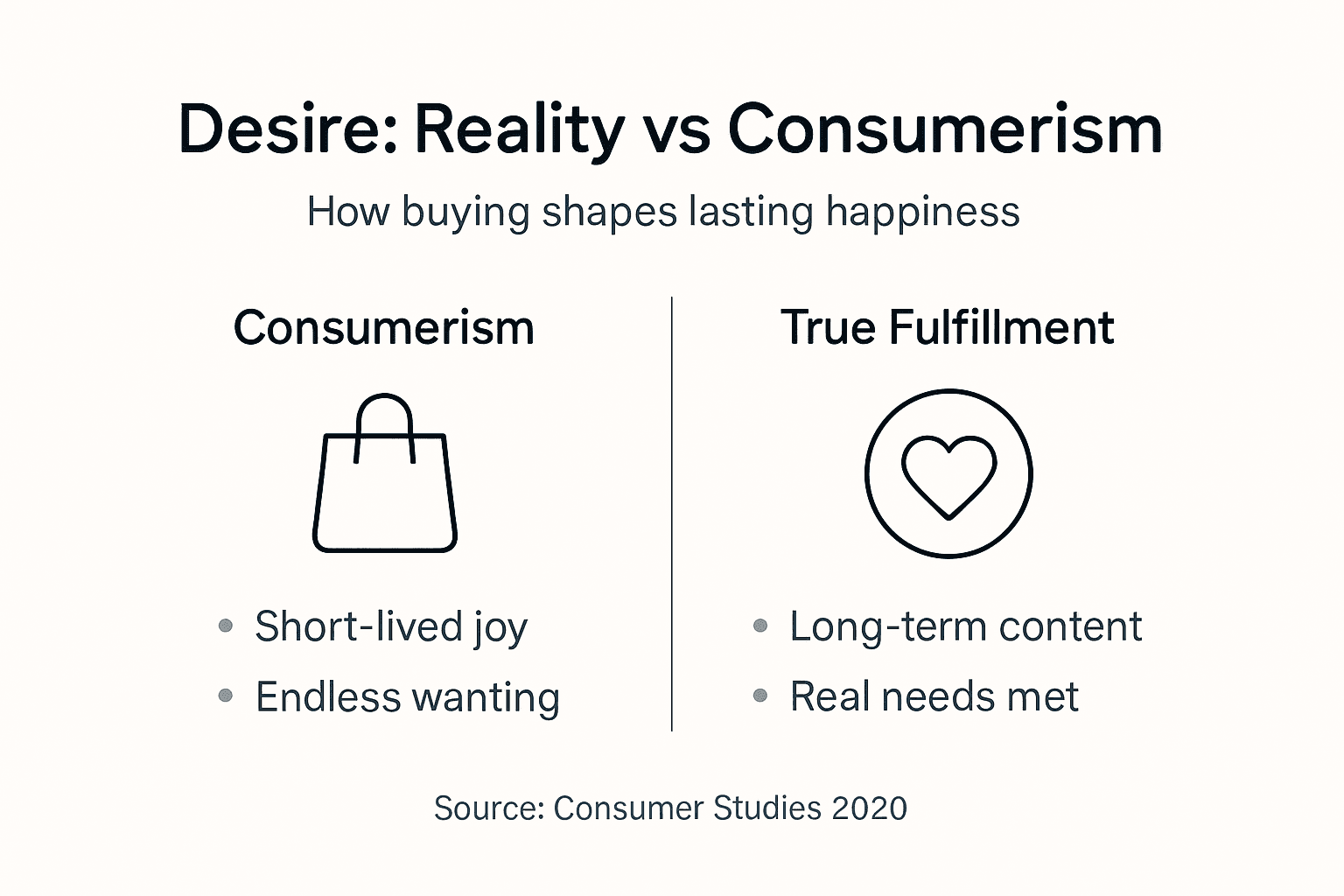
Here’s a comparison of consumerism-driven desire and authentic desire:
| Aspect | Consumerism-Driven Desire | Authentic Desire |
|---|---|---|
| Origin | Shaped by marketing and social influence | Emerges from internal values |
| Duration | Ongoing, rarely fully satisfied | Satisfying when fulfilled |
| Motivation | Status and societal expectations | Personal fulfilment and meaning |
| Emotional Result | Temporary pleasure, ongoing lack | Lasting contentment, self-alignment |
The Mechanics of Perpetual Dissatisfaction
Dissatisfaction isn’t accidental. It’s engineered. Consumer culture has perfected the art of keeping you perpetually unsatisfied, and understanding how this works is the first step to breaking free from it.

At its core, dissatisfaction operates through a simple mechanism: the gap between expectation and reality. Every product promises transformation—a better version of you, a happier life, genuine fulfillment. But when you acquire it, reality never matches the promise. The gap between what marketing sold you and what you actually experience creates disappointment.
Here’s where the psychology gets dark. The cycle of endless desire and discontent keeps you trapped because satisfaction itself is the enemy of the system. Once you’re satisfied, you stop consuming. So marketing deliberately cultivates dissatisfaction by:
-
Redefining normal constantly. What counted as “enough” last year becomes “outdated” this year. Fashion cycles accelerate. Technology becomes obsolete by design. Your possessions age in perception before they age in reality.
-
Amplifying social comparison. Social media shows you an impossible standard of lives that don’t actually exist. This creates persistent dissatisfaction mechanisms where you’re always measuring yourself against carefully curated illusions.
-
Making happiness conditional. Adverts link products to emotions—this trainer will make you confident, this skincare will make you worthy, this gadget will make you productive. You internalise these connections, believing your happiness genuinely depends on owning things.
-
Creating artificial urgency. Limited drops, flash sales, and “exclusive access” create fear of missing out. You buy not because you want something, but because you fear losing the opportunity.
The trap is psychological, not logical. Your rational mind knows that buying something won’t solve an emotional problem. But your emotional mind has been trained to seek solutions through consumption.
Dissatisfaction is the engine that drives consumerism. Remove dissatisfaction, and the entire system collapses.
You’re not weak for feeling caught in this cycle. Your brain is literally being manipulated by billion-pound industries employing psychologists, data scientists, and behavioural experts. The system is designed to exploit how human psychology actually works.
The cycle strengthens because each purchase teaches you the same lesson: temporary satisfaction followed by renewed emptiness. You start believing that dissatisfaction is simply part of being human, rather than recognising it as something deliberately manufactured.
Pro tip: Track what you buy for one week and honestly assess whether each purchase solved a real problem or temporarily distracted from an emotional one. This awareness reveals the pattern without requiring you to judge yourself.
Psychological Traps: The Role of Marketing
Marketing isn’t about selling products. It’s about selling versions of yourself you don’t yet believe you are. And it works by exploiting the gaps between who you are and who you want to become.
Modern marketing operates on a fundamental understanding of human psychology. It knows your insecurities, your aspirations, and the emotional triggers that bypass your rational thinking. The industry employs psychologists, neuroscientists, and behavioural experts specifically to crack the code of your mind.
The most effective marketing tactics exploit vulnerabilities by using what psychologists call emotional triggers and scarcity tactics. These aren’t subtle. They’re deliberate, tested, and refined through millions of data points about how you respond.
Here’s what you’re up against:
-
Scarcity creates panic. “Only 3 left in stock.” “Ends tonight.” These phrases override rational decision-making and force you into action mode. You buy not because you want it, but because you fear losing it.
-
Bandwagon effects normalise excessive consumption. “Everyone’s getting this.” “Trending now.” Your brain interprets popularity as validation, making you feel left out if you don’t participate.
-
Emotional associations redefine products. An energy drink becomes confidence. A skincare routine becomes self-worth. A trainer becomes identity. Marketing severs the product from its actual function and links it to emotions instead.
-
Social media amplifies all of this. Platforms like Instagram and TikTok create fear of missing out through social comparisons. You’re not comparing your life to your neighbour’s anymore; you’re comparing it to thousands of curated highlights from strangers worldwide.
The trap works because it targets your sense of identity and belonging. You’re not being sold a product; you’re being sold the feeling that acquiring it will improve who you are.
Marketing doesn’t create needs. It creates the belief that your existing insecurities can be solved by purchasing something.
What makes this particularly damaging is that marketing creates unrealistic expectations. The lifestyle shown in adverts doesn’t exist. The happiness promised doesn’t materialise. But by then, you’ve already made the purchase and internalised the failure as your own fault, not the marketing’s deception.
Your generation faces intensified pressure because you grew up with this. Social media isn’t just a platform for you; it’s simultaneously a marketing channel that profits from your dissatisfaction.
Pro tip: Before clicking “buy,” ask yourself: “Is this marketing making me want this, or do I genuinely need it?” Write down your answer. Over time, you’ll notice patterns in which purchases were driven by marketing versus actual desire.
Sustainable Alternatives to Endless Want
Breaking free from consumerism doesn’t mean deprivation. It means shifting from quantity to quality, from disposable to durable, from endless accumulation to intentional ownership.
Sustainable alternatives exist across every category you currently consume. They’re not about settling for less; they’re about getting more value—both personally and environmentally—from what you actually buy.
The good news? Consumer attitudes are shifting. Research shows that many of your generation demonstrate genuine willingness to adopt sustainable alternatives like bio-based products, even when they cost slightly more. The barrier isn’t desire; it’s knowledge and accessibility.
Here’s what sustainable alternatives actually look like:
-
Quality over quantity. Buy one durable item that lasts five years instead of five cheap items that last one year. Your wardrobe, electronics, and home goods all benefit from this shift.
-
Circular materials matter. Sustainable materials like biopolymers reduce reliance on non-renewable resources and minimise environmental impact. Products made from these materials have a genuinely lower footprint throughout their entire lifecycle.
-
Second-hand first. Buying pre-owned extends product life and removes the environmental cost of manufacturing. It also costs less, meaning your money stretches further.
-
Repair and restoration. Instead of replacing, fix what you have. This requires a different mindset, but it saves money and builds a genuine relationship with your possessions.
-
Multi-purpose design. Choose items that serve multiple functions rather than single-purpose gadgets cluttering your space.
The psychological shift is crucial. When you move away from endless wanting, you stop seeing purchases as identity statements and start seeing them as tools for living. A pair of trainers becomes footwear, not a status symbol. A jacket is warmth, not a personality statement.
Sustainable consumption isn’t about buying less. It’s about wanting less by making better choices with what you do buy.
You might worry this sounds boring. It’s actually the opposite. When you’re not constantly chasing novelty, you discover genuine appreciation for what you own. You notice quality. You understand craftsmanship. This creates deeper satisfaction than any impulse purchase ever provided.
The practical pathway involves exploring zero-waste living principles and eco-friendly alternatives that fit your actual lifestyle, not the one marketing convinced you that you needed.
Pro tip: Start with one category—fashion, home goods, or electronics—and commit to buying only sustainable alternatives for three months. Notice how your spending changes and how your satisfaction compares to your previous habits.
See how sustainable consumption contrasts with the traditional consumerist approach:
| Approach | Consumerism | Sustainable Consumption |
|---|---|---|
| Buying Motivator | Impulse, status, novelty | Need, durability, ethics |
| Product Lifespan | Short-lived, disposable | Long-lasting, repairable |
| Environmental Impact | High waste and emissions | Lower footprint, mindful usage |
| Relationship with Stuff | Identity statement | Practical tool, valued over time |
Break Free From Consumerism With Smarter Choices at Stomart
The article exposes how consumerism manipulates your desires, turning genuine needs into never-ending cravings and fostering perpetual dissatisfaction. You might recognise the frustration of chasing products for identity or fleeting pleasure only to feel emptier afterwards. This cycle is exhausting and emotionally draining but there is a path forward.
At Stomart.co.uk, we understand the importance of shifting from impulse buying to intentional ownership. Explore our curated selection of durable home goods, thoughtful fashion, and eco-friendly products designed to bring lasting value rather than momentary satisfaction. By choosing quality over quantity and embracing sustainable alternatives, you reclaim control over what you want and why.
Discover how purchasing mindfully can transform your relationship with stuff while reducing environmental impact. Start your journey to authentic desire and meaningful consumption today. Visit Stomart.co.uk to shop consciously and enjoy exclusive seasonal deals aimed at smarter spending. Your next great find awaits with purpose and potential.
Ready to make a change that matters now? Browse our versatile collections and take the first step to strengthen your sense of real fulfilment by shopping at Stomart.co.uk.
Frequently Asked Questions
What is consumerism and how does it affect human desire?
Consumerism is a cultural system that encourages the acquisition of goods and services, shaping human desires by turning short-term wants into ongoing cravings that remain unfulfilled. It prioritises status and societal expectations over genuine needs.
How does marketing manipulate our desires?
Marketing exploits psychological triggers, emotional associations, and social comparisons to create desires based on insecurities. It frames products as solutions to emotional needs, making you feel incomplete without them.
What are the signs of consumerism-driven desire?
Signs include a constant feeling of dissatisfaction, impulsive buying based on trends rather than needs, and purchasing items primarily to signal status or identity rather than genuine enjoyment or utility.
How can I break free from the cycle of consumerism?
To escape consumerism, shift your focus from quantity to quality in your purchases, consider sustainability in your choices, and practice mindfulness by assessing whether your desires are genuine or influenced by marketing. Taking a pause before each purchase can help you identify authentic needs.
Recommended
- The Hidden Cost of Convenience – Impacts on Sustainability - STOMART.CO.UK
- Why Personalised Fashion Matters - STOMART.CO.UK
- A Complete Guide to Home Décor Stores - STOMART.CO.UK
- Why Modern Life Makes Us Forget Our Humanity - STOMART.CO.UK
- Nostalgia Sells: Harness The Power Of Christmas To Boost Your Online Sales | ParcelPlanet