

The Hidden Cost of Convenience – Impacts on Sustainability
on Feb 26, 2026Grabbing a takeaway coffee and arranging same-day delivery can seem like smart ways to simplify your day. Yet for eco-conscious urban dwellers, the true meaning of convenience is rarely straightforward. Beyond saving time, convenience products impact environmental health, social connections, and overall quality of life. This article uncovers hidden costs of convenience culture and reveals how thoughtful choices can support both sustainability and personal wellbeing.
Key Takeaways
| Point | Details |
|---|---|
| Understanding Convenience | Convenience is about fitting products and services seamlessly into your life, balancing time efficiency, accessibility, minimal effort, and life integration. |
| Myths vs Reality | Many misunderstand convenience as always being fast or low-quality; in reality, it can coexist with high quality and varies based on personal circumstances. |
| Environmental Costs | The hidden environmental impacts of convenience products extend beyond their purchase, including pollution and resource depletion across their entire lifecycle. |
| Conscious Consumer Choices | Engaging in conscious shopping can balance convenience with sustainability, encouraging deliberate purchases that prioritise quality and responsible production. |
Convenience Defined: Advantages and Common Misconceptions
Convenience shapes nearly every consumer choice you make. From quick grocery runs to one-click online shopping, it influences what you buy and how you live. But convenience is far more nuanced than most people realize.
Convenience doesn’t mean what you might think it means. Many assume it refers only to speed or ease of access. The reality is more complex—convenience encompasses balancing multiple life demands like work, family, and personal time. It’s about fitting products and services into your existing life without friction.
What Convenience Really Means
Convenience operates on several levels:
- Time efficiency: How quickly something fits into your schedule
- Accessibility: Whether a product or service is readily available when you need it
- Minimal effort: Low physical or mental energy required to obtain or use something
- Life integration: How well it aligns with your existing routines and responsibilities
You value convenience differently depending on context. What’s convenient for a busy Monday morning differs entirely from weekend shopping. This flexibility is crucial to understanding why convenience drives billions in consumer spending.
Common Misconceptions About Convenience
People hold several false beliefs about convenience that deserve clarification:
Misconception 1: Convenience always means lower quality. Research shows convenience doesn’t inherently reduce satisfaction or quality. Many high-quality products and services prioritise both convenience and excellence.
Misconception 2: Online options are the only “convenient” choice. Convenience varies across different delivery methods. Some people find in-store shopping more convenient than waiting for delivery. Others prefer online ordering for its flexibility.
Misconception 3: Convenience is a universal standard. Your definition differs from your neighbour’s. What feels convenient depends on your personal circumstances, priorities, and lifestyle.
Misconception 4: More convenience always equals better outcomes. Excessive convenience can lead to overconsumption, waste, and unexamined purchasing habits. Sometimes inconvenience creates better decisions.
To clarify the realities versus common myths about convenience, see the comparison below:
| Aspect | Common Misconception | Actual Reality |
|---|---|---|
| Quality | Convenience means lower quality | Quality and convenience can coexist |
| Delivery Method | Only online options are convenient | In-store and online can both offer convenience |
| Universality | Convenience is the same for everyone | Personal circumstances define convenience |
| Outcomes | More convenience always means better results | Excessive convenience can create negative effects |
The Real Advantages of Convenience
Convenience genuinely offers measurable benefits when used thoughtfully:
- Saves time for activities that matter more to you
- Reduces daily stress and decision fatigue
- Improves access for people with mobility or time constraints
- Enables juggling competing responsibilities effectively
- Allows focus on higher-priority tasks
True convenience improves your life by freeing time and mental energy for what actually matters.
Your urban lifestyle demands flexibility. Convenience products address real problems—rushing between work and commitments, managing a household with limited time, handling unexpected needs. The issue isn’t convenience itself; it’s understanding what costs come hidden beneath the surface.
Pro tip: Before purchasing a “convenient” product, ask whether it genuinely saves you time or simply saves you from thinking about the purchase. The difference determines whether it’s truly convenient or just impulsive.
Environmental Impact of Modern Convenience Products
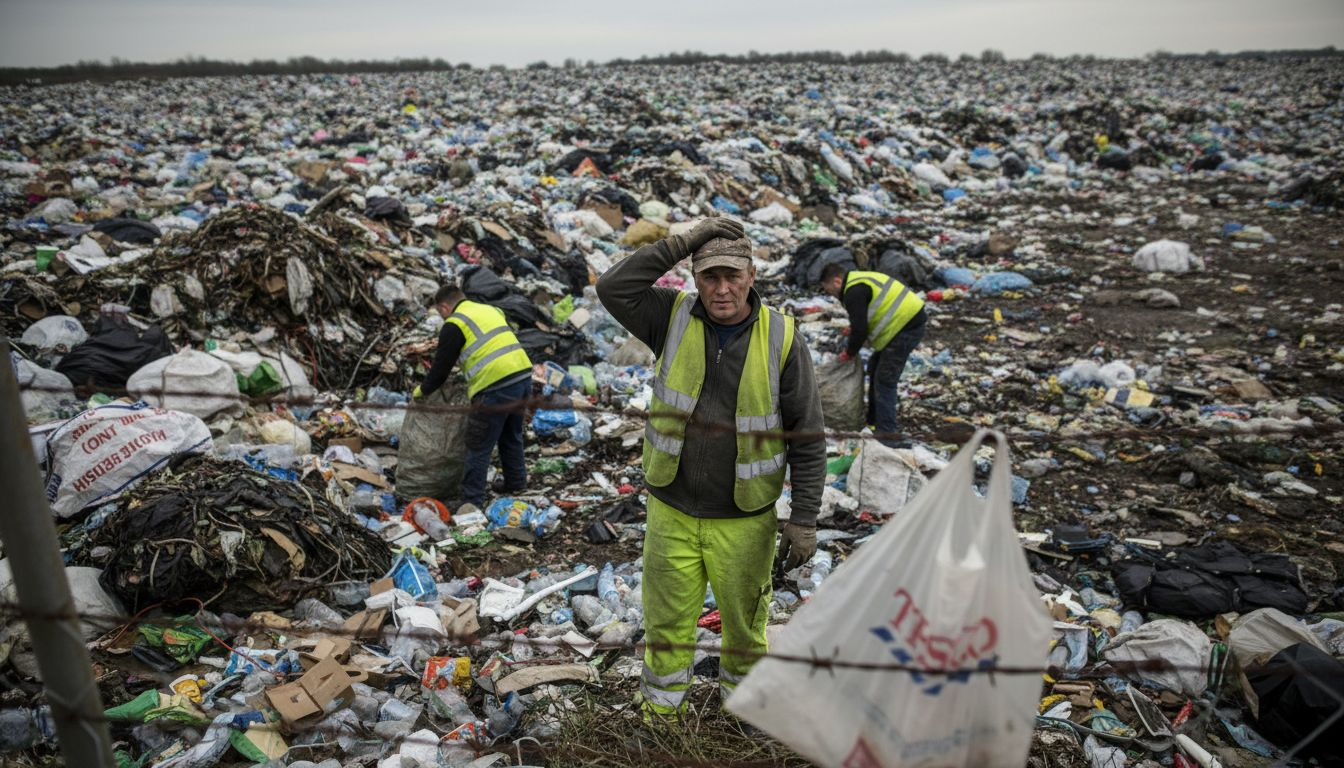
Convenience products create a hidden environmental cost that extends far beyond the checkout. Every disposable item you grab—from single-use coffee cups to plastic packaging—triggers a chain of environmental damage that starts long before you use it and continues long after you throw it away.
The environmental footprint of convenience products is staggering. Single-use plastic bottles generate substantial greenhouse gas emissions throughout their entire life cycle, from extraction and manufacturing through transport, use, and disposal. A bottle used for minutes can pollute for centuries. This pattern repeats across thousands of convenience products you purchase without thinking.
The Full Life Cycle Problem
Most people focus only on disposal—what happens after you throw something away. The real damage occurs earlier:
- Raw material extraction: Mining and drilling for fossil fuels and minerals depletes natural resources
- Manufacturing: Factory production consumes massive amounts of energy and water
- Transportation: Shipping convenience products globally burns fuel and releases emissions
- Usage: Some products require energy or chemicals during normal use
- Disposal and beyond: Landfill accumulation and environmental persistence for decades
Each stage compounds the environmental impact. A convenience product’s true cost isn’t what you pay at the till—it’s measured in resource depletion, carbon emissions, and ecosystem damage.
To understand the broader impact of disposable items, consider the comparison of product life cycles:
| Product Type | Life Cycle Duration | Environmental Impact | Sustainability Potential |
|---|---|---|---|
| Single-use plastic bottle | Minutes (use); centuries (decomposition) | High: pollution, emissions, resource depletion | Very low, mostly non-recyclable |
| Reusable metal bottle | Several years | Low: less waste, reduced emissions | High, can replace hundreds of single-use items |
| Compostable cup | Hours (use); months (biodegrade) | Moderate: limited landfill burden | Medium, must be properly composted |
Why Convenience Products Damage Ecosystems
Convenience items harm wildlife and natural systems in multiple ways:
Plastic persistence. Plastic pollution persists in ecosystems worldwide, harming marine life, terrestrial animals, and disrupting food chains. Microplastics now appear in soil, water, and even human bloodstreams.
Chemical contamination. Manufacturing and disposal release toxic chemicals that contaminate groundwater and soil, affecting agriculture and drinking water supplies.
Habitat destruction. Resource extraction for convenience products destroys forests, wetlands, and other critical habitats.
Climate impact. Production and transport of convenience items contribute substantially to global greenhouse gas emissions, accelerating climate change.
The Urban Consumer’s Dilemma
You live in a system designed around convenience. Your busy schedule, limited time, and urban environment make single-use products genuinely attractive. But understanding the environmental cost helps you make conscious choices about when convenience truly matters versus when alternatives exist.
Many eco-friendly alternatives, like sustainable home products, offer comparable convenience without the environmental devastation. The choice isn’t always between convenience and sacrifice—sometimes it’s between different types of convenience.
Every convenience product purchase is a choice between immediate personal ease and long-term environmental stability.
Pro tip: Before buying a convenience product, ask: “Will I use this for minutes or months?” If it’s minutes, find a reusable alternative. Minutes of convenience shouldn’t cost years of environmental damage.
Social and Emotional Trade-Offs We Overlook
Convenience culture demands a hidden emotional price. You chase fast solutions to save time, yet end up more stressed, isolated, and disconnected from meaningful connections. The convenience you gain in your schedule often costs you in mental wellbeing and social bonds.
When you prioritise convenience, you sacrifice deeper connections. Quick online transactions replace face-to-face interactions with shopkeepers. Ready-made meals skip the ritual of cooking together. Same-day delivery means fewer reasons to leave home and encounter neighbours. These small losses accumulate into profound loneliness.
The Loneliness Epidemic Hidden Behind Convenience
Social isolation and lack of meaningful support significantly impact mental health across all age groups. Convenience products enable you to meet physical needs whilst avoiding human contact, deepening emotional disconnection.
Convenience culture creates isolation in several ways:
- Reduced social interaction: Self-checkout, online shopping, and delivery avoid human encounters
- Atomised living: Individual consumption replaces communal activities
- Time poverty paradox: Saved time fills with work, not relationships
- Eroded community spaces: Shopping centres and local markets decline as online retail expands
- Digital substitution: Virtual interactions replace in-person connections
You end up with more free time but less genuine connection. The emotional cost compounds silently until you realise you’re fundamentally alone.
Stress, Burnout, and the Convenience Trap
Convenience products promise to reduce stress, but often intensify it. The pressure to always be productive, always be connected, always be optimised creates relentless anxiety. Convenience enables overcommitment—you can fit more into your schedule, so you do, until burnout follows.
Supporting emotional wellbeing requires intentional focus on social connections and stress management. Yet convenience culture pushes against both. You’re encouraged to work longer, consume faster, and rest less.
The Quality of Life Question
Convenience saves minutes but costs hours of meaningful living. Time saved doesn’t automatically convert to wellbeing. You must consciously redirect saved time towards relationships, reflection, creativity, and rest.
Most people don’t. They fill saved time with more work or mindless scrolling. Convenience becomes a treadmill—you move faster without actually going anywhere meaningful.
Convenience without intention creates isolation. Saved time without purpose creates anxiety. You gain efficiency but lose connection.
Your urban life doesn’t require perfect convenience to function well. Sometimes the “inconvenient” choices—cooking dinner together, shopping locally, walking instead of delivery—create the wellbeing that convenience promises but cannot deliver.
Pro tip: Identify one convenience product you use daily and replace it with a slower alternative once weekly. Notice how this shift affects your stress levels and social connection within a month.
Sustainability, Waste, and Hidden Economic Costs
Convenience comes with a price tag that never appears on your receipt. The true cost of single-use products, disposable packaging, and throwaway culture extends far beyond the checkout, creating massive waste streams and draining resources that should be preserved for future generations.
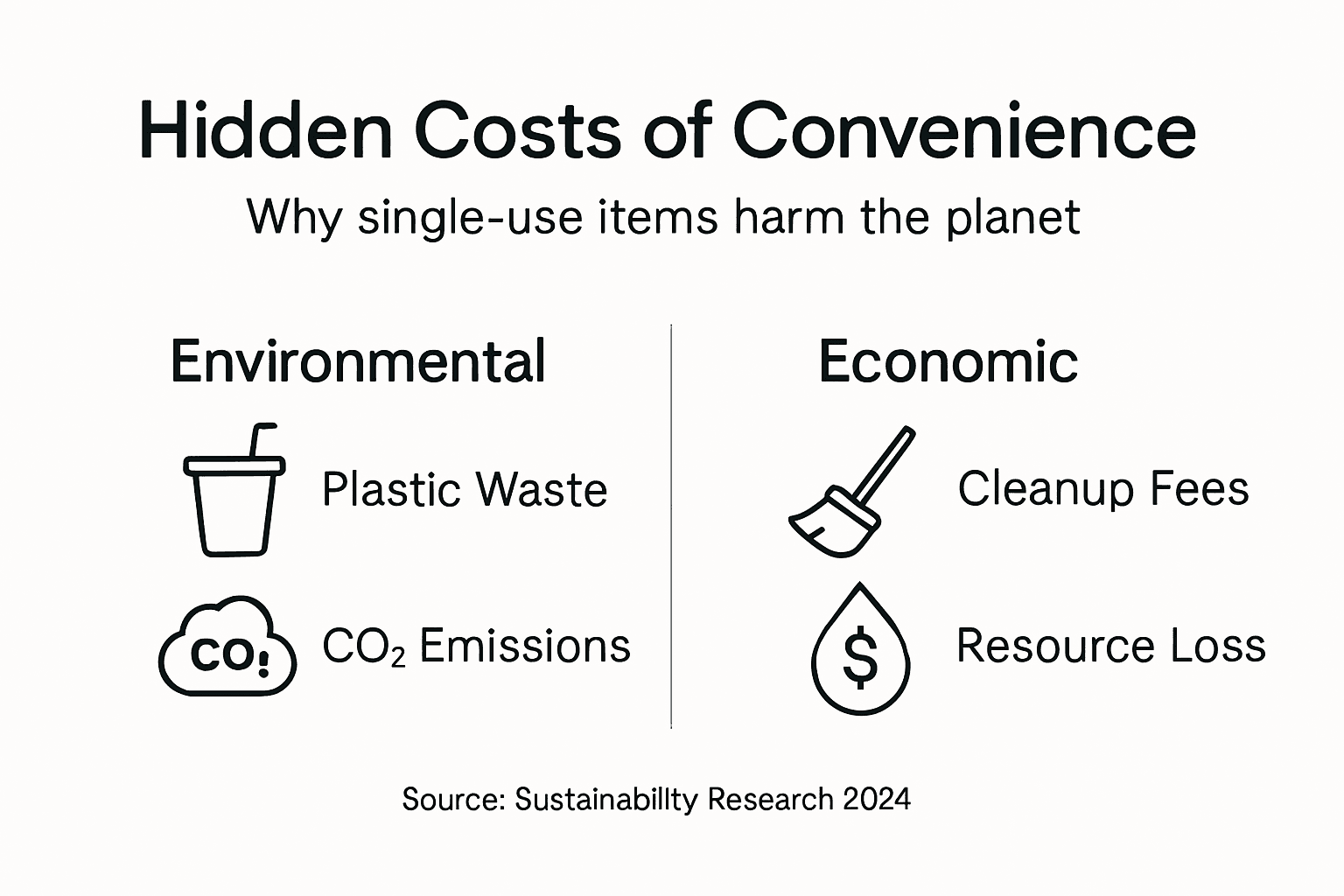
You rarely see the full economic impact of convenience consumption. Landfill costs, pollution cleanup, resource depletion, and climate remediation are paid collectively through taxes, environmental damage, and declining quality of life. These hidden expenses far exceed the savings you gain from buying cheap, disposable products.
The Economics of Waste
Waste reduction strategies generate measurable economic benefits alongside environmental gains. Yet most people focus only on purchase price, ignoring disposal costs and broader economic consequences. This creates a false economy where convenience appears cheaper than it actually is.
Hidden economic costs include:
- Landfill management: Sorting, transporting, and burying waste costs money and land
- Water treatment: Contamination from disposal requires expensive cleanup
- Healthcare expenses: Environmental toxins create illness and medical costs
- Resource extraction: Mining and drilling deplete finite resources, raising future prices
- Climate adaptation: Extreme weather and environmental damage require costly infrastructure changes
- Lost productivity: Poor air and water quality reduce work output and wellbeing
Each convenience purchase shifts costs from the individual consumer to society at large. You save £2 on a disposable item; society spends £20 managing the waste.
Poor Planning Creates Waste
Inefficiency and poor asset tracking create substantial hidden costs in both personal and organisational spending. Convenience culture encourages overbuying because products are cheap and readily available. You purchase more than needed, use less than purchased, and discard the rest.
This pattern repeats across millions of consumers, creating exponential waste. Convenience products enable thoughtless consumption at scale, transforming individual purchasing decisions into collective environmental and economic damage.
The True Cost of Cheap Convenience
Inexpensive convenience products carry hidden sustainability costs that aren’t reflected in their prices. A £1 plastic bottle costs far more when you account for environmental remediation, resource replacement, and ecosystem damage. Manufacturers externalise these costs, leaving society to pay.
Products like reusable alternatives and sustainable goods may cost more upfront but eliminate ongoing waste and replacement costs. They’re actually more economical when you calculate true lifetime expenses.
Cheap convenience masks expensive consequences. Low purchase prices hide high societal costs.
Your purchasing power shapes markets. When you choose products designed for durability and reusability over single-use convenience, you signal demand for sustainable alternatives. Manufacturers respond by investing in better materials and designs. Over time, sustainable products become cheaper as scale increases.
Pro tip: Calculate the true cost of your most-used convenience products by tracking how many you buy annually and multiplying by price, then research the waste management and environmental costs. The total cost usually shocks consumers into reconsidering their choices.
Conscious Shopping: Striking a More Responsible Balance
Conscious shopping isn’t about deprivation or abandoning convenience entirely. It’s about making deliberate choices that balance your immediate needs with long-term environmental and social responsibility. You can have both convenience and sustainability—but only if you shop with intention.
The good news? You’re not alone in wanting this balance. A majority of consumers will pay premiums for socially responsible products that benefit the environment and human welfare. This shift shows that sustainable shopping is becoming mainstream, not niche.
Moving Beyond Impulse Buying
Convenience culture thrives on impulse. Quick decisions, fast checkouts, and instant gratification drive overconsumption. Breaking this cycle requires deliberate reflection before purchase.
Reflecting on possessions you already own reduces the urge to buy and creates more mindful shopping habits. Instead of automatically adding items to your basket, pause and consider what you genuinely need versus what you want.
This simple practice prevents waste before it starts:
- Inventory your home: Know what you own and avoid duplicate purchases
- Wait before buying: Leave items in your basket for 48 hours before checkout
- Question each purchase: Ask whether this item solves a real problem or just feels convenient
- Track what you use: Notice which purchases actually improve your life versus collecting dust
- Set category limits: Decide how many items per category you genuinely need annually
These practices aren’t restrictions. They’re clarity. You’ll discover what actually matters to you versus what marketing convinced you to want.
Choosing Quality Over Quantity
Conscious shopping often means buying fewer items but choosing better ones. A durable jacket costs more upfront but outlasts five cheap alternatives. You save money, reduce waste, and support makers who invest in quality.
Look for products designed for longevity:
- Repairable design: Can you fix broken parts or is it disposable?
- Ethical production: Are workers treated fairly and paid properly?
- Material quality: Will this last years or months?
- Brand transparency: Do they publish sustainability information openly?
- Fair trade credentials: Does this product support responsible practices?
When shopping for items that prioritise fair trade and ethical production, you’re investing in systems that support human welfare alongside environmental protection.
Building Your Personal Shopping Framework
Conscious shopping works best with clear personal guidelines. Without them, you’ll revert to convenience patterns when tired or stressed.
Conscious shopping isn’t perfection. It’s progress—making better choices more often than before.
Your framework might include avoiding single-use items, buying only what you’ll use within a month, prioritising secondhand options, or supporting specific ethical brands. The specifics matter less than consistency. Start small with one or two rules, then expand as they become automatic.
Pro tip: Create a “needs versus wants” list before shopping trips and stick to it rigidly for one month, then review how many items on the “wants” list you actually missed. This resets your baseline for what feels essential.
Embrace True Convenience with Sustainable Choices Today
The article highlights the hidden costs of convenience products that many urban consumers face—environmental damage, social isolation, and unnoticed economic expenses. If you feel overwhelmed by the challenge of balancing a busy life while making responsible purchases that reduce waste and support sustainability, you are not alone. At Stomart.co.uk, we understand your need for time efficiency, minimal effort, and thoughtful shopping that respects the planet and your wellbeing.
Discover how convenient shopping can also be conscious shopping. Explore our wide selection of eco-friendly home products and carefully curated essentials designed to help you reduce single-use waste without sacrificing comfort or style. Make a positive impact now by choosing products that align with your values while enjoying the variety and accessibility of our online store.
Take the first step toward sustainable convenience by visiting Stomart.co.uk today and transform your shopping habits with purpose and ease.
Frequently Asked Questions
What are the hidden costs of convenience products?
Convenience products often have hidden environmental and economic costs that extend beyond their purchase price. These include resource depletion, greenhouse gas emissions from production and transportation, waste management expenses, and health costs associated with pollution.
How do convenience products affect sustainability?
Convenience products typically contribute to a throwaway culture that increases waste and environmental damage. Their production and disposal can harm ecosystems, contribute to climate change, and cause long-lasting pollution, making them less sustainable than reusable or eco-friendly alternatives.
What are some sustainable alternatives to single-use convenience items?
Sustainable alternatives include reusable items like metal water bottles, cloth shopping bags, and compostable utensils. These products can replace multiple single-use items and reduce waste significantly, offering long-term economic and environmental benefits.
How can consumers make more conscious choices when it comes to convenience products?
Consumers can adopt conscious shopping practices by assessing their actual needs versus wants, waiting before making impulse purchases, prioritising durable and ethically produced items, and tracking their consumption habits to reduce unnecessary buying.