

How nature heals the mind with science still catching up
on Mar 25, 2026You’ve felt it before: that deep sense of calm washing over you during a woodland walk, or the quiet clarity that emerges after sitting by a stream. Yet when researchers try to capture exactly why nature exposure improves mental health, the explanations remain surprisingly incomplete. Science confirms the benefits are real and measurable, but the mechanisms behind nature’s profound healing power continue to puzzle experts. This article explores what we know about nature’s mental health effects and where mystery still lingers.
Key Takeaways
| Point | Details |
|---|---|
| Mental health benefits | Nature exposure improves multiple mental health outcomes including reductions in depression and anxiety and increases in mood and vitality, with a large meta analysis of 78 field experiments showing benefits across diverse populations and settings. |
| Theoretical mechanisms | Attention Restoration Theory describes soft fascination that gently captures attention and allows directed attention to recover, while Stress Reduction Theory links lower cortisol and calmer neural activity to nature exposure. |
| Natural design cues | Fractal patterns and curved edges in nature require less cognitive processing, reducing mental fatigue, and even indoor plants can provide calming visual elements. |
| Brief visits effective | Short nature intervals such as ten minutes can yield meaningful mental health benefits and may outperform single longer sessions. |
| Virtual nature benefits | When real access is limited, virtual nature can still improve mood and reduce stress. |
The scientific basis for nature’s mental health benefits
Researchers have assembled compelling evidence showing that nature exposure improves 12 distinct mental health outcomes, from reducing depression and anxiety to boosting positive emotions and vitality. A comprehensive meta-analysis examining 78 field experiments confirmed these benefits across diverse populations and settings. Urban forests and parks delivered the strongest improvements, though even modest green spaces showed measurable effects.
Two major theories attempt to explain these benefits. Attention Restoration Theory suggests that natural environments provide ‘soft fascination’, gently capturing our attention without demanding intense focus. This allows our directed attention capacity to recover from the constant demands of modern life. Unlike urban environments that require vigilant attention to navigate traffic, signs, and crowds, nature lets your mind rest whilst remaining engaged.
Stress Reduction Theory takes a physiological approach, proposing that natural settings reduce cortisol levels and calm amygdala activity, the brain region responsible for processing threats and anxiety. Studies using brain imaging confirm that nature exposure decreases activity in neural circuits associated with rumination and negative thought patterns. Your body literally shifts into a calmer state when surrounded by trees, water, and natural landscapes.
Physical characteristics of natural environments also matter. Research shows that fractal patterns found in trees, clouds, and coastlines require less cognitive processing than the sharp angles and repetitive patterns of built environments. Curved edges and organic shapes feel inherently easier for your brain to interpret, reducing mental fatigue. This explains why even indoor plants offer measurable health benefits, bringing these calming visual elements into your daily environment.

Pro Tip: Choose nature settings with water features when possible. The combination of visual fractals, soothing sounds, and negative ions near moving water amplifies mental health benefits beyond what vegetation alone provides.
Dr. Gregory Bratman, a leading researcher in this field, notes: “The evidence supporting nature’s positive effects on mental health is remarkably robust across different populations, settings, and study designs. What remains fascinating is that we still cannot fully explain why these benefits are so consistent and powerful.”
The gap between knowing that nature heals and understanding precisely how creates both frustration and opportunity. Whilst theories provide frameworks, individual experiences often exceed what current models predict. Your profound sense of restoration after a forest walk involves complex interactions between sensory input, memory, cultural context, and biological responses that science continues to unravel.
Variations in nature exposure: duration, settings, and virtual alternatives
Not all nature experiences deliver identical benefits. The duration, setting, and even whether the nature is real or virtual significantly shape mental health outcomes. Understanding these variations helps you maximise the healing potential of whatever nature access you have available.
| Exposure type | Duration | Primary benefits | Effectiveness |
|---|---|---|---|
| Brief nature visits | 10-20 minutes | Immediate mood boost, attention restoration | High, sometimes exceeding longer sessions |
| Extended forest bathing | 2-4 hours | Deep stress reduction, enhanced vitality | Very high for active engagement |
| Daily urban green space | 15-30 minutes | Consistent anxiety reduction, rumination decrease | Moderate to high with regular practice |
| Virtual nature immersion | 5-15 minutes | Anxiety relief, accessible stress management | Moderate, with large effect sizes |
Research reveals a surprising finding: shorter nature intervals can be remarkably effective, sometimes producing greater mental health improvements than single extended sessions. A 10-minute walk through a park during your lunch break might restore your mood more effectively than waiting for a weekend hiking trip. This challenges the assumption that longer always means better.
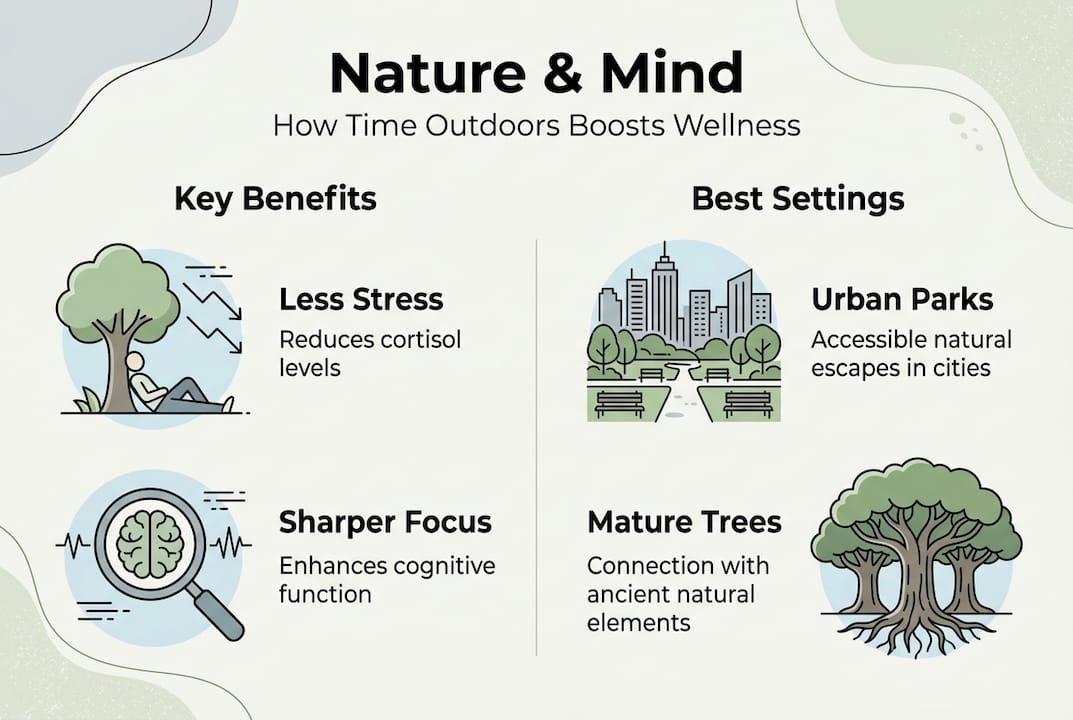
The type of natural setting matters considerably. Urban forests and established parks with mature trees consistently show the strongest effects on depression and anxiety. Coastal environments, mountains, and rural landscapes each offer distinct benefits, though access varies widely based on where you live. Even small urban green spaces, whilst less powerful than forests, provide measurable improvements when visited regularly.
When direct nature access proves difficult, virtual nature experiences offer valid alternatives. Studies examining virtual reality nature scenes, nature videos, and even high-quality photographs demonstrate significant reductions in anxiety with large effect sizes. Whilst not identical to physical presence in nature, these digital experiences activate similar neural pathways and provide genuine relief, particularly valuable for people with mobility limitations or those living in nature-poor urban areas.
Follow these evidence-based practices to optimise your nature exposure:
- Prioritise consistency over duration. Brief daily nature contact outperforms occasional extended trips for sustained mental health improvements.
- Engage multiple senses deliberately. Notice sounds, scents, textures, and temperature changes, not just visual scenery.
- Incorporate gentle movement. Walking or tai chi in nature amplifies benefits compared to stationary observation.
- Choose settings with biodiversity. Environments with varied plant species, water features, and wildlife provide richer sensory experiences.
- Experiment with timing. Morning nature exposure may boost mood throughout the day, whilst evening visits promote better sleep.
Pro Tip: If you cannot access outdoor nature regularly, create a dedicated relaxation space indoors with plants, nature sounds, and natural light to maintain consistent benefits.
The flexibility in how nature delivers mental health benefits means you can adapt approaches to your circumstances. Whether through brief urban park visits, extended forest therapy sessions, or virtual nature when needed, multiple pathways exist to harness nature’s healing power.
Challenges and individual factors in nature’s mental health effects
Despite robust evidence for nature’s benefits, significant challenges complicate our understanding of how and why these effects occur. Research in this field faces methodological obstacles that limit definitive conclusions.
- Study quality varies enormously, with many investigations using small sample sizes, short intervention periods, or inadequate control groups
- Heterogeneous methods make comparing results across studies difficult, as researchers measure different outcomes using varied assessment tools
- Access inequalities mean findings may not generalise to populations with limited nature exposure or different cultural relationships with natural environments
- Publication bias likely skews results towards positive findings, with null or negative results remaining unpublished
- Placebo effects and expectation bias potentially inflate reported benefits when participants know they are receiving a nature intervention
Individual differences profoundly shape how you experience nature’s mental health effects. Your personal level of nature connectedness, the subjective sense of relationship with the natural world, strongly predicts benefit magnitude. People who feel deeply connected to nature consistently report greater improvements in mood, anxiety, and wellbeing from nature exposure than those with weaker connections.
Cultural background influences both expectations and experiences. Indigenous communities and cultures with nature-centric worldviews may experience nature’s healing differently than urban populations in industrialised societies. Age, physical ability, previous nature experiences, and even childhood exposure to natural environments all modulate individual responses.
Urban residents sometimes face a paradox: whilst they may need nature’s mental health benefits most due to higher stress and anxiety levels, they often have the least access to quality natural spaces. This creates health inequities that research is only beginning to address systematically.
Pro Tip: Avoid viewing nature as a universal cure-all for mental health challenges. Whilst benefits are real and measurable, nature exposure works best as part of a comprehensive approach that may include therapy, medication, social support, and lifestyle changes.
The concept of eco-anxiety adds another layer of complexity. Some individuals experience distress when engaging with nature due to awareness of environmental degradation, climate change, or species loss. For these people, nature contact can trigger sadness or anxiety rather than relief, requiring sensitive therapeutic approaches that acknowledge these valid concerns.
Researchers also caution against romanticising nature in ways that ignore genuine risks or create unrealistic expectations. Nature can be uncomfortable, challenging, or even dangerous depending on conditions and individual circumstances. Awe experiences in nature reduce rumination for many people, but others may feel overwhelmed or anxious in vast natural settings.
Understanding these limitations and individual variations helps you approach nature’s mental health benefits with realistic expectations. The effects are genuine and scientifically supported, but not universal or uniform. Your personal response depends on multiple factors beyond simply being present in a natural setting.
Applying nature’s healing for your mental wellness
Translating research findings into practical daily habits requires intentional strategies tailored to your lifestyle, location, and preferences. Start with these evidence-based approaches:
- Schedule brief nature breaks throughout your day, even 10 minutes during lunch or between tasks
- Identify accessible green spaces near your home or workplace and visit them regularly
- Practise forest bathing or shinrin-yoku, the Japanese practice of mindful forest immersion
- Create outdoor rituals like morning garden time or evening walks that become consistent habits
- Join nature-based groups or activities to combine social connection with outdoor exposure
For those with limited outdoor access, bringing nature indoors offers genuine benefits. Follow this guide to incorporate natural elements into your living space:
- Select popular indoor plant varieties known for air purification and visual appeal, such as snake plants, pothos, or peace lilies.
- Position plants in areas where you spend significant time, particularly workspaces and relaxation zones.
- Add nature sounds through recordings or apps featuring rainfall, ocean waves, or forest ambience.
- Maximise natural light exposure by keeping window areas clear and using full-spectrum lighting when needed.
- Incorporate natural materials like wood, stone, or bamboo in furniture and décor.
- Display nature photography or artwork featuring landscapes that evoke calm and connection.
Multisensory engagement dramatically enhances nature’s mental health benefits. Whilst visual beauty captures attention, deliberately engaging other senses deepens the experience. Listen for bird calls, rustling leaves, or water sounds. Notice the scent of soil, flowers, or rain. Feel bark texture, grass beneath your feet, or breeze on your skin. This full sensory immersion activates broader neural networks and produces more profound restoration.
Set achievable goals based on your current circumstances. Urban dwellers might aim for three 15-minute park visits weekly, whilst rural residents could target longer weekend nature immersions. The key is consistency rather than perfection. Even modest regular nature contact accumulates meaningful mental health benefits over time.
Avoid common pitfalls that undermine nature’s healing potential. Rushing through nature whilst mentally preoccupied with work or worries prevents the attention restoration that drives benefits. Overexertion through overly strenuous activities can increase stress rather than reduce it. Unrealistic expectations that nature will instantly solve all mental health challenges lead to disappointment.
Pro Tip: Combine nature exposure with other wellness practices you already enjoy. Meditate outdoors, sketch natural scenes, photograph wildlife, or practise gentle yoga in a park to create personalised rituals that maximise engagement and benefit.
The most effective nature wellness routines feel sustainable and enjoyable rather than obligatory. Experiment with different settings, durations, and activities until you discover what genuinely restores your mental wellbeing. Your ideal approach may differ significantly from research recommendations or others’ experiences, and that personal fit matters more than following rigid guidelines.
Explore nature-inspired wellness with STOMART
Enhancing your connection with nature at home becomes effortless when you have access to quality plants and natural products designed for modern living. STOMART offers a carefully curated selection of indoor plants, gardening essentials, and nature-inspired wellness items that bring the mental health benefits of natural environments into your daily routine.
Our collection includes everything from air-purifying plants to create calming indoor sanctuaries to outdoor garden accessories that encourage regular nature engagement. Explore our expert articles on house plant health benefits and discover how jasmine plants enhance indoor wellness through their soothing fragrance and visual beauty. Whether you are creating a meditation corner, refreshing your workspace, or designing a therapeutic garden, STOMART provides the tools and inspiration to integrate nature’s healing power into your environment.
How nature heals the mind in ways science is still catching up with: frequently asked questions
What is ‘soft fascination’ and how does it help mental health?
Soft fascination describes how natural environments gently capture your attention without requiring intense focus, allowing your directed attention capacity to recover from mental fatigue. Unlike urban settings that demand constant vigilance, nature’s patterns, movements, and sounds engage you effortlessly whilst your cognitive resources restore. This explains why even brief nature exposure can dramatically improve concentration and reduce mental exhaustion.
Can virtual nature really replace real outdoor experiences for stress relief?
Virtual nature experiences provide genuine mental health benefits, particularly for anxiety reduction, with research showing large effect sizes comparable to some real nature exposures. However, virtual alternatives lack the multisensory richness, physical movement, and environmental variability of actual outdoor settings. They work best as supplements when real nature access is limited rather than complete replacements, offering valuable relief for people with mobility challenges or those in nature-poor urban environments.
How often should I spend time in nature to see mental health benefits?
Research suggests that brief daily nature contact, even 10 to 20 minutes, produces more consistent mental health improvements than occasional extended sessions. Aim for regular exposure rather than waiting for infrequent long outings. Three to five short nature visits weekly appear optimal for sustained mood enhancement, anxiety reduction, and attention restoration, though individual needs vary based on baseline stress levels and nature connectedness.
Does everyone experience the same mental health improvements from nature?
No, individual responses to nature vary considerably based on personal nature connectedness, cultural background, previous experiences, age, and expectations. People who feel deeply connected to nature typically report greater benefits than those with weaker relationships to natural environments. Cultural context, urban versus rural upbringing, and even awareness of environmental issues all modulate how you experience nature’s healing effects, making personalised approaches more effective than one-size-fits-all recommendations.
What are safe ways to start incorporating more nature into a busy urban lifestyle?
Begin with accessible micro-doses: 10-minute walks in nearby parks during lunch breaks, morning coffee on a balcony with plants, or evening strolls through tree-lined streets. Identify green spaces within 15 minutes of your home or workplace and schedule regular visits as non-negotiable appointments. Bring nature indoors through plants, nature sounds, and natural light maximisation. Join local nature groups or gardening communities to combine social connection with outdoor exposure, making the habit more sustainable and enjoyable.