

What ancient communities understood about living well
on Mar 08, 2026Ancient wellness is often dismissed as mystical or unscientific, yet over 70% of traditional ancient wellness treatments have now been validated by modern scientific research. This guide explores foundational principles from Ayurveda, Traditional Chinese Medicine, and Greco-Roman traditions that foster holistic wellbeing. You will discover how these timeless insights remain remarkably applicable to modern life, offering practical pathways to balanced health.
Key takeaways
| Point | Details |
|---|---|
| Holistic integration | Ancient wellness systems integrate body, mind, and spirit within unified frameworks for complete health. |
| Evidence-based practices | Modern science validates many ancient dietary, movement, and mental wellness principles. |
| Preventive philosophy | Traditional systems emphasised prevention through lifestyle balance rather than reactive treatment. |
| Practical application | Simple adaptations of ancient wisdom can enhance vitality, mental clarity, and emotional resilience today. |
| Cultural depth | Common misconceptions obscure the empirical foundations and sophisticated knowledge within ancient traditions. |
Foundations of ancient wellness
Ancient wellness represents holistic health achieved through balance and prevention rather than reactive treatment. Major systems include Ayurveda, Traditional Chinese Medicine, and Greco-Roman practices that emphasised equilibrium across physical, mental, and spiritual dimensions. These traditions viewed health as dynamic harmony requiring ongoing attention to diet, environment, and lifestyle.
Roman civilisation demonstrated public health sophistication through infrastructure. Their public health systems significantly reduced infectious diseases by implementing aqueducts, public baths, and waste management networks. This collective approach contrasts with modern individualistic health models.

Hippocratic medicine established foundational principles still relevant today. Hippocrates advocated that root causes of disease are diet, lifestyle, and environment, shifting focus from supernatural explanations to observable factors. This rational approach laid groundwork for preventive medicine.
Key foundational elements include:
- Balance between opposing forces like hot and cold, wet and dry
- Prevention through lifestyle modifications before illness manifests
- Individualised treatment recognising unique constitutional differences
- Integration of physical health with mental and spiritual harmony
- Community and environmental factors as health determinants
These principles offer valuable context for understanding philosophical insights on energy depletion in contemporary settings. The history of wellness reveals sophisticated knowledge systems that modern medicine is only beginning to fully appreciate.
Holistic mind-body-spirit frameworks from ancient traditions
Traditional Chinese Medicine operates through concepts of Qi and yin-yang. Balancing Qi and yin-yang restores health and wellbeing by harmonising opposing yet complementary forces. Qi represents vital energy flowing through meridian pathways, whilst yin-yang describes dynamic equilibrium between passive and active principles.
Ayurveda personalises health through three doshas: vata, pitta, and kapha. Ayurveda’s three doshas guide personalised health by balancing mind-body-spirit according to individual constitution. Each person possesses unique dosha proportions requiring tailored dietary, lifestyle, and therapeutic interventions.
The mind-body-spirit triad forms the foundation of ancient wellness systems. Holistic triadic models improve quality of life indicators by 20-40% compared to approaches addressing only physical symptoms. This integration recognises that mental distress manifests physically, whilst physical ailments affect emotional states.
Core framework elements include:
- Energy flow concepts like Qi, prana, or vital force animating living beings
- Constitutional typing systems for individualised health strategies
- Interdependence of physical vitality, mental clarity, and spiritual peace
- Cyclical patterns reflecting natural rhythms and seasonal changes
- Balance as dynamic process requiring continuous adjustment
Pro Tip: Focus on balancing these three domains rather than optimising one dimension alone for lasting wellbeing that withstands life’s inevitable fluctuations.
These frameworks illuminate the importance of rituals for emotional health by providing structured practices. Understanding energy depletion philosophical insights becomes clearer through ancient energetic models.
Ancient diets and nutritional wisdom
The Mediterranean diet exemplifies ancient nutritional wisdom still validated today. Mediterranean diet reduces cardiovascular events by approximately 30% through emphasis on olive oil, fish, vegetables, whole grains, and moderate wine consumption. This pattern prioritises nutrient density and natural foods over processed alternatives.
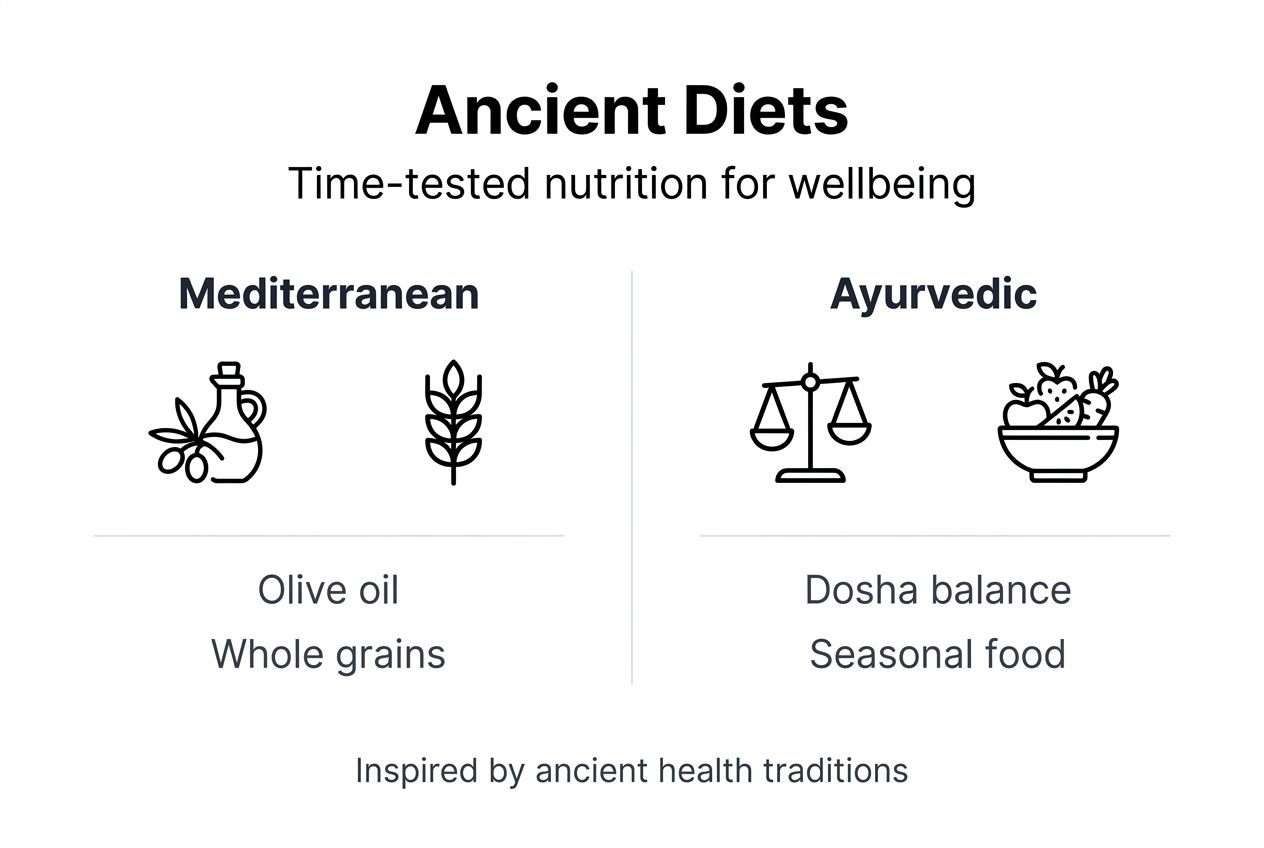
Ayurvedic nutrition emphasises dosha balance and seasonal eating. Ayurvedic diet promotes metabolic health through nutrient balance and seasonal foods aligned with natural cycles. Six tastes (sweet, sour, salty, pungent, bitter, astringent) should appear in balanced meals to satisfy nutritional and energetic needs.
| Dietary tradition | Key components | Primary health benefits |
|---|---|---|
| Mediterranean | Olive oil, fish, vegetables, whole grains, legumes | 30% reduction in cardiovascular events, improved longevity |
| Ayurvedic | Seasonal foods, six tastes, dosha-specific choices | Enhanced metabolic health, digestive balance |
| Traditional Chinese | Warm cooked foods, five flavours, energetic properties | Improved Qi flow, organ system support |
| Ancient Greek | Moderation, varied diet, honey, grains, legumes | Balanced nutrition, sustained energy |
Ancient dietary principles relevant today include:
- Whole, minimally processed foods as nutritional foundation
- Seasonal eating aligned with natural availability and energetic needs
- Moderation and mindful consumption over excess
- Food as medicine preventing illness before it manifests
- Individual constitution determining optimal dietary patterns
These principles connect naturally with benefits of organic honey used medicinally for millennia. Practising mindful eating insights aligns perfectly with ancient emphasis on conscious consumption.
Physical exercise and movement traditions
Yoga represents one of the most complete ancient movement systems. Yoga improves flexibility by 35%, reduces anxiety by 30%, and enhances sleep quality through integrated postures, breathing techniques, and meditation. This multidimensional practice addresses physical strength, mental focus, and energetic balance simultaneously.
Tai Chi offers gentle movement enhancing energy flow and mental calmness. Slow, flowing movements coordinate breath and intention whilst strengthening muscles, improving balance, and cultivating mindfulness. Older adults particularly benefit from fall prevention and cognitive enhancement.
Forest bathing, or shinrin-yoku, involves multisensory nature immersion. Japanese forest bathing reduces cortisol, increases natural killer cells by 40%, and supports cardiovascular health through phytoncide exposure and stress reduction. Simply spending mindful time amongst trees triggers measurable physiological benefits.
Ancient movement practices share common features:
- Mind-body integration rather than purely mechanical exercise
- Breath coordination enhancing energetic and cardiovascular effects
- Adaptability across age ranges and fitness levels
- Prevention focus maintaining mobility and vitality long term
- Natural settings or nature connection when possible
Pro Tip: Incorporate varied ancient movement practices into your weekly routine rather than relying on a single modality to develop comprehensive physical, mental, and energetic fitness.
Modern applications include functional fitness for strength drawing on movement principles. Tools like yoga fitness exercise balls can enhance traditional practices.
Mental, emotional, and spiritual wellness practices
Meditation and mindfulness originated in ancient India and China as practices for mental clarity and emotional balance. Regular meditation reduces anxiety by around 30% and improves emotional regulation and mental resilience through neuroplastic changes in brain regions governing attention and emotion. Techniques range from breath awareness to visualisation and mantra repetition.
Spiritual harmony served as a pillar of ancient wellness alongside physical and mental health. Practices included prayer, ritual, connection to nature, and contemplation of existence’s deeper questions. These activities provided meaning, purpose, and community belonging that buffered against life’s inevitable challenges.
Indian and Chinese traditions illustrate mental and spiritual wellbeing approaches:
- Pranayama breathing techniques regulating nervous system and mental states
- Mindfulness meditation cultivating present-moment awareness without judgement
- Qigong combining movement, breath, and intention for energetic cultivation
- Ritual observances marking life transitions and seasonal cycles
- Philosophical study and reflection on ethics, purpose, and interconnection
These practices recognised that emotional distress and spiritual disconnection manifested as physical illness. Addressing root psychological and existential concerns prevented downstream health problems whilst enhancing life satisfaction and resilience.
Practical applications today include mindful eating techniques bringing meditative awareness to daily activities. Simple daily mental health tips often draw directly from ancient contemplative traditions.
Common misconceptions about ancient wellness
Myth: Ancient wellness is purely mystical and lacks practical value. Reality shows that over 70% of core treatments have physiological impacts validated by modern research. Acupuncture modulates neurotransmitters, herbal medicines contain bioactive compounds, and meditation alters brain structure measurably.
Myth: Ancient diets were simplistic and nutritionally inadequate. Evidence demonstrates that traditional Mediterranean and Ayurvedic diets correlate with 25-30% reduction in metabolic syndrome incidence. These sophisticated dietary systems optimised available foods through cultural evolution over millennia.
Myth: Ancient healing separated body and mind as unrelated domains. Ancient systems actually pioneered holistic integration, recognising psychosomatic connections and treating patients as unified beings. Modern medicine’s organ-system specialisation represents a departure from traditional whole-person approaches.
Key clarifications include:
- Ancient wellness systems are empirically grounded through observation and refinement
- Traditional practices addressed root causes rather than superficial symptoms
- Cultural context and individual variation were central to ancient approaches
- Prevention through lifestyle balance was prioritised over reactive treatment
- Holistic frameworks integrated physical, mental, emotional, and spiritual dimensions
Understanding these realities enables more effective adoption of ancient wisdom without romanticising or dismissing valuable knowledge. Modern tools like gua sha skincare benefits demonstrate traditional techniques’ continued relevance when applied appropriately.
Applying ancient wisdom to modern living
Integrative lifestyle practices improve health outcomes by 20-40% when incorporating physical, mental, and spiritual aspects. Practical application requires adapting principles thoughtfully to contemporary contexts whilst respecting cultural origins.
- Begin with one foundational change aligned with ancient principles, such as adding a 10-minute morning meditation or switching to whole food breakfast.
- Incorporate movement practices like yoga, Tai Chi, or mindful walking three times weekly to build mind-body integration.
- Adopt dietary patterns emphasising seasonal, whole foods and mindful eating rather than restrictive rules.
- Establish simple rituals marking daily transitions, such as gratitude practice before meals or evening reflection.
- Connect with nature regularly through forest walks, gardening, or outdoor exercise to ground energetic balance.
- Seek community and meaningful relationships as health foundations rather than optional extras.
- Prioritise sleep hygiene and circadian rhythm alignment following natural light-dark cycles when possible.
Modern wellness aids can support ancient principles when chosen thoughtfully. Quality tools and products from STOMART align traditional wisdom with contemporary convenience. Simple holistic daily routines enhance energy, emotional balance, and vitality sustainably.
Pro Tip: Tailor ancient practices mindfully, respecting cultural origins whilst adapting to personal health needs and contemporary life constraints for sustainable integration.
Resources on ancient wisdom and modern wellness provide additional frameworks for practical application bridging traditional knowledge with current lifestyles.
Discover holistic wellness solutions at STOMART
STOMART offers carefully curated products aligning with ancient wellness principles for modern living. From organic skincare drawing on traditional ingredients to wellness tools supporting mindful movement and self-care rituals, the selection bridges timeless wisdom with contemporary quality standards. Explore natural, sustainable wellness aids that support your mind-body-spirit balance through thoughtfully chosen items.
Take the next step towards improved wellbeing with resources and expert guidance from STOMART holistic wellness solutions. Whether you seek movement aids, organic personal care, or lifestyle products supporting balanced living, discover options that honour ancient traditions whilst meeting modern needs.
Frequently asked questions
What did ancient communities understand about living well?
Ancient communities understood that balance among body, mind, and spirit was essential for health rather than treating these as separate domains. They recognised prevention through lifestyle choices as superior to reactive treatment of established illness. Integration with natural cycles, community connection, and meaningful ritual formed foundational wellness elements.
How can ancient wellness practices benefit modern life?
Ancient practices offer evidence-based approaches to stress reduction, chronic disease prevention, and mental wellbeing that complement modern medicine. Their holistic frameworks address root causes rather than isolated symptoms, whilst emphasising sustainable lifestyle patterns over quick fixes. Many techniques require minimal equipment and adapt easily to contemporary schedules.
Are ancient wellness systems scientifically valid?
Modern research validates the majority of ancient wellness treatments through measurable physiological mechanisms and clinical outcomes. Practices like meditation, yoga, dietary patterns, and herbal medicines demonstrate reproducible health benefits in controlled studies. Whilst some traditional explanations differ from modern terminology, the practical effectiveness remains demonstrable.
Which ancient wellness tradition should I start with?
Begin with whichever tradition resonates most strongly with your current needs and cultural comfort. Mediterranean dietary principles offer accessible entry points, whilst yoga or Tai Chi suit those seeking movement practices. Meditation and mindfulness from Indian or Chinese traditions benefit nearly everyone regardless of physical ability.
Can ancient wellness replace modern medical care?
Ancient wellness practices complement rather than replace modern medical care, particularly for acute conditions and serious illness. They excel at prevention, chronic condition management, and enhancing overall quality of life alongside conventional treatment. Always consult qualified healthcare providers when addressing significant health concerns whilst integrating traditional practices as supportive measures.