

How physical spaces shape your mental wellbeing
on Mar 26, 2026Most people assume their surroundings simply provide shelter or aesthetic appeal, yet research reveals a far deeper truth: the physical spaces you inhabit actively shape your emotions, cognition, and overall mental health. From the colours on your walls to the layout of your furniture, every design choice influences how you feel and function daily. Environmental psychology demonstrates that thoughtfully designed spaces can reduce stress, boost creativity, and enhance social connections, whilst poorly planned environments may trigger anxiety and impair memory. This guide explores the science linking physical spaces to mental wellbeing and offers practical strategies to optimise your surroundings for better emotional health.
Key Takeaways
| Point | Details |
|---|---|
| Lighting shapes mood | Quality lighting directly affects emotions and cognitive function by regulating circadian rhythms and reducing fatigue. |
| Nature lowers stress | Greenery and biophilic design lower cortisol levels, creating calmer mental states. |
| Layout guides cognition | Open floor plans with abundant windows maximise daylight penetration, curved lines reduce visual stress, and acoustic dampening lowers cognitive load. |
| Home versus urban wellbeing | Home environments offer restoration and personal control over light colour and layout to support security and belonging, whereas urban spaces demand adaptation to external conditions and provide stimulation. |
How physical spaces influence mental wellbeing: the science behind it
Environmental psychology examines how surroundings affect emotions, thoughts, and behaviours, revealing that physical spaces function as silent architects of mental states. Researchers have identified key elements that shape psychological experiences: lighting quality, colour schemes, acoustic properties, spatial layout, and natural features. Each component interacts with your nervous system, triggering physiological responses that cascade into emotional and cognitive shifts.
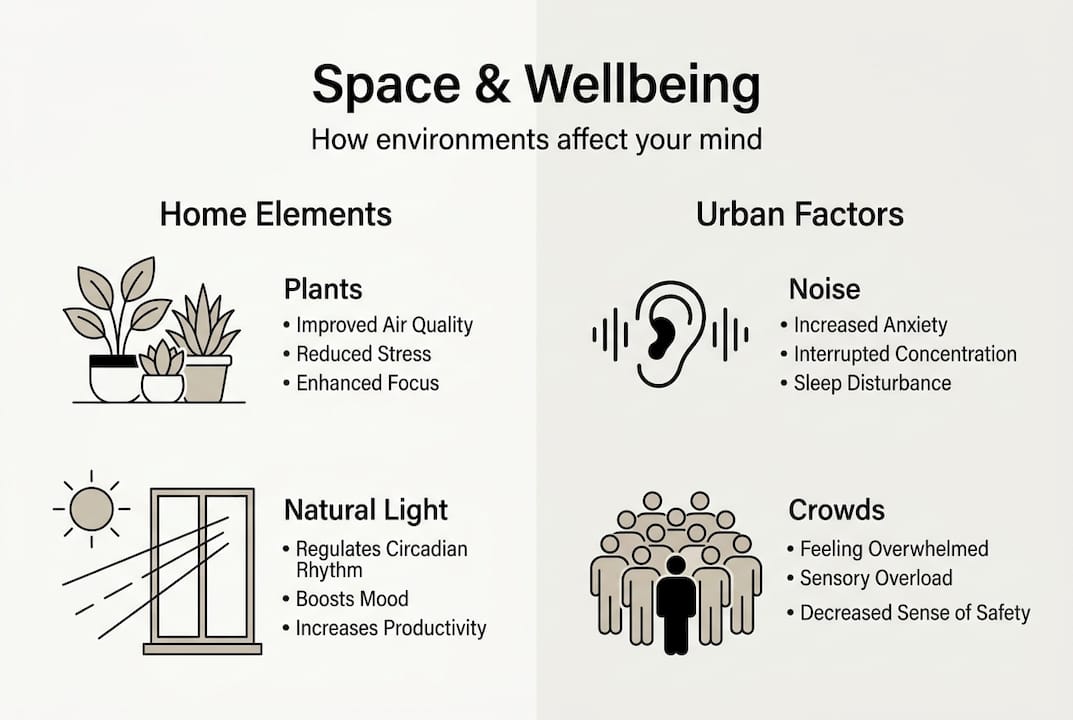
Natural light exposure regulates circadian rhythms, improving sleep quality and daytime alertness whilst reducing symptoms of depression. Greenery and biophilic design elements lower cortisol levels, the primary stress hormone, creating calmer mental states. Conversely, spaces with harsh fluorescent lighting, cluttered layouts, or excessive noise elevate anxiety and impair working memory. Thoughtful design in retail spaces can promote positive mental states for both customers and employees, demonstrating how commercial environments apply these principles.
Modern architectural approaches integrate naturalistic features to enhance psychological outcomes:
- Open floor plans with abundant windows maximise daylight penetration
- Curved architectural lines reduce visual stress compared to sharp angles
- Acoustic dampening materials minimise cognitive overload from ambient noise
- Vertical gardens and living walls bring nature indoors
“The built environment is not merely a backdrop to human activity but an active participant in shaping mental health outcomes, influencing everything from stress responses to social cohesion.”
Research consistently shows that individuals working or living in spaces with natural elements report higher satisfaction, better concentration, and improved emotional regulation. Understanding these mechanisms empowers you to recognise how your current environment may be supporting or undermining your mental wellbeing.

Comparing home and urban environments: how different spaces shape your mental state
Residential and urban spaces exert distinct psychological influences due to their contrasting characteristics and functions. Cities shape personality and emotional health through environmental design, with dense populations, rapid pace, and sensory stimulation creating unique mental demands. Urban dwellers often experience heightened alertness and social anxiety but may also benefit from cultural diversity and intellectual stimulation. Meanwhile, residential spaces offer private sanctuaries where personal control over design elements supports relaxation, identity expression, and emotional recovery.
The table below illustrates how various environmental factors differ between home and urban settings:
| Environmental factor | Home environment impact | Urban environment impact |
|---|---|---|
| Noise levels | Low, controllable, promotes rest | High, unpredictable, increases stress |
| Personal control | Complete customisation possible | Limited individual influence |
| Social density | Chosen interactions | Constant exposure to crowds |
| Natural elements | Easily incorporated via plants, windows | Requires intentional green space access |
| Sensory stimulation | Moderate, self-regulated | Intense, constant, overwhelming |
Home environments provide psychological restoration after urban exposure. You control lighting intensity, colour palettes, furniture arrangement, and decorative elements, tailoring spaces to your emotional needs. This autonomy fosters sense of security and belonging, crucial for mental health maintenance. Urban spaces, however, demand adaptation to external conditions: navigating traffic, managing crowd interactions, and processing abundant visual information.
Key distinctions affecting mental states include:
- Privacy levels: homes offer solitude; cities require constant social navigation
- Pace of life: residential spaces permit slower rhythms; urban settings accelerate activity
- Aesthetic coherence: homes reflect personal taste; cities present visual chaos or architectural harmony
- Restoration opportunities: homes naturally support recovery; cities require intentional green space seeking
Pro Tip: Incorporate biophilic elements like potted plants or nature photography in your home to counterbalance urban stress exposure, and seek parks or green corridors during city activities to maintain emotional equilibrium.
Balancing time between these environment types optimises mental wellbeing. Recognising their complementary roles helps you leverage each space’s strengths whilst mitigating weaknesses.
Key elements of space design that unlock mental wellbeing benefits
Specific design components wield measurable influence over psychological states, offering practical levers for enhancing mental health through environmental modification. Lighting stands paramount: natural light synchronises your biological clock, elevating mood and energy whilst artificial lighting quality affects eye strain and fatigue. Circadian-aligned lighting systems that mimic daylight intensity throughout the day support optimal hormonal balance and cognitive performance.
Colour psychology demonstrates that hues trigger distinct emotional responses. Blues and greens promote calmness and focus, making them ideal for bedrooms and workspaces. Yellows and oranges stimulate energy and creativity, suitable for social areas or kitchens. Reds increase arousal and can elevate heart rate, best used sparingly as accent colours. Neutral tones provide visual rest, preventing sensory overwhelm.
Plants serve multiple functions beyond aesthetics. They improve indoor air quality by filtering toxins, increase humidity levels, and provide visual connection to nature. Studies show that overall feel and environment of retail spaces contribute to shoppers’ mental health and comfort, with greenery playing a significant role in creating welcoming atmospheres. Even small potted herbs or succulents on windowsills deliver measurable stress reduction.
Spatial layout influences social interaction patterns and personal comfort. Open layouts encourage communication and collaboration but may reduce privacy and increase noise. Segmented spaces with defined zones support focused work and quiet reflection. Furniture arrangement affects movement flow: cluttered pathways create frustration, whilst clear circulation promotes ease and reduces cognitive load.
The comparison table below highlights mental benefits of design elements:
| Design element | Home application benefit | Retail/public space benefit |
|---|---|---|
| Natural lighting | Improved sleep, reduced depression | Enhanced customer mood, longer visits |
| Calming colours | Stress reduction, better focus | Comfortable browsing, positive associations |
| Indoor plants | Air quality, anxiety relief | Welcoming atmosphere, sensory appeal |
| Ergonomic layout | Physical comfort, productivity | Easy navigation, reduced frustration |
| Personalisation | Identity expression, emotional security | Brand connection, memorable experiences |
Additional elements worth considering:
- Texture variety: soft fabrics, natural wood, smooth ceramics engage tactile senses
- Scent management: lavender promotes relaxation, citrus boosts alertness
- Temperature control: comfort ranges between 18-22°C for optimal cognitive function
- Acoustic design: sound-absorbing materials reduce mental fatigue
Pro Tip: Prioritise natural light and plants in your space for maximum mental wellbeing benefit, as these elements deliver the strongest research-backed psychological improvements with minimal investment.
Integrating multiple design elements creates synergistic effects, amplifying individual benefits into comprehensive mental health support systems within your physical environment.
Applying environmental psychology principles to your own space
Translating scientific insights into practical action requires systematic approach to evaluating and modifying your surroundings. Begin by assessing current conditions: identify areas with insufficient natural light, note colour schemes that feel energising or draining, and observe how furniture arrangement affects your movement and mood throughout the day. This awareness forms the foundation for targeted improvements.
Follow these steps to optimise your space for mental wellbeing:
-
Maximise natural light exposure by removing heavy curtains, cleaning windows thoroughly, and positioning workspaces near light sources. Install mirrors strategically to reflect daylight deeper into rooms.
-
Select colour palettes aligned with room functions. Choose cool blues or greens for bedrooms and study areas to support concentration and rest. Use warm yellows or oranges in social spaces to encourage interaction and energy.
-
Introduce living plants appropriate to your lighting conditions and maintenance capacity. Low-maintenance options include pothos, snake plants, and peace lilies, all offering air purification and visual appeal.
-
Arrange furniture to create clear pathways and defined functional zones. Ensure seating areas face windows or interesting views rather than blank walls. Position desks perpendicular to windows to avoid screen glare whilst maintaining daylight benefits.
-
Add personal touches that reflect your identity and positive memories: family photographs, artwork you love, or collections that spark joy. These elements strengthen emotional connection to your space.
-
Control sensory inputs by managing noise levels with rugs, curtains, or white noise machines. Introduce pleasant scents through essential oil diffusers or natural sources like eucalyptus branches.
-
Adjust lighting layers to suit different activities and times of day. Combine ambient ceiling lights, task lighting for focused work, and accent lamps for evening relaxation.
Research shows that thoughtful retail space design promotes positive mental states, principles equally applicable to residential environments. Regular evaluation ensures your space continues meeting evolving needs.
Pro Tip: Refresh your space layout seasonally to sustain mental benefits. Small changes like rotating artwork, rearranging furniture, or introducing new textile colours prevent adaptation and maintain environmental stimulation.
Consider consulting resources on architecture and mood connection for deeper understanding of structural elements that support wellbeing. Implementing even modest changes yields noticeable improvements in daily emotional experiences and cognitive performance.
Explore Stomart’s solutions for inspired spaces
Transforming your environment to support mental wellbeing becomes simpler with curated resources and thoughtfully selected products. Stomart offers comprehensive home décor collections designed to enhance comfort, mood, and functionality whilst reflecting current environmental psychology insights. Whether you seek lighting solutions that mimic natural patterns, colour-coordinated textiles to create calming atmospheres, or biophilic accessories bringing nature indoors, the Stomart homepage provides diverse options suited to various aesthetic preferences and practical needs.
Explore the detailed home décor store guide to discover how different retail environments curate products that promote positive mental states through intentional design choices. This resource helps you identify styles and elements that resonate with your wellbeing goals. Additionally, deepen your understanding by reading about modern architecture mood connections, which explores how structural and design decisions influence emotional health and cognitive function in both residential and commercial contexts.
FAQ
What is the key connection between physical spaces and mental states?
Physical spaces influence mental states by affecting mood, cognition, and behaviour through elements like light, colour, and layout. This connection is studied in environmental psychology, which examines how surroundings trigger physiological responses that shape emotional experiences. Research demonstrates that well-designed environments reduce stress hormones, improve focus, and enhance social interactions, whilst poorly planned spaces increase anxiety and impair memory function.
How can I improve my mental wellbeing through home design?
Use natural light, calming colours, plants, and ergonomic layouts to enhance wellbeing in your home. Position furniture to maximise daylight exposure, select blues and greens for relaxation areas, and introduce low-maintenance plants like pothos or snake plants. Create defined zones for different activities to support both focused work and social interaction. Visit the home décor store guide for inspiration and product ideas that align with environmental psychology principles.
What role does urban environment play in shaping mental health?
Urban design influences stress levels, behaviour, and emotional wellbeing through factors like noise, crowding, and access to green spaces. Dense city environments create sensory overload and social pressure but also offer cultural stimulation and intellectual opportunities. Green spaces and thoughtful architecture mitigate negative effects by providing restoration opportunities and visual relief. Learn more about city design and mental health to understand how urban planning affects psychological outcomes.
Which design elements have the strongest impact on mental wellbeing?
Natural lighting and biophilic elements deliver the strongest research-backed mental health benefits. Daylight exposure regulates circadian rhythms, improving sleep and mood, whilst plants reduce stress hormones and enhance air quality. Colour psychology and spatial layout also significantly affect emotional states, with calming hues promoting relaxation and open arrangements supporting social connection. Combining multiple elements creates synergistic effects that amplify individual benefits.
How often should I modify my space to maintain mental health benefits?
Refresh your space seasonally to prevent adaptation and sustain psychological benefits from environmental changes. Small modifications like rotating artwork, rearranging furniture, or introducing new textile colours maintain novelty without requiring major investments. Regular evaluation every three to four months ensures your environment continues supporting evolving emotional needs and prevents the dulling effect of overfamiliarity with surroundings.
Recommended
- How cities shape your personality and emotional health - STOMART.CO.UK
- How modern architecture improves mood, memory and connection - STOMART.CO.UK
- How nature heals the mind with science still catching up - STOMART.CO.UK
- How environmental harm reflects our inner disconnection - STOMART.CO.UK
- Office Wellness via Air Quality: Healthier Workplaces - Coway Water Purifier