

What birds, bees, and forests reveal about interdependence
on Mar 21, 2026Nature operates as an intricate network where every species plays a role in sustaining life. When you observe a bee visiting a flower or a bird perching in a forest canopy, you witness more than isolated moments. These interactions represent ecological interdependence, the fundamental principle that species rely on each other for survival. Understanding how birds, bees, and forests connect reveals urgent lessons about protecting biodiversity and making informed environmental choices that support the delicate balance sustaining our planet.
Key Takeaways
| Point | Details |
|---|---|
| Interdependence concept | Ecological interdependence means species rely on others for food, shelter, reproduction and maintaining environmental balance. |
| Pollination role | Bees pollinate 87 per cent of flowering plant species, underpinning forest biodiversity and fruit production. |
| Seed dispersal impact | Birds disperse seeds across vast distances, enabling forest expansion and regeneration. |
| Forest habitat support | Forests provide nesting sites for birds and flowering plants for bees, while dead trees and varied habitats sustain a broad web of life. |
Understanding ecological interdependence
Ecological interdependence describes how organisms within ecosystems form mutually beneficial relationships that ensure survival. Species depend on each other for food, shelter, reproduction, and maintaining environmental balance. Without these connections, ecosystems collapse.
Three primary relationship types define interdependence:
- Mutualism benefits both species, like bees pollinating flowers while gathering nectar
- Commensalism helps one species without affecting the other, such as birds nesting in tree branches
- Parasitism benefits one organism at another’s expense, though even parasites play roles in population control
Birds, bees, and forests exemplify mutualistic relationships brilliantly. Bees pollinate wildflowers and trees, enabling reproduction and fruit production. Birds disperse seeds across vast distances, allowing forests to expand and regenerate. Forests provide habitat, food sources, and breeding grounds for countless bird and bee species. This circular dependency creates resilient ecosystems where each participant strengthens the whole.
When one component weakens, cascading effects ripple through the entire system. Declining bee populations threaten plant reproduction. Fewer birds mean reduced seed dispersal and unchecked insect populations. Forest loss eliminates habitat for both groups, triggering biodiversity decline.
Pro Tip: Observe your local environment for interdependence examples. Notice which birds visit specific plants or how bees favour certain flowers. These observations deepen appreciation for ecological complexity and inspire conservation action.
Understanding interdependence matters beyond academic interest. It guides effective conservation strategies, informs sustainable land management, and helps you make eco-friendly home products choices that support these vital relationships. Recognising nature’s interconnectedness transforms how you interact with the environment, from garden planning to purchasing decisions.
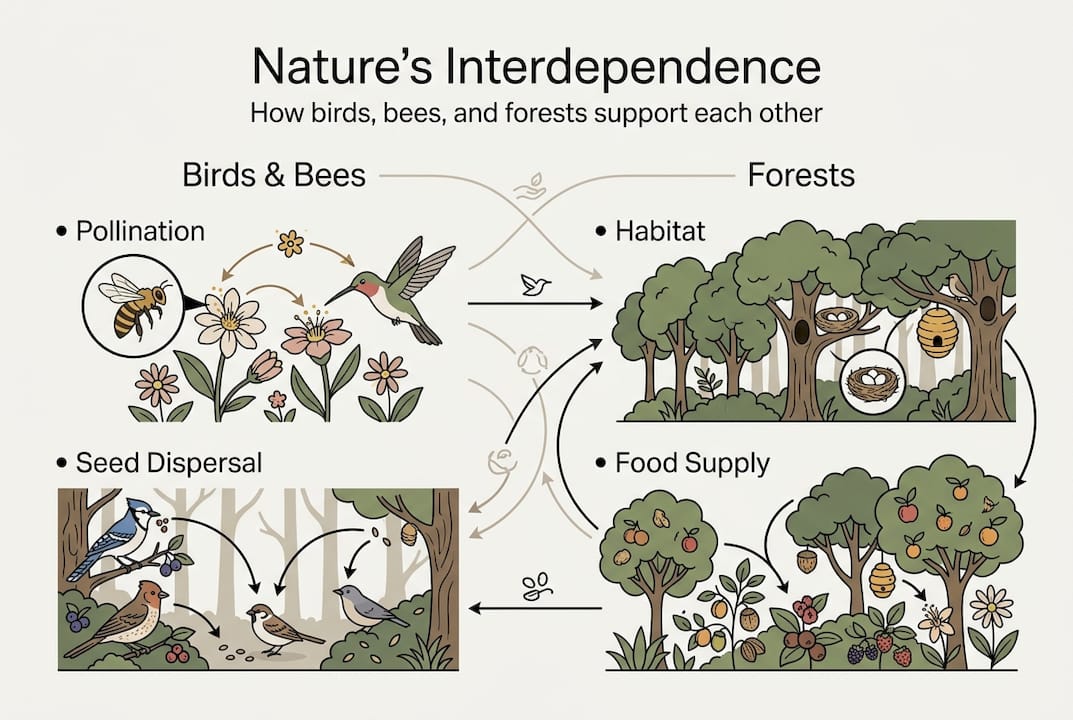
How birds, bees, and forests demonstrate interdependence
Birds perform essential ecosystem services that forests depend upon. Over 300 bird species specialise in seed dispersal, carrying fruits and seeds kilometres from parent trees. This distribution prevents overcrowding, reduces disease transmission, and allows forests to colonise new areas. Woodpeckers control bark beetle populations that would otherwise devastate tree stands. Insectivorous birds consume millions of insects daily, naturally regulating pest populations without chemical interventions.
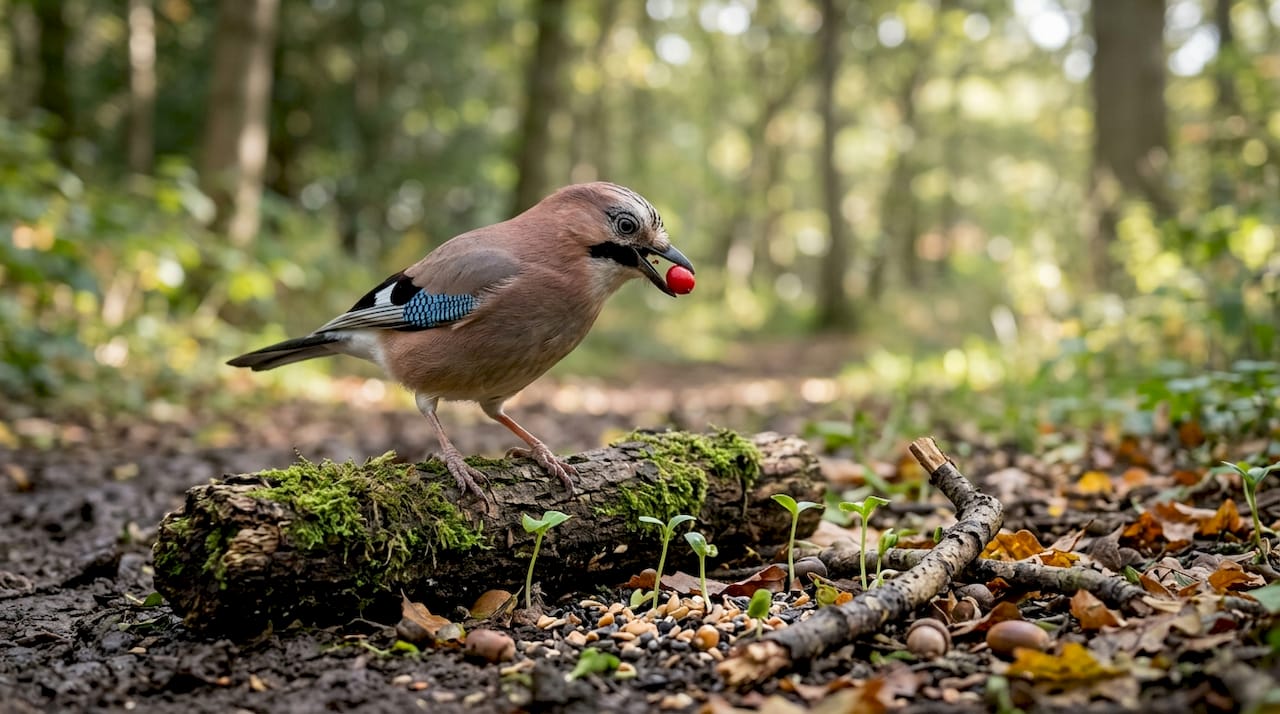
Bees represent nature’s most efficient pollinators. Pollination services provided by bees support 87% of flowering plant species globally. Wild bees pollinate forest understory plants, maintaining biodiversity that stabilises soil, filters water, and provides food for wildlife. Without bee pollination, many tree species cannot reproduce, gradually eroding forest composition and resilience.
Forests create complex ecosystems supporting diverse life forms through layered canopies, varied microclimates, and abundant resources. Mature forests provide nesting sites for birds, flowering plants for bees, and interconnected habitats enabling species movement. Dead trees host cavity-nesting birds and wood-boring insects that bees prey upon. Forest floor vegetation offers shelter and foraging grounds.
| Species group | Primary ecological role | Forest benefit |
|---|---|---|
| Birds | Seed dispersal, pest control, pollination | Forest regeneration, reduced disease, genetic diversity |
| Bees | Pollination, nutrient cycling | Plant reproduction, biodiversity maintenance, food web support |
Key functions each group provides:
- Birds transport seeds across fragmented landscapes, connecting isolated forest patches
- Bees pollinate crops bordering forests, supporting agricultural productivity
- Forests regulate temperature and humidity, creating stable conditions for sensitive species
- Bird droppings fertilise soil, enhancing nutrient availability for plant growth
- Bee activity increases fruit and seed production, feeding mammals and other wildlife
Pro Tip: Create observation logs tracking bird and bee activity in your area throughout seasons. Note which species visit, what plants they interact with, and how weather affects behaviour. This practice builds ecological literacy and reveals local interdependence patterns.
“The decline of pollinators represents an existential threat to forest ecosystems. Without bees and pollinating birds, we face cascading losses affecting everything from soil health to carbon sequestration. Protecting these species protects the forests that sustain us.” — Dr. Sarah Mitchell, Conservation Ecologist
These examples demonstrate that protecting single species proves insufficient. Effective conservation requires understanding and maintaining the relationships binding ecosystems together. Supporting birds means preserving forests. Protecting bees requires maintaining diverse flowering plants. Conserving forests ensures habitat for countless interdependent species. Recognising these connections guides lifestyle eco-friendly home products choices that honour nature’s complexity.
The broader implications for environmental health and conservation
Losing birds or bees triggers devastating cascading effects throughout ecosystems. When bee populations decline, plant reproduction drops sharply, reducing food availability for herbivores. Fewer herbivores mean predators face starvation, destabilising entire food webs. Agricultural yields plummet without pollination services, threatening food security. Forest regeneration slows dramatically, reducing carbon sequestration capacity precisely when climate change demands maximum carbon storage.
Bird population declines create equally severe consequences. Without seed dispersal, forests become isolated genetic islands vulnerable to disease and climate stress. Insect populations explode without avian predation, damaging crops and spreading disease. The economic cost of replacing natural pest control services exceeds billions annually.
Protecting interdependent species forms the foundation of effective conservation strategy. Traditional approaches focusing on single charismatic species often fail because they ignore ecological relationships. Modern conservation recognises that saving forests requires protecting pollinators, seed dispersers, and countless other interconnected organisms.
Practical actions supporting interdependent species:
- Plant native flowering species providing year-round nectar and pollen sources for bees and other pollinators
- Eliminate or drastically reduce pesticide use, which kills beneficial insects and poisons birds feeding on contaminated prey
- Create wildlife corridors connecting fragmented habitats, allowing species movement and genetic exchange
- Preserve dead trees and woody debris offering nesting sites and insect habitat
- Support local conservation organisations working to protect critical ecosystems and restore degraded habitats
- Advocate for policies protecting pollinators, migratory birds, and forest ecosystems at local and national levels
These actions create compounding benefits. Native plants support specialist pollinators whilst providing seeds for birds. Reducing pesticides protects beneficial insects that control pests naturally. Wildlife corridors enable forests to expand and species to adapt to changing conditions.
“Climate change, habitat destruction, and pollution form interconnected threats amplifying each other’s impacts. Addressing these challenges requires understanding how species interdependence makes ecosystems either resilient or vulnerable. Our conservation efforts must reflect nature’s complexity.” — Professor James Chen, Ecosystem Dynamics Research
Understanding interdependence transforms conservation from reactive species rescue to proactive ecosystem maintenance. Rather than waiting for crises, you can support the relationships sustaining biodiversity. Choosing quality eco-friendly products represents one accessible way to reduce environmental pressure on interdependent species whilst meeting daily needs.
Applying lessons from nature to everyday eco-conscious choices
Nature’s interdependence offers powerful lessons for sustainable living. Just as ecosystems thrive through mutual support, your purchasing decisions create ripple effects across environmental systems. Consumer choices inspired by ecological principles reduce habitat destruction, pollution, and resource depletion that threaten interdependent species.
Every product carries an environmental footprint reflecting resource extraction, manufacturing processes, transportation, and disposal impacts. Conventional products often rely on practices devastating to ecosystems: pesticide-intensive agriculture harming pollinators, deforestation destroying bird habitat, plastic pollution contaminating environments. Eco-friendly alternatives minimise these harms through sustainable sourcing, reduced chemical use, and circular design principles.
| Product category | Conventional impact | Eco-friendly alternative impact |
|---|---|---|
| Cleaning products | Toxic chemicals pollute waterways, harm aquatic ecosystems | Plant-based formulas biodegrade safely, protect water quality |
| Personal care items | Microplastics accumulate in food chains, synthetic chemicals disrupt wildlife hormones | Natural ingredients, biodegradable packaging reduce pollution |
| Garden supplies | Synthetic pesticides kill beneficial insects, fertilisers create algal blooms | Organic methods support soil health, protect pollinators |
| Home goods | Resource-intensive production, non-recyclable materials increase waste | Sustainable materials, durable design reduce environmental pressure |
Actionable lifestyle adjustments aligned with ecological interdependence:
- Prioritise products using renewable, sustainably harvested materials that don’t deplete ecosystems
- Choose items with minimal packaging, preferably compostable or recyclable materials
- Support companies transparently reporting environmental practices and conservation efforts
- Buy durable goods requiring fewer replacements, reducing manufacturing demand
- Select organic food and personal care products avoiding pesticides harmful to pollinators
- Invest in energy-efficient appliances and renewable energy reducing climate change pressure on ecosystems
Pro Tip: Evaluate product certifications carefully. Look for credible third-party verification like Soil Association Organic, Forest Stewardship Council, or Leaping Bunny rather than vague marketing claims. Legitimate certifications require rigorous standards and regular auditing, ensuring products genuinely support environmental health.
Understanding nature’s interdependence reveals how seemingly small choices accumulate into significant impacts. Choosing bee-friendly garden products protects pollinators supporting forests. Selecting sustainable wood products reduces deforestation pressure on bird habitat. Avoiding harmful chemicals prevents water pollution affecting entire ecosystems. These connections mirror the ecological relationships sustaining biodiversity.
Applying interdependence lessons extends beyond product selection. Reduce consumption overall by repairing items, sharing resources, and questioning whether purchases truly serve needs. Support local businesses minimising transportation emissions. Participate in community conservation projects restoring habitats. Vote for policies protecting ecosystems and regulating pollution.
The emotional buying pollution guide explores how impulse purchases often conflict with environmental values, offering strategies for mindful consumption. Similarly, natural health and beauty products demonstrate how personal care choices can align with ecological principles whilst meeting wellness needs.
Recognising your role within broader environmental systems empowers meaningful action. Just as birds, bees, and forests depend on mutual relationships, human wellbeing relies on healthy ecosystems. Your choices either support or undermine the interdependence sustaining life. Embracing this responsibility transforms daily decisions into conservation acts, creating positive change rippling through interconnected natural systems.
Support nature by choosing eco-friendly products
Understanding how birds, bees, and forests depend on each other illuminates the importance of supporting these relationships through thoughtful choices. Your purchasing decisions directly impact ecosystems by either reducing harmful practices or perpetuating environmental damage. Choosing eco-friendly products aligned with nature’s interdependence principles creates tangible benefits for biodiversity whilst meeting your household needs.
STOMART offers carefully curated sustainable products spanning home goods, personal care, garden supplies, and lifestyle essentials. Each item reflects commitment to environmental responsibility, helping you make choices that honour the ecological connections sustaining our planet. Explore options supporting your values whilst contributing to healthier ecosystems for the species we depend upon.
What birds, bees, and forests reveal about interdependence faq
What is ecological interdependence?
Ecological interdependence describes how species within ecosystems rely on mutual relationships for survival, reproduction, and maintaining environmental balance. These connections create resilient systems where each organism contributes to overall ecosystem health through roles like pollination, seed dispersal, pest control, and habitat creation.
Why are birds and bees essential for forests?
Birds disperse seeds across vast distances, enabling forest expansion and genetic diversity whilst controlling insect populations that would otherwise damage trees. Bees pollinate flowering plants and trees, ensuring reproduction and fruit production that feeds wildlife and maintains biodiversity critical for forest resilience and ecosystem services.
How does habitat loss affect interdependent species?
Habitat destruction breaks ecological relationships by eliminating nesting sites, food sources, and migration corridors that species depend upon. When forests disappear, birds lose breeding grounds and bees lose flowering plants, triggering population declines that cascade through ecosystems, reducing pollination, seed dispersal, and overall biodiversity.
What simple actions can help protect these ecological relationships?
Plant native flowers providing year-round resources for pollinators, eliminate pesticide use harming beneficial insects, preserve dead trees offering wildlife habitat, and create corridors connecting fragmented landscapes. Supporting conservation organisations, choosing sustainable products, and advocating for protective policies amplify individual efforts into meaningful ecosystem protection.
How do consumer choices impact ecological interdependence?
Purchasing decisions determine whether production practices harm or support ecosystems through resource extraction methods, chemical use, habitat destruction, and pollution. Choosing eco-friendly products reduces environmental pressure on interdependent species by supporting sustainable agriculture, minimising toxic chemicals, and encouraging circular economy principles that protect biodiversity.
Can understanding interdependence improve conservation outcomes?
Recognising species relationships enables holistic conservation strategies protecting multiple organisms simultaneously rather than isolated species. This approach proves more effective because it maintains the ecological connections sustaining ecosystem health, resilience, and the services humans depend upon like pollination, water filtration, and climate regulation.