

What nature teaches about patience: 5 key lessons
on Apr 01, 2026Patience is rarely something we learn from a productivity app or a motivational poster. Most of us have been told it is a virtue, yet society is built around speed, shortcuts, and instant results. What if the most powerful teacher of patience has always been right outside your door? The natural world does not rush. It does not apologise for taking time. From the slow unfurling of a fern to the years a tree spends deepening its roots before it grows tall, nature operates on its own schedule. This article explores what those rhythms can teach us, and why leaning into nature’s pace might be the most transformative thing you do for your personal growth.
Key Takeaways
| Point | Details |
|---|---|
| Nature’s slow rhythms teach patience | Natural cycles like seasons and growth model a patient mindset that society’s rush often overlooks. |
| Empirical evidence for well-being | Studies show nature-based mindfulness boosts resilience, reduces stress, and enhances psychological health. |
| Practical routines build patience | Mindful observation, gardening, and digital mindfulness apps make patience part of everyday life. |
| Society versus nature comparison | Modern society’s impatience contrasts sharply with nature’s pace, which offers unique psychological benefits. |
How nature models patience through slow processes
With these themes in mind, let’s explore how nature demonstrates patience in action and why society often misses these enduring lessons.
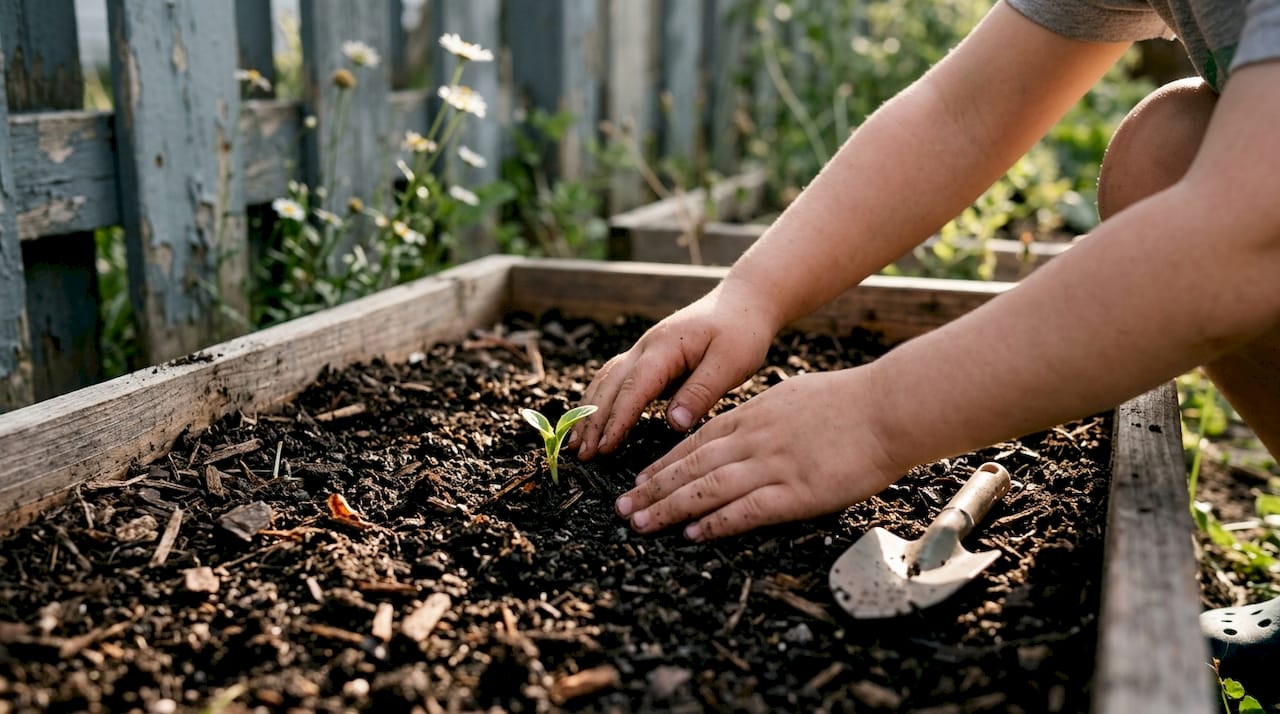
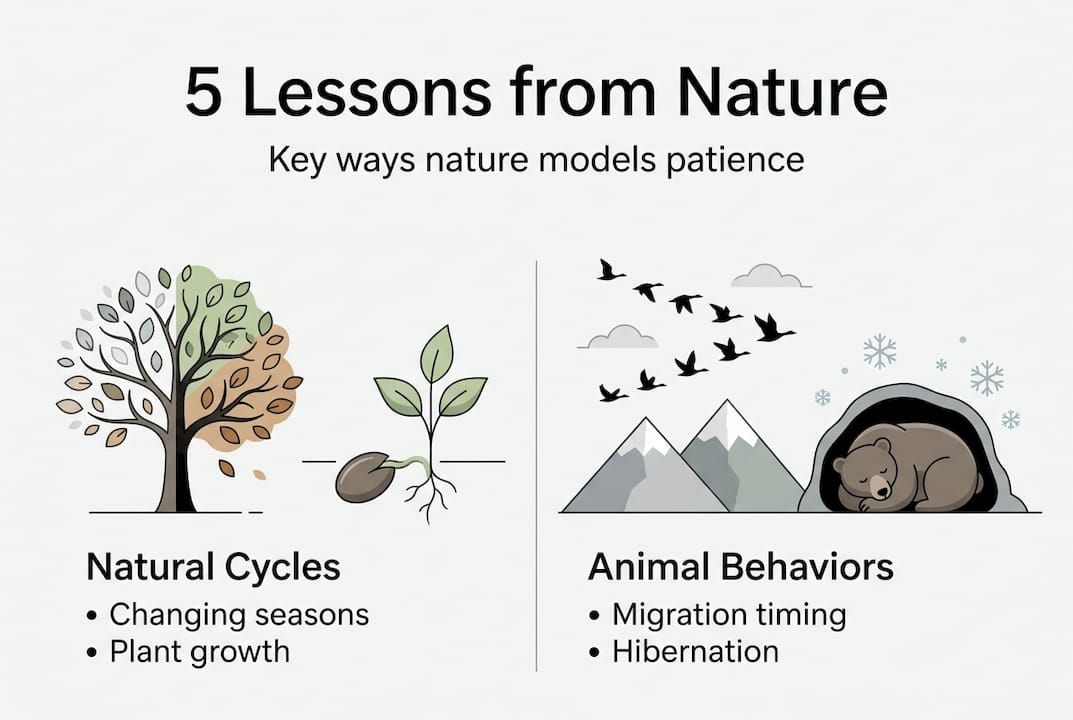
Think about a seed buried in cold soil in November. It does not panic. It does not try to sprout early because the calendar says spring is coming. It simply waits, gathering what it needs, responding to temperature and moisture on a timeline that cannot be rushed. Nature’s slow lessons show us that seed growth, tree rooting, seasonal cycles, and animal behaviours like predator stalking or long migrations all embody a kind of patience that modern society rarely honours.
Society, by contrast, rewards speed. We celebrate the entrepreneur who scaled fast, the student who graduated early, the athlete who recovered in record time. This cultural bias towards instant results creates a background hum of impatience that affects how we work, rest, and relate to others. Learning to reduce stress and boost relaxation often begins with recognising this mismatch.
Here is a quick comparison of how nature and society approach growth:
| Aspect | Nature’s approach | Society’s approach |
|---|---|---|
| Growth timeline | Gradual, cyclical | Linear, accelerated |
| Response to delay | Adaptive waiting | Frustration or intervention |
| Measure of progress | Seasonal milestones | Immediate output |
| Relationship with failure | Part of the cycle | Something to fix fast |
Nature’s most patient behaviours include:
- A monarch butterfly completing a 4,000 kilometre migration over weeks
- An oak tree spending decades establishing roots before reaching full height
- A wolf waiting motionless for the right moment to act
- Arctic plants completing their entire life cycle in just a few short summer weeks
“The natural world does not measure success by how quickly something happens. It measures it by whether the outcome is sustainable.”
If you are new to spending intentional time outdoors, exploring outdoor gear for mindfulness can help you start with the right tools for the experience.
Why nature’s patience fosters mindfulness and well-being
Understanding how nature demonstrates patience opens up new possibilities for developing our own resilience and mindfulness.
The connection between nature and well-being is not just poetic. It is measurable. Nature-based mindfulness interventions show effect sizes of g=0.22 to 0.40 for improvements in psychological well-being, with digital approaches showing even stronger results than traditional ones. That is a meaningful shift, not a marginal one.
| Intervention type | Effect on well-being | Effect on stress/rumination |
|---|---|---|
| Traditional nature mindfulness | Moderate improvement | Medium effect |
| Digital nature mindfulness | Significant improvement | Large effect |
| Passive nature exposure | Small improvement | Small effect |
Patience developed through regular nature exposure does something specific to the mind. It interrupts the loop of rumination, which is the mental habit of replaying worries and problems. When you sit beside a river and watch it move, your brain shifts from problem-solving mode into a more receptive, present-focused state. That shift is not trivial. It is the foundation of genuine resilience.
Statistic to note: Studies report that nature-based mindfulness reduces stress and rumination in young people with medium to large effect sizes, making it one of the more robust non-clinical interventions available.
The wisdom of nature on patience also speaks to authenticity. When you stop trying to force outcomes and start observing how things unfold naturally, you begin to trust the process rather than control it. That is a profound shift in mindset.
Pro Tip: If you cannot get outdoors every day, create a meditation corner at home using natural textures, plants, and soft lighting to bring that same quality of attention indoors.
Methods to integrate nature’s lessons on patience into daily life
Now that we’ve seen how patience in nature can foster well-being, how can these lessons find a place in your daily routine?
Practical methodologies for building patience through nature include mindful observation, gardening, forest walks, and nature-based meditation. The key is consistency over intensity. A ten-minute walk with full attention beats a weekend retreat you attend once a year.
Here is a simple sequence to get started:
- Begin with observation. Spend five minutes each morning watching something in nature, whether that is a bird, a cloud formation, or a plant on your windowsill. Notice without judging or rushing.
- Set intentions, not deadlines. Instead of deciding you will feel calmer by Friday, set an intention to notice one moment of natural patience each day.
- Start a small garden. Even a single pot of herbs teaches you that growth cannot be hurried. Beginner garden tools make this accessible without overwhelming investment.
- Take mindful walks. Leave your headphones behind occasionally. Walk slowly, breathe deliberately, and let your senses lead.
- Use digital mindfulness tools. Apps that guide nature-based meditation can extend the benefits of outdoor time into your evenings.
For urban dwellers, the challenge is finding nature in a concrete landscape. But it is there. Moss growing on a wall, pigeons navigating wind currents, the way rain changes the smell of pavement. Patience is practised in noticing these things.
Pro Tip: Pair your nature walks with a simple journalling habit. Write one observation each day. Over weeks, you will notice patterns that mirror resilience through patience in your own life.
Building a home environment that supports this practice matters too. Exploring ways to create a self-care sanctuary can anchor your nature-inspired routines in a space that feels genuinely restorative.
Society versus nature: A side-by-side view of patience
Applying nature-inspired routines in daily life can highlight the stark contrast with cultural norms. Let’s examine this contrast more closely.
Society operates on a linear model. You set a goal, you pursue it, you achieve it, and then you set another one. There is no rest built into that cycle, no acknowledgement that fallow periods are necessary. Nature, by contrast, is cyclical. Every winter is followed by spring. Every drought eventually ends. Society’s instant-gratification culture clashes directly with this rhythm, teaching us to distrust the process rather than trust it.
| Dimension | Nature’s rhythm | Society’s rhythm |
|---|---|---|
| Time orientation | Cyclical, seasonal | Linear, deadline-driven |
| Response to stillness | Essential for renewal | Seen as unproductive |
| Attitude to failure | Necessary for growth | Something to avoid |
| Pace of change | Gradual and sustainable | Fast and often forced |
The psychological cost of society’s impatience is real. Chronic impatience fuels anxiety, burnout, and a persistent sense that you are always behind. It narrows your focus and makes it harder to appreciate what is already working.
Regular nature connection can realign those values. Consider what changes when you spend consistent time outdoors:
- Reduced cortisol levels and lower physiological stress responses
- Greater tolerance for ambiguity and uncertainty
- Improved ability to focus on the present moment
- Stronger sense of meaning and connection to something larger than yourself
“Nature does not hurry, yet everything is accomplished.” This principle, often attributed to ancient wisdom, captures what adaptation effects in nature exposure research is beginning to confirm scientifically.
Exploring nature-inspired self-care products can support this shift, helping you bring the sensory qualities of the natural world into your daily rituals at home.
Why most people miss the real lesson: Our take on patience in the modern world
Having established that nature’s patience stands apart from society’s hurry, it is time for a frank reflection on what actually fosters lasting patience and resilience.
Most people approach patience as a form of gritted-teeth endurance. They wait, but they do not accept. They pause, but they do not observe. That is not patience. That is suppressed impatience, and it is exhausting. The real lesson from nature is not about waiting longer. It is about trusting that the process itself has value, even when results are invisible.
Society overvalues productivity and systematically undervalues slow processes. We have built entire industries around the idea that downtime is waste. But nature observation paired with digital mindfulness offers a scalable way to build genuine resilience, with research suggesting that guided digital approaches outperform passive exposure alone.
The uncomfortable truth is that most people will not slow down until something forces them to. Burnout, illness, or a moment of profound stillness in a forest. We believe the wiser path is to choose nature and slow living before you are compelled to. Blending intentional time outdoors with tools like better sleep with nature-inspired tools creates a rhythm that supports patience from the inside out. That is not a soft suggestion. It is a practical strategy for lasting personal growth.
Start your journey with nature-inspired patience
Ready to put nature’s wisdom to practical use? Here’s where to begin building patience into your everyday environment.
At Stomart, we stock a wide range of products that support a nature-inspired lifestyle, from home goods that bring calm into your living space to organic health and beauty items that align with slower, more intentional living. Whether you are setting up cosy meditation corners to anchor your daily mindfulness practice or looking for natural products for health that reflect your values, we have options that make it easy to start. Patience is not just a mindset. It is something you can build into your environment, one thoughtful choice at a time.
Frequently asked questions
How does observing nature build patience?
Watching natural cycles like plant growth and animal behaviour slows your mindset, fostering acceptance of gradual results and reducing the urge to force outcomes. It shifts your attention from what is missing to what is unfolding.
What are effective ways to practise patience with nature in an urban setting?
Try mindful walks in parks, follow local seasonal changes, or use gardening and digital mindfulness tools even in small home spaces. Urban nature is subtler, but it is still there if you look for it.
Is there scientific evidence for nature-based patience practices?
Yes. Nature-based mindfulness interventions show significant improvements in psychological thriving and reduced rumination and stress, with effect sizes that compare favourably to other non-clinical approaches.
Does regular time in nature always improve patience?
Chronic nature exposure does not always moderate acute benefits, meaning the effects do not simply accumulate automatically. Pairing outdoor time with digital mindfulness tools tends to amplify and sustain the positive impact.