

How fear shapes society more than facts: 3 key drivers
on Apr 06, 2026TL;DR:
- Fear is a survival response driven by the amygdala that often overrides rational thinking.
- Media amplification and cognitive biases increase societal fear, influencing public perception and policy.
- Overcoming fear requires media literacy, community engagement, and connecting locally to build trust and resilience.
Fear is not a character flaw. It is a survival mechanism so deeply wired into human biology that it routinely overrides logic, evidence, and even lived experience. Across history, societies have made sweeping decisions based on perceived threats rather than verified facts, from wartime propaganda to modern-day health panics. Fear drives societal behaviour through mechanisms like the amygdala’s threat response, which hijacks rational thinking before we even realise it’s happening. Understanding why this occurs is the first step towards reclaiming your ability to think clearly in a world that profits from keeping you anxious.
Key Takeaways
| Point | Details |
|---|---|
| Fear overrides facts | Human brains react instinctively to fear, often bypassing facts and rational reflection. |
| Media magnifies anxiety | Constant exposure to fearful stories distorts our sense of risk and drives societal trends. |
| Fear shapes behaviour and policy | Demands for government intervention and shifts in social attitudes are fuelled more by fear than data. |
| Balanced media can help | Diverse and credible information sources empower societies to resist fear-driven narratives. |
| Community trust matters | Connection and trust at the local level are essential for overcoming the dominance of fear. |
The science behind fear’s power in society
Fear has always been useful. For our ancestors, a quick, instinctive response to a predator meant survival. But that same rapid-fire system now fires in response to a news headline, a social media post, or a politician’s speech. The brain hasn’t caught up with the modern world.
At the centre of this response sits the amygdala, a small, almond-shaped region of the brain that acts as an emotional alarm system. When it detects a threat, real or imagined, it triggers a cascade of stress hormones before the rational prefrontal cortex even gets a word in. This is why the amygdala overrides rational thinking so reliably during moral panics. The emotional brain wins the race every time.
This biological reality is compounded by several well-documented cognitive biases:
- Negativity bias: We pay more attention to threats than to neutral or positive information. Negativity bias distorts risk perception by making emotional, fear-laden content feel more urgent and credible than evidence-based reporting.
- Confirmation bias: Once we believe something is dangerous, we actively seek information that confirms that belief and dismiss anything that contradicts it.
- Social identity theory: In fearful situations, people cluster into in-groups and out-groups. The perceived threat becomes a rallying point, and nuance gets abandoned in favour of tribal certainty.
“Emotional fears spread faster than facts because they tap into our most primitive survival instincts, making them feel personally relevant even when they statistically aren’t.”
This is also why fear-based content goes viral. It isn’t stupidity driving shares and reactions. It is biology. Understanding emotional buying and psychology reveals just how deeply these same mechanisms shape everyday decisions, from politics to purchasing. Similarly, the psychological impact of fear on desire shows how anxiety reshapes what we want and why.
Pro Tip: When you notice a strong emotional reaction to a news story, pause for thirty seconds before sharing or acting on it. That brief gap allows your rational brain to catch up with your amygdala.
How media amplifies societal fear
Understanding the brain’s instinctual response to fear sets the stage for the next force: how the media supercharges and spreads fear throughout society.
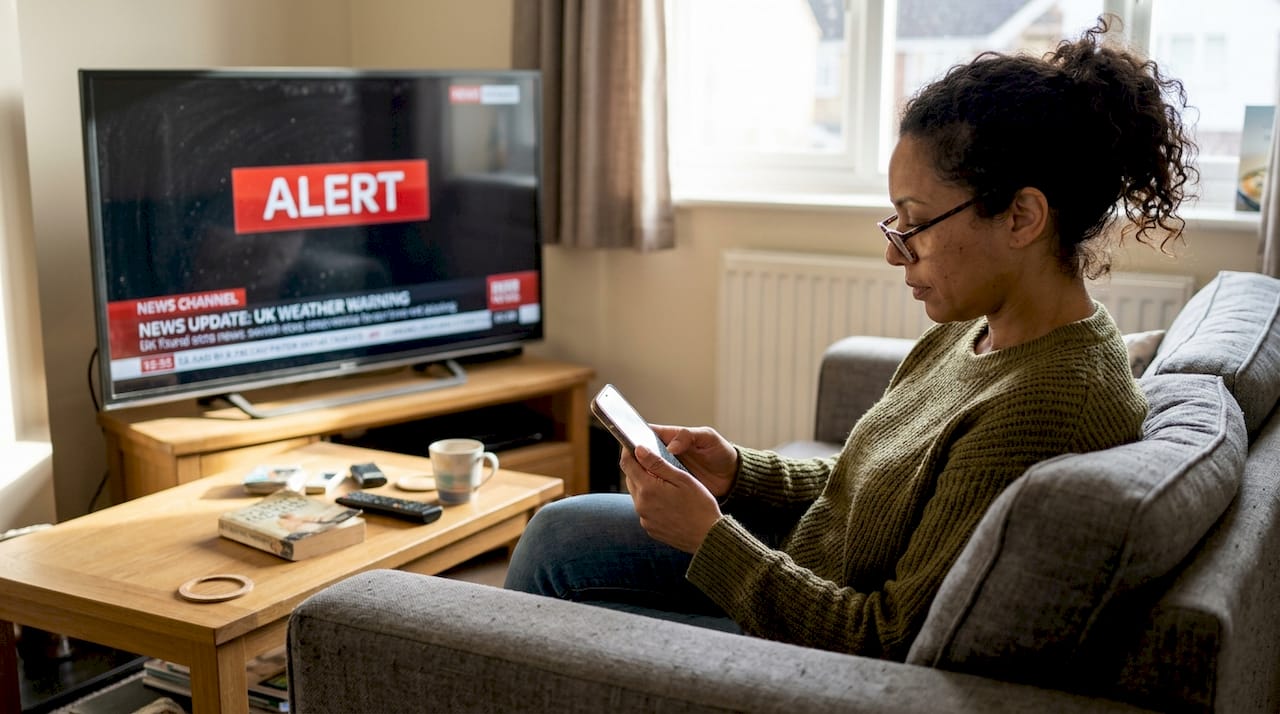
Media organisations, both traditional broadcasters and digital platforms, have a structural incentive to amplify fear. Anxiety keeps audiences engaged. Outrage drives clicks. The result is a feedback loop where frightening content is prioritised, repeated, and emotionally intensified.
The concept of Mean World Syndrome captures this perfectly. First identified by researcher George Gerbner, it describes how heavy media use cultivates anxiety, increasing mistrust and support for authoritarian policies, even when crime rates or actual risks are falling. People who consume large amounts of news consistently overestimate the prevalence of violence, danger, and social breakdown.
| Media consumption level | Perceived personal risk | Trust in institutions | Support for restrictive policy |
|---|---|---|---|
| Low (under 1 hr/day) | Moderate | Higher | Lower |
| Medium (1 to 3 hrs/day) | Elevated | Mixed | Moderate |
| High (over 3 hrs/day) | Very high | Lower | Significantly higher |
Research into cultivation effects and heavy media use confirms that prolonged exposure reshapes how people understand social reality, often independently of what is actually happening in their communities.
The language used by specific outlets matters enormously. Fox News uses more fear language than CNN, and this difference correlates with measurable gaps in vaccine compliance and risk assessment among their respective audiences. Words like “crisis,” “invasion,” and “catastrophe” are not neutral descriptors. They are emotional triggers.
Balanced reporting, by contrast, can actively reduce unjustified fear. When journalists contextualise statistics, present multiple perspectives, and avoid sensationalist framing, audiences make more accurate risk assessments. This has real implications for how media coverage shapes shopping behaviours and how media influence affects retail choices during periods of public anxiety.
Pro Tip: Limit your exposure to rolling news cycles. Set a specific time each day to check headlines rather than leaving news apps open. Your stress levels and your judgement will both improve.
Fear, policy, and public behaviour: the real-world effects
With media acting as a megaphone, fear doesn’t just distort perceptions. It translates into concrete changes in policies and everyday choices.
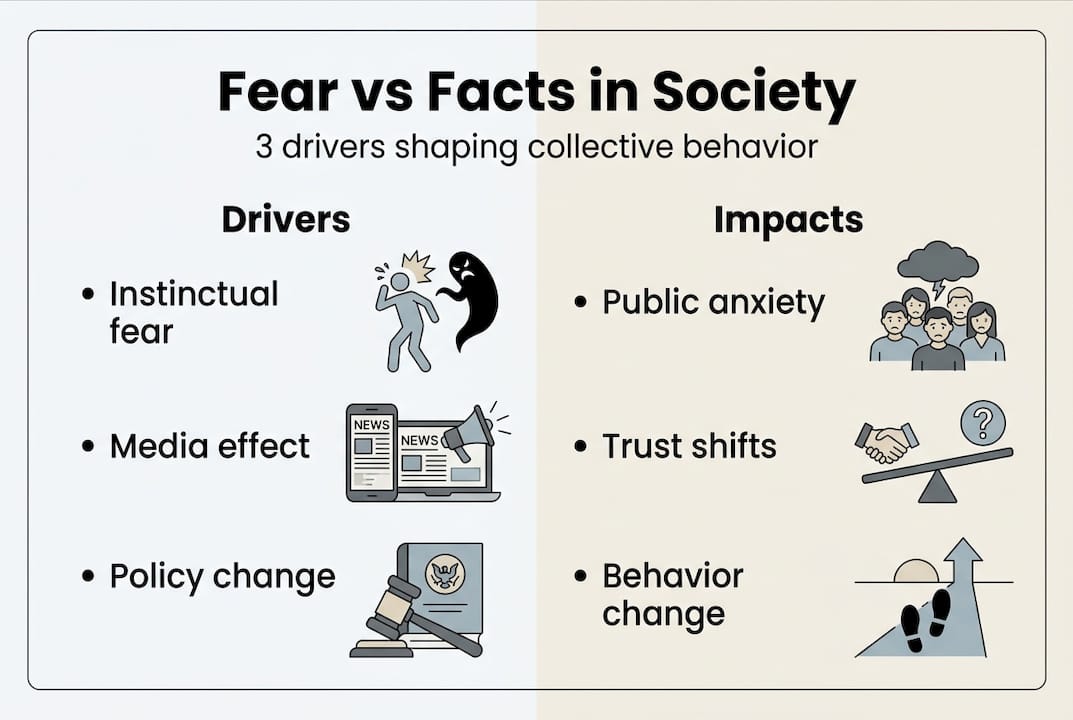
The COVID-19 pandemic provided an extraordinary natural experiment in fear-driven behaviour. Research from a quasi-experimental survey found that TV misinformation boosts demand for government intervention by 77 to 103 percentage points on regulation and 99 to 167 percentage points on mask mandates. Fear, amplified by unreliable sources, produced measurable policy pressure far beyond what facts alone would generate.
Here is how fear typically moves from perception to policy:
- A threat, real or exaggerated, enters public consciousness via media.
- Emotional responses spread faster than factual corrections.
- Public pressure builds for visible government action.
- Policies are enacted quickly, often without full evidence review.
- Once fear subsides, policies may remain long after the original threat has passed.
This pattern is not new. Post-9/11 security legislation, drug war policies from the 1980s, and numerous immigration crackdowns all followed this same arc.
Terror Management Theory (TMT) adds another layer. When people are reminded of their own mortality, a condition called mortality salience, they cling more tightly to their cultural worldview and reject those who differ. Mortality salience increases ideological adherence by 55% and outgroup derogation by 40%, meaning fear of death literally makes societies more polarised and less tolerant.
It is worth noting that fear is not always destructive. In genuine crises, a degree of collective fear can motivate necessary compliance with public health measures or emergency protocols. The problem arises when fear outlasts the threat, or when it is manufactured to serve political or commercial interests. Strategies for reducing consumer anxiety and trust-building approaches in retail contexts mirror the same principles that help communities navigate fear more rationally.
Can facts ever win? Overcoming fear’s dominance
After exploring fear’s influence and its real impact, let’s investigate whether facts can ever regain control and what you can do to counteract fear-driven narratives.
The honest answer is: sometimes, and with effort. Research shows that balanced media enables factual correction over the long term, but that algorithmic feeds and echo chambers actively undermine this process. Facts don’t spread as fast as fear. They rarely trigger the same emotional urgency. But they do accumulate, and societies do update their views, just more slowly.
Historical examples offer genuine hope. Public attitudes towards smoking, drink-driving, and HIV/AIDS shifted dramatically over decades as evidence mounted and trusted voices communicated consistently. Fear gave way to understanding, not overnight, but measurably.
What makes fact-based correction harder today:
- Algorithmic feeds prioritise content that provokes strong reactions, burying calm, evidence-based reporting.
- Echo chambers mean people rarely encounter credible challenges to their existing fears.
- Misinformation spreads six times faster than accurate information on major social platforms.
Practical steps you can take right now:
- Cultivate media literacy. Learn to identify emotional language, check publication dates, and verify claims with primary sources.
- Diversify your news sources. Deliberately read outlets that challenge your existing assumptions, not to agree with them, but to stress-test your own thinking.
- Engage locally. Media literacy and local engagement counter cultivation effects by grounding your sense of risk in real community experience rather than curated media narratives.
Building trust in digital spaces follows the same logic: genuine transparency and consistent, accurate information outperform fear-based persuasion in the long run.
Pro Tip: When you encounter a frightening claim online, ask yourself: “What would I need to see to change my mind about this?” If the answer is “nothing,” that’s a sign you’re in an echo chamber, not a fact-based conversation.
Why resisting the pull of fear takes collective wisdom
Most coverage of this topic focuses on fighting misinformation with more facts. Publish corrections. Label false claims. Improve algorithms. These are reasonable steps, but they miss something fundamental.
Fear doesn’t just live in information. It lives in relationships, or the absence of them. When people feel isolated, economically precarious, or socially invisible, they become far more susceptible to fear-based narratives. The anxious brain seeks certainty, and fearful stories, however inaccurate, provide a clear villain and a simple explanation.
Our observation, watching how communities respond to crises, is that anxieties recede most reliably when people connect locally and verify together. Not when they receive a fact-check email. The uncomfortable truth is that solving fear-dominated societies isn’t primarily a media problem. It is a community trust problem.
This is why community trust and social outcomes matter so much beyond the individual level. Join local discussions. Support institutions that operate transparently. Practise what we might call practical scepticism: question emotional responses, including your own, without dismissing genuine concerns. Real resilience is built between people, not just between a reader and a screen.
Discover more resources for making informed choices
Armed with a deeper understanding of how fear shapes public perception, you may want to continue exploring tools and perspectives that support clearer, more balanced thinking. At STOMART.CO.UK, we believe that informed consumers make better decisions, not just in what they buy, but in how they engage with the world around them. Our blog regularly covers topics at the intersection of psychology, behaviour, and everyday life. Whether you’re looking for reliable shopping choices or broader lifestyle insights, you’ll find resources designed to help you think critically and choose confidently.
Frequently asked questions
Why does fear have more influence than facts in society?
Fear is processed in the amygdala, hijacking cognition before rational analysis can occur, which is why emotional reactions consistently feel more compelling than logical assessments.
How do media outlets shape public anxiety?
Heavy consumption of sensational media creates a Mean World Syndrome, leading people to overestimate personal risk and distrust institutions, even when objective conditions are improving.
Can facts eventually overcome the effects of fear?
Balanced media enables factual correction over time, but echo chambers and algorithmic amplification of emotional content make this process slow and inconsistent.
What practical steps can I take to counter fear-driven narratives?
Practise media literacy, seek out diverse perspectives, and engage with your local community. Media literacy and local engagement are among the most effective tools for building resilience against unfounded fears.