

Why we fear being alone: A deep dive into solitude
on Apr 02, 2026Fear of being alone is often dismissed as weakness or neediness, yet the science tells a far richer story. Fear of being alone stems from evolutionary survival instincts that kept our ancestors alive for millennia. What feels like irrational anxiety is, in many cases, a deeply wired biological response shaped by millions of years of human history. Philosophers, psychologists, and neuroscientists have each wrestled with this question from different angles, and their findings are surprising. This article unpacks the evolutionary, psychological, and philosophical layers beneath solitude anxiety, offering both clarity and practical direction for anyone curious about their own relationship with being alone.
Key Takeaways
| Point | Details |
|---|---|
| Wired for connection | Human evolution and brain chemistry make social contact feel like a biological necessity. |
| Beliefs matter | How you interpret solitude shapes whether being alone feels restorative or distressing. |
| Culture shapes fear | Media and tradition amplify anxieties about being alone, not always based on fact. |
| Solitude is not loneliness | Chosen alone time can fuel creativity and wellbeing—it’s beliefs and context that create harm or benefit. |
| Growth is possible | Evidence-based strategies help anyone reframe and thrive in solitude, overcoming old fear loops. |
The evolutionary and biological roots of social fear
For most of human history, being alone was genuinely dangerous. Early humans who wandered away from their group faced predators, starvation, and exposure. Those who stayed connected survived. Over thousands of generations, the brain developed a powerful alarm system to prevent isolation, and that system is still very much active today.
The neuroscience of loneliness reveals that social rejection activates the same brain regions as physical pain. This is not metaphor. The dorsal anterior cingulate cortex, a region associated with physical hurt, lights up during social exclusion just as it does when you stub your toe. Your brain genuinely treats isolation as a threat to survival.
Several biological mechanisms reinforce this response:
- Oxytocin, often called the bonding hormone, reinforces the pleasure of social connection and makes its absence feel uncomfortable.
- Cortisol, the stress hormone, rises during prolonged alone time when the brain interprets it as danger.
- Anxiety circuits in the amygdala fire when social cues are absent, triggering vigilance and unease.
What makes this especially interesting is that these responses persist even in modern, objectively safe environments. You can be perfectly secure in a well-lit flat with food in the fridge and still feel a creeping dread when alone. The brain has not updated its threat model to match contemporary life.
Cultural transmission adds another layer. Across generations, stories, religions, and social norms have reinforced the idea that solitude is suspicious or sad. Think of how language frames it: someone eating alone is “lonely,” not “peaceful.” These narratives compound the biological alarm, making the fear feel even more justified.
The way your spaces and mental wellbeing interact also plays a role. Certain environments amplify the sense of isolation, while others make solitude feel safe and even pleasurable.
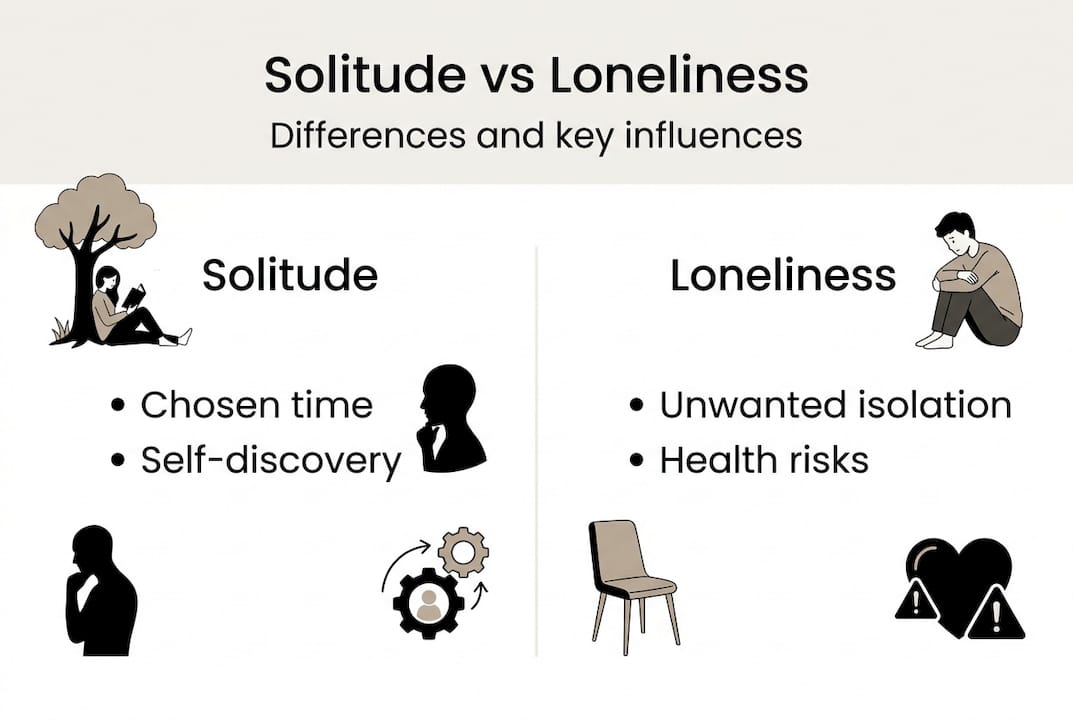
Pro Tip: Not every moment of alone time triggers the brain’s alarm. Context matters enormously. Chosen solitude in a comfortable, familiar environment feels very different from unexpected isolation. Your beliefs about what being alone means shape the experience just as much as the circumstance itself.
Attachment, trauma, and mental distortions
Biology sets the stage, but psychology writes the script. Each person’s unique history shapes how intensely they react to solitude, and attachment insecurities and cognitive distortions are among the strongest predictors of fear of aloneness.
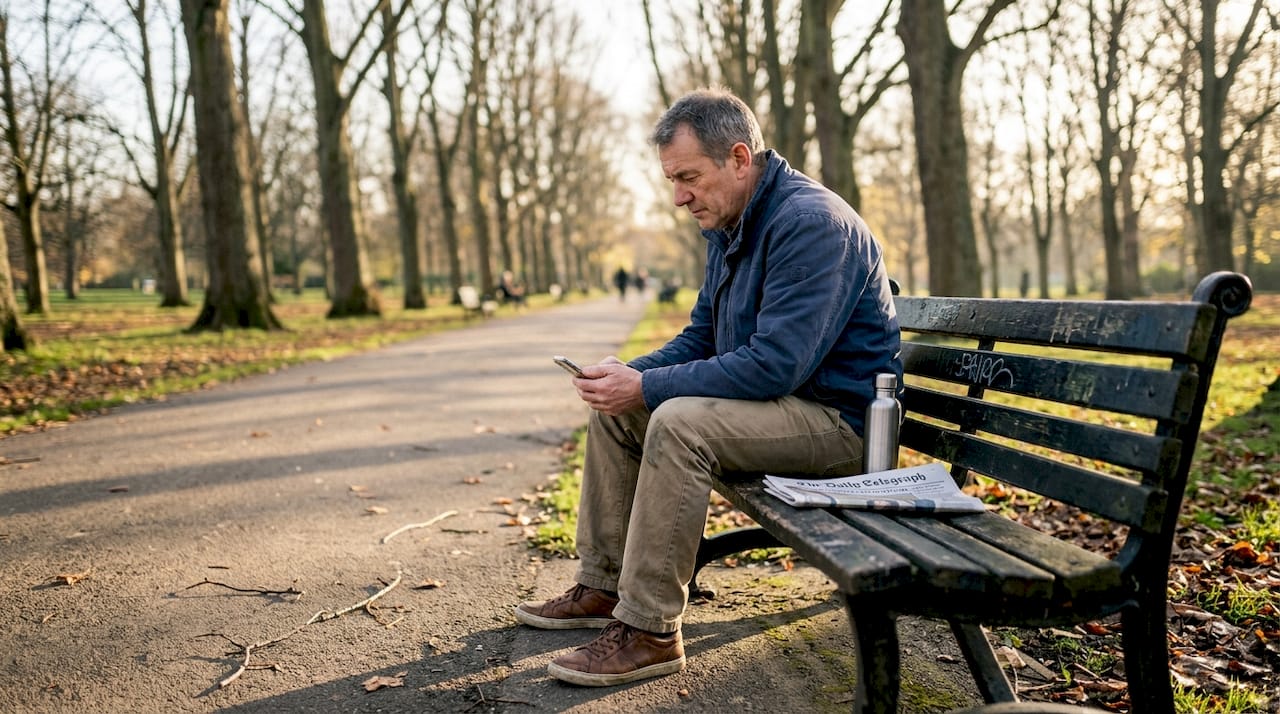
Attachment theory, developed by John Bowlby, describes how early relationships with caregivers create internal models of safety and connection. Those with secure attachment tend to feel comfortable alone because they carry an internalised sense of being valued. Those with anxious or avoidant attachment styles often struggle, interpreting solitude as confirmation of their worst fears about themselves.
Trauma compounds this significantly. Experiences of abandonment, neglect, or sudden loss can rewire the nervous system to treat aloneness as a precursor to danger. The psychology of loneliness shows that these early experiences leave lasting imprints on how the brain processes social absence.
Cognitive distortions also play a powerful role. Three of the most common are:
- Catastrophising: Believing that being alone means something terrible is about to happen or that it will last forever.
- Mindreading: Assuming others are avoiding you or that they find you undesirable.
- Essentialising: Treating aloneness as a fixed identity rather than a temporary state.
These thought patterns interact with consumer desire and loneliness in subtle ways, driving people towards distraction and consumption as a substitute for genuine connection. Similarly, the appeal of personalised support in shops and curated experiences often speaks to a deeper need for acknowledgement and belonging.
| Attachment style | Response to solitude |
|---|---|
| Secure | Comfortable, uses time for reflection |
| Anxious | Distressed, seeks reassurance quickly |
| Avoidant | Appears unbothered but suppresses discomfort |
| Disorganised | Unpredictable, oscillates between craving and fearing connection |
Pro Tip: Simply noticing which cognitive distortion you reach for most often is a meaningful first step. You cannot change a pattern you have not yet named.
Philosophers on solitude: Harm, virtue, or misunderstood?
We have seen how biology and psychology push us towards company. But what have the great thinkers argued about choosing to be alone?
The philosophical tradition on solitude is genuinely divided, and understanding that division helps explain why Western culture holds such conflicting attitudes towards being alone. Aristotle, Schopenhauer, Nietzsche, and Hobbes each staked out sharply different positions.
Aristotle famously described humans as zoon politikon, political animals. For him, the person who lived outside society was either a beast or a god. Solitude, in this view, was unnatural and a sign of deficiency. This idea has had enormous staying power in Western thought.
Schopenhauer took the opposite view with characteristic bluntness. He argued that only those of genuine intelligence could truly enjoy their own company, because only they had rich enough inner lives to sustain themselves without external stimulation.
“A man can be himself only so long as he is alone; and if he does not love solitude, he will not love freedom; for it is only when he is alone that he is really free.” — Arthur Schopenhauer
Nietzsche pushed further, arguing that solitude was essential for the kind of self-overcoming he valued. Hobbes, meanwhile, viewed isolated humans as inherently at war, making society a necessary constraint rather than a natural good.
Common philosophical arguments for and against solitude:
- For: Solitude enables self-knowledge, creativity, and freedom from social performance.
- For: Chosen aloneness is a sign of psychological strength, not weakness.
- Against: Humans require community for moral development and meaning.
- Against: Prolonged isolation can distort perception and erode empathy.
These debates shaped how Western societies designed public and private spaces, from the open-plan offices that assume collaboration is always preferable to the monastic cells that treated solitude as sacred.
Solitude, loneliness, and societal myths today
Drawing from centuries-old philosophy, our relationship with solitude is now shaped as much by headlines and hashtags as by biology and thought.
One of the most important empirical distinctions in recent research is between solitude and loneliness. They are not the same thing. Solitude is a physical state: being alone. Loneliness is an emotional state: feeling disconnected regardless of whether others are present. Negative beliefs amplify loneliness after time spent alone, meaning your mindset about aloneness shapes whether it harms or helps you.
Media consistently frames solitude as harmful. Stories about isolation, loneliness epidemics, and the dangers of living alone dominate headlines, while accounts of productive or restorative solitude are rare. This framing matters because it becomes a self-fulfilling prophecy for many people.
The chronic loneliness epidemic is also shaped by digital superficiality. Social media creates the illusion of connection while often deepening the sense of not truly being known. The pressure to be paired up, part of a group, or constantly available amplifies anxiety about any moment spent alone.
Myths versus realities about aloneness today:
- Myth: Being alone means you are unlikeable. Reality: Many people choose solitude and report high wellbeing.
- Myth: Loneliness is just about being physically alone. Reality: You can feel profoundly lonely in a crowd.
- Myth: Social media cures loneliness. Reality: Passive scrolling often worsens it.
- Myth: Chronic loneliness is inevitable for single people. Reality: Beliefs and community quality matter far more than relationship status.
The health consequences of genuine chronic loneliness are serious. Elevated mortality risk, impaired immune function, and increased risk of depression are all documented outcomes. The distinction between chosen, positive solitude and unwanted, distressing loneliness is therefore not merely philosophical. It is a matter of physical health. Exploring experiences of solo shopping and digital communication and connection can reveal how modern habits quietly shape our sense of belonging.
Breaking the fear loop: New research and practical strategies
Moving from insight to action, what actually works to help people grow more comfortable with being alone?
The most significant recent finding is that belief, not circumstance, is the primary mediator of the solitude experience. CBT can break negative belief-loneliness loops, and people who hold positive beliefs about solitude report significantly lower loneliness even after extended time alone. This is a genuinely empowering finding because beliefs are changeable.
Ecological momentary assessment, a research method that tracks mood in real time throughout the day, has shown that people consistently overestimate how bad alone time will feel beforehand. The anticipation is nearly always worse than the reality.
Practical steps to reframe alone time positively:
- Name the distortion: Identify which cognitive pattern is driving your discomfort before acting on it.
- Schedule solitude intentionally: Treat it as an appointment with yourself rather than something that happens to you.
- Engage in absorbing activities: Reading, crafting, cooking, or walking redirect attention away from anxious self-monitoring.
- Curate your environment: A comfortable, aesthetically pleasing space makes solitude feel like a retreat rather than a punishment. Choosing comforting environments is a practical first step.
- Reflect rather than ruminate: Journalling or gentle self-inquiry builds self-knowledge without spiralling into self-criticism.
Architecture and design also play a measurable role. Research on how architecture improves connection shows that well-designed spaces can reduce anxiety and support both social engagement and restorative solitude.
Pro Tip: Seek out one environment, whether a corner of your home, a local park, or a quiet café, where being alone feels genuinely pleasant. Repeated positive experiences in that space gradually rewire the association between solitude and threat.
The uncomfortable wisdom: Solitude is not the enemy
After all the research and remedies, there is something many experts still understate: solitude is not merely a problem to be managed. It is a resource.
The greatest creative and intellectual breakthroughs in human history have tended to emerge from periods of sustained, chosen solitude. Darwin walked alone for hours. Woolf wrote of the necessity of a room of one’s own. The pattern is consistent across disciplines and centuries. Yet mainstream culture continues to treat any preference for alone time as a red flag rather than a strength.
The real issue is not solitude itself but the quality of attention you bring to it. Aloneness approached with intention, curiosity, and self-compassion is profoundly different from aloneness endured with dread and distraction. The former builds self-knowledge; the latter deepens anxiety.
We believe the conversation around space, solitude, and wellbeing needs to shift from “how do we avoid being alone” to “how do we make being alone worth something.” That reframe changes everything.
Solitude and self-discovery: Find your space for growth
If this article has sparked a desire to explore solitude more intentionally, the environment you inhabit is a powerful place to start. A thoughtfully arranged home can transform alone time from something to endure into something genuinely restorative. Whether you are looking to create a calm reading nook, a reflective corner, or simply a space that feels like yours, Stomart offers a wide range of home goods, lighting, and décor to help you shape spaces that support your wellbeing. For practical inspiration on creating environments that nurture both solitude and connection, explore décor for wellbeing and discover how small changes can make a meaningful difference to how you feel at home.
Frequently asked questions
Why do some people fear being alone more than others?
Attachment insecurities increase fear of being alone, meaning those with anxious or disorganised attachment histories, combined with trauma and cultural messaging, tend to experience solitude as significantly more threatening than those with secure foundations.
Is loneliness always harmful, or can being alone be positive?
Solitude can be restorative and loneliness is linked to negative health outcomes, but the key distinction is whether aloneness is chosen and accompanied by positive beliefs, in which case it can actively support creativity and resilience.
How can I learn to enjoy being alone?
Positive beliefs and activities reduce post-solitude loneliness, so practising intentional reframing, engaging in absorbing solo hobbies, and curating a comfortable environment are the most evidence-backed starting points.
What do philosophers say about the value of solitude?
Philosophers hold contrasting views on solitude, with Aristotle warning that isolation is unnatural for humans, while Schopenhauer celebrated it as the truest expression of freedom and self-knowledge for those with a rich inner life.