
Recent Posts


- Dec 27, 2025


- Dec 24, 2025


- Dec 21, 2025


How to Organise Kitchen for Maximum Efficiency and Space
Contents
Most British city apartments offer less than twelve square metres of kitchen space, meaning efficient organisation becomes more than just convenience. When workdays run long and your kitchen doubles as your coffee shop, workspace, and dinner party hub, every inch matters. This guide delivers straightforward strategies tailored for busy professionals who want their compact British kitchens to feel spacious, practical, and easy to navigate without sacrificing style or function.
Quick Summary
| Key Point | Explanation |
|---|---|
| 1. Assess Your Kitchen Layout | Evaluate your current kitchen flow using the kitchen work triangle to identify inefficiencies. |
| 2. Systematic Decluttering | Empty and categorise items in your kitchen to reduce clutter and focus on functional space. |
| 3. Create Designated Storage Zones | Assign storage areas based on usage frequency for optimal access and efficiency. |
| 4. Utilise Smart Organisers | Invest in modular organisers and vertical storage solutions to maximise your kitchen’s capacity. |
| 5. Observe and Adjust Workflow | Monitor your cooking habits to align your layout with your daily activities for smoother operation. |
Step 1: Assess existing kitchen layout and identify problem areas
Before diving into kitchen organisation, understanding your current space is crucial. The first step involves a comprehensive assessment of your kitchen’s workflow and potential inefficiencies, using the kitchen work triangle concept as a strategic guide.
Start by walking through your kitchen and observing how you currently move between key areas like the cooktop, sink, and refrigerator. Pay attention to bottlenecks and awkward movements. Are you constantly zigzagging around obstacles? Do you find yourself taking unnecessary steps while preparing meals? Research from kitchen management studies suggests that minimising these inefficient movements can dramatically improve your cooking experience.
Measure the distances between your primary workstations and note any obstructions. Ideally, no leg of your kitchen triangle should be less than 1.2 metres or more than 2.7 metres. This ensures smooth movement and reduces physical strain during food preparation. Take photographs and create a rough sketch of your current layout to help visualise potential improvements.
Practical Tip: Use a measuring tape and coloured sticky notes to mark problematic areas and potential solutions during your kitchen assessment.
Here is a summary of common kitchen problem areas and their typical causes:
| Problem Area | Typical Cause | Potential Impact |
|---|---|---|
| Awkward workflow | Poor kitchen triangle arrangement | Increased prep time |
| Blocked pathways | Obstructions or oversized furniture | Friction during cooking |
| Overcrowded surfaces | Excess unnecessary items | Reduced workspace |
| Hard-to-reach storage zones | Poor item placement | Unused or wasted space |
| Frequent duplicates | Lack of systematic decluttering | Clutter buildup |
Step 2: Declutter shelves, cupboards and worktops methodically
Decluttering is more than just tidying up your kitchen space. Professional organising techniques reveal it is a transformative process of understanding your relationship with household items and creating functional living spaces. This step will help you systematically reduce unnecessary kitchen clutter and create a more efficient cooking environment.
Begin by completely emptying each shelf and cupboard one area at a time. Sort items into clear categories: keep, donate, discard. Research suggests that decluttering is not just about physical organisation but also about mindful consumption. Ask yourself critical questions about each item. When was the last time you used it? Does it serve a genuine purpose? Are there duplicate items taking up unnecessary space? Be ruthless in your assessment.
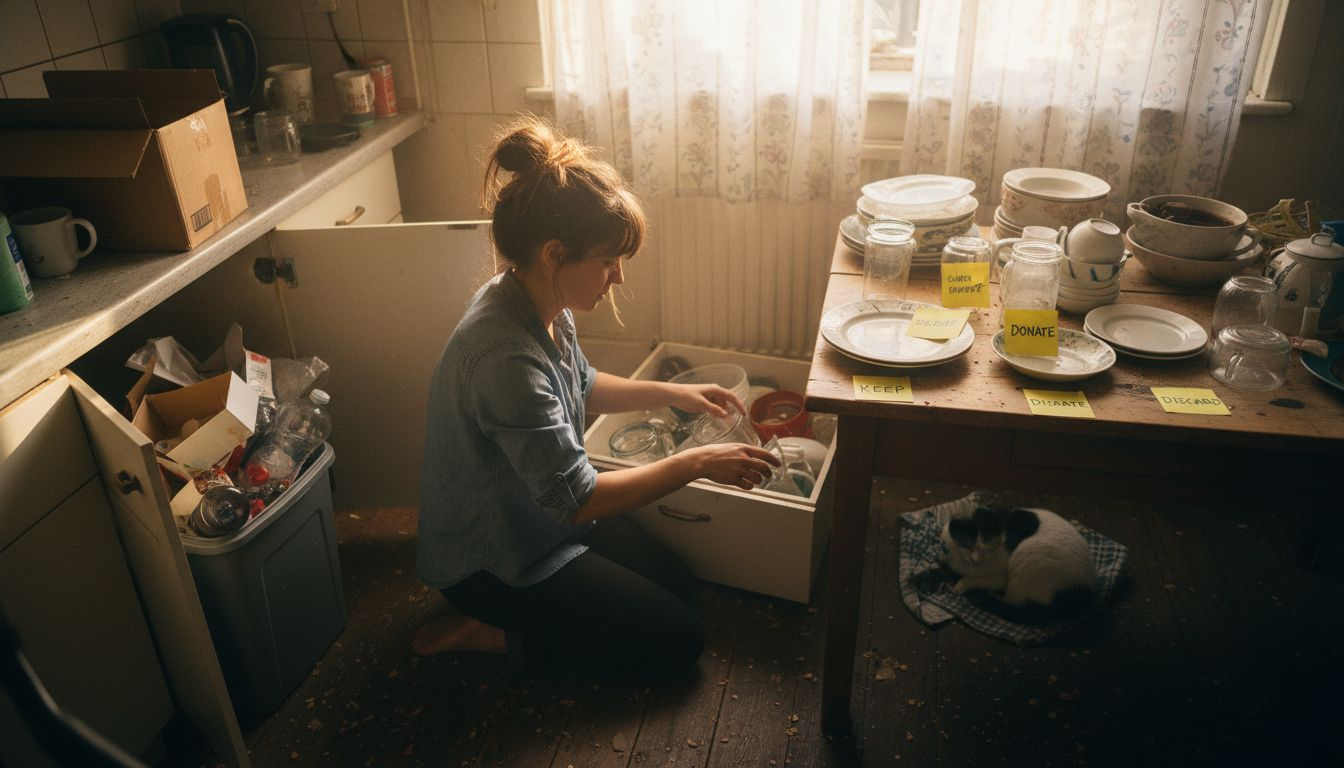
Focus on creating functional zones in your kitchen. Group similar items together cooking tools, baking equipment, and everyday utensils. Remove expired products, damaged equipment, and those random gadgets collecting dust. Consider vertical storage solutions and drawer organisers to maximise space and maintain your newly decluttered areas.
Practical Tip: Create a one in one out rule for kitchen items to prevent future clutter accumulation.
Step 3: Categorise items and allocate designated storage zones
Transforming your kitchen storage requires a strategic approach that goes beyond simple organisation. Advanced storage assignment policies suggest creating dedicated zones that match your cooking habits and frequency of use. This method will help you design a kitchen that works seamlessly with your lifestyle.
Start by creating distinct categories for your kitchen items based on usage frequency and function. Multi-criteria inventory classification techniques recommend grouping items into primary zones such as daily use, occasional use, and rarely used. Place your most frequently used cooking tools and utensils in easily accessible lower cabinets or drawers near your primary work areas. Seasonal bakeware and special occasion serving dishes can be stored in higher or more remote cabinets.
Consider creating specialised zones within your kitchen. A baking zone might include mixing bowls, measuring cups, and baking trays. A coffee or tea station could house mugs, kettles, and related accessories. This approach ensures that everything has a logical home and reduces time spent searching for items during meal preparation.
Practical Tip: Use clear container labels and colour coding to maintain your new organisational system and make item retrieval effortless.
Step 4: Optimise cabinet and drawer space using smart organisers
Unlocking maximum kitchen storage potential requires strategic thinking and intelligent organisational solutions. Professional organizing techniques reveal that smart organisers can transform even the most cluttered spaces into models of efficiency and accessibility.

Begin by investing in modular drawer dividers and adjustable shelf systems that adapt to your specific storage needs. Vertical storage solutions like tiered shelving and pull-out organisers can dramatically increase your usable space. Consider stackable containers for pantry items, magnetic knife strips for utensils, and under shelf baskets that utilise often forgotten vertical spaces. Group similar items together and use clear containers that allow you to quickly identify contents without unnecessary rummaging.
Prioritise accessibility when designing your storage system. Place frequently used items at eye level or in easily reached drawers, while reserving higher or harder to reach spaces for seasonal or rarely used equipment. Implement a systematic approach where each item has a designated home, reducing clutter and making your kitchen feel more spacious and organised.
Practical Tip: Measure your cabinet and drawer dimensions before purchasing organisers to ensure a perfect fit and maximum efficiency.
The table below compares organisational tools for optimising kitchen storage:
| Organiser Type | Best For | Example Use |
|---|---|---|
| Modular dividers | Utensils and cutlery | Drawer separation |
| Adjustable shelves | Pots, pans, and glassware | Cabinet stacking |
| Stackable containers | Dry goods and snacks | Pantry storage |
| Under shelf baskets | Light, flat items | Tea towels |
| Magnetic strips | Frequently used metal utensils | Knife organisation |
Step 5: Verify daily workflow and adjust placements for convenience
Optimising your kitchen layout goes beyond simple organisation strategy. The kitchen work triangle principle provides a critical framework for understanding how your physical movements impact cooking efficiency and overall kitchen performance.
Spend a few days observing your actual cooking habits and noting any friction points in your current layout. Kitchen workflow studies recommend tracking the routes you typically take while preparing meals. Pay attention to how often you move between the refrigerator, sink, and cooking areas. Are there unnecessary steps? Do you find yourself constantly backtracking or reaching awkwardly for frequently used items? These observations will help you make strategic adjustments to your kitchen organisation.
Consider creating dedicated preparation zones that align with your specific cooking style. Position cutting boards near your sink for easy cleaning, place cooking utensils close to the stove, and ensure frequently used ingredients are within arm’s reach. The goal is to minimise unnecessary movement and create a seamless cooking experience that feels intuitive and effortless.
Practical Tip: Sketch a quick floor plan and trace your typical cooking movements with a coloured pencil to visually identify inefficient patterns.
Transform Your Kitchen Organisation Today for Effortless Efficiency
Is your kitchen workflow slowed by cluttered cupboards or poorly planned storage zones? This article highlights key challenges like inefficient layouts, overcrowded surfaces and awkward item placements that increase preparation time and cause frustration. By understanding concepts such as the kitchen work triangle and strategic zoning you can create a space that supports smooth cooking routines and reduces unnecessary steps.
At Stomart.co.uk, we offer a broad selection of smart organisers, modular storage solutions and kitchen essentials designed to maximise space and convenience. Whether you need drawer dividers, stackable containers or clever under shelf baskets, our products help you implement the perfect storage system tailored to your lifestyle. Don’t wait for clutter and inefficiency to hold you back any longer. Visit Stomart.co.uk now and unlock a more organised kitchen today.
Frequently Asked Questions
What are the key steps to organising my kitchen for maximum efficiency?
Begin by assessing your existing kitchen layout, focusing on workflow and identifying problem areas. Then, declutter systematically, categorise items into designated storage zones, optimise space with smart organisers, and finally verify your daily workflow to make necessary adjustments.
How can I identify problem areas in my kitchen layout?
Walk through your kitchen and observe your movements between the cooktop, sink, and refrigerator. Look for bottlenecks or awkward transitions; measuring distances between workstations can help you pinpoint inefficiencies and ensure a well-functioning space.
What should I do with items I no longer need in my kitchen?
Sort through your items by emptying shelves and cupboards, categorising them into keep, donate, or discard piles. Be decisive; if you haven’t used an item in the last year or it serves no genuine purpose, consider letting it go to reduce clutter and enhance your kitchen’s functionality.
How do I create designated storage zones in my kitchen?
Group similar items based on their usage frequency and function, placing frequently used tools in easily accessible areas. Categorise items into zones, such as daily use, occasional use, and rarely used, to ensure everything has a logical home and is easy to retrieve.
What are some effective storage solutions for maximising kitchen space?
Invest in modular drawer dividers, adjustable shelves, and vertical storage solutions to utilise every inch of your kitchen. For example, stackable containers for pantry items can help maximise space and keep your kitchen organised and accessible.
How can I ensure my kitchen layout supports a smoother cooking workflow?
Observe your daily cooking habits to identify any friction points or unnecessary steps. After tracking your movements, adjust the placement of frequently used items to create dedicated preparation zones that streamline your cooking process.
Recommended
- 7 Great Kitchen Gadgets for Homes - STOMART.CO.UK
- 7 Great Kitchen Gadgets for Homes - STOMART.CO.UK
- Kitchen Wall-Mounted Spice Organizer - STOMART.CO.UK
- Cosy and Stylish Home Upgrades - STOMART.CO.UK
- Kleine Küche modern gestalten - Tassenregal Ideen | Farbakzente, Multifunktion - AFUERA – outdoor steel design
Share
- Dec 27, 2025
- Dec 24, 2025
- Dec 21, 2025

- Dec 19, 2025


- Dec 17, 2025

- Dec 16, 2025

- Dec 15, 2025


- Dec 15, 2025

- Dec 15, 2025


- Dec 11, 2025

- Dec 11, 2025


- Dec 08, 2025


- Dec 05, 2025

- Dec 05, 2025


- Dec 02, 2025


- Dec 01, 2025

- Dec 01, 2025

- Nov 30, 2025


- Nov 30, 2025

- Nov 29, 2025


- Nov 25, 2025

- Nov 24, 2025
Recent Posts
- Dec 27, 2025
- Dec 24, 2025
- Dec 21, 2025