
Recent Posts

- Jan 16, 2026


- Jan 12, 2026


- Jan 10, 2026

- Jan 09, 2026

- Jan 08, 2026


- Jan 06, 2026


- Jan 03, 2026


How Smart Thermostats Work: Complete Guide for Homes
Contents
More than 40 percent of british households are now considering smart thermostat technology, yet myths still hold many back. With energy costs on the rise in every british region, finding real ways to cut bills and simplify daily routines has never been more urgent. This guide clears up common misconceptions about smart thermostats and explains what makes them a smart investment for comfort, savings, and control in any british home.
Key Takeaways
| Point | Details |
|---|---|
| Understanding Smart Thermostats | Smart thermostats offer automatic temperature adjustments and energy efficiency far beyond traditional models, adapting to individual household patterns. |
| Common Myths Debunked | Many misconceptions, such as complexity or high costs, deter homeowners; in reality, these devices are user-friendly and can provide savings that offset their initial investment. |
| Connectivity and Control | Equipped with Wi-Fi capabilities, smart thermostats provide remote access and compatibility with home automation systems, enhancing user experience. |
| Energy Saving Potential | With effective usage, smart thermostats can lead to significant energy savings, but require proper installation and user engagement to realise their full potential. |
Smart Thermostats Defined and Common Myths
A smart thermostat is an advanced home climate control device that goes far beyond traditional temperature regulation. Wi-Fi enabled and equipped with intelligent learning capabilities, these devices transform how homeowners manage heating and cooling.
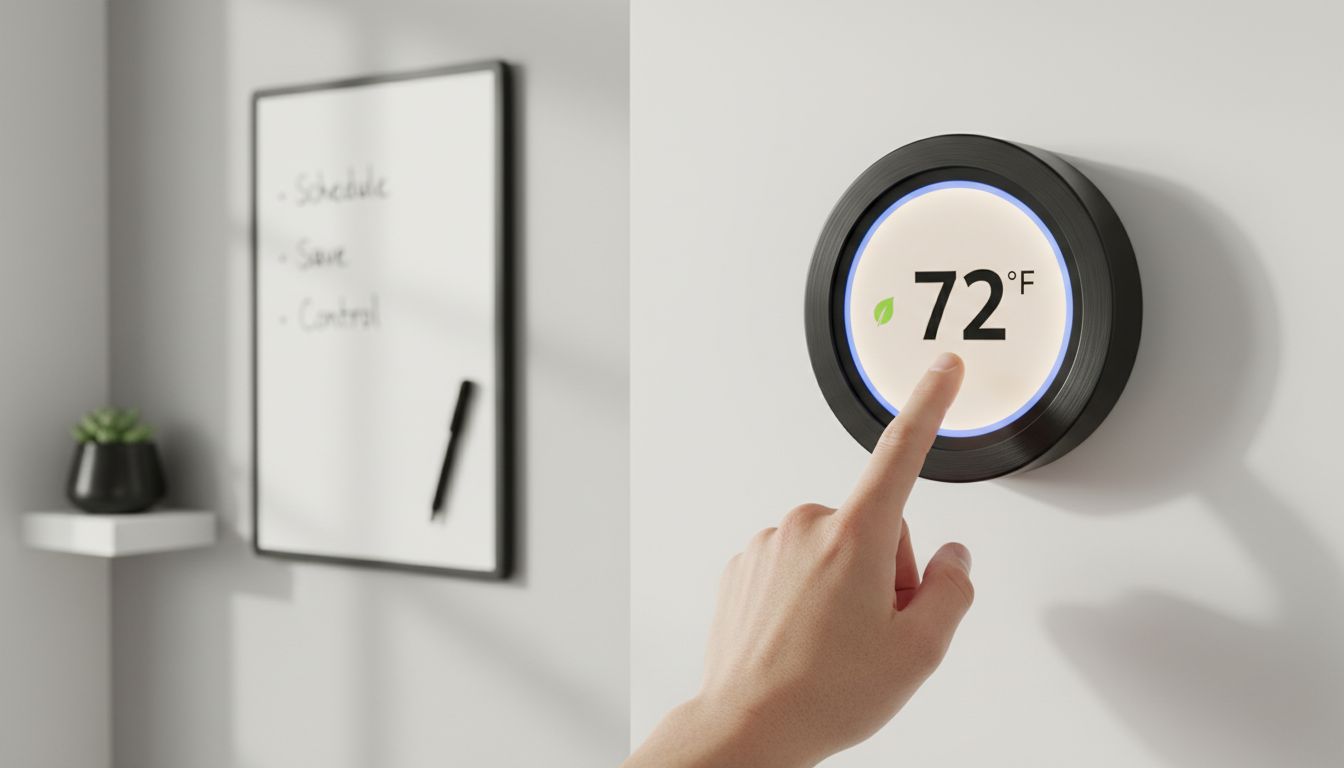
The core functionality of smart thermostats revolves around automatic temperature adjustment and energy efficiency. By learning user behaviours, these sophisticated devices can predict and adapt to individual household patterns, ensuring optimal comfort while minimising energy consumption. Unlike standard thermostats that require manual programming, smart thermostats use advanced algorithms to create personalised temperature schedules.
Common myths about smart thermostats often prevent homeowners from embracing this technology. Let’s debunk a few:
-
Myth 1: Smart thermostats are complicated to use
- Reality: Most models feature intuitive interfaces and smartphone apps
- Setup typically takes less than 30 minutes
- User-friendly design makes temperature management simple
-
Myth 2: They are only for tech-savvy households
- Reality: Designed for users of all technological backgrounds
- Automatic learning reduces the need for complex manual programming
- Suitable for seniors and those less comfortable with technology
-
Myth 3: Smart thermostats are prohibitively expensive
- Reality: Many models are competitively priced
- Energy savings can offset initial investment within 1-2 years
- Potential utility rebates further reduce implementation costs
By understanding the true capabilities of smart thermostats, homeowners can make informed decisions about integrating this intelligent technology into their living spaces. These devices represent more than just a gadget - they are a strategic approach to home comfort and energy management.
How Smart Thermostats Measure and Control Temperature
Understanding how smart thermostats function requires exploring their sophisticated sensing and control mechanisms. Advanced sensors enable these devices to gather precise environmental data, transforming traditional temperature management into an intelligent, responsive system.
Indoor temperature monitoring represents the foundational capability of smart thermostats. These devices deploy multiple sensor types to capture comprehensive climate information, including ambient temperature, humidity levels, and occupancy patterns. By continuously collecting data points, smart thermostats can make nuanced adjustments that traditional thermostats cannot.
The temperature control process involves several sophisticated stages:
-
Temperature Data Collection
- Utilise multiple indoor and outdoor temperature sensors
- Measure precise temperature variations across different home zones
- Track minute temperature fluctuations in real time
-
Algorithmic Analysis
- Process collected sensor data using machine learning algorithms
- Predict optimal temperature settings based on historical patterns
- Automatically adjust heating and cooling systems
-
Adaptive Climate Management
- Learn individual household temperature preferences
- Create personalised heating and cooling schedules
- Minimise energy waste through intelligent temperature regulation
By integrating advanced sensing technologies with intelligent algorithms, smart thermostats transcend basic temperature control. They transform home climate management into a dynamic, responsive experience that prioritises both comfort and energy efficiency.
Types of Smart Thermostats and Key Features
Smart thermostats represent a diverse range of intelligent climate control technologies, each offering unique capabilities for modern homeowners. Varying significantly in features, these devices provide sophisticated solutions for temperature management and energy efficiency.
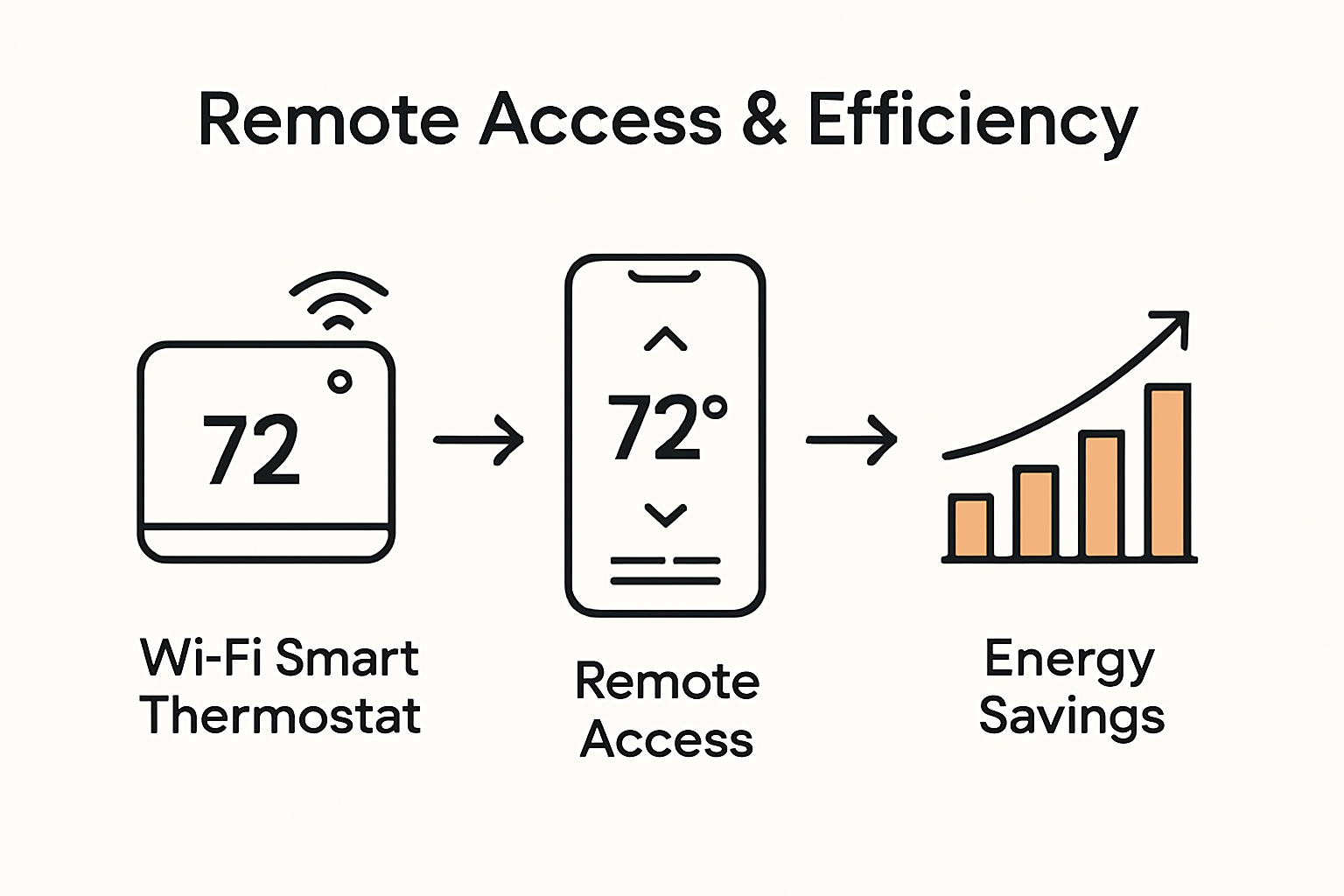
The primary categories of smart thermostats include learning models, programmable designs, and advanced integration systems. Certified models must offer comprehensive energy usage feedback, ensuring homeowners can track and optimise their heating and cooling consumption. These devices are distinguished by their ability to adapt to household patterns and provide granular control over home climate systems.
Key features that differentiate smart thermostats include:
-
Learning Capabilities
- Automatically adjust temperatures based on household routines
- Create personalised heating and cooling schedules
- Adapt to changing occupancy patterns
-
Connectivity Options
- Wi-Fi enabled remote control
- Smartphone app integration
- Compatible with voice assistant platforms
-
Energy Management
- Detailed energy consumption reports
- Recommendations for efficiency improvements
- Utility programme compatibility
-
Advanced Sensor Technologies
- Multiple temperature zone monitoring
- Humidity and occupancy detection
- Precise environmental tracking
By understanding the diverse range of smart thermostat types and their sophisticated features, homeowners can select a device that precisely matches their specific climate control and energy management requirements. These intelligent systems represent a significant leap forward in home environmental control technology.
Connectivity, Compatibility, and Remote Operation
Smart thermostat connectivity represents a revolutionary approach to home climate management. Wi-Fi enabled devices transform how homeowners interact with their heating and cooling systems, offering unprecedented control and flexibility.
The core of smart thermostat functionality lies in its comprehensive connectivity ecosystem. These devices must function effectively as standard thermostats while simultaneously providing advanced remote management capabilities. This dual-purpose design ensures reliability and enhanced user experience across different technological environments.
Key connectivity features include:
-
Remote Access Capabilities
- Smartphone app control
- Web browser management
- Real-time temperature adjustments from anywhere
-
Integration Platforms
- Compatible with voice assistants
- Works with home automation systems
- Seamless connection to smart home ecosystems
-
Communication Protocols
- Bluetooth connectivity
- Wi-Fi network integration
- Secure data transmission
-
Device Compatibility
- Multiple operating system support
- Cross-platform functionality
- Universal home system integration
By understanding the sophisticated connectivity options, homeowners can select smart thermostats that not only manage temperature efficiently but also integrate smoothly with their existing technological infrastructure. The future of home climate control is interconnected, intelligent, and incredibly convenient.
Energy Savings, Costs, and Potential Limitations
Smart thermostats represent a sophisticated approach to managing household energy consumption, offering significant potential for reducing utility expenses. Optimising heating and cooling schedules can lead to substantial financial savings and increased environmental sustainability.
The effectiveness of these devices depends critically on proper installation and consistent user engagement. While the technology promises impressive energy reduction, homeowners must actively participate in understanding and leveraging their smart thermostat’s capabilities to maximise potential benefits.
Key considerations for energy savings and potential limitations include:
-
Financial Investment
- Initial purchase costs range from £100 to £250
- Potential energy savings of 10-15% annually
- Typical investment recovery within 2-3 years
-
Performance Limitations
- Effectiveness varies based on home insulation
- Requires stable internet connectivity
- May not work optimally in older heating systems
-
Energy Savings Potential
- Personalised temperature scheduling
- Automatic energy consumption tracking
- Detailed efficiency reports
-
Potential Challenges
- Complex initial setup
- Learning curve for technology adoption
- Potential privacy concerns with data collection
By carefully evaluating these factors, homeowners can make informed decisions about integrating smart thermostats into their energy management strategy. The technology offers promising opportunities for reducing both environmental impact and household energy expenditure.
Discover Smarter Home Comfort Solutions Today
Struggling to control your home’s temperature efficiently or worried about high energy bills caused by outdated heating systems The detailed insights in “How Smart Thermostats Work” highlight common challenges like complicated setup, energy waste, and the need for adaptable climate control. These pain points affect many homeowners seeking not just comfort but also cost savings and convenience in managing their heating and cooling.
At Stomart.co.uk we understand your desire for simple, effective solutions that fit modern lifestyles. Explore smart home products designed to enhance your comfort and reduce energy costs with ease. Our selection emphasises user-friendly devices that blend advanced technology with practical benefits so you can enjoy personalised temperature control and remote operation without frustration.
Ready to make your home smarter and more energy-efficient Visit Stomart’s homepage now to browse a wide range of innovative household essentials and tech accessories tailored to meet your needs. Take advantage of our current offers today and step into a future where managing your home climate is effortless and cost-effective.
Frequently Asked Questions
How do smart thermostats learn user preferences?
Smart thermostats use advanced algorithms and machine learning to gather data on household routines and temperature preferences. Over time, they adapt to these patterns, creating personalised heating and cooling schedules that optimise comfort and efficiency.
What are the main features of smart thermostats?
Smart thermostats typically offer features such as learning capabilities, remote access via smartphone apps, integration with voice assistants, detailed energy consumption reports, and advanced sensor technologies for precise climate management.
Can a smart thermostat help save on energy bills?
Yes, smart thermostats can help reduce energy bills by optimising heating and cooling schedules, leading to energy savings of 10-15% annually. They provide insights and recommendations for further efficiency improvements, potentially recovering the initial investment within a few years.
What potential limitations should I consider before installing a smart thermostat?
Some limitations include the initial setup complexity, dependence on stable internet connectivity, and varying performance based on home insulation and the age of the heating systems. Additionally, there may be a learning curve for users unfamiliar with the technology.
Recommended
Share
- Jan 16, 2026
- Jan 12, 2026
- Jan 10, 2026
- Jan 09, 2026
- Jan 08, 2026
- Jan 06, 2026
- Jan 03, 2026

- Jan 02, 2026

- Jan 01, 2026


- Dec 30, 2025


- Dec 27, 2025


- Dec 24, 2025


- Dec 21, 2025


- Dec 19, 2025


- Dec 17, 2025

- Dec 16, 2025

- Dec 15, 2025


- Dec 15, 2025

- Dec 15, 2025


- Dec 11, 2025

- Dec 11, 2025


- Dec 08, 2025


- Dec 05, 2025

- Dec 05, 2025

Recent Posts
- Jan 16, 2026
- Jan 12, 2026
- Jan 10, 2026
- Jan 09, 2026
- Jan 08, 2026
- Jan 06, 2026
- Jan 03, 2026