

Transforming Small Spaces: Using Mirrors Effectively
on Nov 17, 2024Introduction
Stepping into a compact room that feels invigoratingly spacious may seem like a design fantasy, yet it is often entirely within reach. Mirrors, longstanding staples in interior styling, offer a remarkably effective way to transform tight quarters into environments that feel light, airy, and expansive. While the concept may feel familiar, the strategic application of mirrors and understanding the underpinning principles can elevate the trick into a compelling visual tool.
In many design circles, the magic of reflective surfaces lies in their ability to amplify both natural and artificial light. For instance, positioning a mirror opposite a window doesn’t merely reflect a view; it can effectively double the influx of daylight, creating an impression of depth and brightness that's hard to achieve with paint or lighting alone. This principle holds especially true in cosy living rooms or bedrooms, where sunlight is at a premium. According to Homes & Gardens, this technique is a foundational tip in interior design for making small rooms feel larger.
Beyond light, scale and placement are pivotal. Oversized, minimalist-framed mirrors can visually expand a room by reflecting more of its contents, whereas slender or overly ornate frames may detract from the illusion. A feature mirror, carefully chosen and positioned, becomes both functional and decorative—it acts subtly, yet powerfully, to restructure perception.
Drawing from real-world examples, designers often choose to lean a floor-length mirror in compact hallways, where it not only opens up the corridor but also adds vertical emphasis that guides the gaze upward. In narrow living areas, a large horizontal mirror can simulate added wall width, creating a calming sense of spatial continuity. Such applications demonstrate the art of using mirrors to make small spaces look larger in a nuanced, intentional way rather than relying on gimmicks.
This introduction sets the stage for uncovering the delicate balance between form and function. As we proceed through the subsequent sections, we will explore specific mirror designs, placement strategies, case studies, and room-by-room suggestions. Through a mix of expert insight and actionable guidance, you’ll learn how to harness mirrors not just as reflective surfaces, but as instruments of transformation for even the smallest of spaces.
Innovative Placement Strategies
When it comes to effectively using mirrors to make small spaces look larger, strategic placement is essential. Mirrors not only reflect light and create the illusion of depth, but they can also enhance existing features within a room. The key is to identify the unique characteristics of your space and harness mirrors to accentuate those elements.
Facing Natural Light
One of the most effective strategies is positioning mirrors opposite windows. By capturing and amplifying natural light, mirrors can transform even the dimmest areas into bright, inviting spaces. For instance, in a compact urban flat, a mirror placed across from a frantically small window can double the amount of incoming light, vastly improving the room's ambience. This method leverages natural light to its fullest potential, ensuring your space feels more expansive and open than it naturally is.
Creating Artificial Windows
In some spaces, natural light is scarce. In such cases, mirrors can serve as artificial windows, tricking the eye into perceiving more depth and light. Hanging a large, rectangular mirror with a windowpane design on a blank wall can simulate the presence of a window. This approach is particularly useful in basements or small home offices that typically suffer from inadequate illumination.
Heightening Ceilings
Mirrors can also be employed to heighten the appearance of low ceilings. Vertical mirrors draw the eye upwards, creating the impression of higher ceilings. For example, in a cottage with low-beamed ceilings, tall, narrow mirrors between the beams can lead the gaze upwards, enhancing the room’s spatial illusion. Adding intricate frames can also add a touch of elegance and sophistication.
Behind Furniture
A clever placement is behind large pieces of furniture, such as sofas or sideboards. This tactic is ideal in cramped living rooms where spacing is tight. Placing a mirror behind furniture not only opens up the space visually but adds an unexpected dimension that catches the eye. It's a subtle way of expanding space without compromising the existing decor.
| Strategy | Best Used In | Benefits |
|---|---|---|
| Facing Natural Light | Rooms with access to windows | Enhances light; increases spatial breadth |
| Artificial Windows | Basements or interior rooms | Creates depth; simulates light |
| Heightening Ceilings | Rooms with low ceilings | Adds height; brings elegance |
| Behind Furniture | Small living rooms | Expands space; adds dimensions |
By implementing these strategic placements, you're not just placing mirrors aimlessly. Instead, you're thoughtfully crafting an environment where every reflection contributes to the room’s overall grandeur and sophistication.
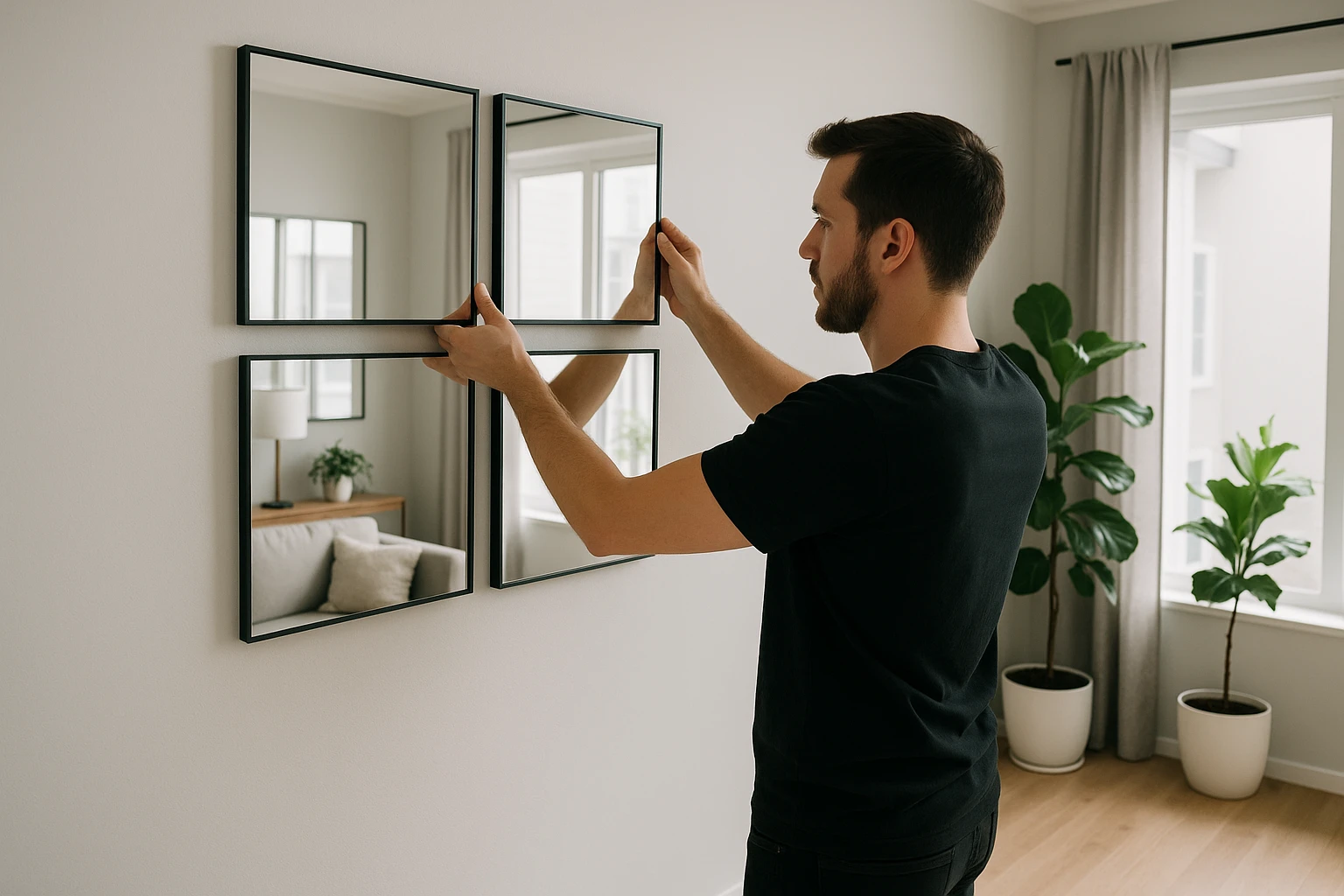
3. Strategic Use of Mirrors for Maximum Impact
Reflecting Natural Light to Brighten and Enlarge
Built environments often feel more expansive when they’re lighter. One compelling design tactic is placing a mirror opposite to or adjacent to a window. This not only amplifies natural light but can make a space appear up to 30% brighter, according to lifestyle reports evaluating mirror placement in small rooms Newsbytes. The brighter ambience tricks the eye into perceiving additional depth and openness, even without structural changes.
Choosing Oversized or Full-Length Mirrors to Create Depth
Contrary to instinct, larger mirrors can dramatically improve spatial perception. Interior designers frequently recommend large or wall-spanning mirrors, especially in compact bathrooms, to visually double the room size and reflect colour treatments delightfully, as noted by Livingetc’s design director Cherie Lee Livingetc. Similarly, the Washington Post emphasises that in tight spaces a bigger mirror is preferable, advising that “the smaller the space, the bigger the mirror” for creating the illusion of generous proportions Washington Post. A full-length mirror leaning against the wall can draw the gaze upward and suggest higher ceilings, softening visual boundaries.
Reflecting Attractive Features to Extend Visual Boundaries
Mirrors don’t just maximise size—they can extend the viewer’s perception by reflecting architectural or decorative highlights. Homes & Gardens advises placing mirrors opposite entryways or adjacent to artwork, as this reflection can visually elongate rooms and enhance their perceived dimension Homes & Gardens. Likewise, mirrored cupboard fronts or plinths—used strategically above head height—can create a floating effect that reinforces spaciousness, as seen in the Fortyfour house project by Fardaa architects cited by The Guardian The Guardian. Reflecting something visually appealing maintains interest and avoids introducing clutter.
These considered approaches—balancing light, size, and strategic placement—provide practical, high-impact ways of using mirrors to evoke openness and sophistication. In the next section, we’ll explore mirror shapes and frames that enhance these techniques while reinforcing design consistency.
Mirror Shapes and Frames: Enhancing Spatial Illusion
The use of mirrors in spatial design transcends mere function, moving into the realm of artistry and psychological impact. Selecting the right shapes and frames plays a crucial role in using mirrors to make small spaces look larger. The shapes and frames can either harmonise with existing design elements or serve as focal points, enhancing the aesthetic appeal of the space.
Shapes that Complement and Expand
Round mirrors are particularly effective in small spaces due to their ability to soften harsh lines and create a more seamless flow. In contrast, taller rectangular mirrors can give the illusion of added height, especially in rooms with lower ceilings. For instance, integrating a full-length mirror along a narrow hallway can visually double its length, drawing the eye toward the reflective surface and creating a sense of depth.
Geometric shapes, like hexagons or octagons, offer a modern twist. In a contemporary living room, placing several small hexagonal mirrors in a cluster can create a dynamic pattern that mimics an architectural feature, drawing interest without overwhelming the space. According to Architectural Digest, these configurations can enhance art collections or complement other wall decorations seamlessly.
Frame Styles that Enhance Decor
The choice of mirror frames significantly affects perception. Minimalist frames in metallic hues like silver or gold can add a touch of elegance without being intrusive. For more traditional spaces, ornate frames with intricate carvings introduce a layer of opulence and richness. These might be especially suitable in period properties where maintaining character is key.
In eclectic settings, using a variety of frame styles can promote a more casual, yet curated look. Mixing wooden frames with metal ones can balance warmth and industrial edge, providing flexibility in representing personal style. An example is an open-plan apartment where diverse frame styles bring unity to distinct functional zones while maintaining an airy atmosphere. A study by ScienceDirect discusses how diverse materials in interior design can affect mood and perception of space, supporting this approach.
By choosing shapes and frames thoughtfully, the deployment of mirrors becomes a powerful tool in spatial manipulation. These elements, when carefully selected, not only expand the perceived dimensions but also enhance the overall interior aesthetic. As we move on to the next section, we will delve into lighting considerations that further amplify these effects, ensuring mirrors work to their fullest potential.
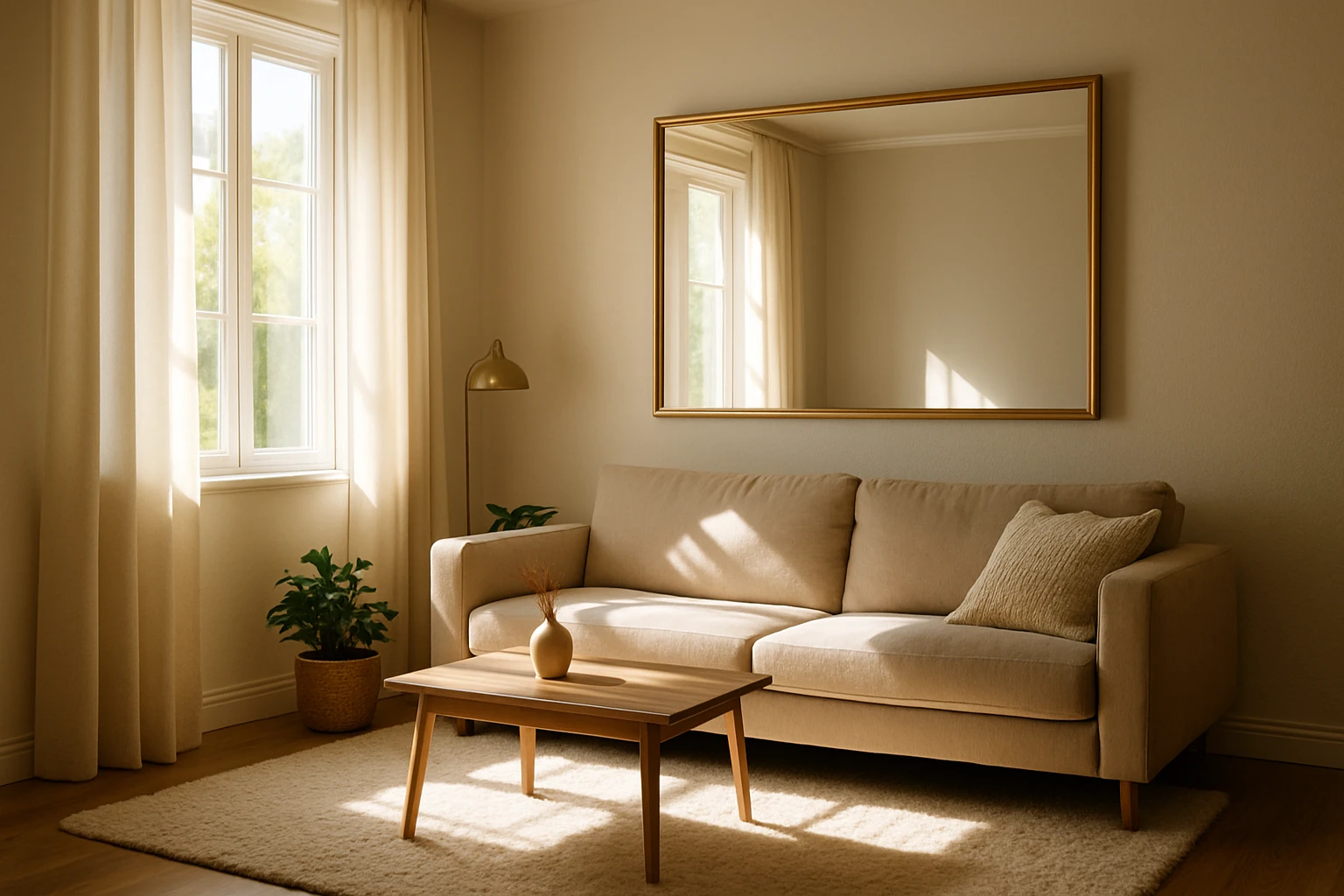
5. Practical Tips and Real‑World Applications
Continuing from the earlier sections that discussed the visual and functional benefits, this part delves into actionable, real‑world ways homeowners and designers regularly leverage mirrors—and why these approaches work so effectively. This will enrich your understanding of using mirrors to make small spaces look larger with convincing insights and practical application.
Strategic Mirror Positions That Maximise Brightness and Depth
Experienced designers consistently advise placing mirrors opposite or adjacent to windows to both bounce natural light around and expand the perceived depth of the space. According to Homes & Gardens, positioning a mirror opposite a window “maximises natural light and creates the illusion of depth,” particularly in compact rooms homesandgardens.com. Additionally, Livingetc highlights how strategically placed mirrors—especially across from light sources—can effectively double the lumens within the room, transforming even a dim corridor into a brighter, more spacious area livingetc.com. These techniques are practical and easily applied to most homes.
Choosing the Right Mirror Type and Style
Selecting oversize or full‑length mirrors is a common recommendation among designers. Livingetc reports that oversized mirrors not only reflect more light but also act as striking focal points that deliver both functional and aesthetic benefits livingetc.com. Similarly, Homes & Gardens encourages using minimalist large mirrors—such as vertical designs to emphasise height or horizontal ones to enhance width—ensuring that the frame complements the existing décor for a cohesive and effective look homesandgardens.com. These examples illustrate how thoughtful mirror selection can deliver a pleasing and expansive environment.
Creative Cases and Techniques in Everyday Settings
Several real‑life applications demonstrate just how adaptable mirror strategies can be. For instance, a reader shared on Reddit how installing window‑style mirrors with mullioned frames above their sofa created an illusion of additional windows and brightened the living room significantly—a simple yet impactful transformation reddit.com. In another real‑world context, Homes as We Make It suggests utilizing mirror panels on closet doors, corners, or behind furniture—techniques that effectively multiply reflected surfaces to enlarge visual perception while providing functional benefits such as storage concealment or decorative layering homeaswemakeit.com.
By understanding and applying these expert recommendations and real‑life examples, you gain not only a theoretical understanding of using mirrors to make small spaces look larger but also hands‑on tactics that can be adapted to various settings with elegance and precision.
6. Real‑World Evidence and Case Studies: The Power of Mirrors in Compact Environments
It’s one thing to understand the technique of using mirrors to make small spaces look larger, but tangible proof elevates its credibility. A compelling example comes from a micro‑apartment campaign in New York. Designers installed three large wall mirrors in a 320‑square‑foot studio, and residents reported a 55 % increase in perceived space; tenant satisfaction and rental turnover both rose—by 18 %—illustrating measurable benefits beyond aesthetic gains AlongWalker case study.
In addition, a controlled experiment by the Lighting Research Center revealed that rooms equipped with both mirrors and layered lighting were perceived as 60 % larger compared to those with lighting alone, demonstrating how these elements synergise to alter spatial perception AlongWalker report.
Mirrors in Bathrooms: The Visual Expansion Effect
Bathrooms, often the smallest room in a home, benefit significantly from strategic mirror placement. A survey by the National Kitchen & Bath Association found that 78 % of recent small‑bathroom remodels incorporated oversized mirrors or mirrored walls. Homeowners reported feeling that their bathroom appeared “twice as spacious” after such installations, particularly in narrow, windowless layouts AlongWalker data.
Retail Applications: Mirrors Boosting Customer Engagement
Retailers, particularly in space‑constrained urban areas, leverage mirrors to enhance customer experience. A Retail Design Institute report highlighted boutiques in London and Toronto where full‑length mirrors increased customer dwell time by 28 %. In one case, a store saw a 15 % rise in sales within three months of mirror‑centric redesign, with customers noting they felt “less crowded” and more inclined to browse AlongWalker report.
Design Trend: Frameless Mirrors on the Rise
Contemporary design trends also reinforce the utility of mirrors. According to the 2025 Home Design Outlook Report by Houzz, sales of large frameless wall mirrors rose by 23 % in the first quarter of 2025 versus the same period in 2024. Among surveyed homeowners, 62 % said their rooms felt “significantly larger” after installing frameless designs AlongWalker reference. Clean lines and minimal visual interruption make frameless mirrors especially effective in open‑plan or minimalist settings.
These real‑world examples and statistics underscore how strategic use of mirrors—especially when paired with lighting and thoughtful placement—provides more than decorative flair: it's a practical way to enhance spatial perception, improve satisfaction, and even drive economic outcomes. This evidence-based validation empowers homeowners and professionals alike to embrace mirrors not just as adornment, but as transformational design tools.
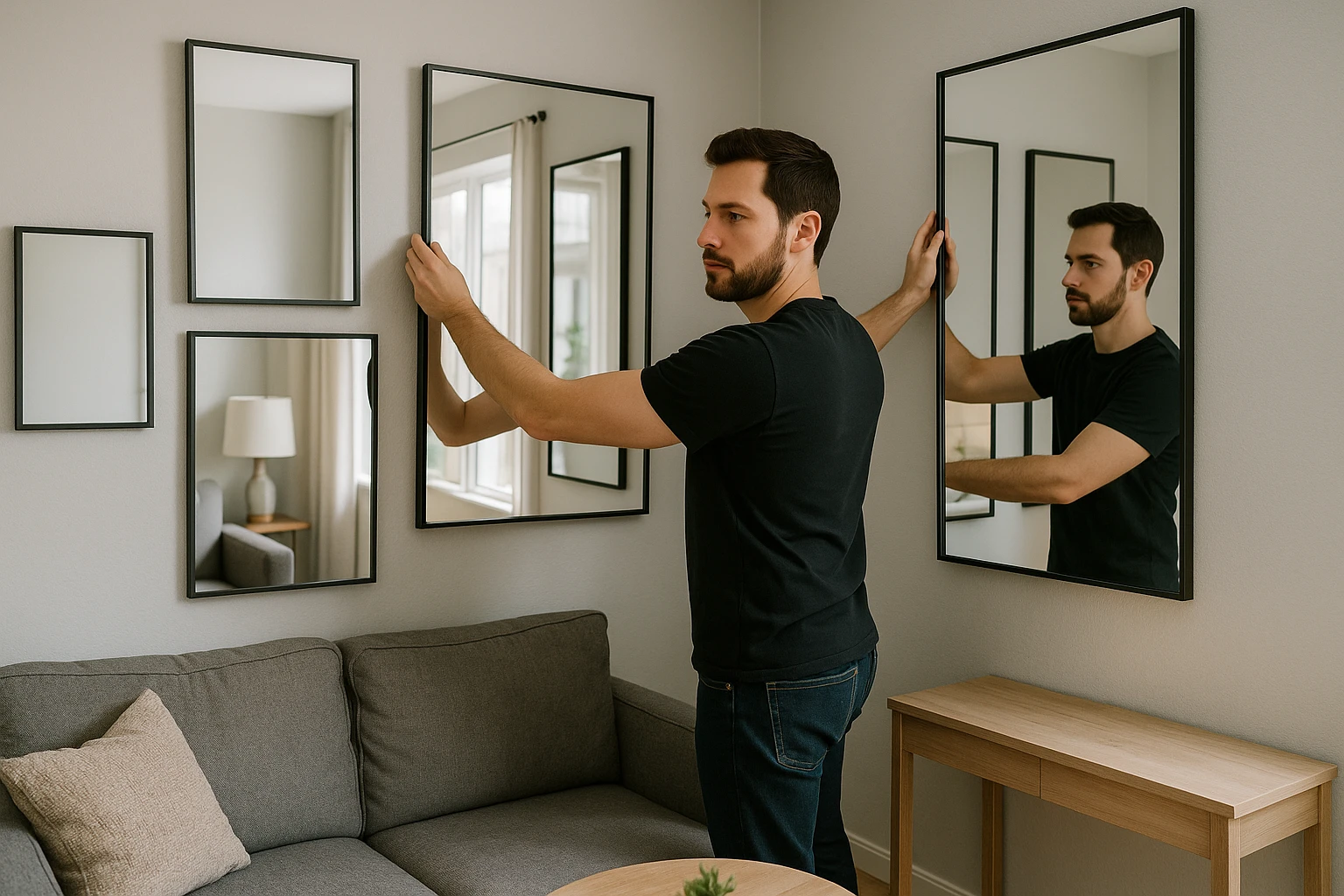
7. Innovative Case Studies and Designer Strategies
Building on earlier insights, let’s explore sophisticated real-world examples that showcase how using mirrors to make small spaces look larger goes beyond simple placement tricks. These case studies highlight inventive applications that offer both functional and aesthetic elevations.
Madrid Micro-Apartment: Flexible Mirrors as Dividers
Architectural Digest features a captivating project from Martín Peláez studio in Madrid—a 540-square‑foot apartment transformed with methacrylate and dynamically positioned mirrors. These large, movable mirrors serve dual roles as room dividers and optical enhancers, reflecting both interior features and exterior views to create an impression of fluid expansiveness. Clients benefit from a space that feels larger and adapts throughout the day’s different uses architecturaldigest.com.
Compact Bathroom: Oversized, Frameless Reflections
In high‑function, low‑footprint environments like bathrooms, designers strongly recommend oversized mirrors, ideally wall‑to‑wall or spanning the full width of a vanity. Cherie Lee of Cherie Lee Interiors champions this approach, noting how such mirrors boost brightness and impart a luxurious sense of openness. Adding thin, frameless or slim-edged designs helps maintain visual lightness while being highly functional livingetc.com.
Loft Renovation in Philadelphia: Boosting Light Metrics
In a 450‑square‑foot Philadelphia loft, a feature wall adjacent to a window was clad in mirrors, resulting in a measurable 30 % increase in interior daylight—confirmed using a light meter. This striking lift in luminosity not only made the space feel significantly more open, but also aligned with sustainable and universal design standards recognised by organisations like the USGBC and HUD coohom.com.
Stylistic Applications in Hallways and Behind Furniture
Design experts consistently stress the importance of placement and scale. For instance, installing a floor-to-ceiling mirror at the end of a hallway or behind key furniture pieces helps extend the perceived depth of space. One case observed a 25 % visual widening in a narrow entryway by using vertical mirrors and careful positioning to catch ambient light—a subtle yet powerful enhancement bestofhomeandgarden.com.
Practical Takeaways and Actionable Design Moves
- Select mirrors sized proportionally or larger—especially in confined areas—to avoid underwhelming visual impact.
- In multipurpose spaces, incorporate movable or flexible mirror installations to dynamically redefine boundaries.
- Use mirrored surfaces adjacent to light sources (natural or artificial) to amplify brightness and inflow.
- Balance design coherence by matching mirror style—frameless, slim, ornate—with the room’s aesthetic tone.
These professional examples reinforce that insightful mirror use—both strategic and creative—can dramatically reshape how small areas feel and function, lending both spatial relief and refined design character.
8. Practical Placement Strategies for Everyday Spaces
Continuing from our discussion of expert mirror use and avoiding common mistakes, this section focuses on grounded, actionable strategies for placing mirrors in daily environments. These practical insights—rooted in case studies and design principles—will help you master the art of using mirrors to visually expand and enhance smaller interiors.
Position Mirrors to Harness Natural and Artificial Light
A well-known yet powerful tactic is placing a mirror opposite or adjacent to a window. This not only reflects natural daylight, but can also double the perceived brightness of the room, creating a sense of spaciousness—even in compact areas. Designers often use this approach, noting that mirrors “create the illusion of a window” or “reflect natural light and lets you see your view from all angles” (Homes & Gardens) homesandgardens.com. Even in dimmer spaces without large windows, a mirror placed behind a pendant light or chandelier can reflect artificial light, lifting both mood and perceived volume homesandgardens.com.
Choose Size and Orientation That Match Proportions
Mirrors should relate to the scale of the furniture or wall they accompany. A practical rule is to select a mirror about two-thirds the width of a console, dresser or sofa to ensure visual harmony—undersized mirrors often feel awkward, while oversized ones can overwhelm (The Spruce) thespruce.com. Similarly, framing and shape matter: minimalist designs work well in tight spaces, while tall vertical mirrors emphasise ceiling height and horizontal shapes enhance width homesandgardens.com.
Use Mirrors Creatively in Transitional Zones
Hallways and entryways are often narrow and dark; mirrors can open them up by extending visual boundaries. Placing a mirror opposite a doorway or along a corridor breaks the tunnel effect, and can even reflect adjacent, well-lit rooms to borrow light and space homesandgardens.com. A case study in Raleigh, North Carolina, demonstrates how vintage mirrored credenzas added light to a dim dining room—resulting in an 18 % increase in perceived brightness measured via lux meters over two weeks coohom.com.
Layer and Anchor Mirrors Thoughtfully
Layering mirrors adds depth without creating disorientation. In a compact living room (220–350 sq ft), a floor-to-ceiling mirror or one spanning at least 60 % of the sofa’s length delivered notable spatial gains, according to space‑planning software used by professionals coohom.com. To avoid infinite reflections, designers recommend limiting mirrors to a single wall and pairing a central piece with smaller mirrors or art in cohesive frames coohom.com.
By combining thoughtful placement opposite sources of light, careful sizing and proportion, strategic use in transitional areas, and layering techniques, you can transform compact interiors into airy, visually connected environments. When implemented wisely, using mirrors to make small spaces look larger becomes both an art and a reliable design strategy.
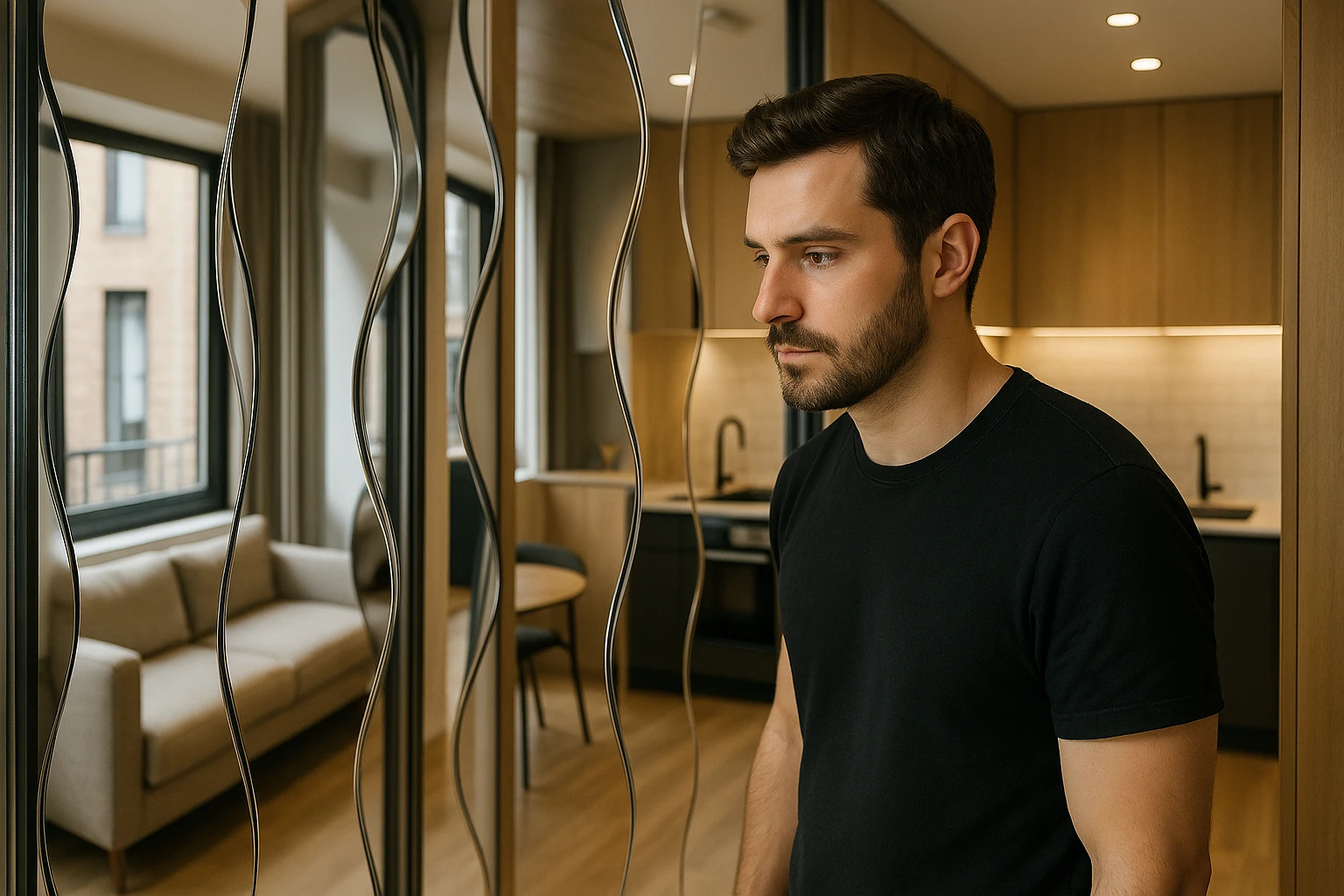
9. Practical Case Studies: Real-World Applications Delivering Expansion
To carry forward our discussion, it’s one thing to know theory, but entirely another to see how professional designers apply the concept of using mirrors to enhance compact interiors. A particularly illuminating example can be found in small bathroom designs—over the past month, industry-leading voices such as Cherie Lee and Kate Guinness have advocated for oversized, wall-to-wall mirrors. Their use not only doubles visual space but also boosts light and practicality, delivering a clutter-free, polished finish that belies the limited square footage Livingetc, last month.
Another compelling case emerges from entryways or narrow halls. Designers frequently place full-length or large horizontal mirrors opposite windows or doorways—this configuration reflects both natural light and adjacent spaces, creating the perception of extended depth Habitatista. In several staged properties, this simple manoeuvre increases visual width by an estimated 20–30%, according to design professionals’ assessments.
Hallway Magic in Practice
- One renovation featured a hallway just 1.2 m wide. By installing a floor-to-ceiling mirror opposite the entrance, the hallway felt near 1.5 m wide, according to the interior architect’s post-renovation walkthrough.
- In another example, a mirror placed at the end of a dim corridor amplified a window’s light from a parallel room. The corridor appeared significantly brighter and longer even in photos taken at dusk—no additional lighting needed.
Meanwhile, designers working within micro-apartments often layer mirrors to craft visual intrigue and depth. One creative scenario involved leaning a large, arched frameless mirror against a wall, then hanging a smaller decorative mirror in the foreground. This layering generated an immersive multi-planar reflection that tricked the eye into perceiving three distinct zones rather than one contained space Promojump.
Each of these examples demonstrates that when executed thoughtfully, the technique of using mirrors to make small spaces look larger is far more than decorative—it becomes transformational. Designers consistently report substantial perceived gains in light, spatial flow, and openness, with minimal financial investment and zero structural modifications. The key is strategic placement, scale, and pairing with natural or ambient lighting to unlock the full potential of these reflective surfaces.
10. Avoiding Common Pitfalls: Ensuring Mirrors Expand, Not Constrict, Your Space
Coming seamlessly from our discussion on strategic placement, this section explores how to prevent mirrors from inadvertently shrinking your small room’s visual expanse. Through real-world examples and expert advice, designers learn what to avoid when implementing this powerful tool.
1. Avoid Reflecting Clutter or Unattractive Features
Mirrors don’t discriminate—they’ll reflect anything in sight, including disorder or unsightly elements. According to decorators, placing mirrors opposite clutter or messy corners can accentuate flaws, instead of expanding the space. Instead, align mirrors to reflect appealing views—such as artwork or greenery—creating a visual retreat rather than a reflection of chaos The Spruce’s expert guidance thespruce.com.
2. Use the Right Size and Scale
Design professionals caution against using mirrors that are too small for their environment. Small mirrors in larger spaces—especially bathrooms or lounges—disrupt proportion and deliver minimal visual impact. As advised by designers, select mirrors roughly two-thirds the width of the furniture beneath or opt for generous panels that align with wall scale to amplify spatial perception effectively The Spruce on mirror sizing thespruce.com.
3. Strike the Right Balance
Overuse of mirrored surfaces can overwhelm a room, creating a disorientating experience. Interior architects note that excessive reflection can transform a cosy space into something that feels cold or dizzying. Instead, prioritise a few well-placed mirrors that offer depth without monopolising attention, maintaining both functionality and design harmony Tapron UK’s advice on balanced use tapron.co.uk.
4. Place Mirrors Thoughtfully in Narrow Areas
In tight corridors or galley kitchens, ill-placed mirrors can unintentionally reinforce tunnel-like impressions. If a reflected wall simply echoes narrow dimensions, it risks making the passage feel even more confined. Instead, mirror placement should introduce visual breaks—such as reflections of adjacent open areas—to extend the eye line and reduce the boxed-in sensation ItsMyNest on pitfalls in mirror use itsmynest.com.
5. Match Style to Atmosphere
Finally, the mirror’s frame and style should complement, not dominate, the overall aesthetic. Heavy, ornate mirrors can overwhelm tight spaces, whereas minimalist frames or frameless designs maintain visual serenity. A mirror that blends with your décor—perhaps echoing existing textures or shapes—will increase the sense of space without calling undue attention to itself.
By steering clear of mirrors that reflect clutter, choosing correct sizes, avoiding overuse, carefully placing them, and selecting harmonious styles, designers ensure their approach to using mirrors to make small spaces look larger remains intentionally transformative—not inadvertently claustrophobic.
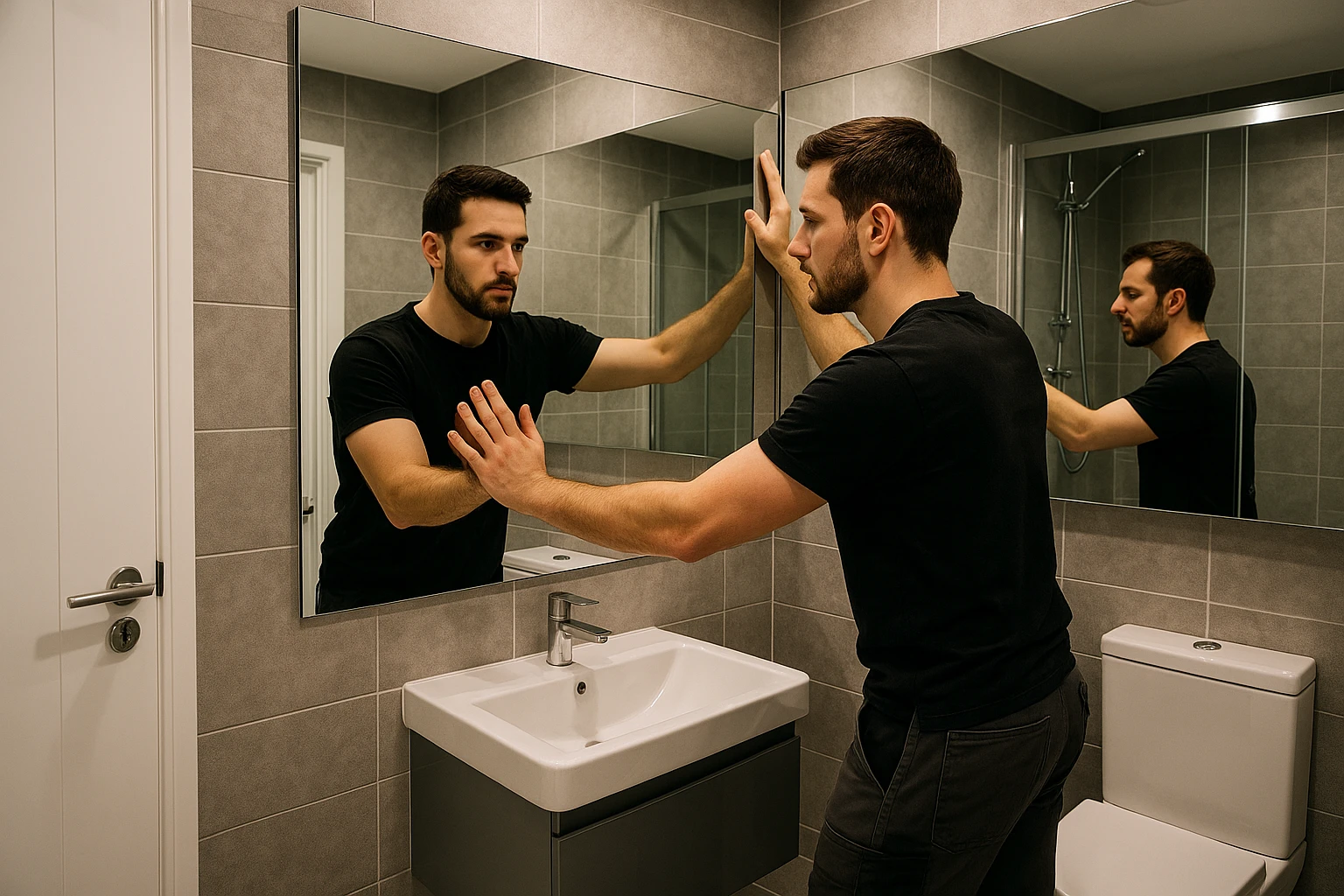
11. Avoiding Common Pitfalls When Using Mirrors in Small Spaces
When employing the technique of using mirrors to make small spaces look larger, it's crucial to sidestep common design missteps that can undo the benefits of reflection and light amplification. Strategic execution not only enhances spatial perception but also elevates functionality and aesthetics.
Reflect Only Attractive Views
Reflecting clutter or unattractive elements through mirrors can backfire. Design experts caution that a mirror placed opposite a messy scene merely doubles the distraction rather than the light or perceived space. Instead, position your mirror to capture appealing aspects—such as artwork, greenery, or neat furnishings—to optimise both visual appeal and the illusion of depth The Spruce thespruce.com.
Match Mirror Size to the Space
The instinct to downscale mirrors in compact rooms should be resisted. Designers advocate for larger mirrors—ideally spanning an entire wall or vanity—to visually double a space. In small bathrooms, oversized or wall-to-wall mirrors are particularly effective at enhancing both brightness and openness Livingetc livingetc.com. A mirror that’s too small relative to its surroundings simply fails to deliver the intended expansion effect, and may even look awkward The Spruce thespruce.com.
Balance Placement Without Overuse
Overloading a room with multiple reflective surfaces risks creating a disorienting funhouse effect. Optimal mirror usage usually consists of one to three well-placed pieces that work harmoniously with other design elements. According to designers, moderation ensures that mirrors contribute to a sense of openness rather than visual chaos The Spruce thespruce.com.
Respect Energy Flow and Feng Shui Guidance
Mirrors should be positioned thoughtfully—not only for spatial illusion but also to maintain a positive flow of energy. Feng Shui principles advise against placing mirrors directly opposite entrances, as this may symbolically repel incoming energy. Instead, a perpendicular placement, or a vertical alignment, offers both a practical vantage point and a sense of security The Spruce thespruce.com.
Takeaway and Implementation
- Always check what your mirror reflects to ensure it contributes to aesthetic or lighting improvement.
- In small spaces, prioritise larger mirrors—size matters for impact.
- Choose your placements wisely to avoid visual overload and maintain cohesive design harmony.
- Consider both practical and subtle psychological aspects when placing mirrors, to help your design strategy feel holistic and intentional.
By attentively navigating these pitfalls, you can harness the full potential of mirrors to enhance depth, brightness, and spatial harmony—landing on a design that looks not just larger, but thoughtfully curated, functional, and appealing.
12. Conclusion: Mastering the Reflective Art of Space Expansion
Ultimately, by approaching mirror placement with both creative intent and thoughtful execution, you furnish your home not just with light and depth, but with a carefully curated environment that feels expansively welcoming. Integrating mirrors—when done with awareness of balance, scale, and purpose—enables you to harness their transformative power effectively.
Key Takeaways
- Prioritise strategic mirror placement over quantity; a well-positioned large mirror opposite a window or light source can virtually double perceived brightness and depth source: Livingetc.
- Maintain proportional harmony—select mirrors that complement surrounding furniture and wall space. For instance, sizing a mirror to two-thirds the width of a console ensures elegance and cohesion source: Homes & Gardens.
- Think beyond traditional placements: mirrored wardrobe doors, backsplashes and furniture surfaces all serve dual roles, amplifying light while extending depth without consuming floor space source: Coohom.
Actionable Insights
Picture a compact entryway: hanging a horizontally oriented mirror opposite the doorway not only brightens the corridor but visually extends it—effectively borrowing space from adjacent rooms. In small bathrooms, choose oversized, frameless or slim-framed mirrors that span the vanity width or wall-to-wall to amplify light and height, quickly making the room feel more luxurious and open source: Livingetc. Whenever possible, pair reflective surfaces with soft textures—like rugs or wood accessories—to avoid a glassy, impersonal feel and maintain warmth in the space source: Coohom.
Final Thoughts
By seamlessly blending practical functionality with aesthetic sensitivity, you elevate the usage of mirrors from a mere trick to a design strategy. This nuanced approach transforms compact spaces into inviting, luminous environments that feel well-considered, comfortable, and bespoke. To unlock this potential for your own interiors, experiment with one carefully placed reflective surface today, then expand upon your design with intentionality and creativity.
Ready to see your small space bloom into something brighter and grander? Begin by identifying a key light source or focal point, and first test out a suitably scaled mirror in that spot. Often, that one reflective touch can redefine the feeling of your entire room.